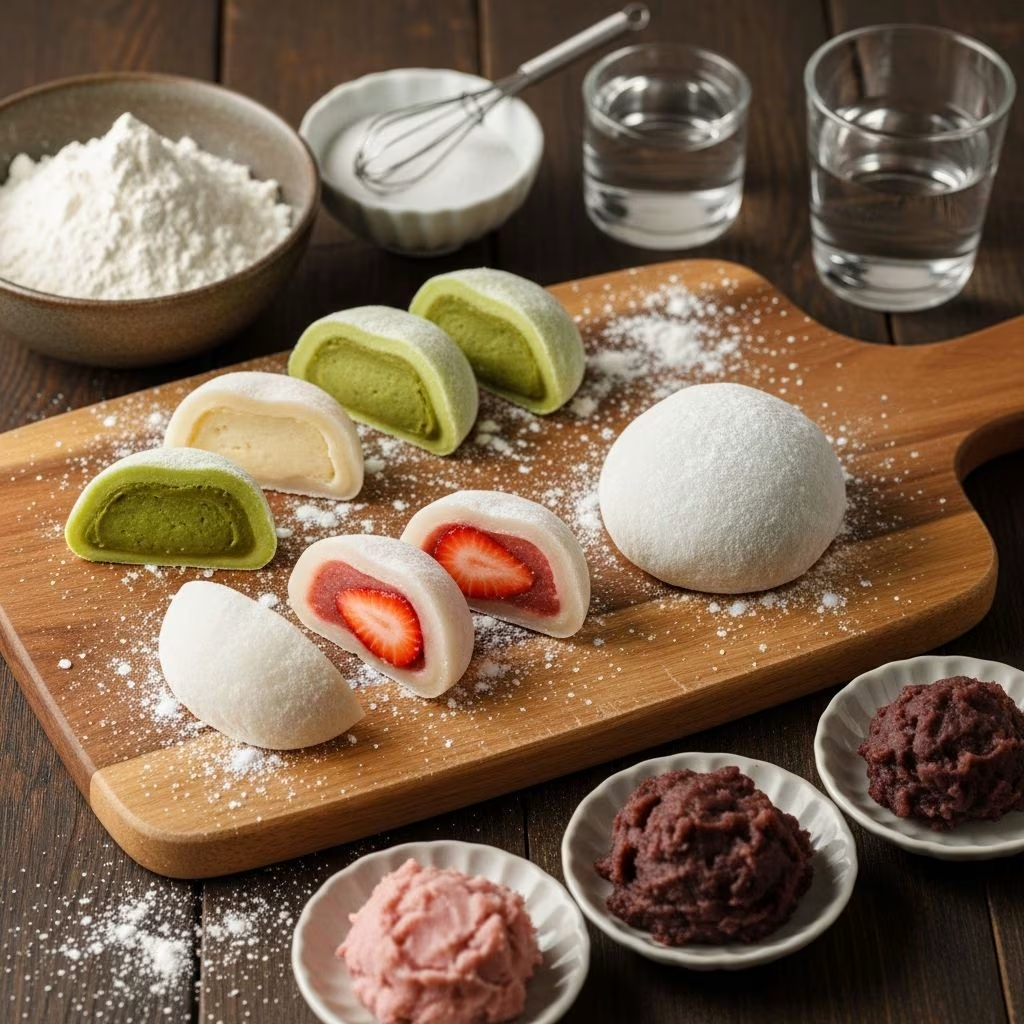
Mochi, the iconic Japanese confection known for its unique chewy texture, has captivated taste buds worldwide. Made primarily from glutinous rice flour, this treat offers endless customization through flavors, colors, and fillings. Whether you’re a novice baker or a seasoned home cook, creating mochi at home is straightforward with minimal ingredients and everyday appliances like a microwave or oven. This guide explores everything from basic dough preparation to creative variations, ensuring you achieve that signature bounce and softness.
Understanding the Essence of Mochi
At its core, mochi derives its elasticity from mochiko or glutinous rice flour, a starch-rich ingredient distinct from regular rice flour due to its high amylopectin content. This gives the dough its stretchy quality, unlike the crumbly nature of wheat-based pastries. Traditionally pounded from steamed rice, modern recipes simplify the process using heat to gelatinize the starch, resulting in a smooth, pliable mass.
Mochi appears in various forms: plain sheets for slicing, filled daifuku, or bite-sized balls. Its subtle sweetness allows pairings with fruits, chocolates, or ice cream, making it versatile for desserts, snacks, or even savory twists.
Essential Ingredients for Success
Stocking the right basics ensures consistent results. Here’s a breakdown:
- Glutinous Rice Flour (Mochiko): The star ingredient, providing chewiness. Opt for brands like Koda Farms for authenticity.
- Sugar: Granulated white sugar sweetens the dough; adjust for taste.
- Liquid Base: Water, milk, or coconut milk hydrates the flour. Milk adds creaminess, while coconut milk brings tropical notes.
- Optional Add-Ins: Food coloring for vibrant hues, vinegar for pliability, cornstarch for dusting to prevent sticking.
These components yield a dough that’s sticky when warm but firms up upon cooling. Proportions typically follow a 1:1 ratio of flour to liquid by volume, with sugar at about 2/3 cup per cup of flour.
Mastering the Dough: Cooking Techniques
Three primary methods suit different kitchens: microwave for speed, oven for batches, and stovetop for control. Each gelatinizes the starch effectively.
Microwave Method – Quickest for Small Batches
Ideal for 10-12 pieces, this takes under 10 minutes. Combine 1.5 cups mochiko, 1 cup sugar, 1.5 cups water (or milk), and a splash of vinegar in a bowl. Whisk smooth, cover with plastic wrap, and microwave in 1-minute bursts, stirring between. The dough turns translucent and sticky after 3-4 minutes.
- Mix dry ingredients first, then incorporate liquids.
- Microwave high for 1 minute; stir vigorously with a wet spatula to avoid sticking.
- Repeat 2-3 times until shiny and thick. Cool slightly before handling.
Oven Baking – Perfect for Even Texture
For larger trays like chi chi dango, preheat to 350°F (175°C). Grease an 8×8-inch glass dish, mix ingredients, pour batter, cover with foil, and bake 45-55 minutes. The edges set firmer, while the center stays soft.
This method yields a cake-like mochi, sliceable into diamonds. It’s forgiving for beginners and naturally vegan/gluten-free.
Stovetop Steaming or Pan-Cooking – Traditional Flair
Without a microwave? Steam the batter over boiling water for 20-30 minutes or cook in a non-stick pan with water like a thick porridge, stirring constantly. This preserves authenticity, mimicking historical methods.
| Method | Time | Yield | Best For |
|---|---|---|---|
| Microwave | 5-10 min | 10 balls | Quick individual pieces |
| Oven | 45-55 min | 8×8 tray | Party-sized slabs |
| Stovetop | 20-30 min | Variable | No-appliance homes |
Shaping and Filling Your Creations
Once cooled to lukewarm, dust a surface and hands generously with cornstarch or extra mochiko. Portion dough into golf-ball sizes, flatten into 3-4 inch discs (1/4-inch thick), and add fillings before sealing.
Popular Fillings:
- Sweet Classics: Red bean paste (anko), strawberry chunks, or mango puree for fruity bursts.
- Indulgent Twists: Chocolate ganache, almond joy bars, or Biscoff spread with crumbs.
- Frozen Delight: Small ice cream scoops wrapped and frozen for mochi ice cream.
- Savory Options: Natto or pickled plums for umami contrast.
Pinch seams tightly to avoid leaks. For plain mochi, roll into balls or cut into shapes. Dust exteriors to maintain shape.
Flavor Variations to Elevate Your Mochi
Experiment beyond basics:
- Matcha Mochi: Add 1-2 tsp matcha powder to the batter for earthy notes.
- Strawberry Infusion: Blend strawberries with milk before mixing for natural pink color and flavor.
- Coconut Chi Chi Dango: Use coconut milk and shred coconut atop the baked version.
- Chocolate Mochi: Incorporate cocoa powder or fill with melted dark chocolate.
Food coloring enhances visual appeal—red for luck, green for freshness. Adjust sugar down for less sweet profiles.
Storage and Serving Suggestions
Fresh mochi is best eaten same-day, as it hardens over time. Refrigerate in an airtight container up to 3 days; microwave briefly to restore chew. Freeze unfilled dough or filled pieces for 1 month, thawing at room temp.
Serve plain, dipped in kinako (soy flour), or with tea. For parties, arrange colorful assortments or pair with green tea ice cream.
Troubleshooting Common Issues
Encounter problems? Here’s how to fix:
- Too Sticky: More cornstarch dusting; ensure full cooking.
- Crumbly Dough: Insufficient liquid or undercooking—microwave extra 30 seconds.
- Holes in Seals: Pinch firmly and thin edges before closing.
- Not Chewy Enough: Use quality mochiko; avoid substitutions like regular flour.
Microwave wattage varies—test in short intervals. Glass bowls conduct heat evenly.
Health and Dietary Notes
Mochi is naturally gluten-free, appealing to celiacs. Vegan versions use water or plant milks. High in carbs, it’s energy-dense; portion mindfully. For lower sugar, use alternatives like honey, though texture may shift slightly.
FAQ
What is the best flour for mochi?
Glutinous rice flour (mochiko) is essential for chewiness; regular rice flour won’t work.
Can I make mochi without a microwave?
Yes, oven baking or stovetop steaming yields excellent results.
How do I prevent mochi from sticking?
Dust generously with cornstarch or mochiko during shaping.
Is mochi freezer-friendly?
Filled mochi freezes well for up to a month; thaw slowly.
Can mochi be savory?
Absolutely—fill with veggies, fish, or natto for umami versions.
Conclusion: Your Mochi Journey Begins
With these techniques, homemade mochi becomes a rewarding ritual. Start simple, then innovate with seasonal fillings. Share your creations and enjoy the chewy joy!
References
- Easy Mochi Recipe — Happy Happy Nester. 2023. https://happyhappynester.com/easy-mochi-recipe/
- Easy Mochi Recipe with Just 4 Ingredients — Catherine Desserts. 2023. https://zhangcatherine.com/easy-mochi/
- Easy Homemade Mochi (Chi Chi Dango) — Mochi Mommy. 2023. https://www.mochimommy.com/easy-homemade-mochi/
- Easy Mochi Ice Cream Recipe — Tastes Better from Scratch. 2023. https://tastesbetterfromscratch.com/mochi-ice-cream/
- Strawberry Mochi Recipe — Ms Shi and Mr He. 2023. https://msshiandmrhe.com/strawberry-mochi/