Creating impressive multi-layered cakes has traditionally required multiple round pans, precision leveling tools, and considerable baking experience. However, home bakers now have access to a revolutionary approach that simplifies the entire process while delivering restaurant-quality results. By utilizing a standard sheet pan—the same versatile baking vessel used for roasting vegetables and preparing sheet pan dinners—you can produce stunning layered cakes with remarkable ease and consistency.
Why Sheet Pans Excel for Layer Cake Production
The fundamental advantage of using sheet pans lies in their design and baking characteristics. Unlike traditional round cake pans that create domed, uneven surfaces requiring extensive trimming and leveling, sheet pans produce uniformly flat cakes with consistent height throughout. This architectural difference transforms the baking process from a multi-step challenge into a straightforward procedure.
Sheet pans, particularly half-sized varieties common in residential kitchens, provide the ideal dimensions for creating multiple cake layers from a single baked cake. The shallow depth of these pans ensures rapid, even baking, which reduces overall cooking time significantly compared to baking in multiple stacked round pans. Additionally, the flat surface naturally prevents the doming and cracking that frequently occurs with deeper, narrower pan designs.
Preparation and Baking Fundamentals
Success with the sheet pan method begins with proper preparation. Start by thoroughly greasing your half-sized sheet pan, ensuring complete coverage of all surfaces and corners. This step prevents sticking and ensures clean removal of your finished cake.
Next, line the pan with parchment paper, which serves as an additional barrier against adhesion while facilitating easier cake removal and subsequent cutting. The parchment creates a non-stick surface that allows you to cleanly extract your cake and work with it confidently.
Pour your prepared cake batter into the lined pan and distribute it evenly across the entire surface using an offset spatula or bench scraper. The distribution should be uniform from edge to edge, with no thick or thin spots that would create inconsistent layers.
Cutting Techniques and Shaping Perfection
Once your sheet pan cake has completely cooled, the transformation into perfect layers begins with a simple cutting technique that requires no specialized equipment. The primary tool you’ll need is a round plate or cake board that will serve as your cutting template.
Flip your chosen plate upside-down onto the cooled cake surface and carefully trace around its perimeter using a sharp serrated knife. Press the blade steadily downward in a single continuous motion, creating a circular outline that cuts completely through the cake layer.
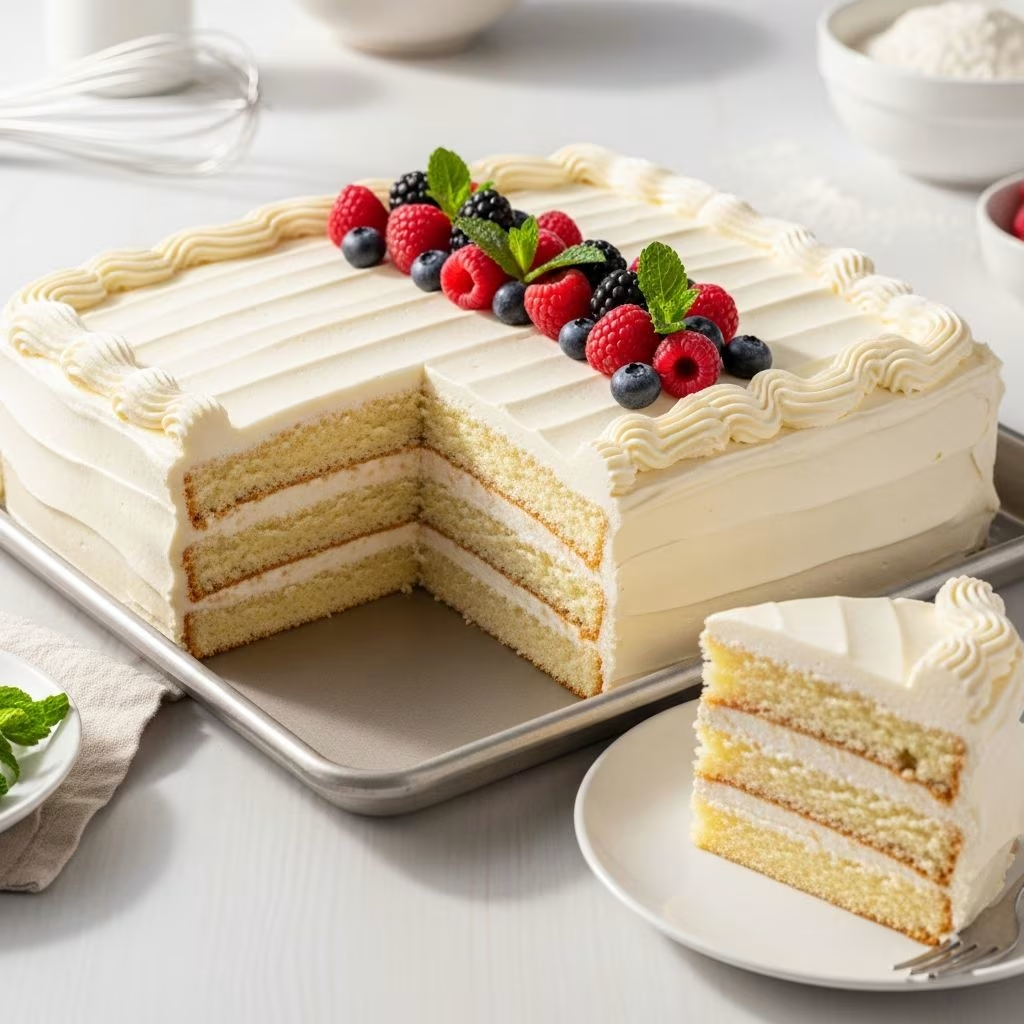
The standard half-sheet pan accommodates three 6-inch circular layers or two 8-inch circular layers. For those desiring a three-layer 8-inch cake, cut two full circles and then divide the remaining cake into two semicircular pieces, which together form an adequate base layer.
The remarkable benefit of this approach emerges immediately: each circular layer possesses identical height and flatness, eliminating the need for the tedious measuring, shaving, and leveling procedures that traditionally follow cake removal from round pans.
Advantages Over Traditional Multi-Pan Baking
Managing Leftover Cake Pieces
An inherent characteristic of the circular cutting process produces rectangular cake remnants surrounding your perfectly cut circles. Rather than discarding these scraps, creative bakers can transform them into additional desserts that enhance presentation and reduce waste.
Cake Pop Creation
Combine crushed cake scraps with frosting in a ratio that produces a moldable consistency. Roll the mixture into spheres, insert lollipop sticks, and coat with melted chocolate or colored candy melts. This method converts potential waste into elegant petit fours.
Mini Cake Layers
Use small biscuit or cookie cutters to stamp decorative shapes from your remaining cake pieces. These mini creations can be frosted, topped with fresh fruit, layered with mousse, or decorated with edible flowers to create sophisticated individual desserts.
Cake Crumb Enhancements
Toast crushed crumbs until they develop a subtle crunch and golden color, then use them as decorative elements atop frosted layer cakes. The textural contrast and visual interest created by this garnish technique elevates presentation significantly.
Additional Applications
- Incorporate cake cubes into trifle desserts for layered elegance
- Combine larger chunks with custard for elevated bread pudding variations
- Sprinkle crumbs over ice cream for sweet, satisfying texture
- Mix crushed pieces with whipped cream for cake-flavored filling alternatives
Equipment and Material Requirements
The sheet pan method requires surprisingly minimal specialized equipment, making it accessible to bakers at all skill levels. Essential items include:
- One half-sized sheet pan (18 x 13 inches approximately)
- Parchment paper for lining
- Offset spatula or bench scraper for batter distribution
- Round plate or cake board matching desired layer diameter
- Sharp serrated knife for cutting circles
- Cooling rack for proper cake cooling
Many home kitchens already possess all these items, eliminating the need for additional purchases. This accessibility democratizes the ability to produce bakery-quality layered cakes without investment in specialized round pan collections.
Timing Considerations and Production Efficiency
The reduced baking time inherent to sheet pan cakes significantly accelerates the overall production timeline. A sheet pan cake typically completes baking in 30-40 minutes, compared to the 45-60+ minutes required when baking multiple round pans sequentially in a standard oven.
Furthermore, the elimination of leveling steps removes hours of precision work from the decorating phase. Bakers can proceed directly to frosting, crumb coating, and final decoration without extensive preparation of individual layers.
Flavor and Texture Consistency
Baking all cake batter in a single pan ensures uniform flavor development and crumb structure throughout all layers. Unlike scenarios where multiple pans bake simultaneously at varying rack positions, each sheet pan cake receives identical heat distribution, resulting in uniform moisture content and tender crumb consistency across every layer.
Frequently Asked Questions
Can I use a full-sized sheet pan instead of a half-sized pan?
Yes, though full-sized pans produce thinner cakes requiring different cutting strategies. You might cut four to five layers from a full pan, adjusting your cake assembly design accordingly. Baking time may decrease slightly due to the increased surface-to-volume ratio.
What size plate works best for tracing circles?
Use a dinner plate (approximately 10-11 inches) for 8-inch layer cakes or a smaller salad plate (8-9 inches) for 6-inch layers. Ensure your chosen plate bottom fits entirely within the sheet pan dimensions without extending beyond the cake edges.
How do I prevent cake layers from separating during frosting?
Apply a thin crumb coat of frosting to each layer surface before final frosting application. This base layer seals loose crumbs and creates tackiness that prevents layer shifting during assembly and decoration.
Can different cake recipes work with this method?
Absolutely. Chocolate, vanilla, spice, and fruit-flavored cakes all adapt successfully to sheet pan baking. Adjust baking time slightly based on cake density, checking for doneness with a toothpick inserted at the cake center.
Is parchment paper essential, or can I use cooking spray alone?
While cooking spray alone provides some protection, combining spray with parchment paper provides superior results. Parchment prevents sticking more reliably and allows cleaner cake removal and cutting.
Professional Baker Insights and Recommendations
Professional bakers favor this technique precisely because it delivers consistent, predictable results that align with food service demands. The method’s reliability reduces waste, accelerates production timelines, and ensures customer satisfaction through superior cake uniformity and appearance.
Home bakers adopting this approach position themselves to create desserts indistinguishable from bakery offerings while investing minimal time and equipment. The technique fundamentally simplifies layer cake creation, making impressive presentations achievable for anyone with basic baking knowledge.
Conclusion: Elevating Your Baking Practice
The sheet pan layer cake technique represents a paradigm shift in home baking methodology, democratizing professional-quality results and eliminating traditional barriers to success. By embracing this approach, bakers can confidently create stunning multi-layered cakes that demonstrate precision, elegance, and culinary sophistication.
Whether you’re preparing desserts for family gatherings, special occasions, or simply elevating everyday baking endeavors, this technique delivers remarkable results with minimal complexity. The combination of reduced equipment requirements, simplified production steps, and guaranteed layer uniformity makes the sheet pan method an essential addition to every home baker’s skill collection.
References
- The Sheet Pan Hack For Cleaner Cake Layers — Food Republic. 2024. https://www.foodrepublic.com/1281925/sheet-pan-hack-cleaner-cake-layers/