Creating an exceptional burger at home requires more than simply throwing ground beef on a grill. The process involves understanding ingredient selection, proper mixing techniques, patty formation, and precise cooking methods. Whether you’re planning a backyard gathering or a casual family dinner, mastering burger preparation elevates your cooking repertoire and impresses your guests with consistently delicious results.
Understanding Your Meat Selection
The foundation of any great burger begins with choosing the right ground beef. The meat-to-fat ratio significantly impacts the final product’s flavor, juiciness, and texture. Ground beef typically ranges from very lean to heavily marbled, with each option producing distinct characteristics in the finished burger.
- 80/20 blend: Contains 20% fat, which provides adequate moisture without excessive grease
- 85/15 blend: Leaner option suitable for health-conscious preparations
- 75/25 blend: Higher fat content offering enhanced tenderness and richness
- Chuck cuts: Natural choice from the shoulder region, containing ideal fat distribution
Freshness matters considerably when selecting ground beef. Purchase meat as close to your cooking time as possible, ideally within one day of grinding. If buying pre-ground beef, check the packaging date and choose packages that appear firm and well-sealed. Many butchers offer custom grinding services, allowing you to specify your preferred cuts and fat ratios for optimal results.
Essential Ingredients Beyond Ground Beef
While ground beef forms the primary component, supplementary ingredients enhance flavor development and texture consistency. Understanding the role of each ingredient helps achieve superior burger quality.
Binders and Structural Elements: Breadcrumbs serve as a binder that absorbs moisture and helps maintain patty cohesion during cooking. A single egg provides additional binding properties and creates a more uniform texture throughout the patty. These components prevent excessive crumbling and ensure your burgers hold together through the cooking process.
Seasonings: Salt and ground black pepper represent the most fundamental seasonings, enhancing natural beef flavors without overshadowing the meat’s inherent taste. The seasoning application timing influences how flavors develop—adding salt immediately before cooking prevents moisture extraction, preserving juiciness in the final product.
Optional Enhancement Ingredients: Many burger enthusiasts incorporate additional elements like minced garlic, finely chopped onions, or Worcestershire sauce for flavor complexity. However, restraint proves essential—excessive additions can overpower the beef’s natural character and create an unbalanced final product.
Preparation Techniques for Optimal Results
The method used to combine ingredients directly affects burger texture and consistency. Proper mixing ensures even distribution without overdeveloping the meat structure.
The Gentle Mixing Method
Combine your ground beef with the egg, breadcrumbs, salt, and pepper using a light hand. Avoid aggressive mixing or prolonged handling of the meat mixture, as this develops gluten strands that result in dense, tough burgers. Instead, use your fingers to gently fold ingredients together until just combined. The mixture should appear slightly shaggy with visible beef particles—this indicates proper mixing without overworking.
Patty Formation and Shaping
Divide the prepared mixture into portions appropriate for your serving needs. For standard burgers, approximately 4 ounces produces a reasonable patty size. Form each portion into a disk slightly larger than your bun, accounting for shrinkage during cooking.
Create a gentle indentation in the patty’s center using your thumb. This depression prevents the patty from puffing excessively during cooking and helps maintain even thickness throughout the burger. The indentation should measure approximately half an inch deep—significant enough to prevent ballooning but not so deep that it creates a hole through the patty.
Handle formed patties minimally before cooking. Excessive manipulation damages the structure and can result in compact, dense burgers. If preparing burgers in advance, refrigerate patties separately on parchment paper to prevent sticking and preserve their shape.
Grilling and Cooking Approaches
The cooking method and temperature control determine your burger’s final texture, moisture retention, and flavor development.
| Cooking Method | Temperature Range | Advantages | Best Used For |
|---|---|---|---|
| Outdoor Gas Grill | Medium-High (375-425°F) | Consistent heat, easy temperature control, minimal setup | Regular entertaining, family cookouts |
| Charcoal Grill | Medium (325-375°F) | Traditional flavor, smoky characteristics, authentic experience | Serious enthusiasts, flavor-focused cooking |
| Cast Iron Skillet | Medium-High (375-400°F) | Indoor option, excellent crust development, temperature precision | Year-round cooking, consistent results |
| Flat-Top Griddle | Medium (325-350°F) | Multiple burgers simultaneously, even heat distribution | Feeding large groups efficiently |
Cooking Process and Doneness Levels
Preheat your cooking surface adequately before placing patties. For grills, allow 5-10 minutes for temperature stabilization. Place patties on the grill and resist the urge to manipulate them immediately—let them develop a flavorful crust through the cooking process.
Resist repeated flipping, which disrupts crust formation and can cause moisture loss. Most burgers require only one flip during cooking. Cook your first side for 3-4 minutes, then flip and cook the second side until reaching your desired doneness.
Doneness Temperatures:
- Rare: 125-130°F internal temperature
- Medium-Rare: 130-135°F internal temperature
- Medium: 135-145°F internal temperature
- Medium-Well: 145-155°F internal temperature
- Well-Done: 160°F and above internal temperature
Use an instant-read meat thermometer inserted horizontally into the patty’s center for accurate temperature assessment. Avoid inserting the thermometer vertically, which can produce inaccurate readings.
Ingredient Quality and Sourcing Considerations
The quality of ingredients extends beyond the ground beef itself. Every component contributes to your final product’s overall excellence.
Breadcrumb Selection: Plain panko breadcrumbs typically provide better texture than traditional breadcrumbs due to their larger, airier structure. If breadcrumbs are unavailable, finely crushed saltine crackers or oats can serve as alternatives, though they produce slightly different textural characteristics.
Egg Specifications: Large eggs provide appropriate moisture and binding without excessive richness. Room-temperature eggs incorporate more uniformly into the mixture compared to cold eggs directly from refrigeration.
Salt Considerations: Kosher salt offers superior flavor distribution compared to iodized table salt due to its larger crystal size and lack of additives. If using kosher salt, you may need slightly more volume compared to table salt measurements.
Common Mistakes to Avoid
Understanding frequent pitfalls helps prevent disappointing results. Many home cooks encounter predictable challenges that stem from specific preparation or cooking errors.
- Overworking the meat mixture: Excessive mixing develops toughness and density
- Adding seasonings too early: Premature salt addition can draw out moisture
- Forming patties too thin: Results in dry burgers that lack juiciness
- Cooking at excessive temperatures: Creates burnt exteriors while leaving interiors undercooked
- Skipping the thumb indentation: Produces puffed, unevenly cooked patties
- Flipping burgers repeatedly: Disrupts crust formation and increases moisture loss
- Pressing down with a spatula: Squeezes out flavorful juices during cooking
- Cooking from frozen: Produces inconsistent doneness and uneven cooking
Frequently Asked Questions About Burger Preparation
How Far in Advance Can I Prepare Burger Patties?
Formed patties can be refrigerated for up to 24 hours before cooking. For longer storage, freeze patties on a baking sheet, then transfer to freezer bags for up to three months. Cook frozen patties directly from the freezer, adding approximately 2-3 minutes to your total cooking time.
Can I Prepare Burger Mix Without Eggs?
While eggs serve important binding functions, alternatives exist for those avoiding eggs. Finely minced mushrooms, applesauce, or additional breadcrumbs can provide similar binding properties, though the texture will differ slightly from traditional preparations.
Should I Oil the Grill Before Cooking Burgers?
A light oil coating on the grill grates prevents sticking and promotes even browning. Apply oil using a folded paper towel held with tongs rather than spray bottles, which can ignite over open flame.
Why Do My Burgers Shrink Significantly During Cooking?
Shrinkage results from fat rendering and moisture evaporation during the cooking process. Higher fat content ground beef experiences more noticeable shrinkage. Proper patty thickness and the thumb indentation technique minimize these effects.
What Internal Temperature Indicates Food Safety?
The United States Department of Agriculture recommends cooking ground beef to 160°F internal temperature to ensure food safety and eliminate harmful pathogens. Use an accurate meat thermometer for verification.
Complementary Elements and Serving Suggestions
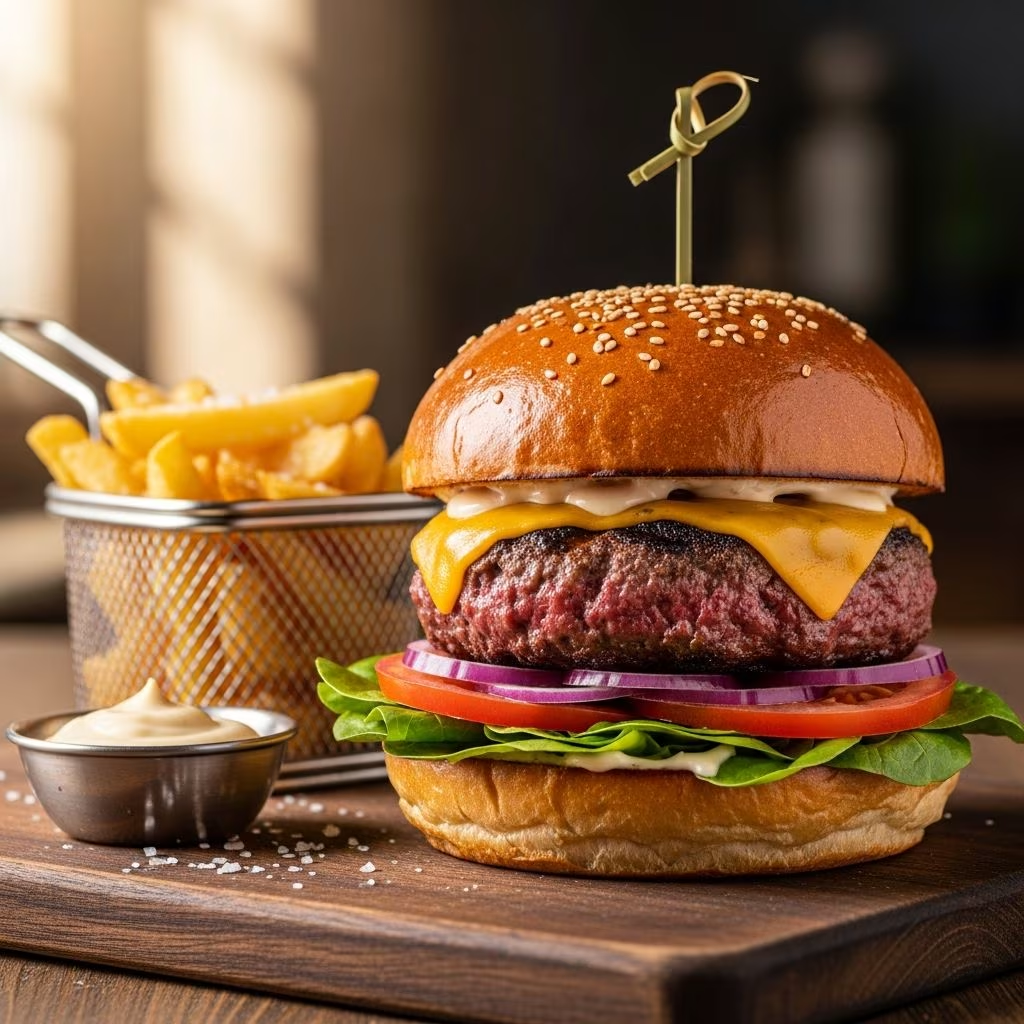
A superior burger extends beyond the patty itself. Thoughtful consideration of buns, toppings, and accompaniments completes the experience.
Bun Selection: Choose sturdy buns capable of supporting your burger’s moisture content without becoming soggy. Lightly toasting buns improves texture and adds structural integrity. Brioche, potato, or ciabatta buns offer interesting flavor and texture variations worth exploring.
Topping Organization: Layer toppings strategically to prevent ingredient displacement. Position cheese directly on the warm patty, allowing it to melt. Place lettuce and tomato near the bun rather than directly on the patty to minimize moisture transfer.
Condiment Application: Apply condiments thinly to maintain burger structural integrity. Excessive condiments create a soggy, difficult-to-eat burger that falls apart when bitten.
Scaling Burger Preparation for Groups
Preparing burgers for multiple people requires strategic planning and organization. Prepare patties in advance and refrigerate them on parchment-lined trays. Set up a toppings station allowing guests to customize their burgers according to preferences. This approach streamlines the cooking process while accommodating diverse tastes and dietary preferences.
Invest in a meat thermometer for accurate temperature verification when preparing multiple patties simultaneously. This prevents undercooked or overcooked results when managing numerous burgers throughout the cooking process.
References
- Safe Internal Temperature Chart — United States Department of Agriculture Food Safety and Inspection Service. 2024. https://www.fsis.usda.gov/food-safety/safe-food-handling-and-preparation/cook-safely/safe-internal-temperature-chart
- Ground Beef Storage and Handling — United States Department of Agriculture. 2024. https://www.fsis.usda.gov/food-safety/safe-food-handling-and-preparation/meat-poultry-and-seafood
- Grilling Safety and Temperature Guidelines — National Fire Protection Association. 2024. https://www.nfpa.org/