Athletes and fitness enthusiasts often invest significant resources in commercial sports drinks to maintain peak performance during training and competition. However, creating an effective hydration solution at home requires only a handful of ingredients and minimal preparation time. By understanding the fundamental science behind sports beverage formulation, anyone can develop personalized drinks that match their taste preferences while reducing expenses and controlling ingredient quality.
Understanding the Science of Sports Hydration
A properly formulated athletic beverage serves multiple critical functions during physical exertion. The primary purpose involves replacing fluids lost through perspiration, preventing dehydration that can impair performance and endurance. Beyond simple hydration, sports drinks deliver carbohydrates that sustain energy levels during prolonged activities, and electrolytes—particularly sodium—that regulate fluid retention and cellular function.
The balance between these components determines whether a drink effectively supports athletic performance. Water alone, while necessary, cannot provide the sustained energy that carbohydrates supply or restore the mineral balance that electrolytes maintain. Commercial beverages often contain artificial colors, preservatives, and excessive sugars, motivating athletes to explore homemade alternatives that deliver similar benefits with cleaner ingredient lists.
Essential Components for Homemade Sports Drinks
Creating an effective hydration beverage requires understanding three fundamental elements that work synergistically to support athletic performance:
Water as the Foundation
Water comprises the majority of any sports drink formula, typically accounting for 90-95% of the final volume. The water base can be filtered, mineral-enriched, or even replaced partially with herbal tea, coconut water, or green tea for additional nutritional complexity. The choice of liquid affects both the mineral content and subtle flavor profile of the finished beverage.
Carbohydrates for Energy Delivery
Carbohydrates in sports drinks provide readily available energy that muscles utilize during intensive physical activity. Common sources include sugar, honey, maple syrup, and fruit juices. Research indicates that a concentration of 6-8% carbohydrates (approximately 6-8 grams per 100 milliliters) optimizes the balance between energy provision and fluid absorption. Lower concentrations fail to provide adequate energy support, while higher concentrations can slow gastric emptying and cause digestive discomfort.
Electrolytes for Mineral Balance
Sodium, potassium, calcium, and magnesium are essential electrolytes that the body loses through sweating. Sodium, in particular, plays a crucial role in maintaining fluid balance and preventing hyponatremia—a dangerous condition where blood sodium becomes dangerously diluted. Most homemade formulas prioritize sodium through salt addition, while potassium and other minerals come from juice components and optional mineral powders.
Basic Recipe Formulation Methods
The Simplified Standard Formula
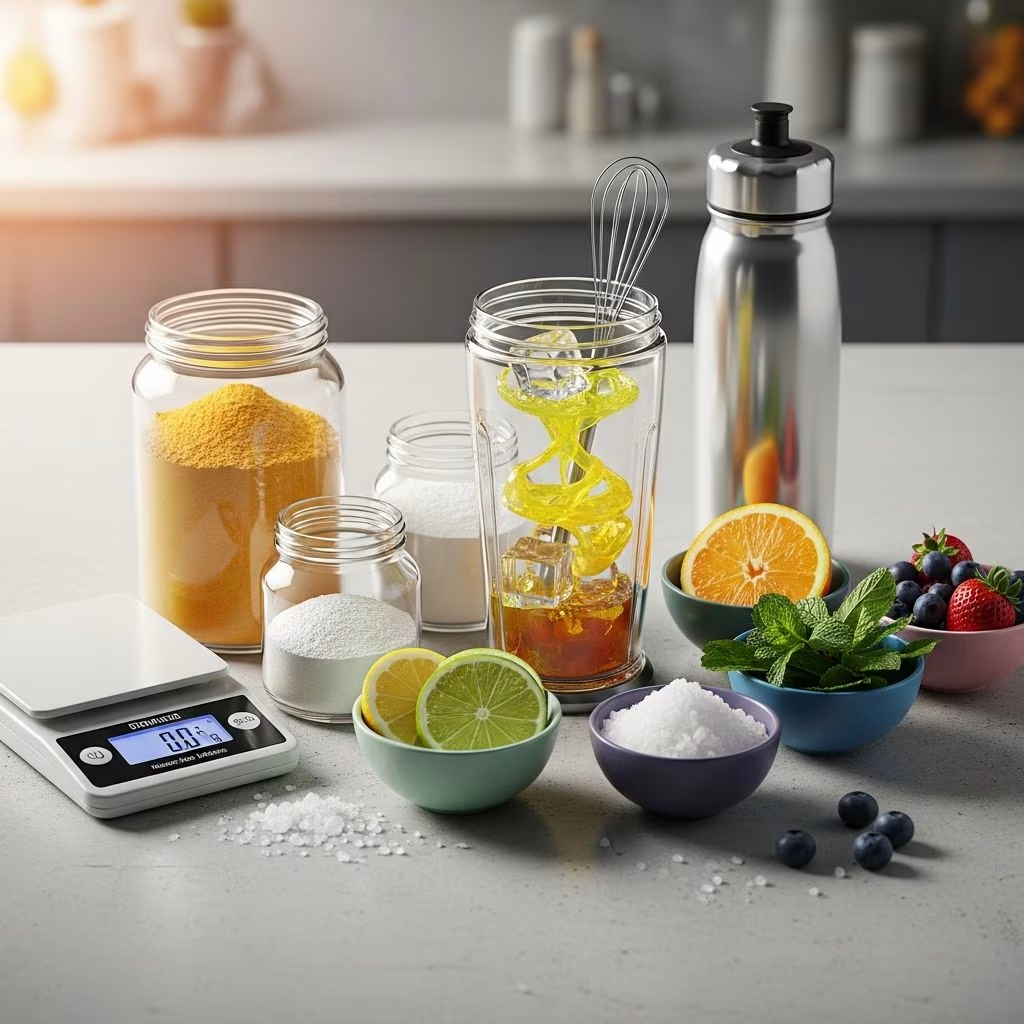
The most accessible approach to homemade sports drinks uses minimal ingredients that most people already have available. This method combines one liter of water with approximately 60 grams of sugar (equivalent to 12 teaspoons or 4 tablespoons) and one-half teaspoon of salt. After mixing these components until fully dissolved, you can add citrus juice or fruit cordial to taste, adjusting sweetness and saltiness according to personal preference. This formula creates a beverage with approximately 12-15 grams of carbohydrates per serving and around 290-300 milligrams of sodium per eight-ounce serving.
The Juice-Based Approach
An alternative method leverages the natural sugars and minerals present in fruit juices. This approach combines fruit juice (typically 20-25% of the final volume) with water, salt, and optional lemon juice. A representative formula includes one-quarter cup of orange juice, two tablespoons of lemon juice, one-quarter teaspoon of salt, one-quarter cup of sugar, and additional water to reach the desired volume. This method produces a beverage with approximately 50 calories per eight-ounce serving and 110 milligrams of sodium.
The Tropical Variant
For athletes seeking more sophisticated flavor profiles and enhanced mineral content, coconut water-based formulas offer compelling advantages. Coconut water naturally contains potassium and other electrolytes while providing light flavor notes that appeal to athletes who find traditional sports drinks overly sweet. A pina colada-inspired variant combines 32 ounces of coconut water, 12 ounces of 100% pineapple juice, one-quarter cup of lemon juice, 12 ounces of water, and one-half teaspoon of sea salt.
Advanced Recipe Variations
| Recipe Type | Primary Ingredients | Carbohydrates (per serving) | Sodium Content | Best Use |
|---|---|---|---|---|
| Cherry-Based Formula | Tart cherry juice, water, salt, lemon juice | 15g | 300mg | Recovery and endurance training |
| Citrus Electrolyte Blend | Orange juice, lemon juice, grapefruit juice, honey, salt | 25g | 159mg | High-intensity workouts |
| Minimal Electrolyte Option | Water, sugar, salt, optional cordial | 12-14g | 110-150mg | Casual exercise and fitness |
| Mineral-Enhanced Version | Water, sugar, salt, calcium-magnesium powder, juice | 12-15g | Variable | Extended endurance events |
Step-by-Step Preparation Instructions
The Dissolution Method
Begin by dissolving sugar and salt in hot water—approximately one-quarter to one-half cup of boiling water provides sufficient heat to expedite dissolution. This initial step ensures even distribution of these ingredients throughout the final beverage, preventing settling or uneven sweetness and saltiness. Once these components dissolve completely, add your chosen juice or flavorings, then combine with the remaining cold water.
The Direct Mix Approach
For simplified preparation, combine all ingredients—water, sugar, salt, and juice—in a single container and whisk vigorously for 2-3 minutes until the sugar and salt crystals completely disappear. This method produces equally effective beverages with minimal equipment and faster preparation time, though some people prefer the dissolution method for ensuring complete incorporation of salt crystals.
Storage and Shelf Life
Homemade sports drinks remain fresh in sealed containers for approximately 5-7 days when refrigerated. For extended storage, consider freezing portions in ice cube trays, allowing you to add concentrated flavor components to water immediately before consumption. This flexibility enables customization based on workout intensity and duration on any given day.
Customization Strategies for Individual Preferences
Adjusting Sweetness Levels
Personal taste preferences vary significantly regarding sweetness in beverages. Start with the basic formula recommendations and gradually adjust sugar or juice content based on your preferences during actual training. Some athletes prefer less sweet drinks that feel lighter during intense effort, while others seek the psychological boost from familiar sweetness. Record successful variations for future reference.
Flavor Profile Development
Citrus juices provide the most universally accepted flavors for sports beverages, but numerous alternatives exist. Tart cherry juice delivers natural anthocyanins while providing distinct flavor complexity. Coconut water offers tropical notes and additional electrolytes. Herbal tea bases, particularly when chilled, create refreshing foundations for added juices and sweeteners. Experimentation during low-stakes training sessions helps identify flavors that both appeal to your taste preferences and settle well during physical exertion.
Electrolyte Customization
The basic salt addition provides sodium replacement appropriate for most athletes, but longer endurance events (exceeding 90 minutes) may benefit from additional electrolyte supplementation. Calcium-magnesium powders address potential mineral depletion during extended training. For event-specific preparation, adjust electrolyte concentrations upward for hot-weather training or high-sweat-rate activities.
Comparative Analysis: Homemade vs. Commercial Options
Cost Considerations
Creating homemade sports drinks produces dramatic cost savings compared to purchasing commercial alternatives. While premium brands cost $1.50-3.00 per serving, homemade beverages typically cost $0.15-0.40 per serving, depending on chosen ingredients. For athletes consuming multiple servings weekly during training seasons, these savings accumulate substantially.
Ingredient Transparency
Homemade formulas provide complete control over ingredients, enabling athletes to avoid artificial colors, preservatives, and excessive chemical additives present in many commercial drinks. This transparency proves particularly valuable for individuals with sensitivities to artificial ingredients or those seeking to maintain clean nutritional profiles aligned with their overall dietary philosophies.
Performance Equivalency
When formulated with appropriate carbohydrate and electrolyte concentrations, homemade sports drinks deliver performance benefits equivalent to commercial options. The fundamental physiological mechanisms remain identical—adequate carbohydrate availability and electrolyte balance support the same endurance improvements and fluid balance maintenance regardless of whether ingredients derive from commercial formulations or home preparation.
Frequently Asked Questions
Can I make sports drinks without added salt?
While possible, reducing sodium content compromises the beverage’s effectiveness for rehydration, particularly during extended exercise in warm conditions. Sodium enhances water retention and prevents hyponatremia. For casual, low-intensity activities lasting under 60 minutes, minimal sodium additions suffice, but endurance athletes should maintain appropriate sodium concentrations.
How far in advance should I prepare homemade sports drinks?
Prepare beverages 1-2 days before consumption to ensure optimal freshness. While refrigerated drinks remain safe for 5-7 days, flavor quality and nutritional integrity gradually decline. For peak performance, consume within 48 hours of preparation.
Can I use artificial sweeteners instead of sugar?
Artificial sweeteners provide taste without carbohydrates, which defeats the primary purpose of sports drinks during athletic activity. Carbohydrate delivery remains essential for endurance support. However, for post-exercise recovery drinks or light activity beverages, artificial sweeteners may suit personal preferences.
What’s the optimal serving temperature?
Cold beverages (approximately 50-59 degrees Fahrenheit) enhance palatability and promote faster gastric emptying during exercise, improving fluid absorption rates. Pre-chill beverages before intense training sessions for optimal performance benefits.
Can I batch-prepare drinks for the entire week?
Batch preparation suits your schedule, though beverages maintain optimal quality for approximately 5-7 days when refrigerated. Divide large batches into individual servings in sealed bottles to minimize oxidation and maintain flavor consistency throughout the week.
Integration Into Training Protocols
Effective hydration strategies vary based on activity duration and intensity. For workouts lasting under 60 minutes, water suffices for most athletes, though homemade sports drinks provide psychological benefits and modest performance enhancement. For training sessions exceeding 90 minutes, carbohydrate and electrolyte replacement becomes increasingly important for sustaining performance and reducing fatigue.
Consider creating multiple beverage variations optimized for different training scenarios. A minimal-electrolyte formula works well for casual fitness activities, while concentrated versions support serious endurance training. This flexibility enables personalized hydration strategies that adapt to your specific athletic demands and preferences.
Environmental and Health Considerations
Beyond cost savings and ingredient control, homemade sports drinks reduce environmental impact associated with plastic bottled beverages and manufacturing processes for commercial formulations. Reusable containers further minimize waste. From a health perspective, controlling ingredient quality ensures you consume only substances you consciously select, avoiding unexpected additives or excessive chemical ingredients that individual bodies might not tolerate well.
References
- Make Your Own Sport Drink & Energy Bar — University of Arizona Campus Health. PDF. https://health.arizona.edu/sites/default/files/sport_nutrition_make_your_own_sports_drinks_and_energy_bars_0.pdf
- How to Make Your Own Carbohydrate Sports Drink With Electrolytes — Phil Mosley, MyProCoach Endurance Training. YouTube Video. https://www.youtube.com/watch?v=iCFlRMnw6Tc
- Homemade Electrolyte Drink (With Flavor Options) — Wellness Mama. https://wellnessmama.com/recipes/natural-sports-drink/
- Homemade Electrolyte Drink & Gels for Runners — Runners World. https://www.runnersworld.com/nutrition-weight-loss/a31207410/homemade-electrolyte-drinks-energy-gels/
- Make Your Own Sports Drink! How to Make Greaterade — Food Wishes. YouTube Video. https://www.youtube.com/watch?v=kehS5f3Fe5I
- Save money by making your own energy drinks — Bike Radar. https://www.bikeradar.com/advice/nutrition/how-to-make-your-own-energy-drinks