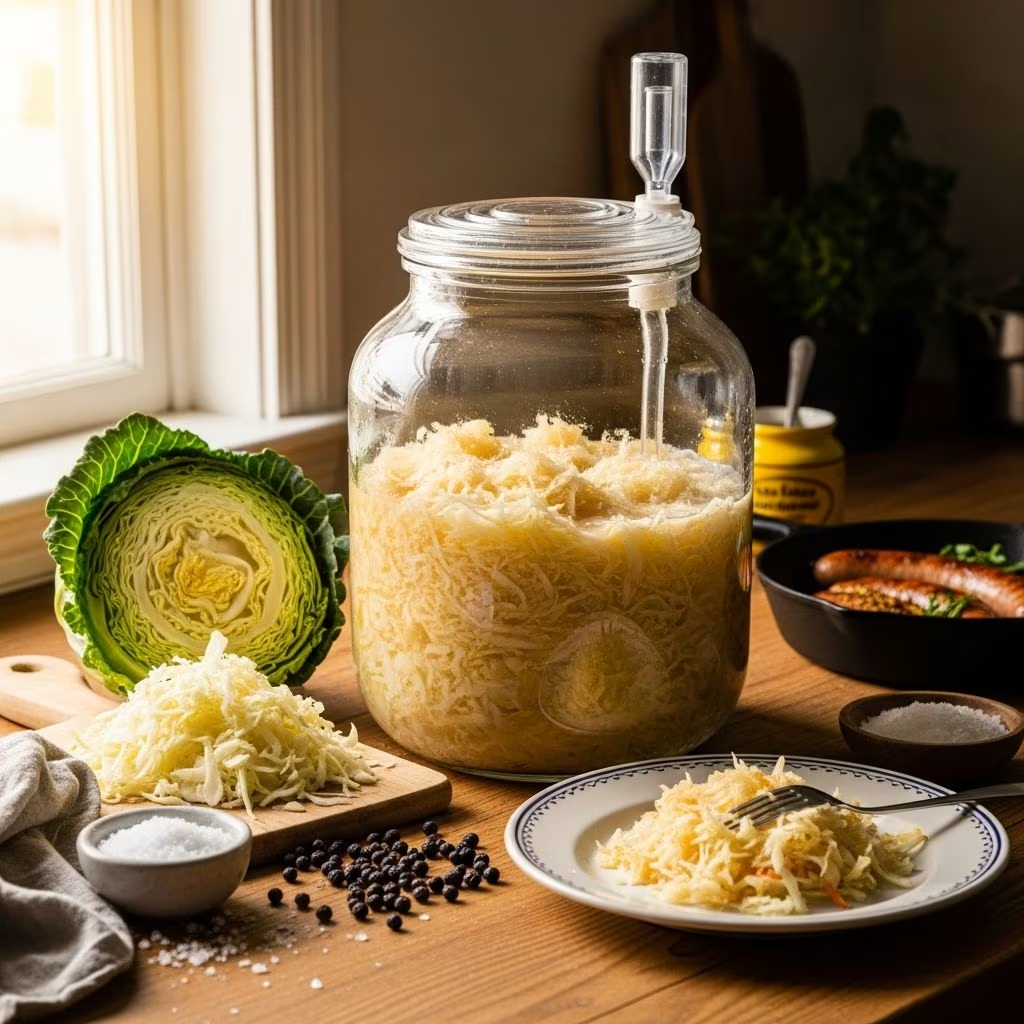
Homemade sauerkraut offers a tangy, crunchy delight packed with probiotics, far surpassing store-bought versions in flavor and nutrition. This guide walks you through the essentials of lacto-fermentation, using basic ingredients like cabbage and salt to create a versatile condiment.
The Science Behind Fermentation
Lacto-fermentation transforms cabbage into sauerkraut through beneficial bacteria that convert sugars into lactic acid, preserving the vegetable while enhancing its flavor and nutritional profile. This natural process, rooted in traditional food preservation, creates an acidic environment that inhibits harmful pathogens.
Key players include Lactobacillus bacteria naturally present on cabbage leaves. When salt draws out moisture, it forms a brine that submerges the cabbage, fostering anaerobic conditions ideal for these microbes. The result is a product rich in live cultures supporting digestive health.
Selecting the Perfect Cabbage
Choose fresh, firm green or red cabbage for optimal juice release and texture. Organic varieties minimize pesticide residues that could disrupt fermentation. A medium head weighing about 1 kg yields roughly 1-2 quarts of finished kraut.
- Green cabbage: Classic choice for mild, traditional flavor.
- Red cabbage: Adds vibrant color and slightly sweeter notes.
- Napa cabbage: Offers softer texture, ideal for Asian-inspired variations.
Weigh the trimmed cabbage to calculate salt precisely, ensuring consistent results.
Essential Ingredients and Tools
The beauty of sauerkraut lies in its simplicity: cabbage and non-iodized salt suffice. Sea salt or pickling salt works best, avoiding anti-caking agents or iodine that hinder bacteria.
| Ingredient | Amount per 1 kg Cabbage | Purpose |
|---|---|---|
| Sea salt or kosher salt | 18-25 g (1.5-2.5% by weight) | Draws out moisture, creates brine |
| White or red cabbage | 1 medium head | Main fermentable base |
| Optional: caraway seeds, bay leaves | 1/2 tsp – 1 Tbsp | Flavor enhancers |
Required tools: Clean glass jars, mandoline or sharp knife, tamper or pestle, kitchen scale, and weights for submersion.
Step-by-Step Preparation Guide
- Prep the cabbage: Discard outer leaves, reserving one clean leaf. Quarter the head, remove the core, and shred finely (1/8-inch slices) using a mandoline for uniformity.
- Salt and massage: In a large bowl, toss shreds with calculated salt. Massage vigorously for 5-10 minutes until wilted and liquid pools. Let sit 10-20 minutes if needed for more brine.
- Pack tightly: Transfer to sterilized jars, pressing down to eliminate air pockets. Liquid should cover cabbage; add 2% brine (1 tsp salt per cup water) if short.
- Submerge and weight: Place reserved leaf over top, add glass weights or a small jar to keep everything underwater. Seal loosely or use an airlock.
- Ferment: Store at 60-75°F (15-24°C) away from direct light. Taste after 5-7 days; ferment 2-4 weeks for stronger tang.
Fermentation Times and Temperatures
Temperature dictates speed and flavor development. Warmer conditions accelerate the process but risk off-flavors; cooler yields nuanced results.
| Temperature | Fermentation Time | Flavor Profile |
|---|---|---|
| 60-65°F (15-18°C) | 3-6 weeks | Mild, complex |
| 70-75°F (21-24°C) | 2-3 weeks | Tangy, balanced |
| Above 82°F (28°C) | 2-4 days (monitor closely) | Sharp, potentially yeasty |
Troubleshooting Common Issues
Fermentation mishaps are learning opportunities. Here’s how to address them:
- Mold on surface: Skim off if cabbage below is fine; ensure submersion next time.
- Not enough brine: Top with 2% salt water; massage longer initially.
- Soft texture: Use fresher cabbage, finer slices, or less salt.
- Off smells (rotten eggs): Discard batch; check cleanliness and temperature.
- Kahm yeast (white film): Harmless but skim; prevents with proper submersion.
Flavor Variations to Experiment With
Elevate basic kraut with add-ins introduced during packing:
- Classic German: Caraway seeds and juniper berries for earthy notes.
- Spicy kimchi-style: Ginger, garlic, chili flakes.
- Root veggie mix: Shredded carrots, beets for color and sweetness.
- Herbal: Dill, mustard seeds, or fresh herbs.
Start with small batches to test preferences.
Health Benefits of Homemade Sauerkraut
Beyond taste, sauerkraut delivers probiotics for gut microbiome support, aiding digestion and immunity. It’s low-calorie, vitamin C-rich, and contains enzymes enhancing nutrient absorption.
- Probiotics: Live cultures promote healthy bacteria balance.
- Prebiotics: Fiber feeds beneficial microbes.
- Anti-inflammatory: Lactic acid reduces gut inflammation.
Consume 1-2 tablespoons daily; raw maximizes benefits.
Storing and Shelf Life
Once fermented to taste, refrigerate to slow activity. Lasts 4-6 months in the fridge; freezer for up to a year. Always keep submerged in brine.
Signs of spoilage: Slimy texture, foul odor, or discoloration—discard immediately.
Serving Suggestions and Recipes
Sauerkraut shines in diverse dishes:
- Top Reuben sandwiches or hot dogs.
- Mix into salads for crunch.
- Pair with sausages, potatoes in hearty stews.
- Blend into smoothies for probiotic boost (small amounts).
For a simple side: Sauté lightly with onions and apples, or enjoy straight from the jar.
Frequently Asked Questions
Is it safe to make sauerkraut at home?
Yes, with clean equipment and submersion, risks are minimal. Follow hygiene protocols.
How do I know when it’s ready?
Taste test starting day 5; bubbles indicate active fermentation. Bubbles slow as it matures.
Can I use table salt?
Avoid iodized salt; it inhibits bacteria. Opt for sea or pickling salt.
What if my kraut smells like alcohol?
Over-fermentation or high temps; still edible if no mold, but flavor may be sharp.
Can I speed up fermentation?
Warmer spot shortens time, but monitor to avoid spoilage.
Scaling Up Production
For larger batches, use fermentation crocks with water seals for optimal anaerobic conditions. Maintain 1-2% salt ratio; process in stages to ensure even fermentation.
Pro tip: Stagger batches weekly for continuous supply.
References
- How To Make Sauerkraut (German Recipe) — Elavegan. 2023-10-15. https://elavegan.com/how-to-make-sauerkraut/
- Homemade Sauerkraut Recipe — Ball Mason Jars. 2024-01-20. https://www.ballmasonjars.com/sauerkraut.html
- How to Make Sauerkraut with 2 Ingredients — Pickles & Honey. 2023-05-12. https://picklesnhoney.com/how-to-make-sauerkraut-recipe/
- How To Make Sauerkraut — The Daring Gourmet. 2023-08-08. https://www.daringgourmet.com/how-to-make-sauerkraut/
- How to Make Sauerkraut in a Traditional Crock — Lehman’s Blog. 2022-11-03. https://blog.lehmans.com/sauerkraut/
- How to Make Sauerkraut — The Pioneer Woman. 2023-02-14. https://www.thepioneerwoman.com/food-cooking/recipes/a100555/how-to-make-sauerkraut/