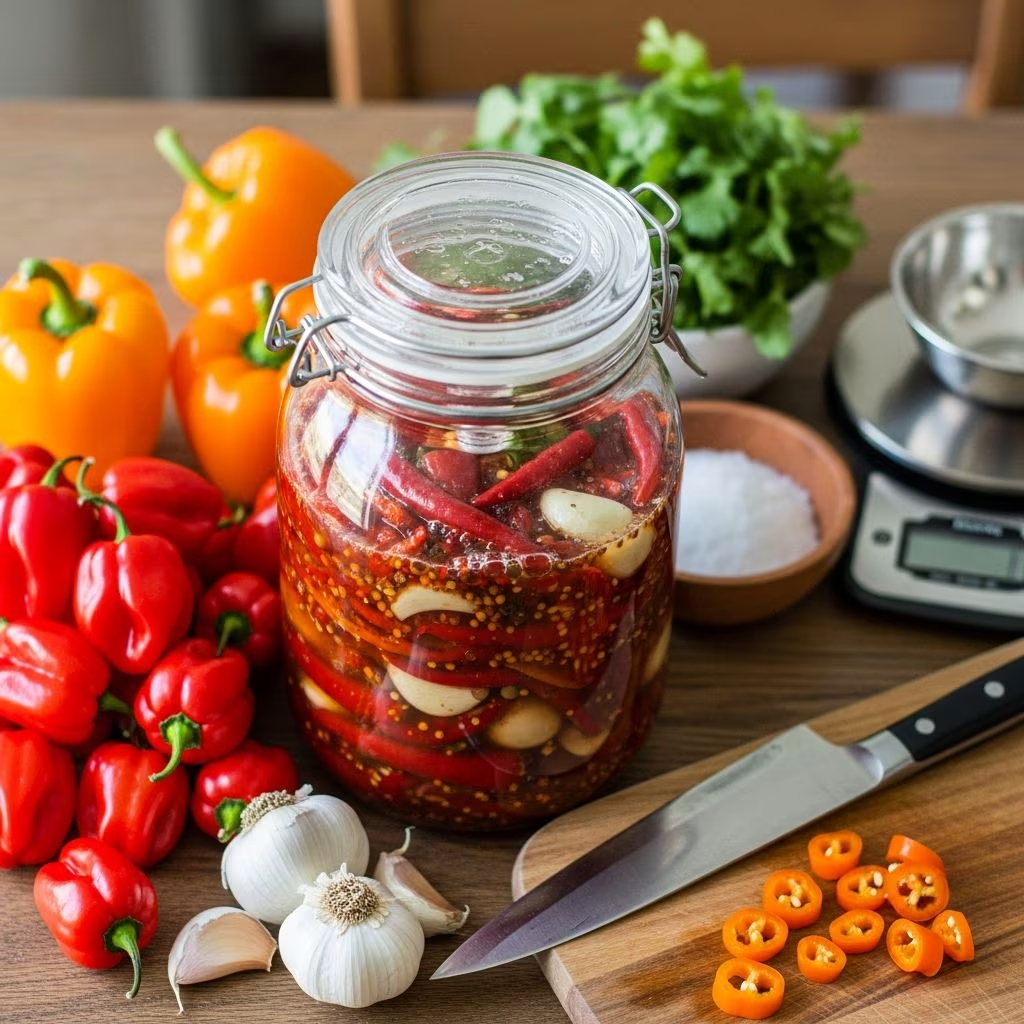
Homemade fermented hot sauce offers a complex depth of flavor that commercial varieties often lack, thanks to the natural process of lacto-fermentation. This method transforms fresh peppers into a tangy, probiotic-rich condiment using just salt, water, and time. Whether you’re a spice enthusiast or new to fermentation, this guide provides everything needed to produce vibrant, customizable sauces.
Why Choose Fermentation for Hot Sauce
Fermentation enhances peppers’ natural heat with funky, umami notes developed by beneficial bacteria. Unlike vinegar-based sauces, fermented versions retain live cultures that support gut health. The process is straightforward, requiring no special equipment beyond jars and patience, typically 7-14 days.
- Flavor complexity: Bubbles and cloudiness signal active microbes creating lactic acid for tanginess.
- Health benefits: Probiotics from lactobacillus aid digestion.
- Customization: Mix pepper varieties for heat levels from mild to scorching.
Essential Ingredients and Tools
Start with high-quality, fresh produce to ensure success. Key components include peppers, brine, and optional add-ins for nuance.
| Ingredient | Purpose | Quantity Example (1 Quart Jar) |
|---|---|---|
| Hot peppers (e.g., serrano, habanero, jalapeño) | Base heat and flavor | 1-2 lbs, roughly chopped |
| Sea salt or Himalayan pink salt | Brine for fermentation | 3 tbsp per quart filtered water |
| Filtered or unchlorinated water | Brine medium | Enough to cover peppers |
| Optional: garlic, onions, carrots | Flavor enhancers | 1-2 each, sliced |
| Vinegar (apple cider or white) | Post-ferment acidity | 1/2 cup |
Tools: Wide-mouth mason jars, fermentation weights or cabbage leaf, airlock lid (optional), blender, fine mesh strainer, gloves for handling peppers.
Mastering the Brine: The Fermentation Foundation
A proper brine is crucial—aim for 3-5% salinity to inhibit bad bacteria while promoting good ones. Dissolve 3 tablespoons sea salt in 1 quart warm filtered water (chlorine kills microbes). Test salinity with a refractometer if available, or stick to weight-based ratios: 30-50 grams salt per liter water.
- Use non-iodized salt to avoid fermentation inhibition.
- Filtered water prevents chlorine interference.
- Warmer brine dissolves salt faster; cool before adding to peppers.
Step-by-Step Fermentation Process
Follow these steps for reliable results. Total active time is under 30 minutes, plus fermentation wait.
- Prepare peppers: Wear gloves. Roughly chop or halve peppers, removing stems. Pack tightly into jar, leaving 1-2 inches headspace. Add sliced garlic, onions, or carrots for depth.
- Add brine: Pour over peppers until submerged by 1 inch. Use a weight (glass or ziplock bag filled with brine) to keep solids below liquid. Cover loosely or with airlock.
- Ferment: Store at 65-75°F (18-24°C) out of direct sun. Check daily: press down浮動 pieces, taste after 7 days. Bubbles, sour aroma indicate success (1-4 weeks).
- Harvest: When tangy and bubbly, strain solids, reserving brine. Refrigerate extra brine for future use.
Blending into Sauce Perfection
Post-fermentation, transform mash into sauce. Blend solids with 1/2-1 cup reserved brine and vinegar for acidity (pH under 4.0 for safety). Process until smooth, adjusting thickness.
- Optional cook: Simmer 10-15 minutes to halt fermentation and brighten flavors, but this kills probiotics.
- Strain: For thin sauce like Tabasco, pass through cheesecloth; keep chunky for texture.
- Thickeners: A pinch of xanthan gum stabilizes without cooking.
Yield: About 2-3 cups from 1 quart jar. Bottle in sterilized glass with swing tops.
Flavor Variations to Suit Every Palate
Experiment beyond basics for unique profiles.
| Style | Peppers | Add-Ins | Notes |
|---|---|---|---|
| Classic Fiery | Serrano or jalapeño | Garlic, onion | Balanced heat, green notes |
| Tropical Heat | Habanero, scotch bonnet | Mango, lime, cilantro | Sweet-fruity contrast |
| Smoky Depth | Chipotle or ancho | Cumin, smoked paprika | Barbecue vibes |
| Mild Veggie | Bell peppers + mild chiles | Carrots, ginger | Family-friendly |
Incorporate during packing or blending. Herbs like oregano shine post-ferment.
Troubleshooting Common Fermentation Hiccups
Issues arise but are fixable.
- No bubbles: Too cold? Move to warmer spot. Check brine strength.
- Mold: Skim white yeast (safe); discard fuzzy colored mold. Ensure submersion.
- Off smells: Rotten? Discard batch. Sour is good; ammonia bad.
- Too salty: Dilute with water or vinegar in blending.
Monitor pH (below 4.2 safe); use strips for confidence.
Storage, Shelf Life, and Safety Essentials
Raw fermented sauce lasts 3-6 months refrigerated. Cooked versions endure 1 year. Always sterilize bottles: boil 10 minutes. For pantry storage, ensure pH <3.5 via vinegar/citric acid.
- Signs of spoilage: Bloating, off odors, discoloration.
- Pro tip: Freeze extras in ice cube trays for portioned use.
Health Perks of Fermented Condiments
Beyond taste, these sauces deliver probiotics akin to kimchi or sauerkraut, potentially boosting immunity and microbiome diversity. Peppers provide vitamins A and C, capsaicin for metabolism support.
Frequently Asked Questions
Can I use any pepper type?
Yes, from mild poblanos to superhots like ghost peppers. Match with compatible flavors.
How long does fermentation take?
7-14 days typically; taste-test for preference. Longer yields more tang.
Is cooking necessary?
No, but it stabilizes and extends shelf life at the cost of live cultures.
Vegetarian/vegan friendly?
Fully plant-based; no animal products needed.
What if my sauce is too thick?
Add reserved brine or water incrementally while blending.
Scaling Up for Gifting or Stockpiling
Double or triple batches in larger crocks. Ferment separately by heat level for blending control. Gift in decorative bottles with custom labels detailing ingredients and date.
Master this craft, and you’ll never buy hot sauce again—each batch tells your unique flavor story.
References
- Fermented Hot Sauce Recipe — Chili Pepper Madness. 2023-05-15. https://www.chilipeppermadness.com/recipes/fermented-hot-sauce/
- Easy Fermented Hot Sauce — The Elliott Homestead. 2021-09-01. https://www.theelliotthomestead.com/blog/2021/09/fermented-hot-sauce
- How to Make Fermented Hot Sauce — American Homebrewers Association. 2022-08-10. https://homebrewersassociation.org/beyond-beer/how-to-make-fermented-hot-sauce/
- Fermented Hot Sauce – Simple and Delicious! — Feasting At Home. 2023-02-20. https://www.feastingathome.com/fermented-hot-sauce-simple-and-delicious/