Understanding the Heritage Behind This Beloved Dish
Few salads have achieved the iconic status of the Waldorf salad, a creation that has graced tables across generations and continues to remain relevant in contemporary cuisine. The Waldorf salad represents more than just a combination of ingredients; it embodies a particular moment in culinary history when refined ingredients were celebrated in their simplicity. The salad originated at the Waldorf Astoria Hotel in New York City, created by Oscar Tschirky, the hotel’s first maître d’hôtel, in 1893. What began as a remarkably simple composition of just three foundational elements—apples, celery, and mayonnaise—has evolved into a versatile dish that adapts to modern palates while maintaining its essential character.
The original recipe’s elegance lay in its restraint. Rather than overwhelming the plate with numerous components, Tschirky focused on quality and the natural interplay of textures and flavors. The crisp bite of fresh celery complemented the subtle sweetness of apples, while the creamy richness of mayonnaise bound these elements together. This minimalist approach reflected the culinary philosophy of the era, when understanding the intersection of ingredients was valued more highly than complexity for its own sake.
The Evolution of Ingredients and Flavor Profiles
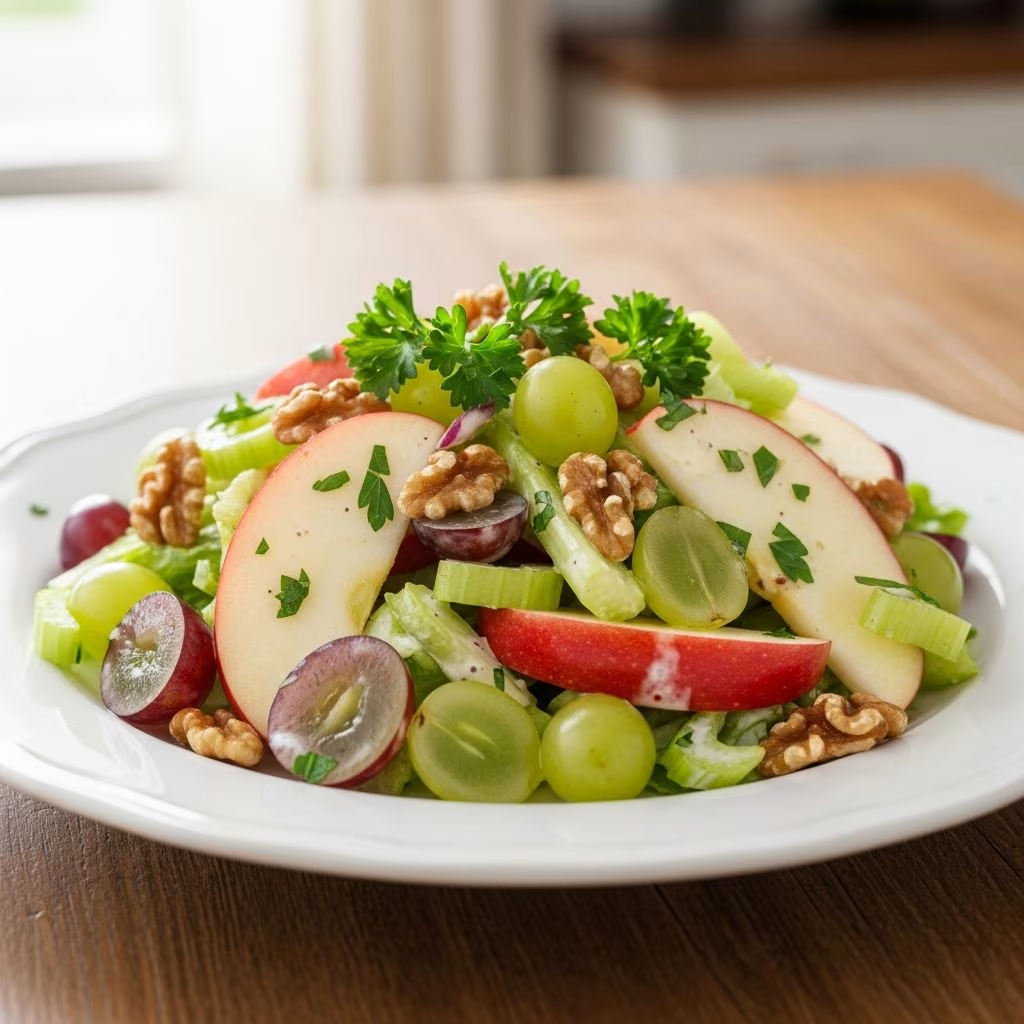
While the original Waldorf salad maintained its elegant simplicity, subsequent generations discovered that the foundational composition could accommodate additional elements without sacrificing its essential character. Grapes and walnuts became standard additions over the years, introducing new dimensions of flavor and texture to the dish. These additions were not arbitrary; they were carefully selected to enhance rather than overwhelm.
The introduction of grapes added bursts of juicy sweetness that complemented the tartness of the apples and the earthiness of the celery. Walnuts brought a subtle bitterness and substantial crunch that provided textural contrast to the creamy dressing. These evolved versions remain faithful to the original’s spirit while acknowledging modern preferences for more complex flavor combinations.
Contemporary interpretations have introduced even more variations. Some preparations incorporate fresh herbs like parsley for brightness and visual appeal. Others experiment with different nuts—pecans or almonds—or introduce vegetables like cucumber for additional crispness. The beauty of the Waldorf salad lies in its flexibility; it can serve as a canvas for culinary creativity while maintaining its fundamental identity.
Essential Components and Selection Guidelines
Creating an exceptional Waldorf salad begins with understanding each component’s role and selecting the highest quality ingredients available. The foundation of this dish rests on several key elements that work in concert:
- Apples: The choice of apple variety significantly impacts the final dish. Tart varieties such as Granny Smith provide acidic brightness that balances the creamy dressing, while sweeter varieties like Honeycrisp or Gala introduce layers of natural sweetness. Many excellent Waldorf salads use a combination of both tart and sweet apples to create a more nuanced flavor profile.
- Celery: This vegetable provides the essential crunch that defines the textural experience of the salad. Fresh, crisp celery with no signs of wilting or browning is crucial. Some preparations include the tender leaves of the celery for a milder, slightly more delicate celery flavor that doesn’t overpower other components.
- Walnuts: These nuts contribute an earthy, slightly bitter note that prevents the dish from becoming overly sweet. Many recipes recommend lightly toasting the walnuts before adding them to the salad, which intensifies their flavor and creates a more pronounced crunch. The toasting process can be accomplished easily in a dry skillet over medium heat for just a few minutes.
- Grapes: Whether using red or green varieties, grapes add pockets of refreshing sweetness. Halving the grapes before adding them to the salad ensures more even distribution throughout the dish and makes each bite more balanced.
Crafting the Perfect Dressing
The dressing represents the binding element that transforms individual components into a cohesive dish. Traditional Waldorf salads rely on a creamy mayonnaise-based dressing, which serves as the foundation for countless variations. However, contemporary preparations have expanded this approach significantly.
The classic dressing combines mayonnaise with freshly squeezed lemon juice, which brightens the overall flavor profile and prevents the salad from tasting heavy. Many modern recipes incorporate Greek yogurt alongside the mayonnaise, creating a lighter version that maintains creaminess while reducing overall richness. The addition of honey provides subtle sweetness that complements rather than dominates, while a pinch of salt and freshly ground pepper enhances all other flavors.
Some contemporary interpretations explore entirely different dressing approaches. Balsamic-based dressings add complexity and sophistication, transforming the salad into something that feels more appropriate for formal occasions. Vinaigrette-style dressings create a lighter alternative for those seeking a less creamy preparation. The key to any successful dressing is achieving balance—the dressing should coat the ingredients without overwhelming them or making the salad soggy.
Step-by-Step Preparation Technique
Executing a Waldorf salad requires attention to timing and technique to ensure that all components maintain their textural integrity until serving:
- Prepare the dressing first: Combine your chosen creamy base—mayonnaise, Greek yogurt, or a combination—with lemon juice, honey, salt, and pepper in a separate bowl. This allows the flavors to meld slightly before being introduced to the remaining ingredients.
- Process the fruit: Dice the apples into bite-sized pieces immediately before assembly. Toss them with fresh lemon juice to prevent oxidation and browning. This step should occur as close to assembly as possible to maintain the apples’ fresh appearance and texture.
- Prepare remaining components: Slice celery thinly, cut grapes in half, and chop your selected nuts into appropriately sized pieces. If using fresh herbs like parsley, chop them finely to distribute their flavor evenly throughout the salad.
- Combine ingredients: Add all prepared ingredients to a large mixing bowl and pour the dressing over them. Toss gently but thoroughly, ensuring every component receives an even coating of dressing.
- Chill before serving: Refrigerate the completed salad for at least thirty minutes before serving. This resting period allows the flavors to develop and meld while maintaining the ingredients’ textural integrity.
Serving Suggestions and Presentation Ideas
The Waldorf salad functions effectively as both a standalone dish and as a component within larger meals. When served as a side dish, it pairs beautifully with roasted poultry, grilled fish, or other main proteins. The salad’s refreshing quality makes it particularly appropriate for holiday gatherings, where it can provide textural and flavor contrast to heavier traditional dishes.
For serving as a light lunch or first course, consider presenting the salad atop a bed of tender lettuce leaves—butter lettuce, bibb, or mixed greens provide an excellent foundation. The lettuce adds nutritional value and textural variety while creating visual appeal through the contrast of colors and textures.
Presentation considerations enhance the dining experience. Serving the salad in a shallow bowl or on a platter rather than in a deep dish allows diners to appreciate all components visually. A garnish of additional fresh parsley or tender celery leaves adds visual interest and signals the freshness of the preparation.
Variations for Different Occasions and Preferences
The fundamental composition of the Waldorf salad accommodates numerous variations that cater to different tastes, dietary preferences, and occasions:
| Variation Type | Key Modifications | Best For |
|---|---|---|
| Deluxe Version | Addition of blue cheese crumbles, pears, dried cranberries, and balsamic dressing | Sophisticated dinners and special occasions |
| Lighter Preparation | Greek yogurt-based dressing with reduced mayonnaise, fresh herbs | Health-conscious meals and everyday dining |
| Seasonal Twist | Substitution of seasonal fruits and inclusion of additional vegetables | Year-round dining adapting to seasonal availability |
| Modern Interpretation | Walnut brittle, creative dressing variations, contemporary plating | Modern entertaining and contemporary cuisine |
Ingredient Substitutions and Adaptations
Understanding which components can be modified without fundamentally altering the dish allows for adaptations to different preferences and dietary requirements:
- Nuts: While walnuts remain traditional, pecans, almonds, or even candied nuts offer interesting alternatives. Nut-free preparations can substitute seeds like sunflower seeds or pumpkin seeds for textural contrast.
- Dressing base: For those avoiding mayonnaise, Greek yogurt provides similar creaminess with added protein. Tahini or avocado-based dressings create entirely different flavor profiles while maintaining textural qualities.
- Proteins: Some preparations incorporate diced chicken, shrimp, or tofu to transform the salad into a more substantial main course.
- Additional vegetables: Diced cucumber adds freshness, while radishes provide peppery crunch. Fennel introduces subtle anise notes that pair beautifully with apples.
Storage and Make-Ahead Considerations
The Waldorf salad’s versatility extends to advance preparation, making it ideal for busy entertaining schedules. Components can be prepared separately and stored in the refrigerator for up to one day before assembly. Keep the dressing in a separate container from the other ingredients to prevent the salad from becoming soggy. Combine them no more than two to three hours before serving for optimal texture and freshness. If preparing the salad further in advance, wait to add the apples until closer to serving time, as they will discolor despite lemon juice treatment if left sitting for extended periods.
Frequently Asked Questions
Can I prepare Waldorf salad in advance?
Yes, but with considerations. Prepare individual components separately and store in the refrigerator. Combine no more than a few hours before serving, and add apples just before assembly to prevent browning.
What are the best apples to use?
Tart varieties like Granny Smith provide ideal acidity, while sweeter types like Honeycrisp add natural sweetness. Many excellent versions use a combination of both types.
Can I make this salad vegetarian?
The traditional recipe is already vegetarian. Ensure your mayonnaise or yogurt-based dressing meets any specific dietary requirements.
How long does Waldorf salad stay fresh?
When stored properly with dressing kept separate, components remain fresh for approximately one day. Once dressed, consume within a few hours for best texture.
What can I serve alongside this salad?
The Waldorf salad pairs beautifully with roasted poultry, grilled fish, or other light proteins. It also complements holiday meals as a refreshing side dish.
Mastering the Art of Balance
What distinguishes an exceptional Waldorf salad from an ordinary one lies in the careful balance of flavors, textures, and components. Each element must contribute meaningfully to the whole without dominating. The tartness of the apples balances the creaminess of the dressing. The earthiness of the walnuts prevents the fruit from making the salad overly sweet. The crispness of the celery provides essential textural contrast to the soft dressing and juicy fruit elements.
This equilibrium is what has allowed the Waldorf salad to endure for over a century, adapting to changing tastes while maintaining its essential identity. Whether prepared in its classical form or reimagined with contemporary ingredients, the Waldorf salad remains a testament to the power of thoughtful simplicity in cuisine.
References
- Waldorf Salad Recipe — Love and Lemons. 2024. https://www.loveandlemons.com/waldorf-salad/
- Waldorf Salad Recipe — The Forked Spoon. 2024. https://theforkedspoon.com/waldorf-salad/
- Waldorf Salad — Downshiftology. 2024. https://downshiftology.com/recipes/waldorf-salad/
- Waldorf Salad Recipe — Favorite Family Recipes. 2024. https://www.favfamilyrecipes.com/waldorf-salad/