Chicken stock forms the flavorful backbone of countless dishes, from hearty soups to silky sauces. Unlike store-bought versions loaded with preservatives, homemade stock delivers pure, nuanced taste drawn from quality ingredients simmered slowly. This guide explores everything needed to produce exceptional stock, drawing on time-tested techniques adapted for modern kitchens.
Why Choose Homemade Over Store-Bought
Opting for homemade chicken stock means full control over ingredients, resulting in a cleaner, more vibrant product. Commercial broths often contain high sodium levels and artificial additives that dilute authentic flavor. Freshly made stock captures the essence of roasted bones and aromatic vegetables, yielding a gelatinous texture when chilled that indicates high collagen content for body in recipes.
Health benefits extend beyond taste: homemade versions allow customization for low-sodium diets or specific dietary needs. The process also reduces food waste by repurposing bones from meals, making it economical and sustainable.
Essential Ingredients for Superior Stock
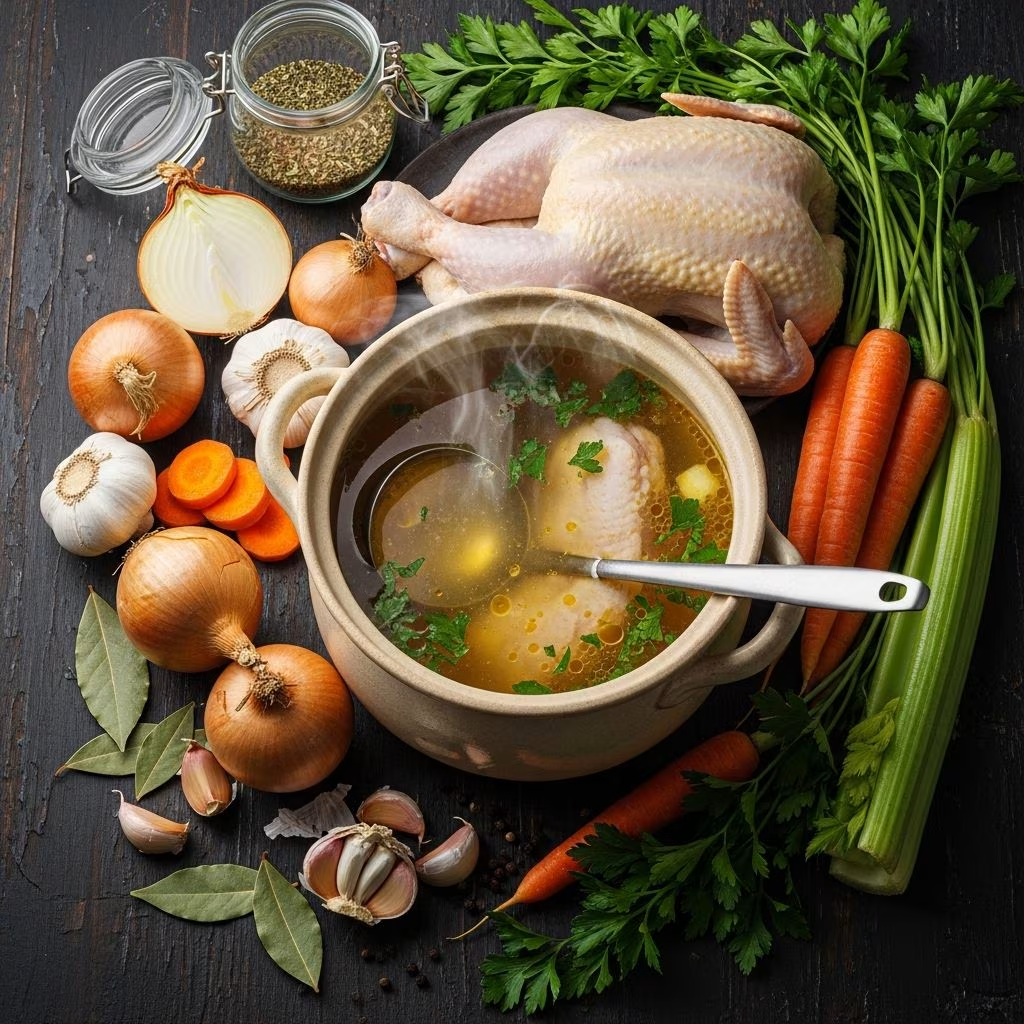
Great stock starts with simple, fresh components. Focus on bones for richness, vegetables for aroma, and subtle seasonings for depth.
- Chicken Bones or Carcasses: Use raw or roasted backs, necks, wings, or leftovers from rotisserie chickens. Aim for 4-5 pounds to yield about 3 quarts of stock.
- Aromatic Vegetables: Roughly chop 2 carrots, 2 celery stalks, 1 large onion (unpeeled for color), and optional leek greens. These provide sweetness and balance without overpowering.
- Herbs and Spices: 2-3 bay leaves, 1 teaspoon peppercorns, fresh thyme, rosemary sprigs, and parsley stems added late for minerals.
- Acid Booster: 1-2 tablespoons apple cider or white vinegar to draw minerals from bones, enhancing nutrition and flavor.
- Water: Cold, filtered water to cover ingredients by 2 inches, typically 3-4 quarts per batch.
Avoid salt until the end to prevent over-concentration during reduction. Roasted bones impart deeper color and taste, mimicking professional restaurant stocks.
Stovetop Method: The Classic Approach
The traditional stovetop simmer builds layered flavors over hours. This method suits those with time for hands-off cooking.
- Combine bones, vegetables, herbs, vinegar, and cold water in a large stockpot (at least 8 quarts).
- Bring to a boil over medium-high heat, skimming foam rigorously for clarity. Foam consists of proteins and impurities.
- Reduce to a bare simmer (gentle bubbles only) and cook uncovered 3-5 hours, or up to 12 for intensity. Add water if needed to keep ingredients submerged.
- In final 10 minutes, stir in parsley and salt to taste.
- Strain through a fine-mesh sieve into a bowl, discarding solids. Cool rapidly in an ice bath.
Expect reduction by one-third, concentrating flavors. A 200°F internal temperature prevents cloudiness.
Pressure Cooker Technique for Quick Results
Modern pressure cookers like Instant Pot cut time dramatically while preserving quality.
| Step | Action | Time |
|---|---|---|
| 1 | Add bones, veggies, herbs, water (not exceeding max fill line) | Prep: 10 min |
| 2 | Seal and cook on high pressure | 30-60 min |
| 3 | Natural release (20-30 min) | 20-30 min |
| 4 | Strain and season | 10 min |
This yields tender bones and extracted gelatin in under 2 hours total. Skim foam before sealing for best clarity.
Slow Cooker Option for Effortless Stock
Ideal for overnight prep, slow cookers maintain low, steady heat.
- Layer bones, chopped vegetables, herbs, and water in cooker.
- Set to low for 10-12 hours or high for 6-8 hours.
- Strain post-cook; no skimming needed as scum settles.
Results rival stovetop with minimal monitoring, perfect for busy schedules.
Pro Tips for Crystal-Clear, Flavor-Packed Stock
Elevate your stock with these expert practices:
- Roast First: Brown bones and veggies at 400°F for 45-50 minutes for mahogany color and umami.
- Cold Start: Begin with cold water to gradually draw out flavors evenly.
- Skim Diligently: Remove foam every 15 minutes initially to avoid bitterness.
- Low and Slow: Avoid boiling; aim for 180-200°F to prevent turbidity.
- Degrease: Chill overnight; fat solidifies for easy removal, improving purity.
For variations, add garlic or ginger for Asian-inspired stocks, or tomato paste for French-style.
Storage and Freezing Best Practices
Proper storage extends usability. Refrigerate up to 5 days or freeze for 3-6 months.
- Portion into 2-cup freezer bags or ice cube trays for convenience.
- Label with date; thaw in fridge overnight.
- Boil before use if stored over a week.
A thick, jiggly set when cold signals success—proof of natural gelatin.
Creative Uses in Everyday Cooking
Homemade stock transforms recipes:
- Soups and stews for instant depth.
- Risottos, where it absorbs into rice.
- Gravies and pan sauces reduced for gloss.
- Poaching proteins or cooking grains.
Replace water 1:1 in any recipe calling for broth.
Common Mistakes and How to Avoid Them
Steer clear of pitfalls for consistent results:
Too Cloudy? Over-boiling or skipping skim. Solution: Gentle simmer and foam removal.
Lackluster Flavor? Insufficient bones or short cook time. Use more carcass and extend simmering.
Off Tastes? Dirty pot or old ingredients. Start with clean equipment and fresh produce.
Frequently Asked Questions
Can I use a whole chicken?
Yes, reserve meat for later use after straining. Adjust water to cover.
Vegetarian alternative?
Mushroom or vegetable scraps work similarly, simmered 1-2 hours.
How do I know it’s done?
Taste for balance; bones should be soft and flavor robust, typically 3+ hours.
Can I reuse bones?
Once for stock; second simmer yields weak broth, better for pet food.
Freezer space tips?
Flatten bags for stacking; cubes for small portions.
Troubleshooting Flavor Profiles
Adjust based on taste:
| Issue | Cause | Fix |
|---|---|---|
| Bitter | Overcooked veggies | Shorter simmer, strain early |
| Flat | No acid/roast | Add vinegar, roast bones |
| Greasy | Too much skin | Degrease after chilling |
| Weak | Low bone ratio | Increase bones/water balance |
These tweaks ensure perfection every batch.
Mastering chicken stock unlocks professional-level home cooking. With practice, it becomes a kitchen staple, enhancing dishes effortlessly.
References
- Easy Chicken Stock – Taste Better From Scratch — tastesbetterfromscratch.com. 2023. https://tastesbetterfromscratch.com/homemade-chicken-broth-how-to-get-the-most-from-your-rotisserie-chicken/
- The Only Chicken Stock Recipe You’ll Ever Need — pamelasalzman.com. 2022-10-15. https://pamelasalzman.com/homemade-chicken-stock/
- Chicken Stock Recipe — recipetineats.com. 2021. https://www.recipetineats.com/chicken-stock-recipe/
- How to Make Your Own Chicken Stock — growingupsarita.com. 2023. https://growingupsarita.com/how-to-make-your-own-chicken-stock-a-simple-flavorful-recipe/
- How to Make the Best All-Purpose Chicken Stock — andrewzimmern.com. 2022. https://andrewzimmern.com/recipes/how-to-make-the-best-all-purpose-chicken-stock/