Making beef jerky at home has become an increasingly popular culinary hobby for those seeking to create their own snacks with complete control over ingredients and flavors. Unlike store-bought varieties that often contain excessive sodium, preservatives, and artificial ingredients, homemade beef jerky allows you to customize the seasoning profile and quality of the meat to suit your preferences. This comprehensive guide walks you through every step of the jerky-making process, from selecting the right cut of meat to achieving the perfect texture and flavor.
Understanding the Foundation: Choosing Your Meat
The success of your beef jerky project begins with selecting the appropriate cut of meat. Lean cuts are essential because fat does not dehydrate properly and can lead to rancidity and spoilage. The most commonly recommended options include eye of round roast, flank steak, and top round steak. Eye of round roast stands out as an exceptional choice due to its combination of affordability, accessibility, and natural leanness, making it ideal for both beginners and experienced jerky makers.
When purchasing your meat, aim for approximately 1.5 to 3 pounds depending on how much jerky you wish to produce. Ensure that you thoroughly trim away any visible fat and silver skin before beginning the preparation process, as these elements compromise the final product’s shelf life and quality.
Preparation Techniques for Optimal Slicing
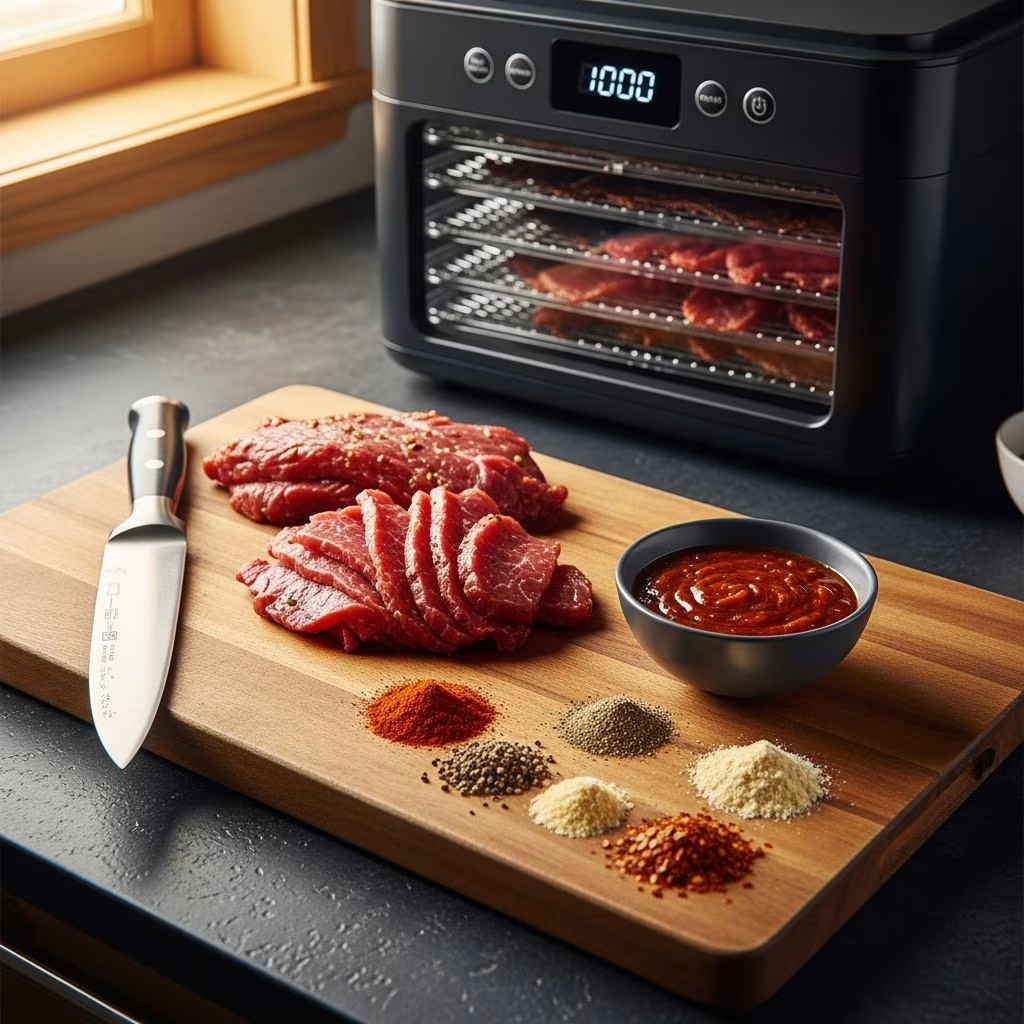
Proper meat preparation significantly impacts the texture and eating experience of your finished jerky. Begin by partially freezing the meat before slicing—place it in the freezer for one to two hours to firm it up. This chilling period makes the meat substantially easier to cut into uniform strips, which is crucial for even dehydration.
Using a sharp knife or meat slicer, cut the meat between one-eighth and one-quarter inch thick. The thickness you choose affects drying time: thinner strips dehydrate faster but may become brittle, while thicker strips retain more moisture and chewiness. For most applications, aim for consistency across all pieces to ensure uniform drying. Consider cutting the meat with the grain for a more fibrous, chewy texture, or against the grain for a more tender consistency.
The Marinade: Building Flavor Foundation
The marinade transforms basic beef into a flavorful delicacy. While numerous variations exist, most successful marinades share common components: soy sauce, Worcestershire sauce, and seasoning elements. These ingredients work together to add depth, umami, and complexity to the meat.
Classic Savory Marinade
This straightforward marinade delivers traditional jerky flavors without excessive sweetness:
- 1/2 cup soy sauce
- 2 tablespoons Worcestershire sauce
- 1 teaspoon onion powder
- 1 teaspoon garlic powder
- 1 teaspoon black pepper
- Optional: 1/2 teaspoon red pepper flakes for heat
Sweet and Smoky Variation
For those preferring a balanced sweet-savory profile:
- 1 cup soy sauce
- 3/8 cup brown sugar
- 3 tablespoons Worcestershire sauce
- 1 tablespoon smoked paprika
- 1 teaspoon meat tenderizer (unseasoned)
- 1/2 teaspoon red pepper flakes
- 1 teaspoon onion powder
- 1 teaspoon garlic powder
Asian-Inspired Honey Garlic Option
This variation introduces honeyed sweetness and pronounced garlic notes:
- 2/3 cup soy sauce
- 1/2 cup honey
- 2 tablespoons granulated garlic
- 2 tablespoons kosher salt
- 2 tablespoons cracked black pepper
Whisk all marinade ingredients together thoroughly, ensuring that any sugars dissolve completely. This uniform distribution guarantees consistent flavor throughout your finished jerky.
Marinating Process and Timeline
Place your sliced meat into a large resealable bag or container and pour the marinade over it, ensuring that every piece becomes thoroughly coated. Marinating duration varies depending on the recipe and desired intensity: some methods require 6 to 8 hours, while others recommend a full 24 hours for maximum flavor penetration.
Position the marinating meat in your refrigerator and occasionally toss or flip the bag to guarantee even exposure to the marinade. This periodic agitation prevents uneven seasoning and allows flavors to penetrate consistently throughout the meat. Remove excess air from the bag if possible, as this enhances flavor absorption.
Pre-Drying Preparation and Safety Considerations
Once marinating reaches completion, remove the meat from the refrigerator and pat each strip thoroughly dry using paper towels. This drying step is important because excess surface moisture can interfere with the dehydration process and affect final texture.
An important safety consideration recommended by the United States Department of Agriculture involves heating the meat before dehydrating. Heating marinated meat to an internal temperature of 160 degrees Fahrenheit before the dehydration phase ensures that any potentially harmful bacteria are destroyed through wet heat application. This preliminary heating step provides additional food safety assurance, particularly important when making jerky for extended storage.
Dehydration Methods and Temperature Control
Several appliances and techniques can successfully dehydrate your prepared jerky strips. Each method offers distinct advantages depending on your equipment availability and personal preferences.
| Dehydration Method | Temperature Setting | Estimated Time | Best For |
|---|---|---|---|
| Food Dehydrator | 160-170°F | 4-6 hours | Consistent, controlled results |
| Oven (door cracked) | 170°F | 3-4 hours | No additional equipment needed |
| Smoker/Pellet Grill | 170°F | 2-3 hours | Enhanced smoky flavor |
| Air Fryer | 160°F | 5-8 hours (batched) | Smaller quantities |
Arrange marinated beef strips in a single layer on your chosen drying apparatus. Avoid overlapping strips, as this prevents even air circulation and results in inconsistent drying. If using an oven, position the racks at different levels and rotate pans midway through the process to ensure uniform dehydration.
Determining Doneness and Texture Achievement
Recognizing when your beef jerky reaches the ideal consistency is crucial for achieving the desired final product. Remove a test piece and allow it to cool to room temperature. The finished jerky should display the following characteristics:
- Dry to the touch with no visible moisture
- Leather-like appearance throughout
- Chewy but still somewhat tender when bent
- Flexible enough to bend without breaking, though it may crack slightly
If your test piece breaks cleanly when bent, the jerky has been over-dried and will become excessively tough. If it feels moist or bends without any resistance, continue dehydrating for an additional 30 minutes and retest. Drying time varies based on strip thickness, ambient humidity, and equipment used, so flexibility in timing is important.
Flavor Enhancement and Customization Ideas
Beyond the foundational marinades, numerous customization options allow you to develop signature jerky varieties. Consider these approaches:
- Spice Blends: Incorporate five-spice powder, cumin, or Chinese five-spice for Asian-inspired profiles
- Heat Variations: Adjust red pepper flakes, jalapeño powder, or cayenne to match your heat tolerance
- Liquid Smoke: Add subtle smoky undertones without requiring a dedicated smoker
- Beer or Beef Stock: Replace a portion of soy sauce with these alternatives for deeper, more complex flavors
- Additional Aromatics: Fresh minced garlic or ginger adds brightness and sophistication
Storage and Shelf Life Considerations
Properly dried homemade beef jerky can be stored in airtight containers at room temperature for extended periods. The lack of preservatives found in commercial versions means careful storage becomes essential for preventing spoilage. Glass jars with tight-sealing lids or vacuum-sealed bags provide optimal protection against moisture and air exposure. Store jerky in a cool, dark location away from direct sunlight, which can degrade quality over time. Properly stored homemade jerky typically maintains quality for 1-2 weeks at room temperature, though refrigeration extends this period considerably.
Frequently Asked Questions
Can I make beef jerky without a dehydrator?
Yes. Your oven with the door slightly ajar works effectively, though careful temperature monitoring is necessary. Set the temperature between 160-170 degrees Fahrenheit and check regularly for even drying. Smokers and grills also produce excellent results with added flavor complexity.
What causes jerky to become too tough?
Over-drying is the primary culprit. Extended dehydration removes too much moisture, resulting in jerky that becomes brittle and unpleasantly chewy. Begin checking doneness after the first hour and test frequently as you approach the expected completion time.
Why is my jerky still moist after dehydrating?
Inadequate drying time or overly thick slices can result in retained moisture. Ensure strips are cut to consistent, appropriately thin sizes, and continue dehydrating in 15-30 minute intervals until the desired texture develops.
Can I use different cuts of beef besides eye of round?
Flank steak and top round steak work well for jerky production. The key requirement is selecting lean cuts with minimal fat, as fat prevents proper drying and causes spoilage.
Does marinating time significantly impact final flavor?
Yes. Longer marinating periods allow deeper flavor penetration. While 6-8 hours produces good results, 24 hours typically yields more developed, complex flavors.
Conclusion: Mastering Your Jerky Craft
Creating homemade beef jerky represents a rewarding culinary undertaking that combines straightforward techniques with creative flavor possibilities. By understanding meat selection, proper preparation, marinade construction, and precise dehydration timing, you develop the foundational knowledge necessary for consistent success. Whether you prefer classic savory profiles or adventurous international variations, the jerky-making process accommodates diverse taste preferences while delivering a satisfying, portable snack with superior quality compared to most commercially available options.
References
- Easy Homemade Beef Jerky — Beef Loving Texans. Retrieved from https://beeflovingtexans.com/recipe/easy-homemade-beef-jerky/
- How To Make Beef Jerky At Home (With Four Recipes) — Northwest Edible. Retrieved from https://nwedible.com/beef-jerky/
- The Best Homemade Beef Jerky Recipe — Once Upon a Chef. Retrieved from https://www.onceuponachef.com/recipes/the-best-homemade-beef-jerky-recipe.html
- Beef Jerky — Gimme Some Oven. Retrieved from https://www.gimmesomeoven.com/beef-jerky/
- Peppered Beef Jerky [with Video] — Hey Grill Hey. Retrieved from https://heygrillhey.com/peppered-beef-jerky/
- Jerky – Beef & Venison — Meat Church. Retrieved from https://www.meatchurch.com/blogs/recipes/jerky
- Homemade Beef Jerky Recipe — Alton Brown. Retrieved from https://altonbrown.com/recipes/homemade-beef-jerky/