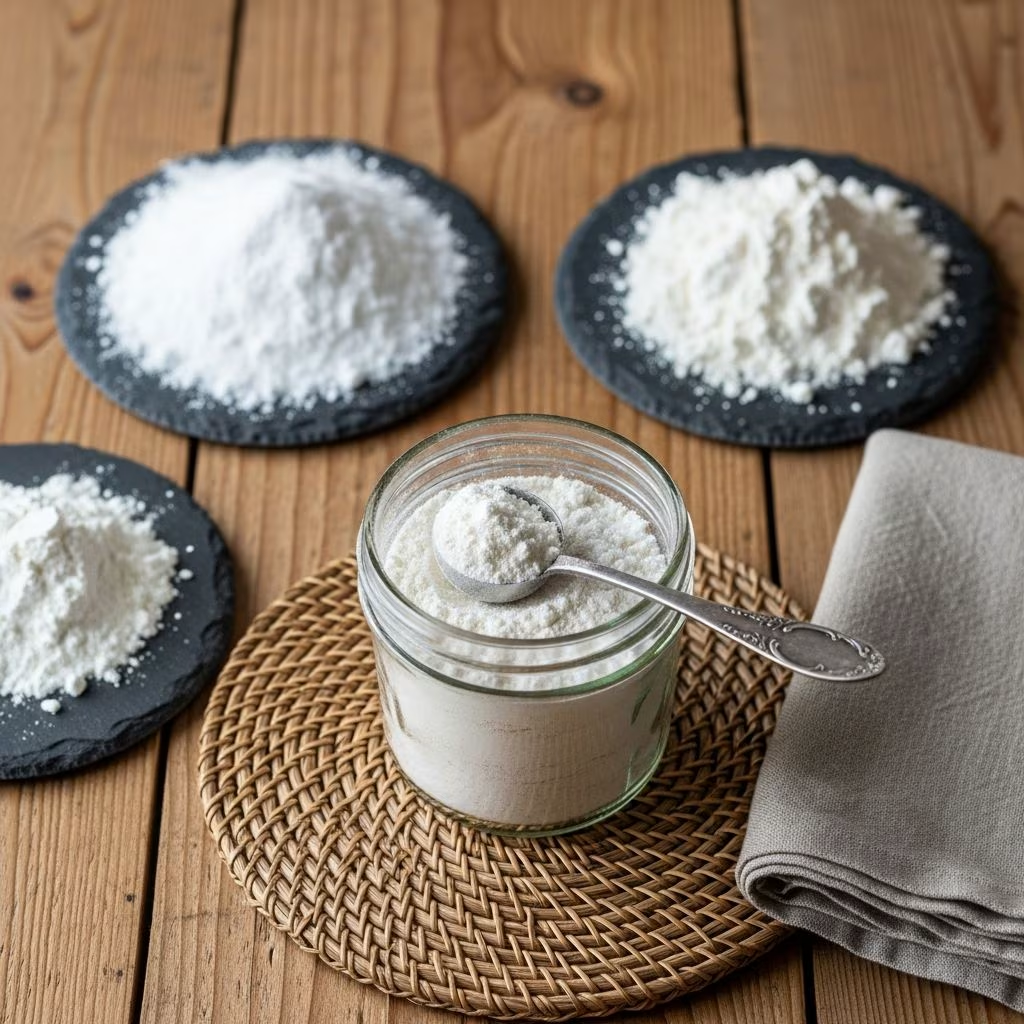
Creating your own baking powder at home empowers bakers to ensure freshness and avoid running out mid-recipe. This simple process uses basic ingredients to produce a reliable leavening agent that rivals commercial versions.
Why Choose Homemade Over Store-Bought?
Commercial baking powder often sits on shelves for months, losing potency over time. Homemade versions allow precise control over ingredients, enabling customization for dietary needs or organic preferences. It’s cost-effective, quick to prepare in under five minutes, and maintains a shelf life of up to one year when stored properly. Unlike many store-bought options, which may include double-acting formulas, homemade is typically single-acting, requiring prompt baking after mixing into batters.
Key advantages include:
- Freshness assurance: Test viability instantly with a simple water fizz method.
- Ingredient transparency: Avoid fillers or additives by selecting pure components.
- Convenience for frequent bakers: Scale batches to match usage, from small test amounts to bulk supplies.
Core Ingredients Explained
Baking powder relies on a balanced combination of an acid, a base, and a stabilizer. Here’s a breakdown:
| Ingredient | Role | Common Alternatives |
|---|---|---|
| Baking Soda (Sodium Bicarbonate) | Base that reacts with acid to produce carbon dioxide gas for lift | None; essential base |
| Cream of Tartar (Potassium Bitartrate) | Acid component triggering the reaction when moistened | Lemon juice or vinegar (for immediate use only) |
| Cornstarch or Arrowroot Powder | Absorbs moisture to prevent premature reaction and clumping | Potato starch (GMO-free option) |
The standard ratio is 2:1:1—two parts acid (cream of tartar), one part base (baking soda), and one part stabilizer. This ensures balanced reactivity.
Step-by-Step Preparation Methods
Assemble minimal tools: a small bowl, measuring spoons, airtight jar, and optional funnel for clean transfer.
Small Batch (Makes ~4 Teaspoons)
- Combine 2 teaspoons cream of tartar, 1 teaspoon baking soda, and 1 teaspoon cornstarch/arrowroot in a bowl.
- Sift or whisk vigorously to eliminate lumps, ensuring even distribution.
- Transfer to storage container immediately to minimize air exposure.
Ideal for single-recipe use or testing.
Bulk Batch (Makes ~1 Cup)
Scale up using the 2:1:1 ratio for efficiency:
- ½ cup cream of tartar
- 4 tablespoons baking soda
- 4 tablespoons cornstarch/arrowroot
- Measure into a wide bowl for easy mixing.
- Stir thoroughly, breaking clumps with a spoon back or fork.
- Funnel into a glass jar with tight lid; label with preparation date.
This yields enough for weeks of baking, perfect for avid home cooks.
Testing for Freshness and Activity
Before incorporating into recipes, verify potency. Mix 1 teaspoon of your homemade powder with ⅓ cup cool water. Active powder fizzes vigorously due to gas release, confirming readiness. If no reaction occurs, discard and remake, as inactive leavening leads to flat bakes.
Store in a cool, dry pantry away from humidity. Shelf life extends to 12 months, but test periodically.
Usage Tips in Your Favorite Recipes
Substitute 1:1 for commercial baking powder in muffins, cakes, biscuits, or pancakes. Since it’s single-acting, activate with liquids and bake promptly to capture peak rise.
Pro Tips:
- In quick breads or cookies, add to dry ingredients first, then incorporate wet.
- For fluffier results, ensure even mixing to distribute leavening uniformly.
- Adjust in high-altitude baking by reducing overall amount slightly, as lower pressure aids natural lift.
Scaling and Custom Variations
Double, triple, or halve batches effortlessly with the fixed ratio. For gluten-free or paleo diets, arrowroot shines as a cornstarch alternative. Experiment with organic sourcing for premium quality control.
| Batch Size | Cream of Tartar | Baking Soda | Starch |
|---|---|---|---|
| 1 tsp total | ½ tsp | ¼ tsp | ¼ tsp |
| 1 tbsp total | 2 tsp | 1 tsp | 1 tsp |
| ¼ cup total | 2 tbsp | 1 tbsp | 1 tbsp |
Frequently Asked Questions
Can I make baking powder without cornstarch?
Yes, for immediate use. Omit starch, but mix baking soda and cream of tartar fresh per recipe to avoid clumping.
Is homemade baking powder double-acting?
No, it reacts once upon moistening. Commercial versions react twice (liquid and heat), so bake batters quickly.
How do I store it long-term?
In an airtight glass jar in a cool, dark place. Avoid moisture; shelf life is 6-12 months depending on ingredient freshness.
What if my baking soda is old?
Freshness determines overall potency. Test baking soda separately with vinegar for bubbles before using.
Can I use it in yeast breads?
Limited role; primarily for chemical leavening in quick breads, not doughs relying on yeast.
Common Mistakes to Avoid
Overmixing after adding liquids deflates rise. Measure level spoons precisely—rounded scoops alter ratios. Ignore expiration cues from fizz tests at your peril; stale powder yields dense results.
For best outcomes, source high-quality, fresh ingredients from reputable suppliers. Bulk buying cream of tartar pays off for regular makers.
Beyond Basics: Advanced Applications
Enhance tenderness in scones or elevate pancake fluffiness. In vegan baking, it pairs seamlessly without eggs. Experiment in homemade seasoning blends or as a natural dentifrice base (small amounts only).
Sustainability bonus: Reduces packaging waste from frequent store purchases.
References
- Easy Homemade Baking Powder — Aunt Niki’s Farm. Accessed 2026. https://auntnikisfarm.com/easy-homemade-baking-powder/
- How to Make Baking Powder — Alpha Foodie. Accessed 2026. https://www.alphafoodie.com/how-to-make-baking-powder/
- Easy Baking Substitution with Basic Pantry Ingredients — Steph’s Stove (YouTube). Accessed 2026. https://www.youtube.com/watch?v=LoY__Zj9Lng
- Baking Powder Substitute — A Modern Homestead. Accessed 2026. https://www.amodernhomestead.com/baking-powder-substitute/
- Whip Up Your Own Baking Powder At Home — YouTube. Accessed 2026. https://www.youtube.com/watch?v=qmGZRAho_I4