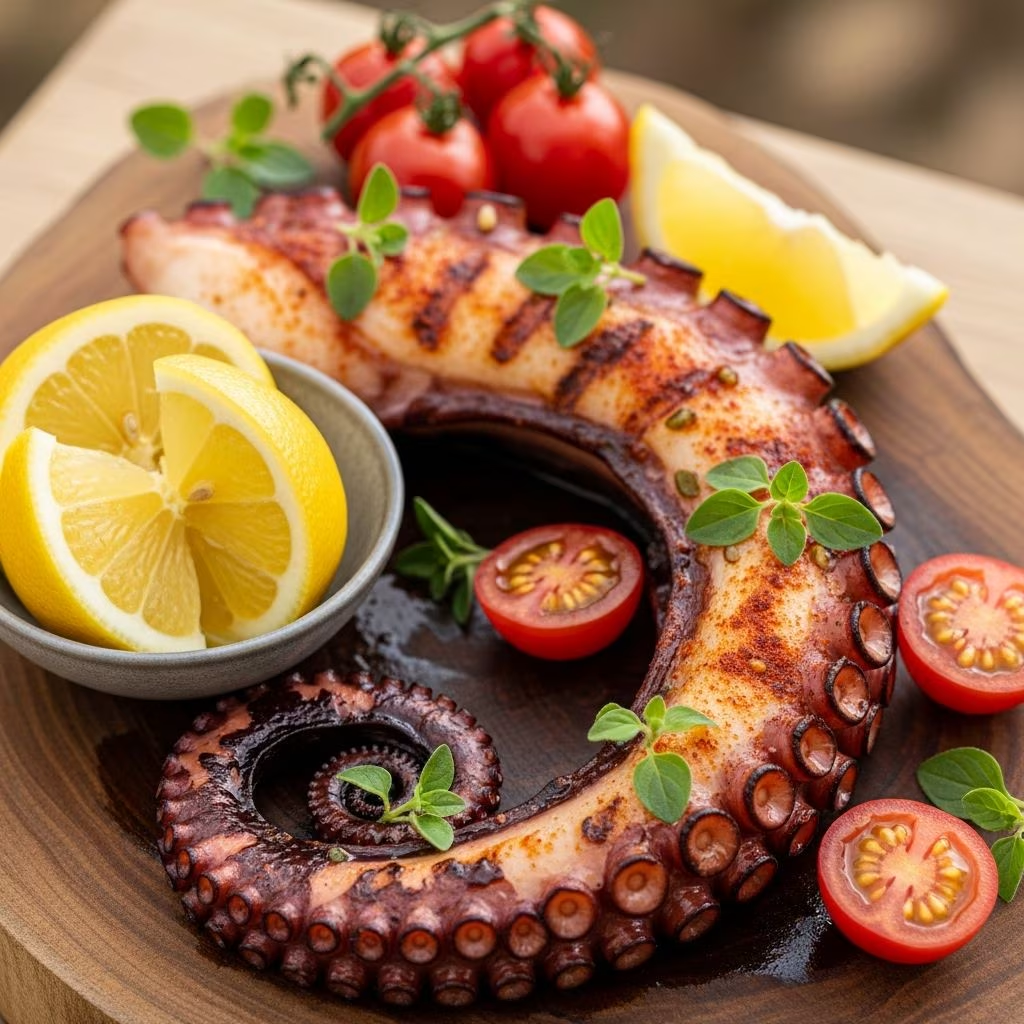
Grilled octopus stands as a highlight in seafood cuisine, prized for its tender texture and smoky flavor when prepared correctly. This dish, rooted in Mediterranean and coastal traditions, transforms a potentially tough ingredient into a delicacy through careful tenderizing and high-heat grilling. Home cooks can achieve restaurant-quality results by following precise steps for boiling, marinating, and grilling.
Why Grilled Octopus Captivates Palates
Octopus meat is rich in protein and minerals like iron and selenium, offering a lean alternative to red meats. Its appeal lies in the contrast between the soft interior and crispy exterior developed during grilling. Chefs emphasize that proper preparation prevents chewiness, making it ideal as an appetizer or main course served with fresh herbs and citrus.
Popular in Greek tavernas, Spanish coastal eateries, and beyond, grilled octopus pairs beautifully with simple accompaniments like lemon wedges, olive oil, and oregano. The process highlights the ingredient’s natural brininess, enhanced by aromatic boils and quick sears.
Selecting the Perfect Octopus
Choose fresh or frozen octopus weighing 1-4 pounds; smaller ones (1-2 pounds) cook faster and are more tender. Look for firm, intact tentacles without discoloration or strong odors. Frozen octopus from reputable sources often works well, as the thawing process aids tenderizing.
- Fresh octopus: Vibrant color, plump tentacles, mild sea scent.
- Frozen octopus: Firm when thawed; avoid if ice crystals indicate poor storage.
- Size guide: Baby (under 1 lb) for quick cooks; medium (2-3 lbs) for balanced tenderness.
Clean by removing the beak and eyes if not prepped. Rinse thoroughly under cold water to eliminate sand or slime.
Tenderizing: The Essential First Step
Tenderizing prevents rubbery results. Simmer octopus in flavored water for 30-90 minutes until a paring knife pierces easily. This breaks down collagen without overcooking.
Classic Boiling Liquid Ingredients
| Ingredient | Quantity (for 2-3 lb octopus) | Purpose |
|---|---|---|
| Water | 6-20 cups | Base for simmering |
| Sea salt | 1-2 tbsp | Seasoning |
| Lemon (halves or juice) | 1-2 | Brightens flavor |
| Bay leaves | 2 | Aromatic depth |
| Garlic cloves | 2-4, smashed | Savory notes |
| Herbs (parsley, thyme) | 2 sprigs each | Fresh infusion |
| Onion (halved) | 1 | Sweet undertone |
| Peppercorns | 1 tbsp | Subtle spice |
Bring liquid to a boil, add octopus, reduce to simmer. Cook whole or tentacle-side down. Test doneness: tentacles curl when ready. Cool in liquid for extra tenderness, then drain.
Crafting Irresistible Marinades
Post-tenderizing, marinate for 30 minutes to overnight. Olive oil base carries garlic, citrus, and herbs, infusing flavor before grilling.
Three Marinade Variations
- Greek-Style: Olive oil, lemon juice, oregano, garlic, salt, pepper. Whisk and coat tentacles.
- Spanish-Inspired: Olive oil, smoked paprika, orange zest, lemon juice, white wine reduction from boil.
- Herb-Forward: Olive oil, balsamic vinegar, capers, thyme, parsley, minced garlic.
Slice tentacles into 2-3 inch pieces post-marinate for even grilling. Reserve some marinade for basting.
Grilling Techniques for Perfect Char
Preheat grill to high (450°F+). Oil grates to prevent sticking. Grill 2-4 minutes per side until charred edges form, aiming for caramelization without drying.
- Direct heat: For bold char; flip once.
- Pan-sear alternative: Hot cast iron skillet with oil; 3 minutes per side.
- Pro tip: Weigh down with foil-wrapped brick for flat contact and even sear.
Rest 2-3 minutes post-grill. Slice diagonally for presentation.
Flavorful Serving Suggestions
Drizzle with extra olive oil, lemon juice, and fresh herbs. Serve warm over greens, with potatoes, or as tapas.
- With romaine, scallions, tomatoes, and Greek seasoning.
- Topped with chimichurri or parsley-cayenne garnish.[10]
- Paired with warm potato salad or grilled lemon slices.
Common Pitfalls and Fixes
Avoid over-boiling (leads to mush) or skipping tenderize (chewy result). High heat prevents steaming on grill.
| Issue | Cause | Solution |
|---|---|---|
| Rubbery texture | Insufficient tenderizing | Extend simmer; use pressure cooker for 20-30 min. |
| Lack of char | Low heat | Crank to 450°F+; pat dry before oiling. |
| Bland flavor | Plain boil | Aromatics + marinade. |
| Sticking | Wet surface | Dry thoroughly; oil grates. |
Nutritional Profile and Pairings
A 3-ounce serving provides ~25g protein, low fat (2g), and omega-3s. Pair with crisp white wines like Assyrtiko or Albariño.
Storage and Reheating
Refrigerate up to 3 days in airtight container. Reheat gently on grill or low oven to retain moisture. Freezes well post-boil.
Frequently Asked Questions
Can I grill frozen octopus?
No; thaw fully and tenderize first for best results.
How long to boil small vs. large octopus?
Small (1 lb): 30-45 min; large (3-4 lb): 60-90 min. Test with knife.
Is a pressure cooker better?
Yes, reduces time to 20-40 min under high pressure.
Vegetarian alternative?
Try grilled king oyster mushrooms with same marinade for texture mimic.
Safe internal temperature?
145°F; focus on tenderness over temp.
Advanced Variations
Experiment with Asian twists (soy-ginger marinade) or spicy harissa rubs. Smoke post-boil for layered flavor.[10]
References
- Grilled Octopus Recipe Inspired by Yellowstone — Jackie Alpers. 2023. https://recipes.jackiealpers.com/mediterranean-style-grilled-octopus/
- Chef Folse’s Spanish-Style Grilled Octopus — Louisiana Cookin’. 2022-10-01. https://louisianacookin.com/chef-folses-spanish-style-grilled-octopus/
- Easy Grilled Octopus Recipe — Cooking LSL. 2023. https://cookinglsl.com/easy-grilled-octopus-recipe/
- Grilled Octopus with Lemon & Oregano — Jess Pryles. 2022. https://jesspryles.com/grilled-octopus-with-lemon-oregano/
- Greek Grilled Octopus — Mia Kouppa. 2024. https://miakouppa.com/grilled-octopus/