Demi-glace stands as one of the most revered sauces in French culinary tradition, offering a deep, concentrated flavor that forms the foundation for countless dishes. This glossy, rich reduction transforms simple ingredients into a versatile powerhouse, perfect for enhancing steaks, roasts, and even vegetable preparations. Whether you’re a home cook aiming to impress or a professional refining your skills, understanding demi-glace opens doors to elevated cooking.
What Is Demi-Glace and Why It Matters
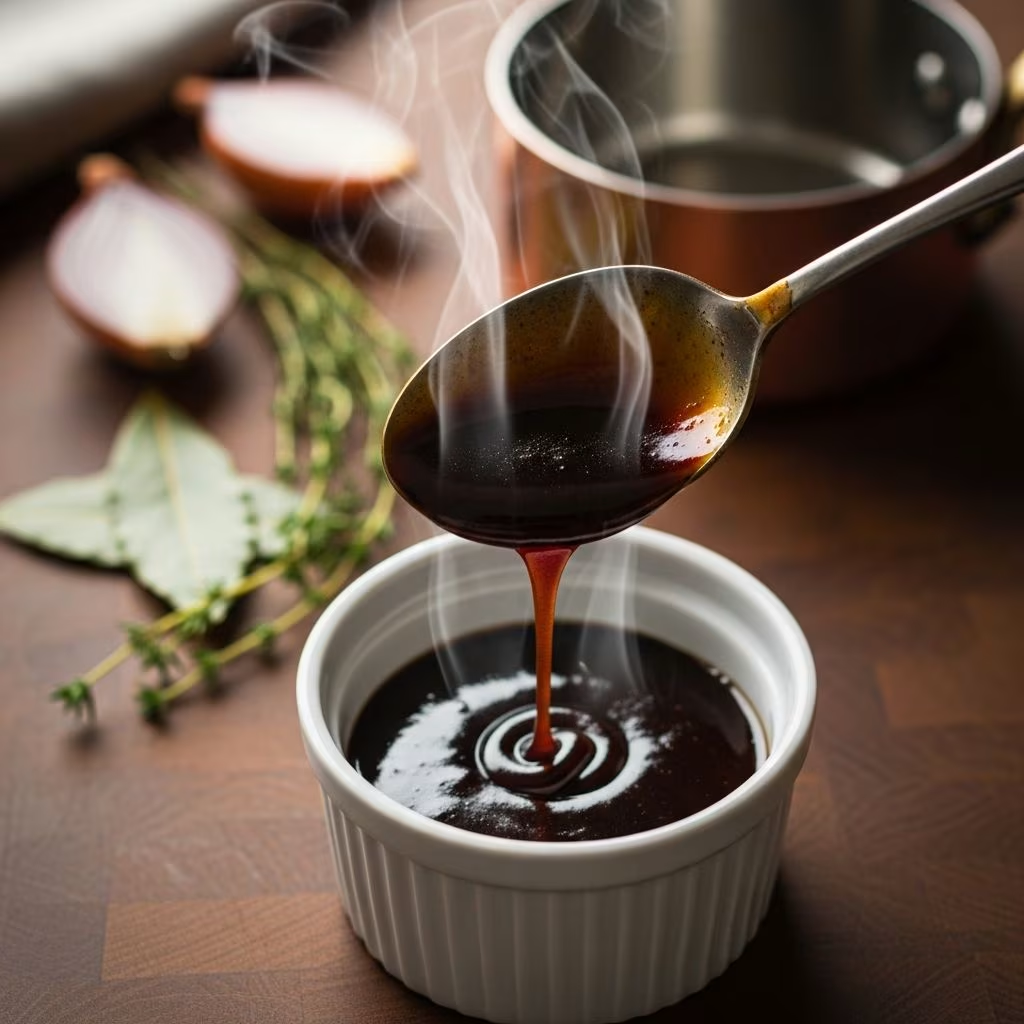
At its core, demi-glace is a highly reduced stock, typically made from equal parts brown stock and Espagnole sauce, simmered until it halves in volume. This process intensifies flavors, creating a sauce that coats the back of a spoon with its luxurious texture. Originating from classic French mother sauces, it serves as a base for derivatives like bordelaise or chasseur, adding umami depth without overpowering other elements.
Its importance lies in versatility: a small amount can elevate a pan sauce for grilled meats or enrich gravies and stews. In professional kitchens, it’s a staple for its ability to meld savory notes from roasted bones, vegetables, and aromatics into something transcendent.
Essential Ingredients for Authentic Demi-Glace
Building a superior demi-glace starts with quality components. Key players include:
- High-quality stock: Veal, beef, or a mix provides the backbone. Homemade roasted stock yields the best results due to its gelatinous richness.
- Aromatics (mirepoix): Onions, carrots, and celery, browned for fond development.
- Tomato paste: Adds acidity and color, caramelized to deepen flavors.
- Herbs and spices: Thyme, bay leaves, parsley stems, and peppercorns in a sachet for subtle infusion.
- Wine or sherry (optional): For deglazing and complexity.
Avoid pre-made stocks if possible; their lack of gelatin results in thinner sauces. For Espagnole base, clarified butter and flour form a brown roux, essential for body.
Traditional Method: From Stock to Perfection
The classic approach demands time but rewards with unparalleled flavor. Begin with roasting bones.
- Roast bones: Veal or beef bones at high heat (425°F) for 20-30 minutes to caramelize surfaces, building flavor foundations.
- Brown mirepoix: Sauté diced vegetables in reserved fat, adding tomato paste to cook out rawness.
- Deglaze and simmer: Add wine, reduce, then pour in cold water or stock. Include sachet and simmer 6-8 hours, skimming impurities.
- Strain and reduce: Pass through a fine mesh, then reduce by half for demi-glace consistency.
This yields about 2 cups from gallons of liquid, a testament to patience.
Streamlined Home Version Without Espagnole
For busy cooks, skip the full Espagnole by starting directly with stock. Heat oil, brown mirepoix, caramelize with sugar and tomato paste, deglaze with wine, add veal stock, and reduce for 2 hours. Strain and reduce again to nappé stage. This method cuts time while retaining essence.
| Method | Time | Yield | Complexity |
|---|---|---|---|
| Traditional | 8-10 hours | 2 cups | High |
| Streamlined | 2-3 hours | 2 cups | Medium |
| Quick Reduction | 3-4 hours | 1 cup | Low |
Pro Tips for Flawless Results
- Skim diligently: Every 45 minutes, remove foam and fat for clarity.
- Low simmer: Bubbles should barely break surface to avoid cloudiness.
- Brown roux mastery: Cook to chocolate hue over 12-15 minutes, stirring constantly.
- Sachet security: Tie herbs in cheesecloth; easy removal prevents bitterness.
- Taste iteratively: Adjust salt or add sherry late for brightness.
If too thin, extend reduction; if broken, whisk in cold butter off-heat.
Storage and Reheating Best Practices
Cool rapidly post-reduction to preserve quality. Refrigerate in airtight containers up to 1 week or freeze in cubes for 6 months. Reheat gently over low heat, stirring to avoid separation. Thaw cubes directly in recipes for convenience.
Creative Ways to Use Demi-Glace
Beyond basics, experiment:
- Steak au poivre: Deglaze pan with demi-glace, cream, and pepper.
- Vegetable glazes: Toss roasted roots in reduced demi-glace.
- Soup enhancer: Stir into broths for instant depth.
- Bordelaise:
- Pasta sauce: Mix with mushrooms for ragù twist.
Add red wine, shallots, bone marrow.
A tablespoon transforms lackluster dishes into standouts.
Common Mistakes and How to Avoid Them
Steer clear of these pitfalls:
- Burning roux: Low heat, constant stir.
- Insufficient reduction: Test coating on spoon.
- Cloudy sauce: Strain multiple times, chill stock first.
- Over-seasoning: Salt lightly; flavors concentrate.
FAQs
Can I use chicken stock instead of veal?
Yes, but veal’s mildness shines; beef works too, though stronger.
How long does homemade demi-glace last?
Fridge: 1 week; freezer: 6 months in cubes.
Is store-bought demi-glace worth it?
Paste concentrates help, but homemade surpasses in flavor.
Vegetarian demi-glace possible?
Mushroom stock with roasted veggies mimics depth effectively.
Why skim during simmering?
Removes impurities for glossy, pure sauce.
Nutrition Snapshot (Per 2 Tbsp Serving)
| Nutrient | Amount |
|---|---|
| Calories | 35 |
| Protein | 4g |
| Fat | 1g |
| Sodium | 200mg |
Low-cal yet flavorful; use sparingly for impact.
References
- How To Make Demi Glace — Escoffier Online. 2023-05-15. https://www.escoffieronline.com/how-to-make-demi-glace/
- Demi-Glace Recipe (Classic French Sauce) — The Frizzled Leek. 2022-11-10. https://thefrizzledleek.com/demi-glace-recipe/
- Demi Glace デミグラスソース — Just One Cookbook. 2024-02-20. https://www.justonecookbook.com/demi-glace/
- Demi-Glace Recipe (Classic Sauce) — Chef Billy Parisi. 2023-08-05. https://www.billyparisi.com/demi-glace/
- Julia Child’s Easy Semi-Demi-Glace — Life of the Party Always. 2011-01-02. https://lifeofthepartyalways.com/2011/01/02/julia-childs-easy-semi-demi-glace-to-the-rescue/