Date balls represent one of the simplest yet most satisfying treats you can prepare at home. These bite-sized confections require minimal cooking knowledge, basic kitchen equipment, and ingredients that many people already have in their pantries. Whether you’re looking for a quick energy boost, a dessert option for dietary preferences, or simply a delicious snack to enjoy throughout the week, date balls offer versatility and convenience that few other treats can match.
The beauty of date balls lies in their adaptability. From traditional walnut-studded versions to chocolate-coated variations and tropical coconut editions, there are countless ways to customize these treats to suit your taste preferences and nutritional goals. This guide will walk you through everything you need to know about selecting ingredients, preparing your workspace, and creating perfectly textured date balls every single time.
Understanding the Star Ingredient: Dates
Dates serve as the foundation for these confections, providing natural sweetness, binding properties, and a chewy texture that creates the signature appeal of date balls. Medjool dates stand out as the preferred choice for most recipes due to their larger size, softer texture, and rich caramel-like flavor profile. These premium dates are typically more expensive than deglet noor varieties, but their superior taste and consistency make them worth the investment.
The condition of your dates significantly impacts the final result. Fresh, soft dates blend smoothly into a cohesive mixture, while older or drier dates require preparation before processing. If your dates feel firm or brittle to the touch, soaking them in hot water transforms their texture and makes them easier to work with in a food processor. A brief 10-minute soak usually softens even the driest dates, allowing them to break down properly during blending.
When purchasing dates, look for specimens without visible blemishes or mold. Store them in an airtight container in a cool location to preserve their moisture content and prevent premature hardening. Proper storage extends their shelf life and ensures you always have quality dates on hand for impromptu snack preparation.
Essential Components and Their Roles
Creating well-balanced date balls requires understanding how each ingredient contributes to the final texture, taste, and nutritional profile. While countless variations exist, certain core components appear consistently across most recipes:
- Nuts – Walnuts, almonds, pecans, or pistachios provide structure, healthy fats, protein, and a pleasant textural contrast. Raw nuts work best, though you can use roasted varieties if preferred. The food processor breaks nuts into small pieces that distribute throughout the mixture, creating stability while maintaining some texture.
- Nut butters – Almond butter, peanut butter, or tahini adds creaminess and acts as a natural binder. These ingredients contribute healthy monounsaturated fats that help hold the mixture together without requiring additional binders like eggs or cornstarch.
- Flavor enhancers – Vanilla extract, cinnamon, or cocoa powder deepen the taste profile and mask any one-dimensional sweetness. Sea salt amplifies all flavors, making each ingredient more pronounced.
- Textural additions – Mini chocolate chips, shredded coconut, or chopped nuts rolled on the outside add visual appeal and provide variety with each bite.
- Moisture adjusters – Water or the reserved soaking liquid from dates helps achieve the proper consistency, transforming a crumbly mixture into one that holds together when rolled.
The Preparation Process: From Assembly to Rolling
Creating date balls follows a straightforward progression that requires no special skills or advanced cooking techniques. Begin by removing the pits from your dates if you haven’t already purchased pre-pitted varieties. Place the pitted dates into your food processor bowl, followed by your chosen nuts, any nut butters, and dry ingredients like vanilla extract, salt, and spices.
The pulsing technique proves crucial at this stage. Rather than continuous blending, pulse the ingredients in short bursts. This approach prevents overworking the mixture while ensuring even distribution of all components. Watch for the moment when the ingredients begin sticking together when pinched between your fingers – this indicates adequate processing.
If your mixture feels too dry, add water in small increments rather than pouring it all at once. Begin with a single teaspoon and pulse again, checking consistency after each addition. This gradual approach prevents accidentally creating a mushy mixture that won’t hold its shape properly.
Once the mixture reaches the correct consistency, transfer it to a bowl and fold in any mix-ins like chocolate chips or coconut flakes. Using a two-tablespoon cookie scoop ensures uniform portion sizes and speeds up the rolling process considerably. Scoop the mixture onto a clean work surface or plate, then use your hands to roll each portion into a ball. The warmth of your hands slightly melts the dates and nuts, making the rolling process smoother and more efficient.
Exploring Flavor Variations and Customizations
The basic date ball formula provides an excellent canvas for creative experimentation. Different combinations of nuts, spices, and mix-ins create entirely new treats while maintaining the same simple preparation method.
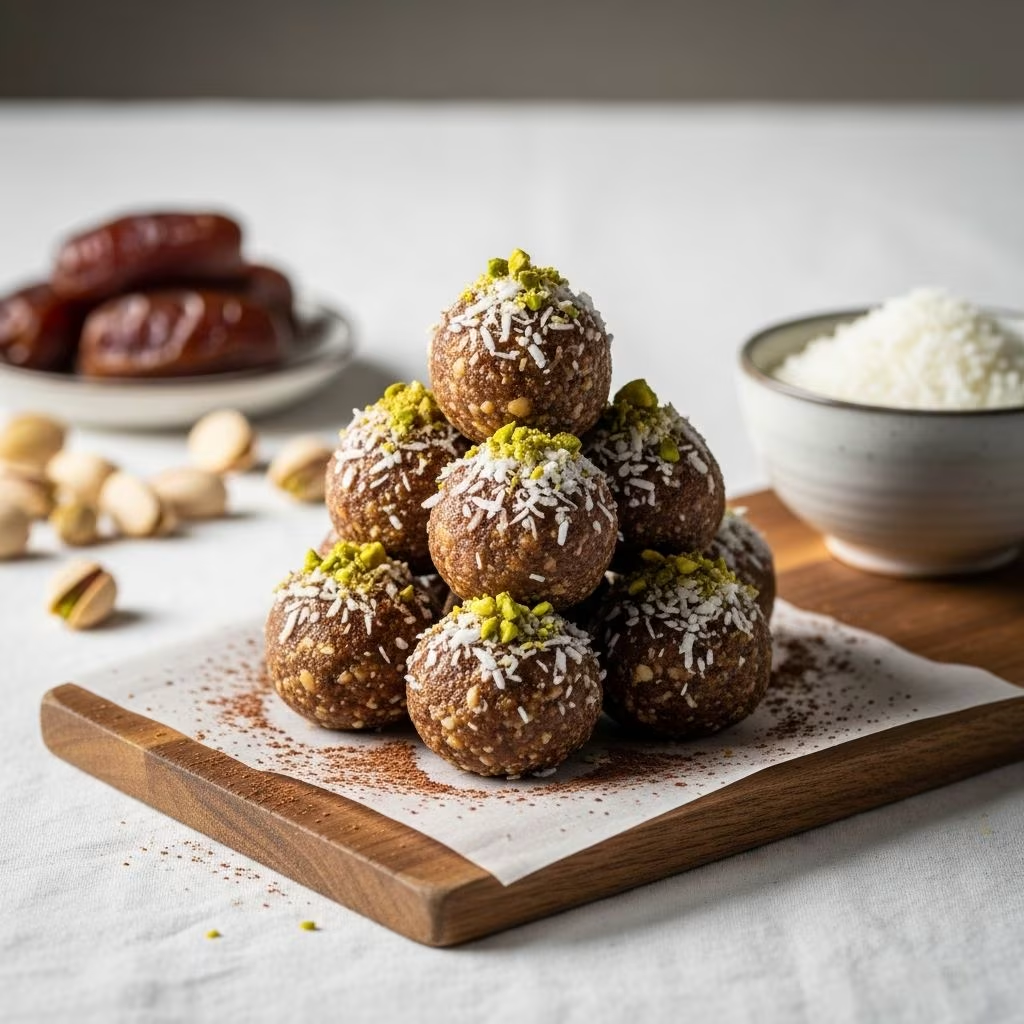
Chocolate-Forward Varieties incorporate cocoa powder directly into the mixture, creating rich brown balls with deep chocolate flavor. Some recipes suggest rolling finished balls in chopped nuts for added crunch, while others dip them in melted chocolate for a luxurious coating. Mini chocolate chips can be folded into the mixture or used as a coating depending on your preference.
Tropical Coconut Options replace some nuts with shredded coconut, creating lighter, airier textures with tropical notes. Rolling the finished balls in extra coconut flakes creates a visually appealing exterior while reinforcing the coconut flavor throughout.
Spiced Versions include warming additions like cinnamon, ginger, or cardamom that pair beautifully with dates’ natural sweetness. These variations work particularly well during fall and winter months or for holiday gift-giving.
Minimal-Ingredient Approaches use only dates and nuts, relying on the natural flavors of quality ingredients to shine. These two-ingredient balls demonstrate how much flavor can be achieved through simplicity and careful ingredient selection.
Dietary Considerations and Customization Options
Date balls naturally accommodate numerous dietary preferences and restrictions without requiring significant recipe modifications. The recipes work perfectly for individuals following vegan, paleo, gluten-free, or dairy-free diets, as the core ingredients align naturally with these eating approaches.
For those avoiding tree nuts due to allergies, substituting seeds like sunflower seeds or pumpkin seeds provides similar textural and nutritional benefits. While the flavor profile shifts slightly, the binding properties remain consistent, allowing the basic formula to work successfully.
Individuals managing blood sugar levels benefit from date balls’ natural sweetness combined with fiber and healthy fats from nuts, which create a more gradual glucose response compared to refined sugar treats. The absence of refined carbohydrates makes these options appealing for many health-conscious snackers.
Storage and Shelf Life Guidelines
Properly stored date balls maintain quality for extended periods, making them ideal for batch preparation. Room temperature storage in an airtight container keeps them fresh for several days, though the texture gradually firms as the moisture content decreases. Many people prefer this firmer consistency, finding it more pleasant to eat.
Refrigeration extends shelf life significantly, keeping date balls fresh for two to three weeks when stored in an airtight container or wrapped individually. The cold temperature firms the mixture and makes the balls easier to handle without sticking to your fingers.
Freezing provides the longest storage option, preserving date balls for several months without quality degradation. Thaw them at room temperature for 15-30 minutes before eating, or enjoy them directly from the freezer if you prefer a harder texture and slower-melting experience.
Equipment Needs and Kitchen Setup
Creating date balls requires minimal equipment, making this recipe accessible regardless of your kitchen resources. A food processor represents the most useful tool, rapidly breaking down dates and nuts into the appropriate consistency. High-powered blenders work as suitable alternatives, though they may require stopping and scraping down the sides more frequently during processing.
A small bowl for mixing assists in folding in chocolate chips or other mix-ins after the initial processing stage. A two-tablespoon cookie scoop speeds up portioning considerably, ensuring uniform sizing and reducing hand contact with the mixture. If you lack a cookie scoop, measuring out tablespoon portions with an actual spoon works equally well, though it takes slightly longer.
A clean work surface, plate, or cutting board provides space for rolling the balls. Some people prefer working directly on the surface, while others find using a shallow bowl makes the rolling motion smoother and prevents mixture from spreading across their workspace.
Troubleshooting Common Issues
Mixture Too Dry and Crumbly – Add water in one-teaspoon increments and pulse again. If you’ve already added significant water, consider adding another date or using slightly softer dates in future batches. Ensure your dates were properly softened before processing.
Mixture Too Wet and Sticky – Process longer to allow nuts’ natural oils to incorporate more thoroughly. You might also add additional oat flour or ground nuts to absorb excess moisture. In future batches, use slightly less water or reduce the amount of nut butter included.
Difficulty Rolling Into Balls – Refrigerate the mixture for 15-30 minutes to firm it up before rolling. This temperature adjustment makes the mixture less sticky and much easier to handle. Alternatively, dampen your hands very slightly with water to prevent the mixture from sticking while rolling.
Balls Falling Apart After Rolling – Your mixture requires more moisture or binding agent. Process longer to allow nut oils to incorporate, or add water in small increments. Future batches might benefit from including a small amount of nut butter or reducing the amount of nuts in the recipe.
Why Date Balls Appeal to Modern Home Cooks
The resurgence of date balls in contemporary home cooking reflects broader trends toward whole-food snacking, minimal-ingredient recipes, and nutritious treats that don’t require oven time. Their no-bake nature eliminates heating concerns during warmer months and requires minimal kitchen cleanup compared to traditional baking projects. The preparation time – typically 10-15 minutes from start to finish – fits easily into busy schedules, making these treats accessible for weeknight preparation or weekend batch cooking.
Date balls also satisfy the human desire for something sweet without the guilt associated with processed candy or sugar-laden desserts. Their natural sweetness from dates, combined with nutritional contributions from nuts and healthy fats, positions them as genuinely nourishing snacks rather than empty indulgences.
Frequently Asked Questions
Can I use different types of dates in this recipe?
Yes, though results vary slightly. Medjool dates provide the best texture and flavor, but deglet noor, Barhi, or Halawi dates work acceptably. Ensure whatever type you select is soft enough to process easily, soaking harder varieties in hot water first.
How many date balls does a typical recipe yield?
Most recipes produce 12-20 balls, depending on the portion size and exact ingredients used. A two-tablespoon scoop typically creates balls that yield approximately 15-16 pieces from a standard recipe.
Are date balls appropriate for people with nut allergies?
Traditional date balls rely heavily on nuts for structure and flavor. However, you can substitute seeds like sunflower or pumpkin seeds. The texture and flavor differ slightly, but the binding properties remain adequate for creating successful balls.
Can I prepare date balls in advance for parties or gifts?
Absolutely. Prepare date balls several days ahead and store in the refrigerator, or make them weeks in advance and freeze. Remove from freezer an hour before serving to allow softening to room temperature.
Do date balls require any special storage containers?
Airtight containers prevent moisture loss and maintain optimal texture during storage. Glass containers with tight-sealing lids work well, as do plastic containers designed for food storage. Individual parchment paper wrapping prevents sticking when storing multiple balls.
References
- Date Balls Recipe — Love and Lemons. 2024. https://www.loveandlemons.com/date-balls/
- 15 Minute Easy Chocolate Date Balls Recipe — An Edible Mosaic. 2024. https://www.anediblemosaic.com/chocolate-date-balls-recipe/
- 2 Ingredient Nut & Date Balls — A Saucy Kitchen. 2017. https://www.asaucykitchen.com/nut-date-balls/
- Easy No-Bake Coconut Date Balls — Wholehearted Eats. 2024. https://www.wholeheartedeats.com/easy-no-bake-coconut-date-balls/
- Date Nuts Energy Balls — Profusion Curry. 2024. https://profusioncurry.com/date-nuts-energy-balls/
- Date Energy Balls Recipe with Coconut and Almonds — The Mediterranean Dish. 2024. https://www.themediterraneandish.com/energy-balls/