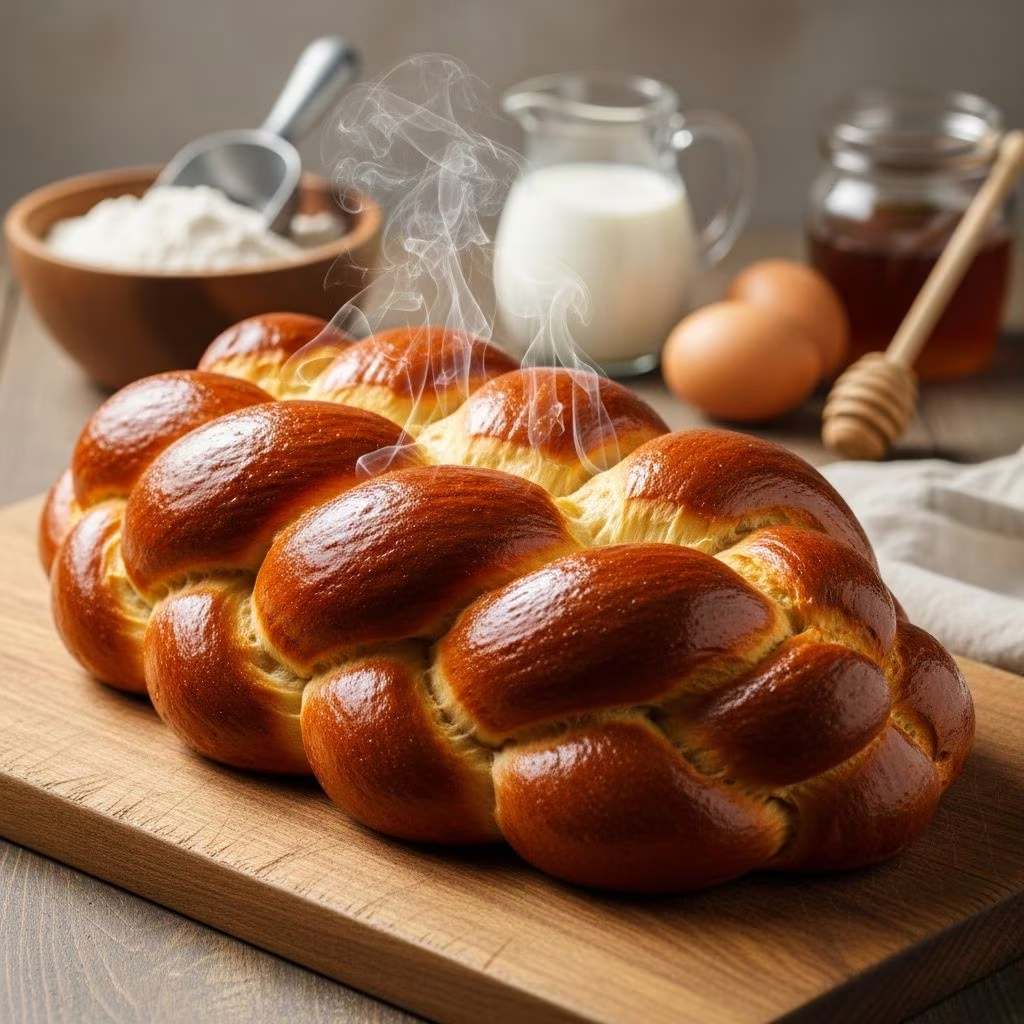
Challah bread stands as a cornerstone of Jewish culinary tradition, prized for its soft interior, shiny golden crust, and intricate braided design. This enriched yeast bread, often enjoyed during Shabbat and holidays, combines simple ingredients like flour, eggs, oil, and honey into a loaf that symbolizes abundance and blessing. Baking challah at home allows you to customize flavors and shapes while connecting with centuries-old practices. This guide provides a complete roadmap, from dough preparation to advanced techniques, ensuring success for beginners and seasoned bakers alike.
The Essence of Challah: History and Significance
Originating in Eastern Europe among Ashkenazi Jewish communities, challah evolved from everyday bread to a ritual item. The name “challah” refers to the portion of dough traditionally set aside as an offering, a custom rooted in biblical commandments. Today, two loaves grace Shabbat tables, representing the double portion of manna gathered by Israelites in the desert. The braiding mimics ladders to heaven or intertwined community bonds, while its sweetness from honey evokes a prosperous new week.
Beyond symbolism, challah’s appeal lies in its versatility. Slice it for French toast, use leftovers in bread pudding, or transform it into savory stuffing. Its egg-rich dough yields a tender crumb ideal for toasting, making it a favorite in modern kitchens worldwide.
Essential Ingredients for Authentic Challah
High-quality ingredients ensure challah’s signature texture and flavor. Start with bread flour for better gluten development, which supports the bread’s structure during rising and braiding.
- Bread flour (4-5 cups): Provides strength for airy results; all-purpose works but may yield denser loaves.
- Instant yeast (2¼ tsp): Activates quickly for reliable rise.
- Lukewarm water (1 cup): Mix boiling and cold water for optimal temperature around 100°F.
- Kosher salt (1 tbsp): Balances sweetness and strengthens dough.
- Honey (¼ cup): Adds moisture and subtle sweetness.
- Neutral oil (½ cup): Like safflower or canola, keeps bread soft without flavor interference.
- Eggs (2 large): Enrich the dough for tenderness and golden hue.
For the egg wash, reserve an extra egg yolk mixed with water or a touch of sweetener for shine. These components create a dough that’s sticky yet manageable, rising into light, fluffy bread.
Step-by-Step Guide to Challah Dough Preparation
Begin with a sponge method to boost flavor and rise. Whisk 1 cup flour with yeast and stir in lukewarm water until smooth. Cover and let it puff up for 45 minutes—this bubbly starter ensures even fermentation.
- Add salt, honey, oil, and eggs to the sponge. Stir until combined.
- Incorporate remaining flour gradually, mixing into a shaggy dough.
- Knead on a floured surface for 2-3 minutes until smooth and elastic. Avoid over-kneading to prevent toughness.
- Place in an oiled bowl, cover, and let rise 1-2 hours until doubled.
This process yields about 2 pounds of dough, perfect for one large or two smaller loaves. Patience during rising is key for optimal texture.
Mastering the Art of Braiding Challah
Braiding elevates challah from simple bread to artistry. For a classic 3-strand braid, divide dough into three equal portions, roll into ropes, and braid tightly, pinching ends. A 4- or 6-strand version adds complexity: number strands, then cross over sequentially (e.g., rightmost over second for 6-strand).
| Braid Type | Strands | Difficulty | Best For |
|---|---|---|---|
| Simple | 3 | Beginner | Everyday loaves |
| Classic | 4 | Intermediate | Shabbat dinners |
| Decorative | 6 | Advanced | Holidays |
Practice on a clean surface dusted with flour. For round challah, coil strands into a spiral, ideal for Rosh Hashanah symbolizing the year’s cycle. Let braided loaves proof 45-60 minutes until puffy.
Baking Techniques for Perfect Golden Crust
Preheat oven to 375°F. Brush with egg wash (yolk + water or syrup) for shine, then sprinkle sesame or poppy seeds. Bake 25-40 minutes, rotating halfway, until deep golden and hollow-sounding when tapped (internal temp 190°F).
Pro tip: Place a pan of water in the oven for steam, mimicking professional results with a crisp exterior and soft inside. Cool on a rack to prevent sogginess.
Creative Variations to Elevate Your Challah
Experiment with flavors while honoring tradition. Add raisins or chocolate chips during braiding for sweetness. For savory twists, incorporate herbs, garlic, or cheese swirls.
- Vegan Challah: Replace eggs with yogurt or aquafaba; knead thoroughly for structure.
- Stuffed Challah: Roll dough thin, fill with spinach-artichoke dip, cinnamon-sugar, or Nutella, then braid and seal.
- Overnight Dough: Refrigerate after first rise for convenient morning baking; shape cold for easier handling.
Large 6-pound batches suit stuffing experiments, yielding multiple loaves.
Troubleshooting Common Challah Challenges
Bakers often face issues like dense loaves or unraveling braids. Here’s how to fix them:
- Dough too sticky? Add flour sparingly during kneading.
- Flat bread? Ensure proper proofing; dough should spring back slowly when poked.
- Pale crust? Use yolk-heavy wash and bake longer.
- Heavy loaf? Check yeast freshness and water temperature.
Humidity affects rising—adjust flour in moist climates. With practice, these hurdles vanish.
Challah in Jewish Holidays and Modern Tables
Rosh Hashanah calls for round challah with apples and honey for a sweet year. On Yom Kippur break-fast, it pairs with smoked fish. Everyday, it shines in sandwiches or as burger buns. Collections of global recipes highlight innovations like olive oil challah from Israel or seeded versions from America.
Storage, Freezing, and Leftover Ideas
Store at room temperature in a bag for 2-3 days. Freeze sliced loaves up to 3 months; thaw and toast. Revive stale challah by sprinkling water and reheating at 350°F.
Transform leftovers: cube for strata, French toast, or croutons. Stuffing with sausage and sage makes Thanksgiving magic.
Frequently Asked Questions (FAQs)
Can I make challah without a stand mixer?
Yes, hand-kneading works perfectly; just knead longer for gluten development.
How do I know when challah is fully baked?
Look for mahogany color and 190°F internal temperature.
Is bread flour necessary?
Preferred for chewiness, but all-purpose yields softer results.
Can I add whole grains?
Substitute up to 1 cup whole wheat flour, adding extra water for hydration.
Why does my challah deflate?
Gentle handling during shaping and proofing prevents this.
Nutrition and Serving Suggestions
One slice (about 80g) offers 250 calories, 8g protein, and carbs for energy. Serve warm with butter, or elevate with smoked salmon and cream cheese. Pairs beautifully with soups or salads.
References
- Holly’s Challah Bread Recipe — Alexandra’s Kitchen. 2014-12-16. https://alexandracooks.com/2014/12/16/hollys-challah/
- Our Favorite Challah Recipes, Plus More Jewish Breads — Jewish Food Society. N/A. https://www.jewishfoodsociety.org/collections/favorite-challah-recipes
- All Things Challah: 14 Recipes to Sweeten Shabbat — Reform Judaism. N/A. https://reformjudaism.org/jewish-holidays/shabbat/all-things-challah-14-recipes-sweeten-shabbat
- 20 Ways To Stuff a Challah — Jamie Geller. N/A. https://jamiegeller.com/recipes/20-stuffed-challah-recipes/