Wisconsin has earned its reputation as the bratwurst capital of America through generations of sausage-making tradition and a deep cultural connection to this beloved dish. Whether you’re preparing for a summer gathering, game day celebration, or simply craving an authentic taste of the Midwest, understanding how to properly prepare and cook Wisconsin bratwurst elevates the entire experience. This comprehensive guide walks you through every step of the process, from ingredient selection to final plating, ensuring that your bratwurst reaches its full potential.
Understanding Wisconsin Bratwurst: History and Characteristics
Wisconsin bratwurst represents a distinctive style of German-influenced sausage that has become deeply embedded in the state’s culinary identity. The tradition traces back to German immigrants who settled in Wisconsin during the nineteenth century, bringing with them centuries-old techniques for sausage production. Unlike many other American sausages, Wisconsin bratwurst maintains specific characteristics that define its category and set it apart from other regional varieties.
The defining feature of authentic Wisconsin bratwurst lies in its spice profile and meat composition. Traditional recipes rely on a carefully balanced blend of warm spices that create a complex flavor profile without overwhelming the palate. The meat base typically consists of pork, either shoulder or a combination of shoulder and back fat, which provides the necessary fat content for flavor and juiciness. The ratio of meat to fat, combined with the precise spice mixture, creates the signature taste that distinguishes Wisconsin bratwurst from other sausage varieties available across the country.
Essential Ingredients for Authentic Preparation
Creating authentic Wisconsin bratwurst requires attention to ingredient quality and proportions. Understanding what each component contributes to the final product helps you make informed choices when sourcing materials.
The Protein Foundation
The primary ingredient in Wisconsin bratwurst is pork, specifically pork shoulder or pork butt, which contains the ideal fat-to-lean ratio for sausage production. Approximately 1,000 grams of pork shoulder provides the meat base for a standard batch. When selecting pork, choose cuts with visible marbling, as this fat content contributes significantly to flavor and texture. Some recipes incorporate additional pork back fat, typically around 200 grams, to further enhance the richness and juiciness of the finished product. The fat content should never be neglected, as it carries flavor compounds and prevents the sausage from becoming dry during cooking.
Seasonings That Define the Profile
The distinctive taste of Wisconsin bratwurst comes from a carefully curated spice blend that must be measured precisely for consistent results.
- Salt: 16 grams of kosher salt serves as the primary seasoning and helps bind the meat mixture together
- Sweetener: 6 grams of dextrose or sugar balances the savory elements and aids in preservation
- Pepper: 3.5 grams of finely ground black pepper or white pepper creates the spice base, with white pepper providing more heat
- Coriander: 1 gram of ground coriander adds subtle earthiness and warmth
- Nutmeg: 3 grams of freshly grated nutmeg contributes warmth and complexity that distinguishes Wisconsin style from other bratwurst varieties
- Marjoram: 1 gram of ground marjoram provides herbaceous notes
- Caraway: 1 gram of ground caraway seeds adds distinctive pungency
- Ginger: 1 gram of ground ginger introduces subtle heat and spice notes
- Celery Seed: 1 gram of ground celery seed rounds out the flavor profile with subtle vegetal notes
Optional ingredients include 25 grams of cold beer or water and 2-3 egg whites as a binder, which help achieve the proper texture and consistency in the finished sausage.
Preparation Methods: From Raw Ingredients to Finished Sausage
Meat Processing and Temperature Control
The foundation of successful bratwurst production begins with proper meat preparation. Start by selecting your pork shoulder and removing any silver skin, sinew, or arterial tissue that would negatively affect texture. Cut the cleaned meat into small cubes approximately one inch in size, then place in the freezer for thirty minutes to one hour until the internal temperature reaches between 32 and 34 degrees Fahrenheit. This cold temperature proves critical because it prevents fat from smearing during grinding, which would compromise the final texture.
Once the meat reaches the desired temperature, grind it using a food grinder fitted with a 6mm plate. Keep all equipment—the grinder, bowl, and utensils—refrigerated or well-chilled to maintain proper temperatures throughout the grinding process. The ground meat should feel cold and slightly sticky to the touch.
Mixing the Meat and Spice Blend
Combine the chilled ground meat with your prepared spice mixture in a large, chilled bowl. Mix thoroughly using your hands or a stand mixer until the mixture becomes noticeably tacky and sticky. You’ll know you’ve mixed sufficiently when a handful of the mixture, if held upside down with an open hand, clings to your palm rather than falling away. This tackiness indicates proper protein development and fat distribution throughout the mixture.
Casing and Shaping
Traditional Wisconsin bratwurst uses natural hog casings in the 29-32mm size range, which provide authentic texture and mouthfeel. Before stuffing, rinse the casings thoroughly under cool running water to remove excess salt. Using a sausage stuffer, carefully fill the casings with your meat mixture, being careful not to overstuff, which can cause casings to burst during cooking. After stuffing, twist the filled casing at approximately 5-inch intervals to create individual sausage links. Prick any air pockets that appear in the surface using a clean needle to prevent bursting during cooking.
Cooking Techniques: Multiple Methods for Perfect Results
The Beer and Onion Method: Simmering Approach
The most traditional Wisconsin preparation involves cooking bratwurst in beer with onions, which has become iconic for game day gatherings and summer cookouts. This method produces exceptionally tender, juicy results and allows partial preparation in advance.
Begin by slicing one sweet or yellow onion into rings and placing them in a large skillet. Add 48 ounces of light beer (typically four 12-ounce cans of brands like Miller Lite) to the skillet and bring the liquid to a boil over high heat. Reduce the heat to medium-low to maintain a gentle simmer, then add your bratwurst sausages to the liquid. The sausages should remain in the simmering liquid for approximately 10-15 minutes, until they are no longer pink in the center and have absorbed the beer flavor.
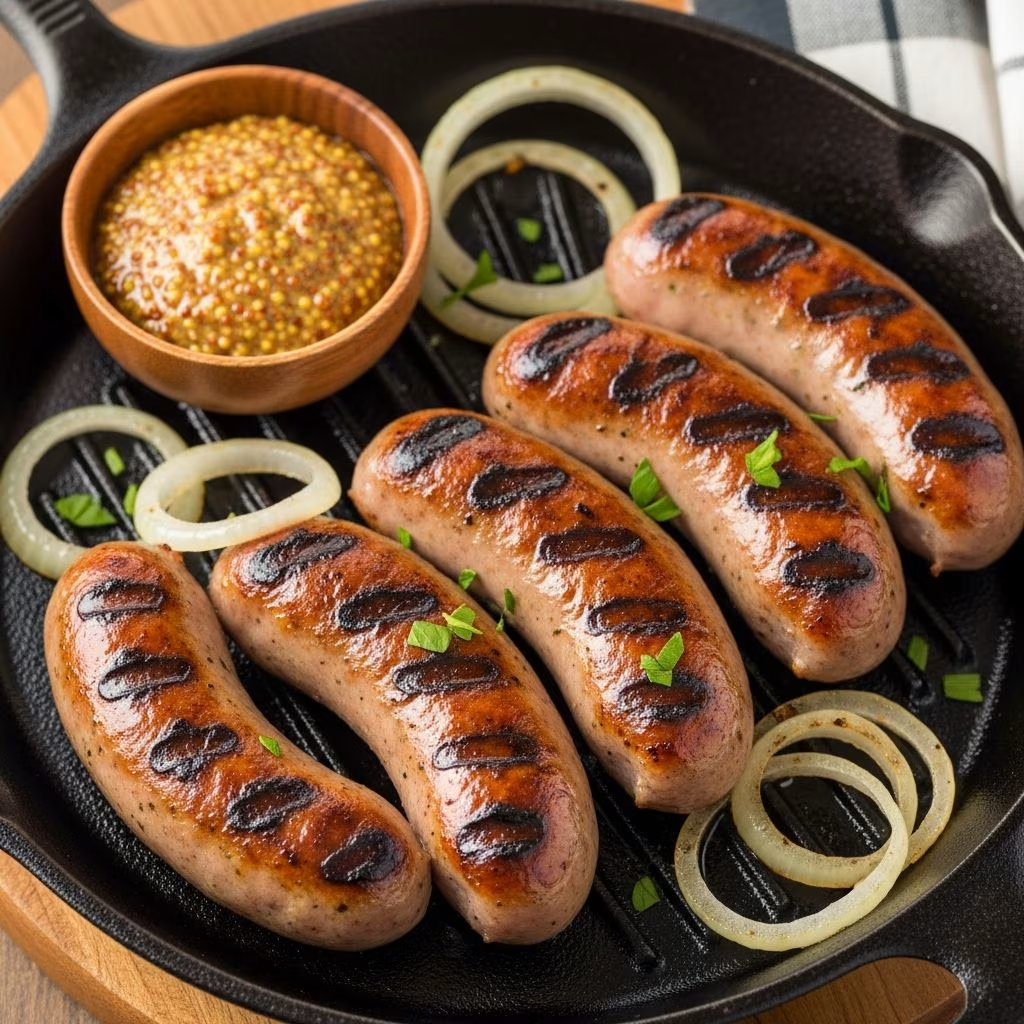
After the simmering phase, transfer the partially cooked bratwurst to a preheated grill or skillet over medium-high heat. Grill or sauté for approximately five minutes on each side, turning once, until the exterior develops a golden-brown color and slight char. This two-stage approach ensures that the sausages cook through completely while developing flavorful browning on the exterior.
Advanced Preparation: The Cold Soak Method
For optimal flavor development, consider the advanced cold-soak technique favored by experienced bratwurst enthusiasts. Place your prepared bratwurst sausages in a large resealable bag or airtight container with sliced yellow onion and 24 ounces of your chosen beer. Seal the container and refrigerate for a minimum of 12 hours, extending up to 24 hours for maximum flavor absorption. This extended cold soak allows the beer and onion flavors to permeate the sausage completely, resulting in more complex and developed taste profiles.
When ready to cook, remove the bratwurst and onions from the refrigerator and bring them to room temperature for approximately 15-20 minutes. This prevents thermal shock during cooking. Proceed with the beer-simmer and grilling method described above for the most flavorful results.
Direct Grilling Method
For those preferring to skip the simmering phase, direct grilling offers a quicker approach that still produces excellent results. Preheat your grill to medium-high heat. Place the bratwurst directly on the cooking grates and grill for 12-15 minutes total, rotating every 3-4 minutes to ensure even browning and cooking. This method requires more attention to prevent burning, but skilled cooks can achieve beautiful caramelization on the exterior while maintaining juiciness inside.
Stovetop Skillet Method
When outdoor grilling isn’t possible, a heavy-bottomed skillet provides reliable results. Heat a cast-iron or heavy-bottomed skillet over medium-high heat and lightly coat with oil. Place the bratwurst in the dry pan and cook for approximately 15-18 minutes, turning frequently to develop even browning. Reduce heat if the exterior begins browning too quickly before the interior cooks through.
Serving Traditions and Accompaniments
The Classic Wisconsin Presentation
Authentic Wisconsin bratwurst service follows time-honored traditions that complement the sausage’s flavors perfectly. Serve your finished bratwurst on sturdy brat-specific buns, which are slightly larger and more robust than standard hot dog buns and resist sogginess better. The proper bun maintains its structural integrity when topped with traditional condiments and prevents the eating experience from becoming messy.
Traditional Toppings and Condiments
| Topping | Description | Recommended Preparation |
|---|---|---|
| Sauerkraut | Fermented cabbage providing acidic balance | Warm gently before serving; drain excess liquid |
| Mustard | Sharp, tangy condiment essential to authentic preparation | Use quality mustard; apply liberally |
| Grilled Onions | Caramelized onions from cooking liquid | Cook alongside bratwurst in beer mixture |
| Pickles | Optional acidic accompaniment | Slice or serve whole on the side |
| Ketchup | Common American addition | Optional; not traditional but widely used |
Layer these toppings onto your bun with the bratwurst, starting with the sausage itself, then adding a generous pile of sauerkraut, followed by grilled onions, and finishing with mustard drizzled across the top. This layering ensures balanced flavor distribution with each bite.
Advanced Techniques and Variations
Creating Homemade Bratwurst from Scratch
While many cooks purchase pre-made bratwurst, creating your own from raw ingredients offers superior flavor control and freshness. After grinding and mixing your meat as described above, stuff the mixture into prepared hog casings using a traditional sausage stuffer. This hands-on approach allows you to adjust spice levels to personal preference and ensures the highest quality ingredients throughout the process.
Flavor Variations Within the Wisconsin Style
While maintaining the essential Wisconsin bratwurst character, you can experiment with pepper selections. White pepper creates significantly more heat than black pepper while providing different flavor notes, appealing to those who prefer spicier sausages. Some producers offer cheese-filled variations that add richness and creaminess to the traditional formula.
Frequently Asked Questions
How can I tell when bratwurst is fully cooked?
Properly cooked bratwurst should reach an internal temperature of 160 degrees Fahrenheit. Use a meat thermometer inserted into the thickest part of the sausage to verify doneness. The exterior should be golden brown or slightly charred, and when cut, the interior should show no pink meat.
Can I prepare bratwurst ahead of time?
Yes, the beer-soak method allows bratwurst to be prepared 24 hours in advance. You can also simmer bratwurst in beer and onions, then refrigerate for up to three days before finishing on the grill. This makes bratwurst ideal for entertaining, as final preparation requires minimal time.
What’s the best beer to use for cooking bratwurst?
Light lagers like Miller Lite, Budweiser, or similar American-style beers work well for the traditional method. The beer should have a relatively neutral flavor profile that won’t overpower the sausage spices. Some enthusiasts prefer regional Wisconsin beers to honor the local tradition.
How should I store uncooked bratwurst?
Store fresh, uncooked bratwurst in the refrigerator at 40 degrees Fahrenheit or below for up to three days, or freeze for up to three months. Thaw frozen bratwurst in the refrigerator overnight before cooking.
Is it necessary to use natural casings?
While traditional Wisconsin bratwurst uses natural hog casings, some recipes adapt the mixture for caseless cooking. However, casings provide authentic texture, appearance, and mouthfeel that significantly contribute to the overall experience, making them highly recommended.
References
- Classic Wisconsin Bratwurst Recipe and Techniques — 2 Guys & A Cooler. Accessed April 2026. https://twoguysandacooler.com/classic-wisconsin-bratwurst/
- Wisconsin-Style Bratwurst: Traditional Methods and Ingredients — The Paupered Chef. Accessed April 2026. https://www.thepauperedchef.com/article/wisconsin-style-bratwurst
- Wisconsin Beer Brats Cooking Guide — Simply Whisked. Accessed April 2026. https://www.simplywhisked.com/wisconsin-beer-brats/
- Regional Beer Brats Preparation and Serving — Cheese Curd In Paradise. Accessed April 2026. https://cheesecurdinparadise.com/wisconsin-beer-brats/
- Grilled Wisconsin Beer Brats Techniques — Plays Well With Butter. Accessed April 2026. https://playswellwithbutter.com/beer-brats-recipe/