Nothing beats the fresh, vibrant taste of homemade pesto. This classic Italian sauce, originating from Genoa, transforms simple ingredients into a burst of herbaceous, nutty goodness. Whether drizzled over pasta, spread on bread, or used as a pizza topping, perfect pesto elevates any dish. In this comprehensive guide, we’ll explore everything from selecting premium components to advanced preparation methods, troubleshooting issues, and innovative ways to use it. By the end, you’ll confidently create restaurant-quality pesto in your own kitchen.
Understanding the Essence of Pesto
Pesto, derived from the Italian word “pestare” meaning to pound or crush, traditionally involves grinding ingredients by hand in a mortar and pestle. This method preserves the oils and flavors better than modern blenders. The core recipe hinges on balance: the sweetness of basil, sharpness of garlic, richness of nuts, brininess of cheese, and smoothness of olive oil.
Authentic pesto alla Genovese, protected by European Union status, specifies particular varieties and proportions. While recipes vary, the goal remains a sauce that’s neither too oily nor too pasty, with a vivid green hue and fresh aroma. Mastering this balance requires attention to quality and technique.
Selecting the Finest Ingredients
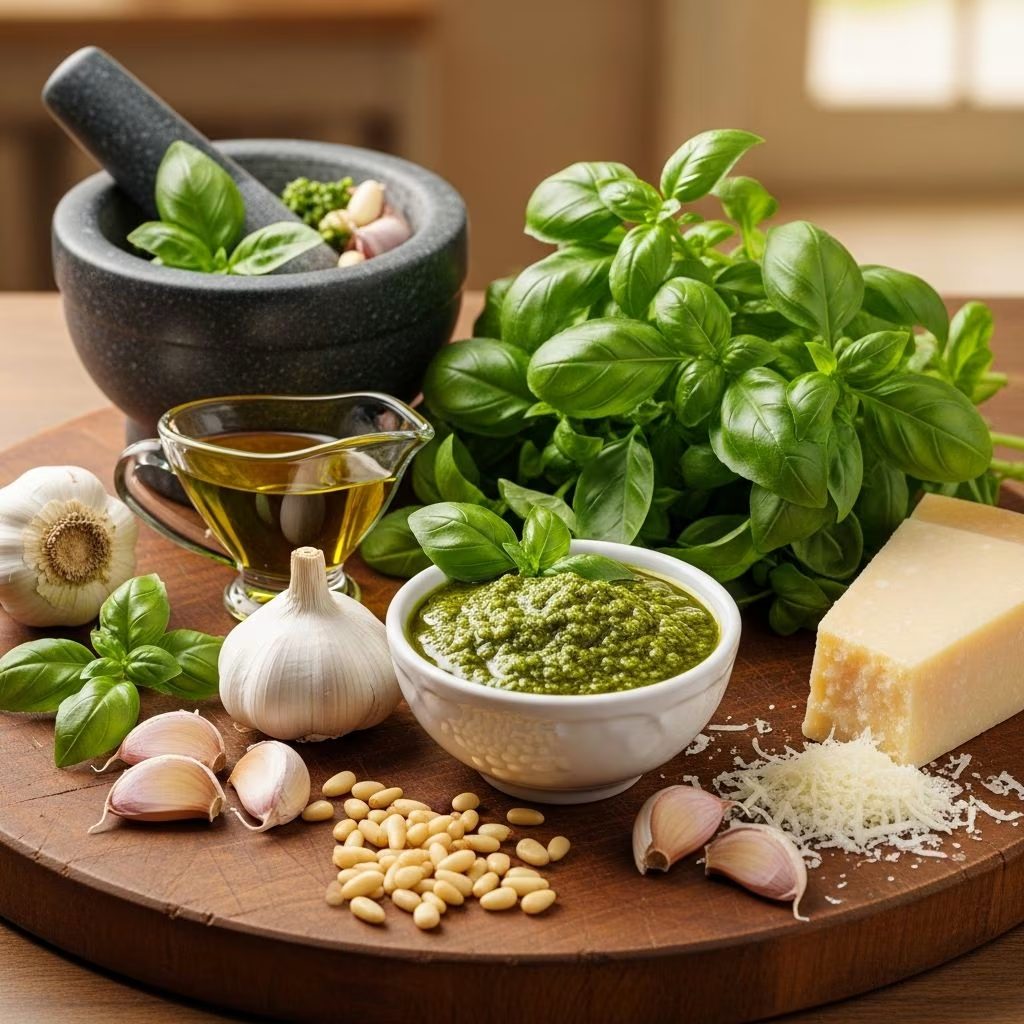
The foundation of exceptional pesto starts with superior components. Here’s a breakdown of what to choose:
- Basil: Opt for young, tender leaves from sweet Genovese basil. Avoid large, tough leaves which can turn bitter when processed. Look for bright green color without wilting or spots.
- Pine Nuts: These provide creaminess and subtle pine flavor. Toast them lightly for enhanced nuttiness, but don’t burn them.
- Garlic: Use fresh cloves, preferably young ones, to prevent overpowering pungency. One or two per cup of basil suffices.
- Parmesan and Pecorino: Freshly grated Parmigiano-Reggiano and Pecorino Romano add umami. Use a 2:1 ratio for optimal saltiness.
- Olive Oil: Extra-virgin offers fruity notes. A good Ligurian oil mimics traditional taste.
- Salt: Coarse sea salt amplifies flavors without overpowering.
For the classic batch serving 4-6, gather: 2 packed cups basil leaves, 1/4 cup pine nuts, 2 garlic cloves, 1/2 cup grated cheeses, 1/2 cup olive oil, and salt to taste.
Step-by-Step Pesto Preparation
Follow these precise steps for flawless results:
- Prep Basil: Gently wash leaves in cold water, then dry thoroughly with a salad spinner or towels. Excess moisture dilutes flavor.
- Toast Nuts: Spread pine nuts on a baking sheet and toast at 350°F for 5-7 minutes until golden. Cool completely.
- Grate Cheese: Use the fine side of a grater for fluffy texture that melts seamlessly.
- Mince Garlic: Chop finely or smash to release flavors without bitterness.
- Process in Stages: In a food processor, pulse basil, nuts, and garlic with a pinch of salt until coarsely chopped. Add cheeses and pulse again.
- Emulsify with Oil: With the machine running, drizzle in oil slowly until the mixture emulsifies into a smooth, vibrant paste. Stop before it becomes too thin.
- Taste and Adjust: Season with more salt or lemon juice for brightness if needed.
Chilling briefly before use allows flavors to meld.
Tools and Techniques for Superior Texture
While a mortar and pestle yield the most authentic result, a food processor works well with caveats. Use short pulses to avoid overheating, which oxidizes basil and dulls color. Add a pinch of salt early as an abrasive to break down fibers.
For blender users, a high-speed model prevents graininess. Process in small batches and scrape sides frequently. Pro tip: Freeze basil leaves briefly to retain chlorophyll and vibrant green.
| Method | Pros | Cons | Best For |
|---|---|---|---|
| Mortar & Pestle | Optimal flavor release, control | Labor-intensive | Small batches, purists |
| Food Processor | Quick, consistent | Risk of overheating | Everyday use |
| Blender | Powerful blending | Harder to control texture | Large quantities |
Preserving Color and Freshness
Brown pesto disappoints. Oxidation from air exposure is the culprit. Minimize by processing quickly and covering the surface with a thin oil layer before storing. Refrigerate in an airtight container up to 5 days; the oil seal prevents browning.
For longer storage, freeze in ice cube trays, then transfer to bags. Thaw cubes as needed for portion control. Blanching basil in boiling water for 10 seconds, then ice bath shocking, locks in color exceptionally well, especially for larger batches.
Avoiding Common Mistakes
Even seasoned cooks falter. Here’s how to sidestep pitfalls:
- Overprocessing: Leads to bitter, warm sauce. Pulse intermittently.
- Poor Basil Quality: Store-bought often lacks potency; grow your own or buy from farmers’ markets.
- Too Much Oil: Results in greasy texture. Add gradually.
- Skipping Toasting: Raw nuts taste flat.
- Using Pre-Grated Cheese: Contains anti-caking agents that affect creaminess.
Taste at every stage to fine-tune.
Creative Variations to Elevate Pesto
Experiment beyond classic:
- Cilantro Pesto: Swap basil for cilantro, add lime for Mexican flair.
- Arugula Pesto: Peppery greens with walnuts for budget-friendly twist.
- Sun-Dried Tomato Pesto: Blend tomatoes, almonds, and Parmesan for rosso version.
- Kale Pesto: Nutritional boost with massaged kale and pistachios.
- Vegan Pesto: Nutritional yeast replaces cheese.
Adjust nuts and acids to match greens.
Ingenious Ways to Use Pesto
Pesto’s versatility shines:
- Pasta: Toss with linguine or trofie; add pasta water for silky sauce.
- Proteins: Marinate chicken or swirl into meatballs.
- Veggies: Mix with roasted potatoes or zucchini noodles.
- Breakfast: Swirl into scrambled eggs or top avocado toast.
- Sandwiches: Layer on panini with mozzarella and tomatoes.
- Soups: Dollop on minestrone.
Dilute with oil or yogurt for dressings.
Nutritional Profile and Pairings
Pesto packs healthy fats from olive oil and nuts, vitamins A and K from basil, and calcium from cheese. A 2-tablespoon serving offers about 200 calories, balancing indulgence with nutrition. Pair with crisp white wines like Vermentino or light reds.
Frequently Asked Questions
Can I make pesto without pine nuts?
Yes, substitute walnuts, almonds, or sunflower seeds affordably without sacrificing much flavor.
How long does homemade pesto last?
Up to 5 days in the fridge under oil, or 3-6 months frozen.
Why does my pesto turn brown?
Oxidation from air and heat. Process cold ingredients quickly and store properly.
Is pesto gluten-free?
Yes, inherently, but check pasta pairings.
Can I use dried basil?
No, fresh only for vibrancy and color.
Perfect Pesto Recipe Template
Ingredients:
- 2 cups fresh basil leaves
- 1/4 cup toasted pine nuts
- 2 garlic cloves
- 1/2 cup grated Parmesan
- 1/4 cup grated Pecorino
- 1/2 cup extra-virgin olive oil
- Salt to taste
Instructions: Pulse basil, nuts, garlic, and salt. Add cheeses. Drizzle oil while running. Yields 1 cup. Prep: 15 min.
References
- Protected Designation of Origin: Pesto Genovese Consortium — Pesto Genovese Consortium. 2023-01-15. https://pestogenovese.it/en/
- Basil Cultivation Guidelines — University of California Agriculture and Natural Resources. 2024-05-20. https://ucanr.edu/sites/UrbanHort/Warm_Season_Vegetables/Basil/
- Olive Oil Production Standards — International Olive Council. 2025-02-10. https://www.internationaloliveoil.org/what-is-evoo/
- Nutritional Analysis of Pesto Sauce — USDA FoodData Central. 2023-11-01. https://fdc.nal.usda.gov/fdc-app.html#/food-details/171285/nutrients