Spicy kimchi stands as a cornerstone of Korean cuisine, offering a tangy, fiery punch that elevates any meal. This fermented dish, primarily made from napa cabbage, combines bold spices with natural lactic acid fermentation to create a probiotic powerhouse. Whether you’re new to fermenting or a seasoned cook, this guide provides everything needed to produce batches of vibrant, crunchy kimchi at home.
Understanding Kimchi: A Fermented Korean Staple
Kimchi’s roots trace back centuries in Korea, where it served as a vital preservation method during harsh winters. The process involves salting cabbage to draw out moisture, then coating it in a spicy paste before fermentation. Lactobacillus bacteria thrive in this environment, converting sugars into lactic acid, which preserves the vegetables and imparts a signature sour tang.
Modern kimchi varies by region and season, but spicy cabbage versions dominate. Key to its appeal is gochugaru, a coarsely ground Korean chili powder that delivers heat without overwhelming smoothness. Fish sauce or fermented shrimp adds umami depth, while garlic, ginger, and onions build aromatic complexity.
Essential Ingredients for Authentic Flavor
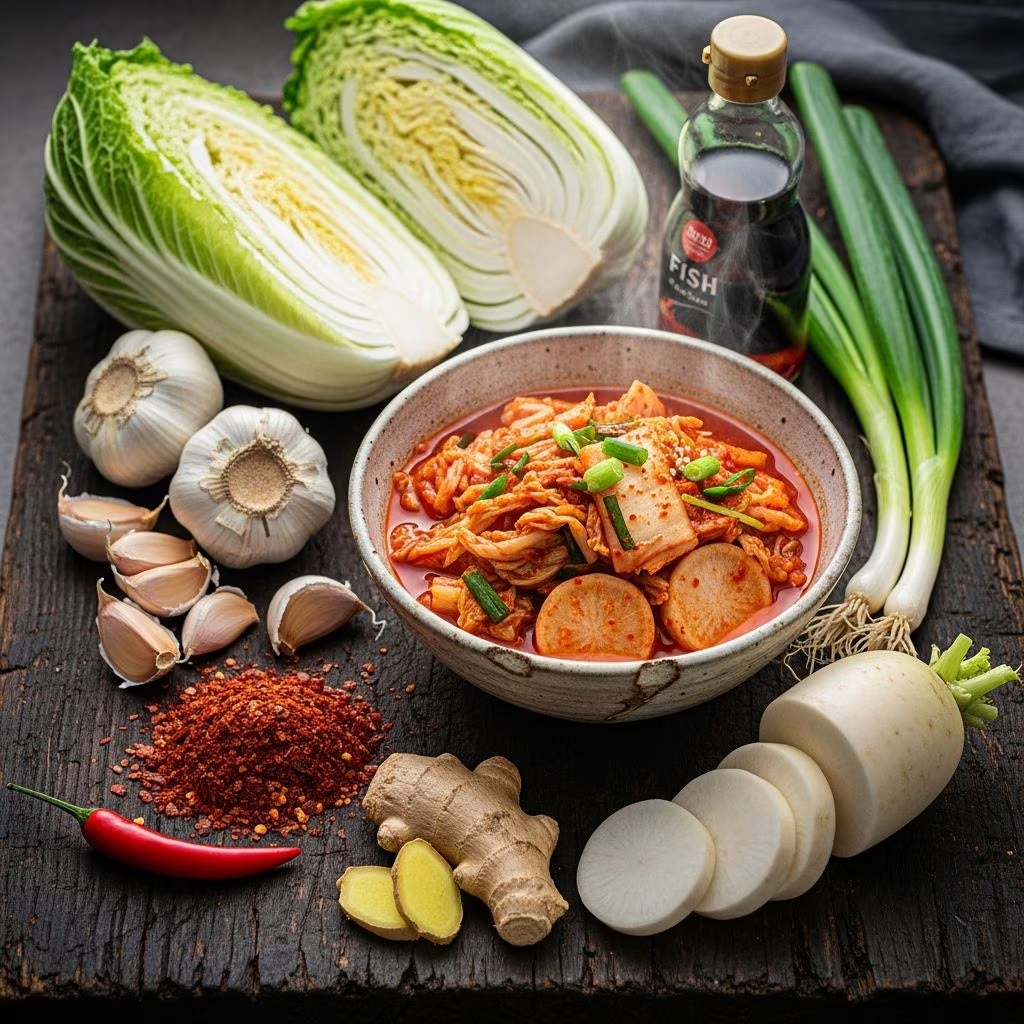
Gathering quality components ensures success. Start with fresh napa cabbage, prized for its crinkly leaves and mild taste. Here’s a breakdown of core elements:
- Napa cabbage: 2-5 pounds, depending on batch size; opt for smaller heads for even salting.
- Kosher or sea salt: Iodine-free, about 1/2 to 1.5 cups for brining; avoids inhibiting fermentation.
- Gochugaru: 1-5 tablespoons per pound of cabbage; adjust for spice level—mild to fiery.
- Garlic and ginger: Minced, 2-6 cloves garlic and 1-2 tablespoons ginger for pungency.
- Fish sauce or fermented shrimp: 1/4-1/2 cup; provides savory glutamates (vegetarian alternatives: soy sauce or miso).
- Sugar: 1-2 tablespoons to feed bacteria.
- Vegetables: Carrots, radish (daikon), green onions, Asian chives for texture and color.
Optional additions like glutinous rice flour create a porridge base for even paste distribution, enhancing adhesion to leaves.
Step-by-Step Preparation Guide
Patience defines kimchi-making. The process spans 1-2 days initially, with fermentation continuing for weeks. Follow these stages meticulously.
1. Preparing and Salting the Cabbage
Trim the tough outer leaves and core of napa cabbage. Quarter lengthwise, then cut into 2-inch pieces or keep halves for whole-leaf style. Rinse thoroughly.
Sprinkle salt generously between leaves, focusing on thick stems. Massage to distribute, then cover with water in a large bowl. Weigh down with a plate and heavy object. Let sit 1-6 hours, flipping every 30-60 minutes. Leaves soften and release brine, achieving 2-3% salinity ideal for fermentation.
Rinse 2-3 times to remove excess salt, taste a leaf—if too salty, rinse more. Drain and squeeze gently.
2. Crafting the Spicy Paste
In a bowl, blend garlic, ginger, onion (if using), sugar, fish sauce, and gochugaru. For porridge method: Cook 2 tablespoons glutinous rice flour with 2 cups water until thickened (7-10 minutes), cool, then mix in spices.
Incorporate julienned carrots, radish, chopped green onions, and chives. Wear gloves—the chili stains and burns. The paste should be thick yet spreadable, fiery red, and aromatic.
3. Coating and Packing
Combine drained cabbage with paste, massaging thoroughly so every leaf gleams red. Pack tightly into clean glass jars, pressing to submerge under brine. Leave 1-2 inches headspace for expansion. Seal loosely or use airlock lids.
4. Fermentation Process
Room temperature (65-75°F) for 1-5 days: Burp jars daily to release CO2, taste for desired tang. Refrigerate to slow fermentation—ready in 1 week, peaks at 2-4 weeks. Bubbles and sour aroma signal success.
Recipe Yield and Scaling Table
| Batch Size | Cabbage (lbs) | Salt (cups) | Gochugaru (tbsp) | Fish Sauce (tbsp) |
|---|---|---|---|---|
| Small | 2 | 1/2 | 2-4 | 2-4 |
| Medium | 5 | 1-1.5 | 4-10 | 4-8 |
| Large | 10 | 2-3 | 8-20 | 8-16 |
Use this table to adjust for your needs. Always taste during mixing.
Troubleshooting Common Issues
- Too salty: Rinse longer or dilute with fresh cabbage.
- Not fermenting: Check temperature; add sugar if stalled.
- Mold: Skim surface; ensure submersion. Discard if black/pink.
- Too spicy: Balance with more cabbage next time or sugar.
- Soft texture: Reduce salting time or use fresher cabbage.
Health Benefits and Nutritional Profile
Kimchi packs probiotics for gut health, vitamins A, B, C from cabbage and veggies, and antioxidants from gochugaru. Low-calorie (20-30 per serving), high-fiber. Studies link regular intake to improved immunity and digestion.
Creative Ways to Use Your Kimchi
Beyond banchan (side dish), incorporate into:
- Fried rice or bibimbap.
- Stews like kimchi jjigae.
- Tacos, burgers for fusion twist.
- Pancakes (kimchijeon).
- Juice for marinade.
Store in fridge up to 3 months; flavor intensifies over time.
Frequently Asked Questions (FAQs)
Can I make vegan kimchi?
Yes—swap fish sauce for soy sauce, salt, or mushroom stock. Fermentation works identically.
How long does kimchi last?
Refrigerated: 1-3 months fresh, up to 6+ months aged. Freeze portions for longer.
Why use iodine-free salt?
Iodine kills beneficial bacteria, halting fermentation.
Is gochugaru necessary?
Essential for authentic taste; substitutes like cayenne lack flake texture and smoke.
What if my kimchi smells off?
Alcohol-like is normal; rotten or yeasty means discard.
Advanced Variations
Experiment with:
- Water kimchi (mul kimchi): Milder, watery brine.
- Radish (kkakdugi): Cubed daikon focus.
- Seasonal: Cucumber