Middle Eastern cuisine offers some of the most vibrant and flavorful dips and spreads that have become increasingly popular across the globe. Among these culinary treasures lies a stunning preparation that combines roasted root vegetables with nutty sesame paste, creating a visually striking and deliciously complex dish. This particular dip originates from the Levantine region, particularly Syria and Lebanon, where it has been enjoyed for generations as part of traditional mezze spreads and family gatherings.
The appeal of this dish extends beyond its rich cultural heritage. The preparation method allows the natural sugars in beets to caramelize during roasting, intensifying their earthy sweetness and creating a depth of flavor that cannot be achieved through other cooking techniques. When combined with tahini, garlic, and bright citrus notes, the result is a luxurious dip that serves equally well at casual gatherings or more formal entertaining occasions.
Understanding the Origins and Cultural Significance
This particular preparation has deep roots in Levantine cooking traditions, where it represents a staple of mezze platters served throughout the region. The dish demonstrates the fundamental principles of Middle Eastern cuisine: the use of whole, minimally processed ingredients; the balance of bold flavors; and the creation of communal dining experiences. The dip exemplifies how simple vegetables, when properly prepared, can become something extraordinary.
Beyond Syria and Lebanon, variations of this dish appear throughout the Mediterranean and North African regions, though the foundational elements remain consistent. Some preparations incorporate toasted walnuts and pomegranate molasses as substitutes for or complements to tahini, offering alternative interpretations of the same basic concept. This adaptability speaks to the ingredient’s versatility and its importance within regional food cultures.
Essential Ingredients for Success
Creating an authentic and delicious version of this dip requires attention to ingredient quality and proper proportions. The following components work together to develop the characteristic flavor profile:
- Fresh beets: Approximately 1 to 2 pounds, depending on desired yield. Medium to large specimens work well for roasting, though size affects cooking duration.
- Premium tahini: Between one-quarter to one-half cup of good-quality sesame paste provides the creamy base and nutty undertones.
- Garlic: Two to four cloves, minced or minced finely, contribute pungent, aromatic notes that balance sweetness.
- Fresh lemon juice: Approximately two tablespoons of freshly squeezed juice brightens flavors and prevents oxidation.
- Extra virgin olive oil: Quality oil used for roasting and finishing adds richness and authentic flavor.
- Seasonings: Salt and ground white pepper provide essential flavor enhancement and balance.
- Optional additions: Ground cumin, fresh herbs such as cilantro or dill, and chile peppers can add complexity and personalization.
The Roasting Process: Building Flavor Through Heat
The foundation of this dip rests upon properly roasted beets. Unlike boiling or steaming, roasting concentrates flavors and creates a subtle caramelization that adds complexity to the final preparation. The process begins with preheating the oven to 400 to 450 degrees Fahrenheit, depending on your equipment and beet size.
Preparation of the beets deserves careful attention. Thoroughly scrub each beet under running water to remove any soil, trimming the stem and root ends. For faster cooking, larger specimens may be cut into quarters after peeling, while smaller beets can be roasted whole and unpeeled. This flexibility allows cooks to adjust timing based on their availability and preferences.
Proper wrapping ensures even cooking and moisture retention. Tear individual pieces of aluminum foil large enough to completely enclose each beet or beet section. Place the prepared beet on the foil, drizzle with extra virgin olive oil, and season generously with salt and freshly ground black pepper. Wrap the foil tightly around the beet, creating a sealed packet that allows steam to circulate internally while maintaining moisture.
Arrange all foil-wrapped beets on a rimmed sheet pan and place in the preheated oven. Cooking time varies significantly based on beet size, ranging from 45 minutes for medium specimens to over 90 minutes for particularly large roots. The beets are finished when a knife or cake tester inserted through the foil penetrates the flesh with minimal resistance, indicating complete tenderness throughout.
Allow the roasted beets to cool in their foil packets until they can be comfortably handled. The residual heat continues the cooking process slightly while the beets firm up enough for peeling. Once cool enough to touch, carefully remove the foil and rub away the outer skin. The papery exterior slips away easily from the tender flesh beneath, though wearing disposable gloves during this step prevents staining hands with beet pigment.
Blending Technique and Achieving Optimal Texture
The transformation of individual components into a cohesive, creamy dip requires careful sequencing and proper equipment. A food processor or high-powered blender provides the best results, creating the silky texture that characterizes this preparation. The blending sequence matters considerably for optimal flavor development.
Begin by adding freshly squeezed lemon juice and minced garlic to the blender bowl. Allowing these ingredients to combine and sit for approximately ten minutes permits the acid to begin mellowing the sharp edge of raw garlic, creating a more balanced and integrated flavor profile. This resting period, though brief, produces noticeable improvements in the final result.
After the resting period, add the tahini to the blender. Blend these three components thoroughly until they form a smooth, well-integrated paste. This step is crucial because it allows the tahini to fully hydrate and combine with the acidic liquid, preventing lumps or separation in the final mixture. Once properly combined, slowly drizzle in the olive oil while continuing to blend, ensuring complete emulsification.
Next, add the coarsely chopped roasted beets to the blender. The exact amount depends on your desired final volume and thickness. Pulse or blend until reaching the consistency you prefer—some people enjoy a slightly chunky texture while others prefer complete smoothness. Most traditional preparations lean toward a uniform, creamy consistency throughout.
As you blend, periodically stop the machine and scrape down the sides of the blender bowl with a spatula, ensuring all ingredients incorporate evenly. This prevents some components from remaining unblended while others over-process. Continue blending for three to five minutes until the mixture achieves the desired smoothness and creaminess.
Seasoning, Adjusting, and Personalizing Your Dip
Once the base mixture reaches its target texture, season carefully to balance the distinct flavor components. Add salt incrementally, tasting after each addition to avoid over-salting. Ground white pepper provides a subtle heat without the visual speckles of black pepper, maintaining the dip’s attractive appearance, though black pepper works equally well if preferred.
Taste the mixture and evaluate whether it needs additional lemon juice to brighten the flavors or more salt to enhance overall taste. Some people prefer a thicker, more substantial consistency while others enjoy a looser, more pourable dip. If you desire greater thickness, add tahini one tablespoon at a time while blending. Conversely, if the mixture seems too dense, incorporate water gradually until reaching your preferred consistency.
This is the stage where personalization truly shines. Ground cumin adds warm, earthy undertones that complement the beets beautifully. Fresh herbs like cilantro, dill, or fennel fronds bring brightness and complexity. A small amount of minced jalapeño or serrano chile provides subtle heat that enhances rather than overwhelms the other flavors. Feel free to experiment with these additions to create a version that reflects your personal preferences and the flavor profiles you most enjoy.
Presentation and Serving Suggestions
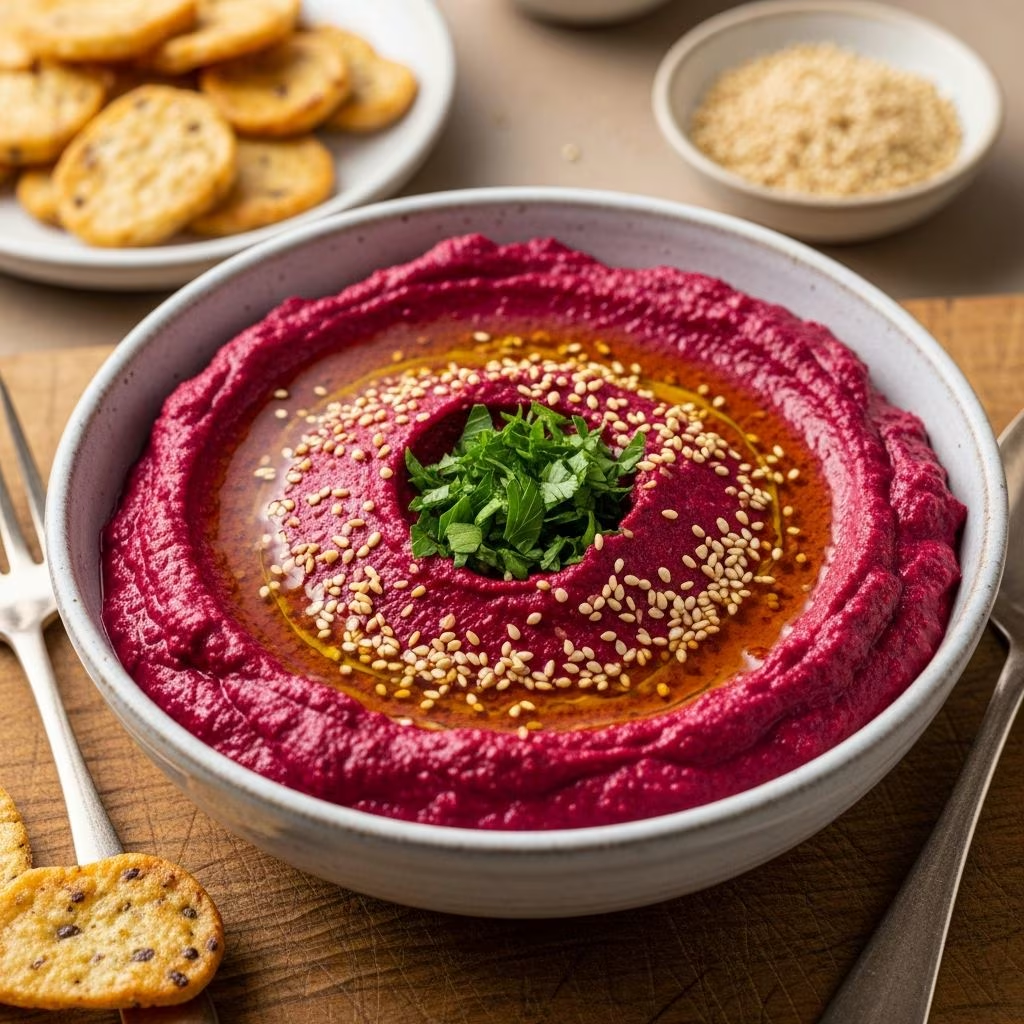
The visual appeal of this dip deserves attention equal to its flavor. When ready to serve, transfer the mixture to a shallow serving bowl or plate. Create a shallow well or decorative pattern across the surface using the back of a spoon. Drizzle generously with high-quality olive oil, allowing it to pool attractively in the recesses. This not only enhances visual presentation but also adds richness to the first bites.
Garnish the finished dip with your choice of complementary elements. Fresh herbs provide color and aroma, while toasted sesame seeds add textural contrast and nutty flavor. Pomegranate arils contribute bright color and tartness that balances the earthiness of the beets. For a more substantial accompaniment, dollop with plain or herbed yogurt for a cooling contrast to the warm spices and rich tahini.
Serve the dip alongside an assortment of vehicles for consumption. Warm pita bread torn into pieces provides the traditional accompaniment, though crackers, vegetable sticks, and chips all work well. Consider creating a full mezze spread by pairing this dip with other small plates, cheeses, olives, and preserved vegetables for a complete Middle Eastern dining experience.
Storage and Make-Ahead Considerations
Properly stored, this dip maintains excellent quality for several days, making it an ideal preparation for advance entertaining or meal planning. Transfer any leftovers to an airtight container and refrigerate for up to four days. The flavors often mellow and integrate further during storage, meaning the dip frequently tastes even better on the second or third day.
For longer storage, this dip freezes well for up to three months. Transfer to a freezer-safe container, leaving some headspace to accommodate slight expansion. When ready to use, thaw in the refrigerator overnight and stir well before serving. The texture may be slightly different after freezing, but the flavor remains excellent.
Troubleshooting Common Issues
| Issue | Likely Cause | Solution |
|---|---|---|
| Dip tastes too earthy or one-dimensional | Insufficient acid or salt for balance | Add more lemon juice gradually and taste, adjusting salt to enhance other flavors |
| Mixture is too thick or pasty | Too much tahini or insufficient liquid | Add water one tablespoon at a time while blending until reaching desired consistency |
| Dip separates or appears oily | Insufficient blending or tahini quality issues | Blend longer and more vigorously, or use fresh tahini from a reliable source |
| Garlic flavor is too harsh or overwhelming | Fresh garlic not allowed to mellow in acid | Blend garlic with lemon juice before adding other ingredients and allow to rest |
| Final color is muted or dull | Beets insufficiently roasted or over-processed | Use very fresh beets and roast until fully caramelized; avoid over-blending |
Frequently Asked Questions
Can I prepare the beets using a different cooking method?
While roasting provides superior flavor development through caramelization, beets can be steamed or boiled in shorter time frames if efficiency is prioritized over maximum flavor complexity. Steaming requires approximately 30 to 45 minutes depending on size, while boiling takes a similar duration. However, these methods leach some flavor and nutrients into the cooking water, diminishing the final result.
What type of tahini works best for this preparation?
Hulled tahini, made from sesame seeds with the nutritious outer layer removed, produces the creamiest, mildest-flavored dip. Unhulled varieties offer more intense sesame flavor and increased nutritional content but result in a slightly grittier texture and earthier taste. Choose based on your personal preferences and the intensity of flavor you desire.
Is this dip naturally vegan and dairy-free?
Yes, the basic preparation contains no animal products or dairy, making it suitable for vegan and dairy-free diets. However, verify that your tahini and other ingredients are not produced in facilities that process allergens if strict avoidance is necessary.
Can I make tahini at home if commercial varieties are unavailable?
Homemade tahini can be prepared by blending toasted sesame seeds with olive oil in a 2:1 ratio until achieving a smooth paste. Toast the sesame seeds first in a dry skillet over medium heat for three to five minutes until fragrant, then cool slightly before processing. This homemade version may require longer blending to reach the smoothness of commercial tahini.
Culinary Variations and Complementary Dishes
While the traditional preparation maintains its charm, creative variations allow for personalization and experimentation. Some cooks incorporate ground walnuts alongside or in place of tahini for additional texture and richness. Others add pomegranate molasses for tartness and complexity that echoes the brightness of lemon juice. Ground coriander, cardamom, or sumac can replace or supplement cumin for different flavor directions.
This dip pairs beautifully with Mediterranean and Middle Eastern main courses, complementing grilled vegetables, roasted meats, and fresh seafood preparations. It also serves as an excellent component of mezze platters alongside hummus, baba ganoush, tabbouleh, and fresh vegetables. The dip’s earthy sweetness particularly complements cool, fresh preparations and balanced yogurt-based sauces.
Nutritional Considerations
Beets provide substantial nutritional value, offering vitamins, minerals, and dietary fiber alongside their vibrant color. Tahini contributes protein, healthy fats, and additional minerals. Together, these ingredients create a nutrient-dense preparation that aligns with contemporary dietary recommendations emphasizing plant-based foods. The dip is naturally low in saturated fat while providing sustained energy from its combination of complex carbohydrates and healthy fats.
References
- Levantine Cuisine: Traditional Food Culture and Contemporary Practice — Food and Agriculture Organization of the United Nations. 2021. https://www.fao.org