Chimichurri represents one of the most celebrated condiments in global cuisine, originating from Argentina where it has graced tables for generations. This vibrant green sauce combines fresh herbs, garlic, vinegar, and olive oil into a harmonious blend that elevates simple ingredients into culinary excellence. Whether you’re preparing grilled meats, roasted vegetables, or crusty bread, chimichurri transforms ordinary dishes into memorable meals. Understanding how to prepare this sauce properly opens doors to countless flavor possibilities and demonstrates mastery over a deceptively simple recipe.
Understanding the Essence of Chimichurri
Chimichurri exists as more than just a sauce—it embodies a culinary philosophy that celebrates fresh ingredients and bold flavors. The sauce’s distinctive character comes from its bright acidity, pungent garlic notes, and herbaceous undertones that create layers of complexity with each spoonful. The appeal of chimichurri lies in its versatility and the way it bridges different cuisines and cooking styles. Unlike heavy, cream-based condiments, chimichurri provides brightness and freshness that complement rather than overpower the main dish.
The sauce has evolved throughout its history while maintaining its core identity. Traditional preparations honor the original recipe’s simplicity, yet modern interpretations occasionally incorporate variations that reflect regional preferences and ingredient availability. This flexibility allows home cooks to create versions that match their taste preferences while respecting the sauce’s foundational principles.
Assembling Your Essential Ingredients
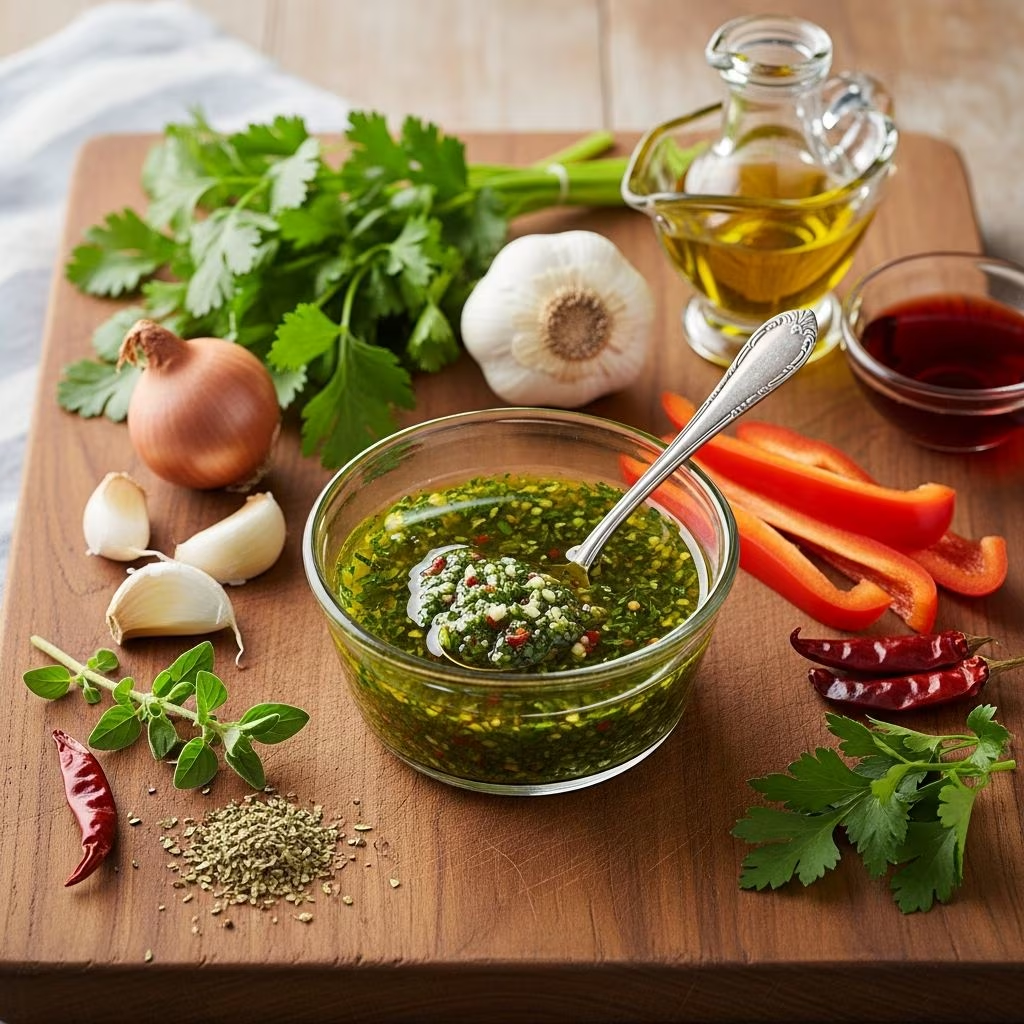
Creating exceptional chimichurri begins with understanding each ingredient’s role in the final product. The foundation consists of seven to eight core components, each contributing specific flavors and textures that work in concert.
Herbs: The Verdant Foundation
Fresh parsley serves as the primary herb in chimichurri, providing the sauce’s characteristic green color and mild herbaceous flavor. Flat-leaf parsley works better than curly varieties because it offers a cleaner taste and easier preparation. You’ll need approximately one-half to one cup of packed parsley leaves, depending on the batch size. Some recipes incorporate cilantro as a complementary herb, adding an additional layer of complexity and a slightly peppery note that enhances the overall profile.
Garlic: The Pungent Powerhouse
Garlic provides chimichurri’s characteristic bite and depth, transforming the sauce from simple to sophisticated. Three to four cloves of fresh garlic, minced or finely chopped, deliver the optimal balance of pungency without overwhelming other flavors. Fresh garlic proves essential—pre-minced or powdered varieties cannot replicate the vibrant intensity that fresh cloves contribute. The garlic’s raw state creates a sharp, clean flavor that mellows slightly as the sauce rests, allowing the other components to integrate harmoniously.
Vinegar: The Tangy Catalyst
Red wine vinegar provides the sauce’s essential acidity, creating brightness that cuts through rich proteins and balances the oil’s richness. Typically, one-quarter to one-third cup of red wine vinegar works well, though personal preference guides final quantities. The acidity serves multiple functions: it preserves the sauce’s vibrant color, prevents enzymatic browning of the herbs, and creates the distinctive tang that defines chimichurri’s flavor profile. Some cooks experiment with white wine vinegar or sherry vinegar, though red wine vinegar remains the traditional choice.
Olive Oil: The Silky Medium
Extra-virgin olive oil comprises the sauce’s largest ingredient portion, typically ranging from one-half to three-quarters cup. The oil serves as both a flavor component and a binding agent, creating the sauce’s characteristic glossy appearance and smooth mouthfeel. Higher-quality extra-virgin oils contribute subtle fruity or peppery notes that enhance complexity, while standard olive oils provide a neutral base that allows other flavors to shine. The oil’s incorporation technique influences the final texture, making this step crucial to success.
Heat and Seasoning Elements
Dried oregano, typically one teaspoon, adds earthy warmth and subtle bitterness that prevents the sauce from becoming one-dimensional. Red pepper flakes or fresh red chiles introduce gentle heat that builds gradually rather than striking aggressively. Salt, usually one-half to three-quarters teaspoon, amplifies all other flavors while preventing a dull, flat taste. Some recipes include optional shallots, which contribute subtle sweetness and additional complexity to the overall composition.
Preparation Methods: Two Paths to Perfection
The Traditional Hand-Chopped Approach
Preparing chimichurri by hand requires more time but yields superior texture and flavor control. Begin by finely chopping the parsley on a clean cutting board, then mince the garlic to uniform pieces. Combine the herbs with oregano, red pepper flakes, and salt in a medium bowl. Add the vinegar and stir, allowing these dry ingredients to begin releasing their aromatics. Finally, pour in the olive oil while stirring continuously to create an even distribution. This method preserves herb structure better than mechanical processing, resulting in visible flecks that contribute to the sauce’s rustic appeal.
The Modern Food Processor Method
For convenience, a food processor accelerates preparation while maintaining acceptable results when executed properly. Add all dry ingredients and fresh components to the processor bowl and pulse in short bursts, pausing frequently to assess texture. The critical step involves stopping before the mixture transforms into a smooth paste—chimichurri should retain visible herb pieces and retain a spoonable consistency. Once the dry ingredients reach the desired chop level, transfer the mixture to a bowl and stir in the olive oil by hand. This hybrid approach combines speed with texture control, preventing over-processing that would destroy the sauce’s character.
The Resting Period: Patience Pays Dividends
After combining ingredients, allowing the chimichurri to rest for fifteen minutes at room temperature fundamentally improves the final product. During this resting period, the garlic’s rawness mellows, vinegar’s acidity integrates throughout, and individual flavors begin melding into a cohesive whole. The oils gradually absorb the herbs’ volatile compounds, deepening the color and concentrating the flavor profile. Skipping this step yields adequate sauce, but respecting this resting period transforms chimichurri into something extraordinary. Before serving, a quick stir reintegrates settled oils and ensures consistent flavor distribution with each portion.
Understanding Texture and Consistency
Achieving the correct consistency separates exceptional chimichurri from mediocre versions. The ideal sauce should be spoonable and glossy, coating the back of a spoon while remaining pourable enough to drizzle over foods. If the mixture appears too thick, additional olive oil added gradually restores the desired consistency. Conversely, if excessive vinegar renders the sauce too thin, incorporating more herbs or adjusting oil ratios brings it into balance. The texture should showcase visible herb pieces suspended throughout rather than appearing as a uniform paste or overly liquid dressing.
Flavor Customization and Variations
While the traditional formula remains timeless, thoughtful variations allow personalization without sacrificing chimichurri’s essential character. Some cooks incorporate fresh mint for additional brightness, add a pinch of cumin for subtle earthiness, or include a small amount of lime juice alongside vinegar for complexity. Others experiment with different pepper varieties or substitute cilantro for some parsley to create distinctive regional interpretations. The key involves understanding which adjustments complement rather than compete with the sauce’s foundational flavors.
Storage and Shelf Life Considerations
Properly stored chimichurri maintains quality for extended periods, making it ideal for batch preparation. In the refrigerator, covered chimichurri remains fresh for up to two weeks, with flavors actually improving over the first few days as ingredients continue melding. The olive oil provides natural preservation properties while the vinegar’s acidity inhibits bacterial growth. Freezing is possible but affects texture, as the fresh herbs become softer upon thawing, though the sauce remains edible and flavorful. For best results, store in airtight glass containers away from direct light, which can degrade the vibrant green color.
Serving Applications and Pairing Strategies
Chimichurri’s versatility allows countless serving applications across different meal types and cuisines. As a marinade, it tenderizes and flavors grilled meats, poultry, and firm vegetables when applied several hours before cooking. Used as a finishing sauce, it adds brightness and freshness to hot-off-the-grill proteins, providing aromatic complexity that enhances rather than masks the main ingredient’s natural flavors. As a dipping sauce, chimichurri accompanies grilled bread, roasted potatoes, empanadas, and vegetable crudités, making it ideal for entertaining and casual gatherings.
| Application | Best For | Timing |
|---|---|---|
| Marinade | Beef, pork, chicken, vegetables | 2-24 hours before cooking |
| Finishing Sauce | Grilled meats and vegetables | Just before or immediately after serving |
| Dipping Sauce | Bread, potatoes, vegetables | Serve at room temperature |
| Drizzle | Soups, grains, composed plates | Just before serving |
Frequently Asked Questions
Can chimichurri be made in advance?
Yes, chimichurri actually improves when made a day ahead. The resting period allows flavors to meld more completely. Store covered in the refrigerator for up to two weeks, though the first three days represent peak flavor development.
Why did my chimichurri turn out too thin or too thick?
Thin consistency results from excessive vinegar or insufficient oil. Add more oil gradually to restore balance. Thick consistency indicates too many herbs or insufficient oil. Drizzle in additional olive oil while stirring until the desired spoonable consistency develops.
Is chimichurri naturally vegan and gluten-free?
Yes, traditional chimichurri contains no animal products or gluten-containing ingredients, making it suitable for vegan and gluten-free diets. Always verify individual ingredient sourcing to confirm adherence to specific dietary requirements.
Can I use dried parsley instead of fresh?
Dried parsley cannot adequately substitute for fresh. The flavor becomes muted and dusty, lacking the bright, herbaceous character that defines chimichurri. Fresh herbs are essential to the sauce’s character and cannot be compromised without significantly altering the result.
How do I prevent my chimichurri from becoming a brown, oxidized paste?
Prevent browning by using fresh herbs and immediately incorporating vinegar after chopping. The acidity inhibits enzymatic reactions that cause discoloration. Store in airtight containers minimizing air exposure, and use within two weeks for optimal color retention.
Mastering Chimichurri Through Practice
Creating exceptional chimichurri becomes intuitive with practice and attention to technique. Understanding how each ingredient contributes to the whole allows confident adjustments based on personal preferences and available ingredients. The sauce’s forgiving nature permits experimentation while maintaining the core elements that define its character. Whether you prefer traditional preparations or creative variations, respecting foundational principles ensures consistent, delicious results. Chimichurri transforms simple meals into celebrations of fresh flavors and culinary excellence, rewarding the cook’s efforts with versatile condiments that elevate every dish they grace.
References
- Best Ever Chimichurri Sauce Recipe — The Forked Spoon. 2024. https://theforkedspoon.com/chimichurri-recipe/
- Easy Chimichurri Sauce — Merry About Town. 2024. https://merryabouttown.com/easy-chimichurri-sauce/