A seafood boil represents one of the most interactive and memorable dining experiences you can create at home. This hands-on feast brings together fresh ocean ingredients in a single pot, infused with aromatic spices and herbs that transform simple components into something extraordinary. Whether you’re planning an intimate dinner or a large celebration, understanding the fundamentals of constructing a seafood boil will elevate your entertaining game and leave your guests talking about the meal long after the evening concludes.
Understanding the Essence of a Seafood Boil
At its core, a seafood boil is a communal dining experience that celebrates the bounty of coastal ingredients. This culinary tradition combines multiple varieties of fresh seafood, vegetables, and proteins in one aromatic broth, typically served family-style on newspaper-lined tables that encourage casual, social eating. The beauty of this dish lies not just in its flavors but in the shared experience of cracking shells, peeling shrimp, and enjoying a meal that demands engagement from every diner.
The meal’s foundation is built upon carefully balanced seasoning and a flavorful cooking liquid. Rather than being a simple boil, the broth becomes infused with layers of flavor from aromatics, spices, and the natural juices released by the seafood itself. This liquid transforms into the base for dipping sauces and the medium that brings all components together in harmonious unity.
Essential Equipment and Preparation
Successful seafood boil preparation begins with having the right equipment. You’ll need:
- An extra-large stockpot or dutch oven (at least 10 quarts or larger capacity)
- Long-handled utensils for stirring and submerging ingredients
- A large saucepan for preparing your butter sauce
- Newspaper or butcher paper for serving surfaces
- Serving utensils and individual bowls for sauce
- Crab mallets or seafood crackers for guest convenience
Before beginning your cooking process, gather all ingredients in advance and prepare aromatics such as smashed garlic and sliced onions. This mise en place approach ensures smooth execution once you begin heating the pot, which can take considerable time to reach a rolling boil.
Crafting the Perfect Seasoning Foundation
The character of your seafood boil emerges directly from the seasoning profile you develop. Rather than relying on a single spice, successful boils layer multiple complementary flavors that build upon one another. A balanced seasoning mixture typically includes Cajun or Creole spices, Old Bay seasoning, hot sauce, and fresh aromatics.
To construct your custom seasoning blend, combine:
- Ground paprika for color and subtle sweetness
- Cayenne pepper for heat that builds gradually
- Garlic powder and onion powder for depth
- Black pepper for sharpness
- Red pepper flakes for additional spice dimension
- Dried herbs such as thyme or oregano for earthiness
Reserve a portion of your dry seasoning mixture specifically for creating the finishing butter sauce. This strategic approach ensures you can adjust the sauce’s intensity independently from the boiling liquid.
Building the Flavorful Cooking Broth
Your cooking liquid sets the stage for everything that follows. Begin by combining water with beer if desired—the alcohol adds complexity and subtle bitterness that complements seafood beautifully. Fill your pot approximately two-thirds full, leaving adequate space for ingredients to move freely and prevent boiling over.
To this base, add your prepared aromatics and seasonings. The process typically unfolds as follows:
- Bring water and beer to a rolling boil
- Add salt, bay leaves, onions, and smashed garlic cloves
- Introduce lemon slices and your Cajun seasoning mixture
- Add hot sauce to taste for background heat
- Allow this seasoned broth to boil for 10-15 minutes, developing depth
This initial boiling period allows flavors to meld and the broth to become properly infused before any protein enters the pot. Rushing this step compromises the final product’s character and depth.
Strategic Ingredient Sequencing
The order in which you add ingredients directly impacts texture and flavor development. Each component requires different cooking times, and introducing them in the wrong sequence results in overcooked seafood or undercooked vegetables.
| Ingredient | Cooking Time | Notes |
|---|---|---|
| Potatoes | 10 minutes (first) | Cut into bite-sized pieces; need longest cooking time |
| Crab and Lobster | 5-7 minutes | Add after potatoes begin softening |
| Shrimp | 3-5 minutes | Turn burner off or reduce heat significantly; residual heat completes cooking |
| Corn on the Cob | 3-5 minutes (last) | Add near the end to prevent mushiness |
| Mussels and Clams | 3-5 minutes | Cook until shells open; discard any that remain closed |
A critical technique involves turning off the burner immediately after adding shrimp. The residual heat in the pot continues cooking these delicate proteins without risking the rubbery texture that results from overcooking.
Creating a Signature Garlic Butter Sauce
While your seafood finishes cooking, prepare the sauce that elevates your boil from good to extraordinary. A proper garlic butter sauce serves as both a dipping sauce and finishing sauce that transforms each bite.
The sauce construction process involves:
- Melting unsalted butter in a separate saucepan over medium heat
- Adding minced garlic and cooking gently over low heat to infuse flavors without browning
- Stirring in your reserved seasoning blend
- Incorporating lemon zest and fresh lemon juice for brightness
- Adding 2-3 cups of the seafood boil liquid to thin the sauce to desired consistency
- Adjusting seasonings to taste with additional salt, pepper, or hot sauce
This approach creates a sauce that connects the boil’s flavors while introducing fresh lemon notes and butter richness. The reserved seafood broth ties everything together, creating a cohesive flavor profile across all components.
Ingredient Selection and Quality Considerations
Your final dish’s success depends significantly on ingredient quality. Fresh seafood should smell of the ocean, not fishy or ammonia-like. When purchasing shrimp, crab, and lobster, buy from reputable seafood counters where turnover is high and storage practices are professional.
Consider these selections for a balanced boil:
- Large shrimp (16-20 count per pound) provide substantial texture
- Snow crab clusters offer sweet, delicate meat
- Andouille sausage adds smoky protein variety and textural contrast
- Baby potatoes or petite red potatoes maintain integrity during boiling
- Fresh corn on the cob brings natural sweetness
- Mussels and clams provide umami depth and visual appeal
The combination of multiple seafood varieties creates complexity that no single ingredient could achieve alone. Balance sweet shrimp with earthy potatoes, tender corn, and smoky sausage for textural and flavor diversity.
Presentation and Serving Strategies
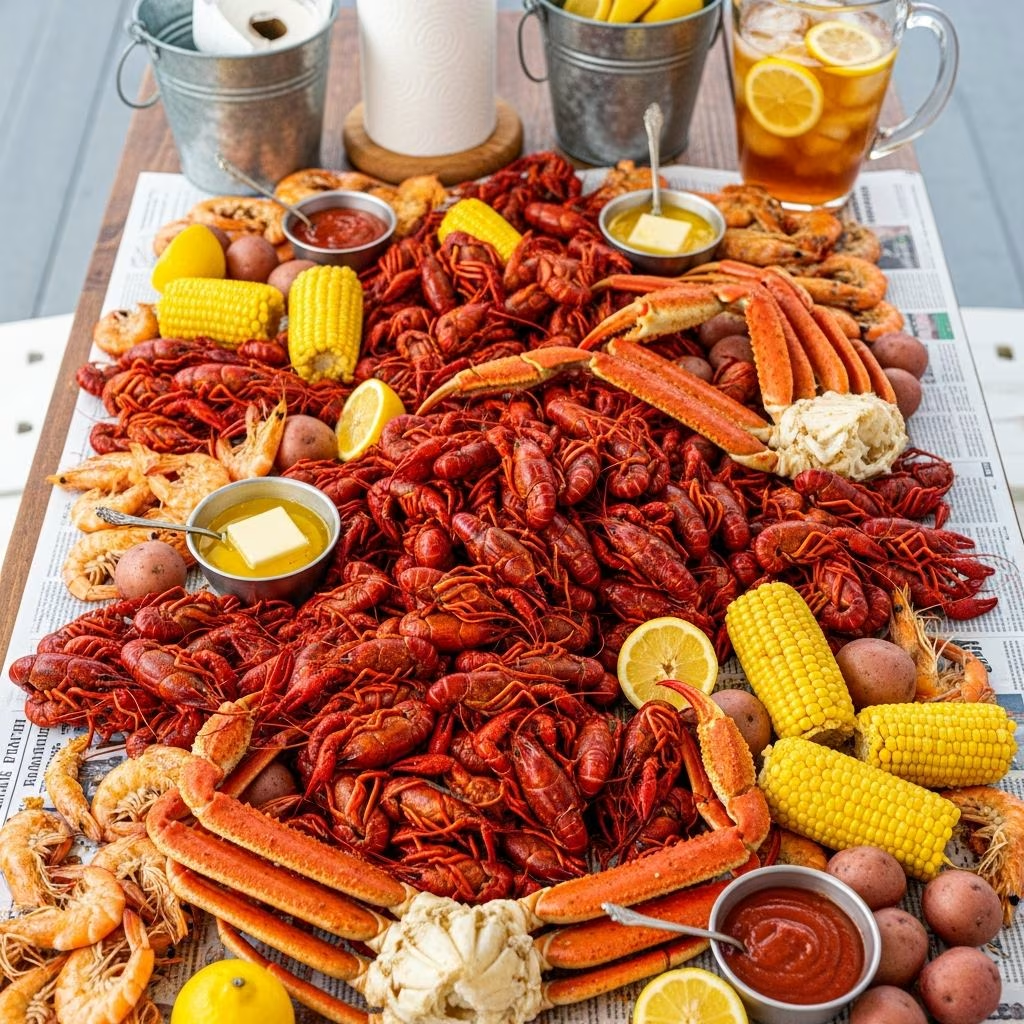
How you present your seafood boil significantly impacts the dining experience. Traditional presentation on newspaper-lined tables or large platters encourages the communal, hands-on eating experience central to this dish’s appeal.
To optimize your serving:
- Spread newspaper or butcher paper across a large table as your serving surface
- Drain the seafood and arrange it directly on the prepared surface in a mound
- Drizzle your finished garlic butter sauce over the entire arrangement
- Garnish with fresh parsley and lemon wedges for color and freshness
- Provide small bowls of additional butter sauce for individual dipping
- Set out seafood crackers and mallets at each place setting
- Include small plates and napkins in abundance
This rustic presentation style makes cleanup simpler while maintaining an elegant, impressive appearance. The casual nature of newspaper service communicates to guests that this meal celebrates enjoyment over formality.
Timing and Logistics for Large Groups
When preparing for groups larger than four to six people, you may need to utilize two stockpots or work in stages. Calculate that bringing a large pot of water to a rolling boil can take one hour or longer, so begin your preparation earlier than you might initially estimate.
For gatherings of eight or more people, consider these approaches:
- Divide ingredients between two pots to maintain proper ingredient-to-liquid ratios
- Time your preparations so both pots finish simultaneously
- Combine finished seafood onto a single serving surface immediately before presenting
- Keep extra sauce warm on the stovetop for guests who want additional sauce
- Prepare your butter sauce in advance and reheat gently just before serving
Advance planning prevents the chaos that can emerge when managing large quantities of perishable ingredients and multiple cooking vessels simultaneously.
Frequently Asked Questions About Seafood Boils
Should I use fresh or frozen seafood?
Fresh seafood typically provides superior texture and flavor, but high-quality frozen seafood that’s been properly thawed works well. Thaw frozen seafood in the refrigerator overnight rather than at room temperature to maintain quality.
Can I prepare components in advance?
Yes. Prepare your seasoning blend days ahead, chop aromatics several hours in advance, and make your butter sauce 1-2 hours before serving. The cooking liquid should be prepared just before you’re ready to add seafood.
What wine or beverage pairs well with seafood boil?
Crisp white wines such as Sauvignon Blanc or Pinot Grigio complement the dish’s briny seafood flavors. Beer works equally well, particularly lagers or wheat beers. Avoid heavy red wines that overpower delicate seafood.
How do I know when shrimp is properly cooked?
Cooked shrimp transforms from translucent gray to opaque pink. The flesh should feel firm but not rubbery. Overcooked shrimp becomes tough and loses its natural sweetness.
What if I’m cooking for dietary restrictions?
Vegetarian guests can enjoy potatoes, corn, and andouille sausage. Those avoiding shellfish can focus on sausage and vegetables. Consider preparing a separate pot or portion for guests with significant allergies.
Storage and Leftovers
While seafood boil is ideally consumed immediately, any remaining seafood can be refrigerated in an airtight container for up to two days. Remove meat from shells before storing to maximize space and simplify reheating. The butter sauce stores separately for up to three days and can be gently reheated before serving with reheated seafood.
Leftover seafood works beautifully in seafood pasta dishes, risottos, or grain bowls where the cooked proteins can be incorporated into new preparations.
Conclusion: Mastering Your Seafood Boil Technique
A well-executed seafood boil demonstrates mastery of timing, flavor layering, and social entertaining. By understanding ingredient sequencing, developing a balanced seasoning foundation, and creating a complementary butter sauce, you transform simple components into an impressive meal that celebrates coastal culinary traditions. The experience of gathering around a newspaper-covered table, cracking shells, and sharing food creates memories that extend far beyond the flavors on the plate. With practice and attention to these fundamental principles, you’ll develop confidence in hosting seafood boils that guests anticipate and remember fondly.
References
- Cajun Seafood Boil with Garlic Butter Sauce — Peel with Zeal. 2024. https://www.peelwithzeal.com/cajun-seafood-boil/
- Homemade Cajun Seafood Boil Recipe with Spicy Garlic Butter — A Full Living. 2024. https://afullliving.com/seafood-boil-recipe-cajun-garlic-butter-sauce/
- Cajun Seafood Boil with Garlic Butter Sauce — Butter Be Ready. 2024. https://www.butterbeready.com/seafood-boil-with-garlic-butter-sauce/
- USDA Seafood Safety Guidelines — United States Department of Agriculture. 2024. https://www.fsis.usda.gov/food-safety/safe-food-handling-and-preparation/seafood-safety
- Cajun Seafood Boil: A Flavor-Packed Feast for Every Occasion — Yummy Kitchen. 2024. https://www.youtube.com/watch?v=YthJ37dxYHc