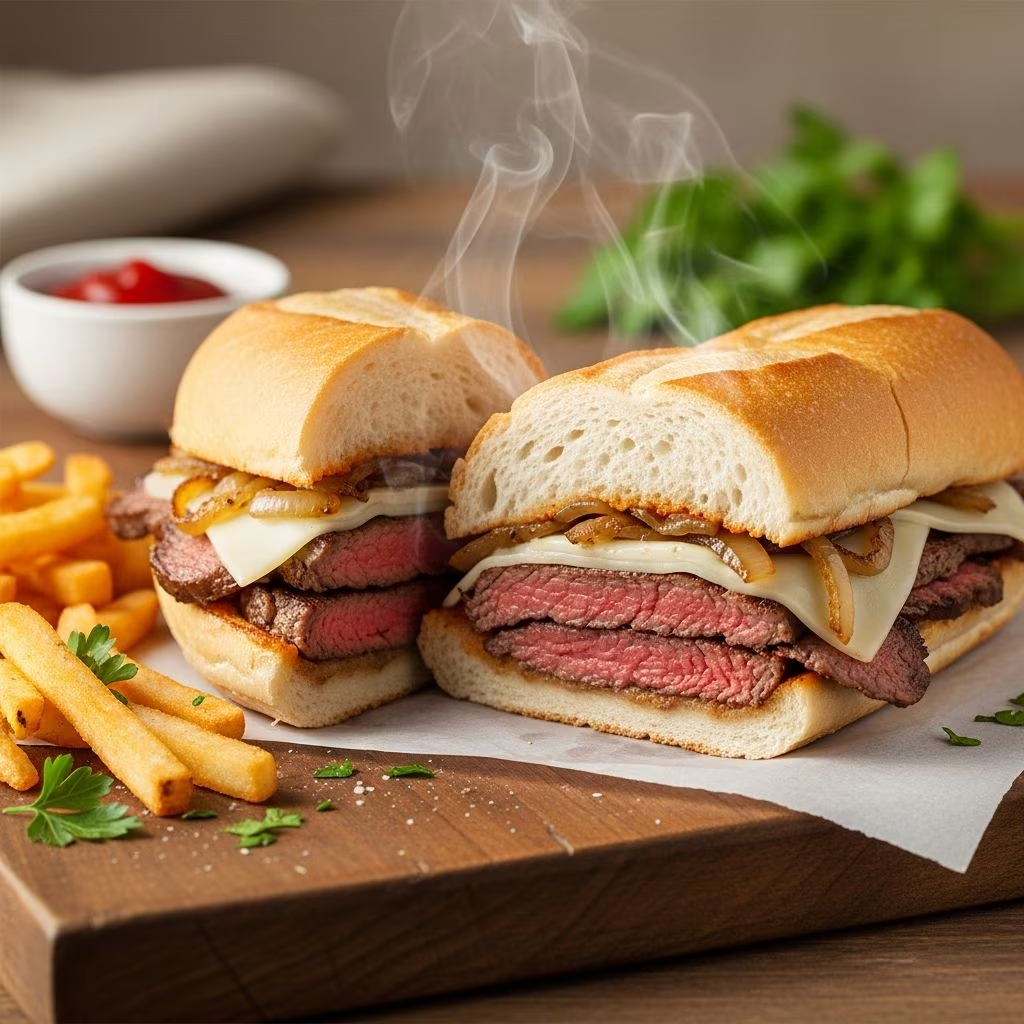
The Philly steak sandwich stands as one of America’s most iconic sandwiches, originating from Philadelphia’s culinary tradition in the early 1900s. This beloved classic combines tender, thinly sliced beef with caramelized onions and melted cheese on a toasted hoagie roll, creating a satisfying meal that has captivated food lovers across generations. While it may seem like a complex dish reserved for professional kitchens, crafting an exceptional Philly steak sandwich at home is entirely achievable with the right techniques and ingredient selection.
Understanding the Foundation: Essential Ingredients
The beauty of a Philly steak sandwich lies in its simplicity and reliance on quality components. Each ingredient plays a crucial role in developing the sandwich’s signature flavor profile and texture.
- Beef Selection: The cornerstone of any authentic Philly steak sandwich is the meat itself. Ribeye steak is traditionally preferred due to its marbling and tenderness. The key is slicing the beef extremely thin—nearly paper-thin—to ensure it cooks quickly and absorbs flavors efficiently. For convenience, pre-shaved beef steak available at grocery stores can streamline preparation without compromising quality.
- Onion Profile: Sweet onions, typically diced into uniform pieces, form the aromatic base of this sandwich. These onions are sautéed separately until they develop a deep caramelization, which concentrates their natural sugars and creates a complex, sweet undertone that balances the savory beef.
- Cheese Component: Provolone cheese is the traditional choice, offering a mild, slightly tangy flavor that complements the steak without overwhelming it. Using mild rather than aged provolone ensures the cheese melts smoothly into a gooey consistency.
- Bread Foundation: Hoagie rolls, also called sub rolls or Italian rolls, provide the structural support for the sandwich. These rolls should be sturdy enough to contain the fillings without becoming soggy, yet tender enough to bite through comfortably.
- Supporting Fats: Butter and oil work together to create the proper sautéing medium. Butter adds flavor to the onions and can be used to toast the rolls with garlic, while oil handles the higher heat required for searing the beef.
Regional Variations and Modern Adaptations
While the classic East Coast version of a Philly steak sandwich contains only steak, onions, and cheese, regional preferences have introduced numerous variations. West Coast adaptations frequently incorporate green bell peppers and mushrooms, adding textural contrast and earthy flavors. Some cooks include sautéed bell peppers and mushrooms alongside the traditional onions, creating a more vegetable-forward sandwich. Additional toppings such as mayonnaise, shredded lettuce, tomatoes, and sliced jalapeños can be added based on personal preferences.
The Art of Preparation: Step-by-Step Technique
Preparing Your Ingredients
Success begins with proper mise en place—having all ingredients prepared and measured before cooking begins. Slice your ribeye steak as thinly as possible using a sharp knife or ask your butcher to shave it for you. Dice onions into consistent, bite-sized pieces to promote even cooking. If incorporating mushrooms or peppers, slice them uniformly so they cook at the same rate as the onions.
Cooking the Aromatic Base
Begin by heating a large skillet over medium heat and adding butter. Once the butter froths, introduce your diced onions. The goal is to cook them slowly, allowing them to release their natural moisture, which then evaporates, concentrating the sugars and creating deep caramelization. This process typically requires 7-10 minutes, during which you should stir occasionally to prevent burning. The onions are ready when they’ve turned golden brown and developed a sweet aroma. Transfer the caramelized onions to a clean bowl and set aside.
Searing the Beef to Perfection
Increase your skillet’s heat to medium-high and add oil. Once the oil shimmers, spread your thinly sliced steak in an even layer across the pan’s surface. Resist the urge to move it immediately—allow it to brown undisturbed for 1-2 minutes. This creates a flavorful crust through the Maillard reaction. Flip the steak and season with salt and pepper. Continue cooking until the beef is cooked through, which typically requires only another minute or two due to the thin slicing. The entire cooking process should take just a few minutes, as overcooking will toughen the meat and eliminate its tenderness.
Combining Elements and Melting Cheese
Return the caramelized onions to the skillet with the cooked beef, stirring to combine evenly. Some recipes call for draining excess liquid from the pan to prevent a soggy sandwich. Reduce heat to medium and arrange provolone cheese slices over the mixture in a circular pattern. Cover the skillet to allow the residual heat to melt the cheese, typically requiring 4-5 minutes. Once melted, stir the mixture gently to incorporate the cheese throughout.
Finishing the Sandwich
While the cheese melts, prepare your hoagie rolls by slicing them three-quarters of the way through, leaving the top connected. If desired, spread softened butter mixed with pressed garlic on the interior surfaces and lightly toast them in a separate pan or toaster oven until golden. This adds flavor and prevents the bread from absorbing excess moisture from the fillings. Using tongs or a sturdy spatula, transfer the steak and cheese mixture into each toasted roll. Some prefer spreading mayonnaise on the inside of the roll before adding the filling.
Ingredient Comparison Table
| Component | Classic Version | West Coast Variation | Skillet Adaptation |
|---|---|---|---|
| Beef Cut | Thinly sliced ribeye | Thinly sliced ribeye | Shaved beef steak |
| Vegetables | Caramelized onions | Onions, peppers, mushrooms | Onions, peppers, mushrooms |
| Cheese | Mild provolone | Mild provolone | Provolone or American |
| Cooking Method | Skillet | Skillet or griddle | Cast iron skillet |
| Bread | Toasted hoagie roll | Toasted hoagie roll | Optional or served on the side |
Professional Tips for Superior Results
- Temperature Control: Manage your heat carefully throughout the cooking process. Medium heat for caramelizing onions allows them to develop flavor without burning, while medium-high heat for searing beef creates a crust without overcooking the interior.
- Thickness Matters: The thinness of your beef slices directly impacts cooking time and texture. Thicker slices require longer cooking and result in a chewier product, while properly thin slices cook in seconds and maintain tenderness.
- Moisture Management: Excess liquid in the pan will cause soggy bread and dilute flavors. Drain liquid after cooking the meat but before combining with cheese to achieve the ideal consistency.
- Cheese Selection: Mild provolone melts more uniformly than aged varieties, which can become stringy and unevenly distributed. Quality cheese makes a noticeable difference in the final product.
- Bread Quality: Using fresh, quality hoagie rolls elevates the entire sandwich. Stale or low-quality bread can undermine even perfectly prepared fillings.
- Timing Integration: Toast your rolls just before assembling to keep them warm and prevent the fillings from cooling them before eating.
Serving Suggestions and Pairings
A classic Philly steak sandwich pairs excellently with crispy french fries or seasoned potato chips for a complete meal. Many restaurants serve this sandwich with pickles on the side to provide acidic contrast to the rich, savory flavors. Coleslaw offers a cool, refreshing accompaniment that cuts through the richness of the melted cheese and beef. For beverages, cold sodas, iced tea, or light beers complement the sandwich’s hearty nature.
Batch Cooking and Storage Considerations
This recipe can be easily scaled to feed a crowd, making it ideal for game day gatherings or casual entertaining. You can prepare the steak and vegetable mixture in advance, then reheat and assemble sandwiches when ready to serve. Store cooked beef and onion mixtures in airtight containers in the refrigerator for up to three days. Reheat gently over medium heat before assembling fresh sandwiches. However, assembled sandwiches should be consumed immediately for optimal texture and temperature.
Frequently Asked Questions
Can I prepare a Philly steak sandwich on a griddle instead of a skillet?
Yes, griddles work exceptionally well for this recipe. The larger, flat cooking surface provides more room for organizing ingredients and managing heat zones. Griddles are particularly advantageous when preparing multiple sandwiches simultaneously.
What is the difference between a Philly cheesesteak and a Philly steak sandwich?
The primary distinction lies in cheese inclusion. A Philly cheesesteak includes cheese as a core component, while some Philly steak sandwiches may be made without it, though cheese has become standard in most preparations.
How thin should I slice the beef?
The beef should be sliced nearly paper-thin, almost transparent in appearance. This thickness ensures rapid cooking and allows the meat to absorb flavors effectively while maintaining its tenderness.
Can I use a different type of cheese?
While provolone is traditional, American cheese or white cheddar can substitute. However, provolone’s mild flavor and melting characteristics make it the preferred choice for authentic results.
Is it necessary to caramelize the onions?
Caramelization develops complex sweetness and depth of flavor. While you can sauté onions without full caramelization, the resulting sandwich lacks the sophisticated flavor profile that makes this dish exceptional.
What should I do if my meat becomes tough or chewy?
Overcooking is the primary cause. Since beef slices are thin, cooking should take only 1-2 minutes per side. Ensure your heat is appropriate and avoid leaving meat in the pan longer than necessary.
References
- Philly Cheesesteak Recipe with Peppers and Onions — Valerie’s Kitchen. https://www.fromvalerieskitchen.com/philly-cheesesteak-recipe-peppers-onions/
- Philly Cheesesteak – Spoon Fork Bacon — Spoon Fork Bacon. https://www.spoonforkbacon.com/philly-cheesesteak/
- Easy Philly Cheesesteak Sandwiches — Mandy in the Making. https://www.mandyinthemaking.com/recipes/philly-cheesesteak-sandwiches
- Philly Cheesesteak (with Video) — Natasha’s Kitchen. https://natashaskitchen.com/philly-cheesesteak/
- Philly Cheesesteak Recipe — Budget Bytes. https://www.budgetbytes.com/philly-cheesesteak-recipe/