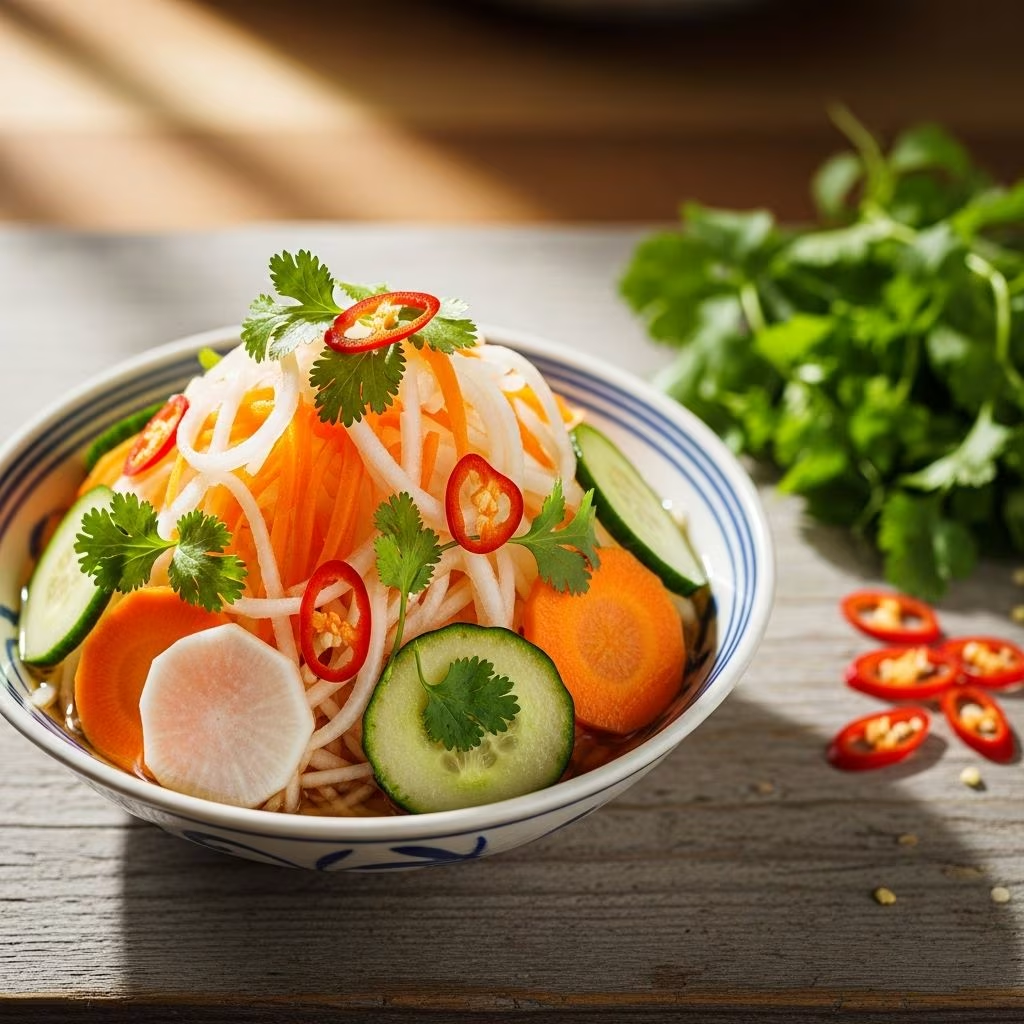
Quick-pickled vegetables form a cornerstone of Vietnamese cuisine, delivering a burst of tangy, sweet, and spicy notes that elevate everyday meals. These vibrant condiments, often featuring julienned carrots, daikon radish, cucumbers, and fiery chiles, require no canning equipment or long waiting periods. Ready in as little as 1 hour, they add irresistible crunch to banh mi sandwiches, rice bowls, noodle dishes, and fresh salads. This guide explores everything from essential ingredients and foolproof methods to creative adaptations and practical serving ideas, empowering home cooks to replicate this authentic flavor profile effortlessly.
Why Vietnamese Quick Pickles Are a Kitchen Essential
Vietnamese pickling stands apart from traditional methods by prioritizing speed and freshness. Unlike fermented pickles that develop over days or weeks, these refrigerator pickles rely on a brine of vinegar, sugar, salt, and water to instantly infuse vegetables with bold taste. The result is a refreshing contrast of textures—crisp and juicy—paired with harmonious sweet-sour-spicy layers that balance rich proteins like grilled meats or tofu.
Health benefits abound too: these low-calorie toppings boost meals with fiber, vitamins, and probiotics from the raw vegetables. They’re versatile for meal prep, lasting up to two weeks in the fridge, and customizable to suit any palate or dietary need. Whether enhancing a casual lunch or impressing at a dinner party, these pickles transform ordinary dishes into something extraordinary.
Core Ingredients for Authentic Flavor
Selecting the right components ensures your pickles capture the essence of Vietnamese street food. Focus on fresh, firm produce and unseasoned vinegars for purity.
- Vegetables: Carrots (matchstick-cut for tenderness), daikon radish (mild and crunchy), English cucumbers (seedless for clean slices), red onion (sharp bite), and Thai bird or serrano chiles (for adjustable heat).
- Brine Base: Rice vinegar (mild acidity), water (dilutes intensity), granulated sugar (balances tartness), and kosher or sea salt (draws out moisture).
- Aromatics: Fresh ginger (subtle warmth) and optional herbs like cilantro for layered depth.
Quantities for a standard batch serving 6-8: 2 carrots, 1 daikon (about 1 lb), 1 cucumber, 1/2 red onion, 1-2 chiles, 1 cup rice vinegar, 1 cup water, 1/4 cup sugar, 2 tsp salt, and a 1-inch ginger piece. Scale up for larger yields.
Step-by-Step Pickling Process
Preparation takes mere minutes, with marinating handling the rest. No cooking required for vegetables preserves their snap.
- Prepare Brine: In a saucepan, combine vinegar, water, sugar, and salt. Heat over medium until simmering and sugar dissolves fully (about 2-3 minutes). Remove from heat and cool for 10 minutes. Alternatively, microwave in a heat-safe bowl for 1-2 minutes.
- Slice Vegetables: Julienne carrots and daikon using a mandoline or knife for uniform thinness (1/16-inch ideal). Thinly slice cucumbers, onions, chiles, and ginger. Pat dry to prevent excess water diluting the brine.
- Assemble: Pack vegetables tightly into a clean glass jar or airtight container. Pour cooled brine over, ensuring full submersion (add extra vinegar-water mix 1:1 if needed). Seal and refrigerate.
- Marinate: Wait at least 1 hour for mild flavor; 4-24 hours yields peak taste. Shake occasionally for even distribution.
Total time: 15 minutes active, 1+ hours passive. Yields about 4 cups.
Pro Tips for Perfect Texture and Taste
- Use room-temperature brine to avoid wilting veggies; hot liquid can soften them prematurely.
- For extra spice, include peppercorns or sliced jalapeños; tame heat by seeding chiles or omitting them.
- Achieve crunchier results by salting sliced veggies for 10 minutes first, then rinsing—this draws out moisture.
- Experiment with tools: A Benriner slicer ensures pro-level uniformity without fatigue.
- Store upright in the fridge; consume within 2 weeks for best vibrancy.
Variations to Suit Every Craving
Adapt the base recipe endlessly for dietary tweaks or seasonal produce.
| Variation | Key Swaps/Add-Ins | Best Pairings |
|---|---|---|
| Classic Banh Mi Style | Carrots + daikon focus; add black pepper | Pork sandwiches, turkey subs |
| Spicy Kick | Extra chiles + sriracha in brine | Rice bowls, tacos |
| Herb-Infused | Thyme, dill, or cilantro sprigs | Salads, grilled fish |
| Low-Sugar | Half sugar, stevia substitute | Diabetes-friendly meals |
| Green Veggie Twist | Green beans, asparagus instead of cucumber | Stir-fries, charcuterie |
Storage, Safety, and Make-Ahead Strategies
These pickles thrive in the refrigerator at 35-40°F. Glass jars prevent flavor absorption better than plastic. Always use clean utensils to avoid contamination. If bubbles form or odor changes, discard promptly—though proper refrigeration minimizes risks.
Make-ahead magic: Prepare 1-3 days in advance for intensified flavor. They hold well for potlucks or weekly meal prep. Freeze drained veggies for up to 1 month (thaw overnight in fridge), though texture may soften slightly.
Creative Ways to Serve and Pair
Beyond banh mi, integrate these pickles into diverse menus:
- Sandwiches & Wraps: Layer in turkey banh mi with spicy mayo, arugula, and jalapeños for crunch.
- Bowls & Salads: Top poke bowls, quinoa salads, or pho with a vibrant pile.
- Proteins: Garnish grilled chicken, tofu stir-fries, or lemongrass pork.
- Snacks: Enjoy straight from the jar or with rice crackers for a healthy nibble.
- Fusion Ideas: Elevate burgers, fish tacos, or ramen with their zing.
Portion 1/4-1/2 cup per serving to complement without overwhelming.
Frequently Asked Questions
Can I use regular white vinegar instead of rice vinegar?
Yes, but dilute with extra water as it’s sharper. Rice vinegar provides authentic mildness.
How long do these pickles last?
Up to 2 weeks refrigerated; flavors peak at 1 week.
Do I need to cook the vegetables?
No—raw slicing preserves crispness.
Can I make them without sugar?
Reduce or omit for tangier results, but sugar tempers acidity.
Are they safe for canning?
This quick method is fridge-only; for shelf-stable, follow proper water-bath canning guidelines from USDA resources.
Nutrition Snapshot (Per 1/4 Cup Serving)
| Nutrient | Amount | % Daily Value |
|---|---|---|
| Calories | 25 | 1% |
| Carbs | 6g | 2% |
| Fiber | 1g | 4% |
| Sodium | 300mg | 13% |
| Vitamin A | 2000 IU | 40% |
Values approximate; varies by batch. Low-fat, vegan, and gluten-free.
References
- Vietnamese Quick-Pickled Vegetables — Whole Foods Market. 2023-05-15. https://www.wholefoodsmarket.com/recipes/vietnamese-quick-pickled-vegetables
- Vietnamese Quick Pickled Veggies — The Salty Cooker. 2024-02-10. https://thesaltycooker.com/vietnamese-quick-pickled-veggies/
- Quick and Easy Banh Mi Recipe with Quick Pickled Veggies — GirlCarnivore. 2023-08-20. https://girlcarnivore.com/quick-and-easy-banh-mi-recipe-with-quick-pickled-veggies/
- Quick Pickled Carrots and Daikon — The Kitchen Girl. 2024-01-12. https://thekitchengirl.com/quick-pickled-carrots-and-daikon/