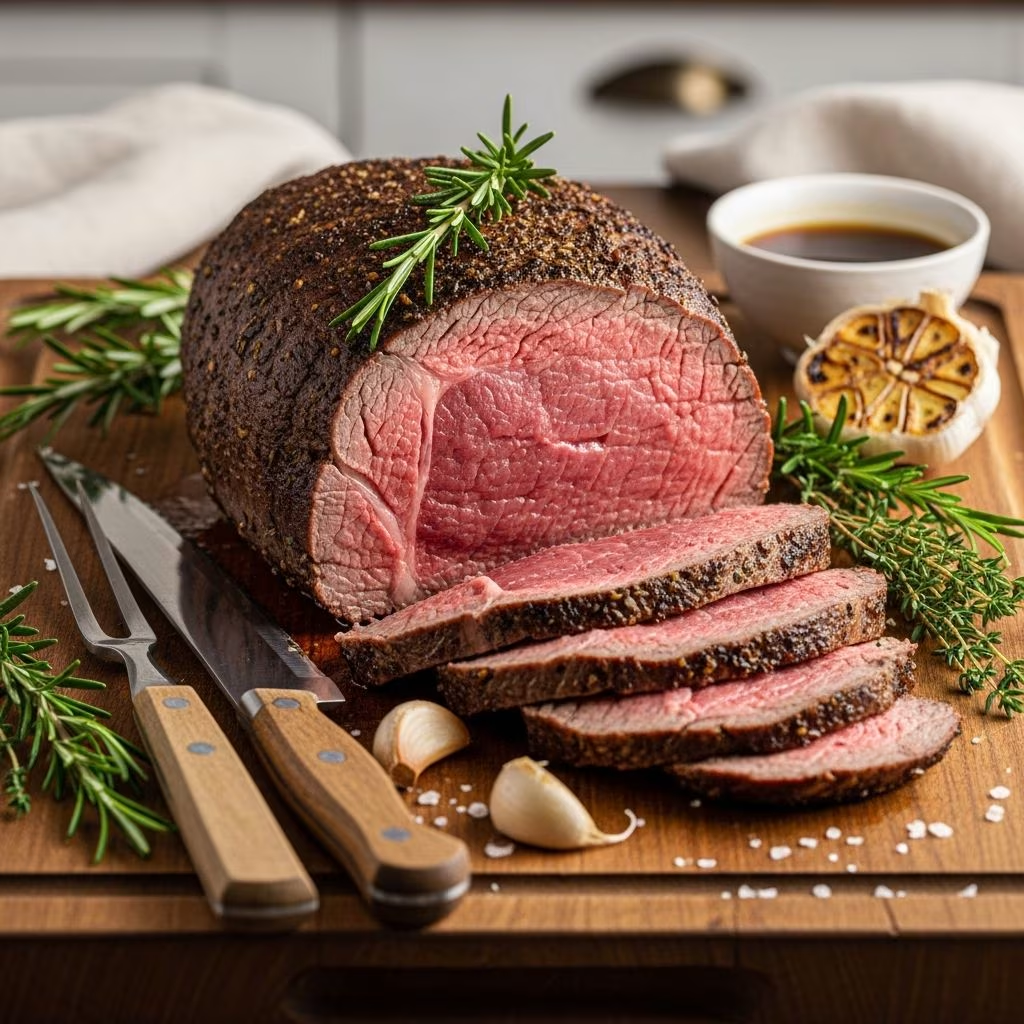
The eye of round roast stands out as one of the most economical beef cuts available, prized for its lean profile and versatility in meal preparation. Sourced from the hindquarters of the cow, this cylindrical muscle delivers mild beefy notes that shine when handled with care. Proper cooking elevates it from tough to melt-in-your-mouth tender, making it ideal for family gatherings, holiday feasts, or weeknight impressiveness. This guide draws on proven techniques to ensure success, focusing on preparation, cooking methods, and accompaniments like rich gravies.
Understanding the Eye of Round Cut
Eye of round comes from the round primal, a heavily exercised area that results in low fat content and a firm texture. Weighing typically 2 to 4 pounds, it’s perfect for roasting whole or slicing thin for sandwiches post-cook. Its leanness demands moisture-locking methods to prevent dryness, such as dry brining or slow roasting after an initial sear. Nutrition-wise, a 3-ounce serving provides about 25 grams of protein with minimal saturated fat, aligning with health-conscious diets.
- Key traits: Lean, budget-friendly, uniform shape for even cooking.
- Best uses: Roast beef, deli-style slices, stir-fries after tenderizing.
- Challenges: Prone to toughness if overcooked; requires precise temperature control.
Essential Ingredients for Success
Building flavor starts with quality basics. A 3-pound roast serves 6-8 people generously. Core pantry items include kosher salt for dry brining, black pepper for bite, and garlic for depth. Oils like olive or avocado withstand high heat for searing, while herbs such as rosemary, thyme, and oregano infuse aromatic layers.
| Category | Ingredients | Purpose |
|---|---|---|
| Base Seasoning | Kosher salt (2-3 tsp), black pepper (1-2 tsp), garlic powder or minced cloves (4 cloves) | Enhances natural beef flavor, tenderizes via salt draw. |
| Herbs & Spices | Dried thyme (1 tsp), rosemary (1 tsp), onion powder (2 tsp), paprika (½ tsp optional) | Adds earthy, savory complexity without overpowering. |
| Fats & Oils | Olive oil (2 tbsp), unsalted butter (2-4 tbsp for gravy) | Promotes browning, enriches sauce texture. |
| Gravy Components | Beef broth (2 cups), flour (3 tbsp), red wine (¼ cup optional) | Creates velvety pan sauce from drippings. |
Opt for grass-fed beef when possible for superior taste and marbling, though conventional works well with these methods.
Preparation Steps: From Fridge to Ready
Allow 1-2 hours for the roast to reach room temperature, promoting uniform cooking. Pat dry thoroughly with paper towels to ensure crisp searing. Apply a generous salt rub at least 45 minutes ahead—this dry brine pulls moisture to the surface then reabsorbs it, seasoning deeply and boosting juiciness.
- Dry brine: Rub 2 tsp kosher salt evenly over all sides. Rest uncovered in fridge overnight or on counter for 1 hour.
- Flavor paste: Mash minced garlic (4 cloves), 1 tbsp oil, onion powder, herbs into a paste. Spread post-brine.
- Oil coating: Drizzle 1 tbsp high-smoke-point oil, massaging to cover.
This prep mimics professional techniques, yielding restaurant-quality results at home.
High-Heat Sear Technique
The hallmark of tender eye of round is a blazing-hot initial roast at 475-500°F for 15-20 minutes. This creates a caramelized crust via Maillard reaction, trapping juices inside. Position on a wire rack over a rimmed sheet to allow air circulation.
- Preheat oven fully (convection if available for even browning).
- Roast fat-side up, rotating halfway for uniform color.
- Monitor closely—crust forms quickly to avoid charring.
Pro tip: Add ½ cup water to the pan bottom post-sear to steam and prevent drying during low-heat phase.
Low-and-Slow Roasting for Perfection
Drop temperature to 225-275°F immediately after searing. Cook to precise internal temps: 125°F medium-rare (most recommended for tenderness), 135°F medium. Expect 90-120 minutes for a 3-pound roast, or about 30-40 minutes per pound.
Use an instant-read thermometer inserted into the thickest part, avoiding bone or fat. Rest tented under foil for 20-30 minutes—carryover cooking raises temp 5-10°F, juices redistribute for supreme moistness.
| Doneness | Internal Temp (Remove) | Final Temp (Rest) | Texture |
|---|---|---|---|
| Rare | 120°F | 125°F | Cool red center, very juicy. |
| Medium-Rare | 125°F | 130-135°F | Warm red, tender, optimal. |
| Medium | 135°F | 140°F | Pink, still moist. |
Crafting the Ultimate Pan Gravy
Pan drippings form the gravy base, concentrated with roasted flavors. Over stovetop medium heat, melt 2 tbsp butter, whisk in 3 tbsp flour for a roux (1-2 minutes to golden). Deglaze with ¼ cup wine or broth, scraping bits, then add 2 cups beef broth. Simmer to thicken, season to taste. Browning sauce (like Kitchen Bouquet) deepens color optionally.
Yield: 2 cups. Strain if lumpy. Variations: Mushroom addition (sauté 8 oz sliced first) or herb infusion.
Serving Suggestions and Pairings
Slice thinly against the grain—1/8-inch thickness maximizes tenderness. Fan on a platter, drizzle gravy. Sides: Yorkshire puddings, roasted potatoes, green beans, or horseradish cream for zest.
- Classic plate: With mashed potatoes and gravy boat.
- Sandwich style: Chilled slices on rye with mustard.
- Wine pairing: Cabernet Sauvignon or Pinot Noir cuts richness.
Leftovers store 3-4 days refrigerated; reheat gently in gravy to retain moisture.
Common Mistakes and Fixes
Avoid these pitfalls for flawless execution:
- No rest time: Leads to juice loss. Always 20+ minutes.
- Skipping thermometer: Guessing temps toughens meat. Invest in a reliable probe.
- High heat throughout: Dries out lean cut. Sear then low is key.
- Thick slices: Cuts with grain make chewy. Angle knife perpendicular.
Recipe Variations for Every Palate
Adapt for dietary needs or flavors:
- Italian herb: Basil, oregano, red pepper flakes.
- Braised style: Slow-cook with veggies, wine, at 325°F for shreddable texture.
- Spicy kick: Add smoked paprika, cayenne.
- Low-carb: Skip flour, use xanthan gum for gravy.
Storage, Reheating, and Freezing
Cool completely before wrapping tightly. Fridge: 4 days max. Freezer: 3 months sliced. Reheat slices in simmering gravy or 250°F oven covered. Avoid microwave to prevent toughness.
FAQs
Can I cook eye of round in a slow cooker?
Yes, but sear first and add liquid for braising. Low 8 hours yields pot roast-style tenderness.
Why is my roast tough?
Likely overcooked or not rested. Aim medium-rare and slice thin against grain.
Grill instead of oven?
Possible: Hot sear then indirect low heat to temp. Monitor closely.
Vegetarian gravy alternative?
Use veggie broth, mushroom stock; same roux method works.
How much per person?
½ pound raw yields 3-4 oz cooked servings due to shrinkage.
Nutrition Snapshot (Per 3oz Serving, Medium-Rare)
| Nutrient | Amount |
|---|---|
| Calories | 180 |
| Protein | 25g |
| Fat | 8g |
| Iron | 2.5mg (14% DV) |
Values approximate; gravy adds carbs/sodium.
References
- Eye of Round Roast (Extra Tender + Juicy!) — Foodess. 2023. https://foodess.com/eye-of-round-roast-extra-tender-juicy/
- Tender Eye of Round Roast Beef with Gravy — Valerie’s Kitchen. 2022-10-15. https://www.fromvalerieskitchen.com/tender-eye-of-round-roast-with-gravy/
- Tender Eye of Round Roast Beef — Big Delicious Life. 2023. https://bigdeliciouslife.com/eye-of-round-roast-beef/
- Best Ever Eye of Round Roast — Life With The Crust Cut Off. 2021. https://lifewiththecrustcutoff.com/best-ever-eye-of-round-roast/
- How to Cook Eye of Round Roast Beef — ChefAlli.com. 2022. https://chefalli.com/how-to-cook-eye-of-round-beef-roast/