Salads represent versatility in the kitchen, serving as light starters, hearty mains, or refreshing sides. Yet, many home cooks struggle to make them exciting beyond basic lettuce and dressing. The key lies in one overlooked element: balance. This foundational principle ensures every bite combines contrasting textures, flavors, and nutrients, turning a simple mix into a symphony of taste and satisfaction.
Why Balance Defines an Exceptional Salad
A well-balanced salad engages all senses. It starts with fresh greens as the base, then layers in sweetness to counter bitterness, creaminess for smoothness, crunch for excitement, and a vibrant dressing to tie it all together. Without this harmony, salads can feel flat or overwhelming. Achieving balance requires intentional choices, drawing from culinary wisdom that emphasizes variety in every component.
Consider the science: our palates crave contrast. Bitterness from greens pairs with natural sugars from fruits, while fats from cheeses or nuts provide satiety. This approach not only enhances enjoyment but also boosts nutrition, making salads a complete meal option.
Building from the Base: Selecting the Right Greens
Greens form the canvas for your salad. Opt for nutrient-packed varieties to maximize health benefits and flavor depth. Romaine stands out for its crispness and density, while spinach offers tenderness and iron. Kale brings earthiness, arugula a peppery kick, and watercress a mustard-like zing.
- Romaine: Ideal for chopped salads due to sturdy leaves.
- Spinach: Mild and versatile for baby leaves.
- Arugula: Adds spice without overpowering.
- Kale: Massage to soften for better texture.
- Mixed greens: Combine for instant variety.
Pro tip: Wash and store greens properly. Roll dry leaves in paper towels inside a zip bag to maintain freshness for a week. This prep ensures crisp bases ready for assembly.
Infusing Sweetness for Flavor Harmony
Sweet elements brighten bitter greens, creating addictive contrasts. Fruits like mandarin oranges, apples, or pomegranate seeds introduce juiciness and natural sugars. Dried options such as raisins or figs offer chewiness. For savory twists, roasted corn or beets provide caramelized notes.
| Sweet Addition | Best Pairings | Texture Benefit |
|---|---|---|
| Apples (sliced thin) | Romaine, nuts | Crisp |
| Pomegranate seeds | Spinach, feta | Juicy pop |
| Mandarin oranges | Arugula, sesame | Tropical burst |
| Dried cranberries | Kale, goat cheese | Chewy |
Incorporate sweetness sparingly to avoid overpowering; a handful per serving suffices.
Creaminess: The Satiety Secret
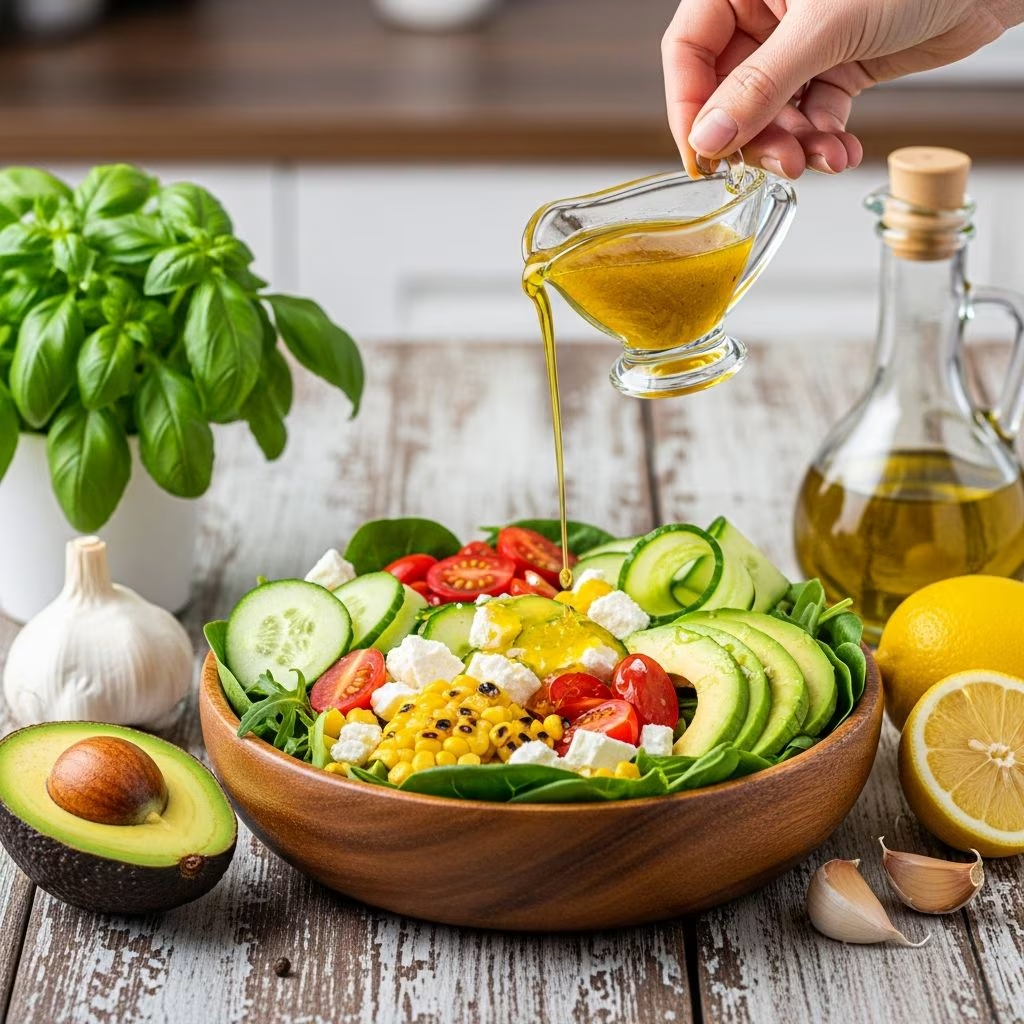
Creamy components add richness, mimicking full meals. Cheeses like shaved parmesan, fresh mozzarella, or queso fresco melt subtly. Avocado slices provide healthy fats and buttery mouthfeel. For vegan options, tahini or hummus drizzle works wonders.
Healthy fats sustain energy, preventing mid-afternoon hunger. Half an avocado per bowl delivers monounsaturated fats, fiber, and creaminess that binds ingredients.
Crunch: Elevating Texture and Excitement
Texture contrast prevents monotony. Nuts (almonds, walnuts), seeds (sunflower, pumpkin), or homemade croutons snap with every bite. Raw cabbage, snap peas, or fried onions add fresh or caramelized crunch.
- Nuts: Toasted for nutty depth.
- Seeds: Quick protein boost.
- Croutons: Cube stale bread, toss in oil, bake at 375°F for 10 minutes.
- Veggies: Shredded carrots, sliced radishes.
Layer crunch last to preserve it under dressing.
Mastering Dressings: The Unifying Force
Dressings bridge components. Homemade vinaigrettes outperform store-bought, using quality olive oil and acids like lemon juice or vinegar. A basic ratio: 3 parts oil to 1 part acid, plus salt, mustard for emulsion.
Simple Lemon Vinaigrette Recipe:
- ¼ cup extra-virgin olive oil
- 2 tbsp apple cider vinegar
- Juice of 1 lemon
- Pinch of salt and pepper
Whisk or shake in a jar. Customize with garlic, herbs, or honey. Quality matters: fruity olive oil enhances subtly.
Global Inspirations for Balanced Salads
Draw from cuisines worldwide for endless variety. Asian bowls feature soy, ginger, edamame, and sesame. Mexican mixes cilantro, lime, beans, corn. Italian relies on basil, tomatoes, parmesan. Greek offers cucumbers, olives, yogurt.
Experiment: Pair crunch with regional sweets, like pomegranate in Mediterranean or oranges in Chinese-inspired.
Meal Prep Strategies for Everyday Success
Prep ahead: Chop veggies (cucumbers, peppers, carrots) into containers for grab-and-go assembly. Store proteins like grilled chicken or beans separately. Add dressing at serving to avoid sogginess.
For lasting power, include proteins: rotisserie chicken, chickpeas, or steak. Carbs from quinoa or fruit sustain longer.
Common Pitfalls and Fixes
| Pitfall | Solution |
|---|---|
| Over-dressing | Drizzle lightly; toss in bowl first. |
| Lack of variety | Mix 3+ greens and textures. |
| Quick wilting | Paper towel storage method. |
| Not filling | Add fats, proteins, carbs. |
Signature Salad Recipes to Try
Mediterranean Crunch Bowl
Base: Arugula, romaine. Sweet: Figs. Creamy: Feta, tahini drizzle. Crunch: Cucumbers, almonds. Dressing: Lemon-olive oil. Serves 2.
Asian Fusion Power Salad
Base: Cabbage, spinach. Sweet: Mandarins. Creamy: Avocado. Crunch: Snap peas, sesame seeds. Dressing: Soy-ginger vinaigrette.
Autumn Harvest Mix
Base: Kale, mixed greens. Sweet: Apples, pomegranate. Creamy: Goat cheese. Crunch: Walnuts, croutons. Dressing: Balsamic-maple.
Frequently Asked Questions (FAQs)
What is the one secret ingredient every salad needs?
Balance—combining textures and flavors for a complete experience.
How do I store greens to keep them fresh?
Roll in paper towels in a zip bag; lasts up to a week.
Can salads be a full meal?
Yes, with proteins, fats, and carbs for sustained energy.
What’s the best homemade dressing for beginners?
3:1 oil-to-acid vinaigrette with lemon and olive oil.
How much crunch should a salad have?
Enough for contrast in every bite—nuts, seeds, or veggies.
References
- The 5 Elements of a Perfect Salad — Lynnette Sheppard. Accessed 2026. https://www.lynnettesheppard.com/perfect-salad/
- These Secret Ingredients Will Make Your Salad AH-MAZING — Chop Secrets. Accessed 2026. https://chopsecrets.com/these-secret-ingredients-will-make-your-salad-ah-mazing/
- Seven Salad Secrets — Katherine Sasser. Accessed 2026. https://katherinesasser.com/seven-salad-secrets/
- 10 Ina Garten Salad Tips We Didn’t Know We Needed Until Now — Chowhound. Accessed 2026. https://www.chowhound.com/2136558/ina-garten-salad-tips/