Preparing a turkey that remains juicy throughout the cooking process while maintaining exceptional flavor represents one of the most sought-after culinary achievements for holiday gatherings. Brining offers a scientifically-proven method to accomplish both objectives simultaneously. This comprehensive guide explores every aspect of the brining process, from fundamental principles through advanced techniques that will elevate your poultry preparation skills.
Understanding the Science Behind Brining
The brining process operates through a fascinating molecular mechanism that fundamentally alters the turkey’s structure. When poultry is submerged in a salt-laden solution, osmosis gradually draws the saltwater into the muscle fibers. This penetration doesn’t simply add surface-level flavor; it modifies the protein structure itself, enabling the meat to retain significantly more moisture during the roasting process.
The salt solution breaks down muscle proteins, allowing them to retain water more effectively. Rather than expelling natural juices during cooking, properly brined turkey maintains internal moisture that would otherwise be lost to evaporation. This results in meat that stays tender and succulent, even if slightly overcooked.
Essential Components for Creating Your Brine Foundation
Every successful brine begins with understanding the role each ingredient plays in the final outcome. The foundation of any brining solution consists of carefully measured components that work in concert.
The Core Salt and Sugar Elements
Kosher salt serves as the foundation ingredient that drives the brining process. Unlike table salt, kosher salt contains no additives and dissolves more readily in liquid. The recommended quantity typically ranges from 1 to 1.5 cups per gallon of water. Brown sugar balances the salt’s intensity while introducing subtle sweetness that complements poultry naturally. The sugar caramelizes during roasting, contributing to a richer exterior color.
Liquid Base Selection
Water forms the primary liquid component, but many experienced cooks incorporate additional liquid elements. Apple cider or apple juice adds depth and slight acidity that tenderizes the meat further. Some recipes include chicken broth as a substitute for water, enriching the overall flavor profile with savory undertones.
Aromatics and Flavor Builders
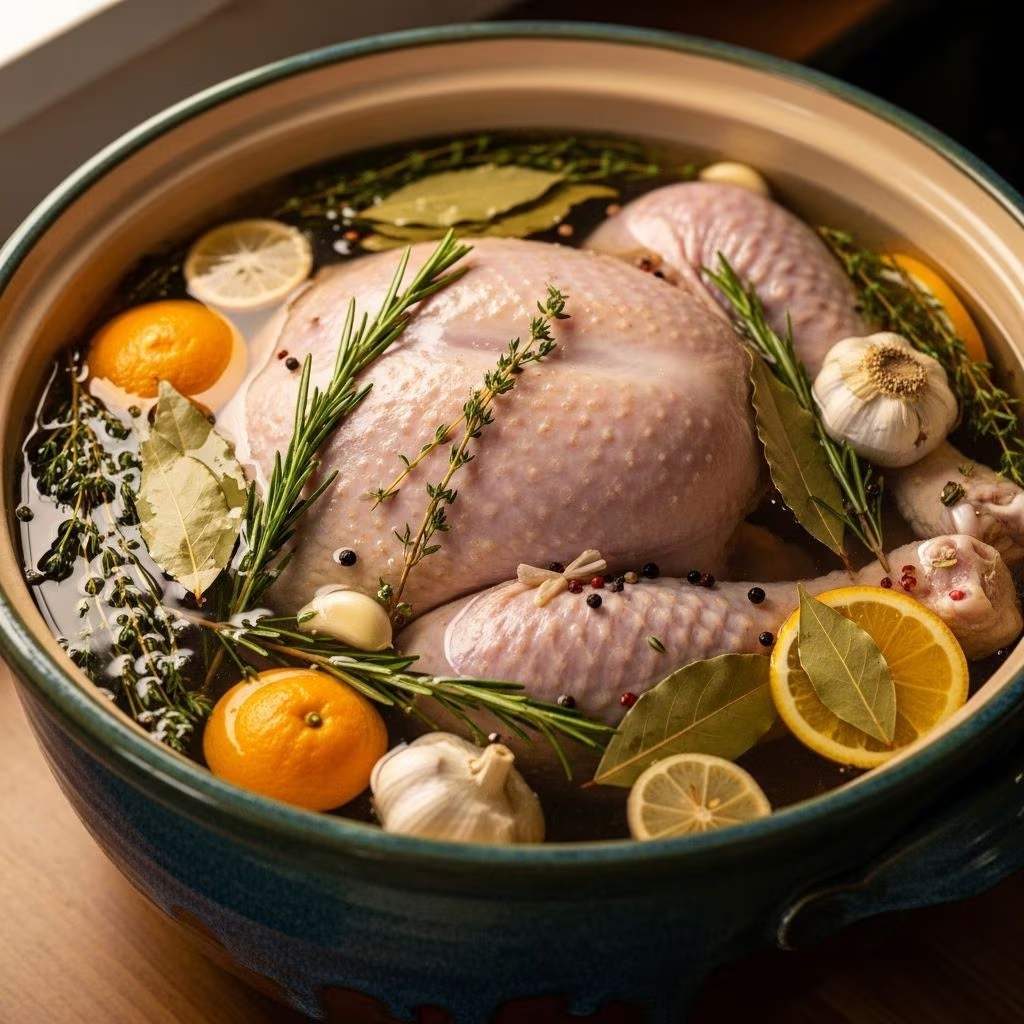
Fresh garlic cloves, either minced or left whole, infuse pungent, savory notes throughout the brining solution. Fresh herbs like thyme, rosemary, and sage contribute aromatic complexity. Bay leaves provide earthy undertones. Citrus elements—orange and lemon wheels or peels—introduce brightness and acid that prevents the brine from tasting one-dimensional.
Additional Flavor Enhancers
Worcestershire sauce contributes umami depth and complexity that mirrors the savory intensity found in slow-cooked broths. Black peppercorns add gentle heat and spice without overwhelming the palate. Some recipes incorporate peppercorns whole to infuse rather than grind them, preventing the brine from appearing murky.
Assembling Your Brining Setup
Successful brining requires appropriate equipment and preparation. Most home cooks don’t possess specialized brining equipment, so improvisation becomes essential.
Container Selection and Capacity
A large stockpot accommodates smaller turkeys, while larger birds demand substantial containers. Food-grade plastic buckets, brining bags specifically designed for this purpose, or large coolers serve equally well. The container must hold both the turkey and enough liquid to completely submerge the bird with several inches of clearance above it.
If refrigerator space presents challenges, a large cooler filled with ice packs maintains safe temperatures throughout the brining period. Cold temperatures remain critical for food safety, preventing bacterial growth while the turkey soaks.
Keeping the Turkey Fully Submerged
A turkey naturally attempts to float due to its air cavity. Keeping the bird completely submerged ensures even seasoning distribution. Weighted plates, smaller containers filled with water, or custom brining racks accomplish this necessary objective.
Step-by-Step Brining Process
Initial Preparation and Ingredient Assembly
Begin by gathering all ingredients and verifying quantities against your chosen recipe. Slice citrus fruits into wheels for easier handling and optimal surface contact with the brine. Measure salt, sugar, and other components into separate containers to streamline the mixing process.
Creating the Brine Solution
Pour cold water into your selected container, then add kosher salt and brown sugar. Stir vigorously until both dissolve completely. Cold water facilitates faster dissolution compared to room-temperature water. Once dissolved, introduce remaining ingredients: minced garlic, citrus pieces, fresh herbs, peppercorns, and bay leaves. Stir thoroughly to distribute ingredients evenly throughout the solution.
Temperature Considerations Before Immersion
The brine solution should reach room temperature or cooler before introducing the raw turkey. Warm brine increases bacterial proliferation risk. Some cooks create the brine, allow it to cool to room temperature, then refrigerate for several hours before adding the turkey.
Submerging and Securing the Turkey
Position the raw turkey into the prepared brine, positioning it breast-side down initially, then breast-side up midway through the brining period. This alternation ensures both sides absorb brine evenly. Secure your chosen weight mechanism to maintain complete submersion.
Refrigeration Duration
Brining duration typically spans 16 to 24 hours for optimal results. Longer brining times—up to 48 hours—intensify flavor absorption but risk oversalting the exterior. Shorter brining periods of 12 hours still provide meaningful improvement over unbrined poultry.
Pre-Roasting Preparation After Brining
Removing the turkey from brine initiates the final preparation phase. Discard the brining solution completely; do not attempt to repurpose or cook with it. The turkey has absorbed necessary salt during brining, so additional seasoning requires restraint.
Rinsing Away Excess Surface Salt
Submerge the brined turkey in fresh, cold water for 15 minutes. This rinses away excess salt deposited on the exterior while preserving interior moisture absorption achieved through brining. Some cooks perform this step twice to reduce exterior saltiness, though this risks losing internal brining benefits.
Achieving Crispy, Golden Skin
Pat the turkey absolutely dry using paper towels. Moisture remaining on the surface inhibits browning and prevents that coveted crispy skin texture. Consider placing the dried turkey uncovered in the refrigerator for several hours or overnight. This air-drying further enhances skin crispness during roasting.
Flavor Customization Strategies
While classic brine recipes provide reliable results, experimentation allows personalization based on preferences and available ingredients.
Herb Variations
Substitute or supplement traditional thyme with fresh sage, rosemary, or oregano. Each herb introduces distinct aromatic qualities. Sage pairs beautifully with poultry, contributing slightly peppery notes. Rosemary adds piney, Mediterranean character. Oregano contributes earthy, slightly spicy dimensions.
Citrus Alternatives
Beyond oranges and lemons, consider grapefruit for bitter complexity, limes for brightness, or tangerines for subtle sweetness. Combine multiple citrus varieties for dimensional flavor development.
Regional Flavor Profiles
Incorporate spice blends reflecting different culinary traditions. Add star anise and cinnamon for Asian-inspired notes. Include cumin and chili powder for Southwestern character. Introduce juniper berries and thyme for European-style complexity.
Common Brining Mistakes and Solutions
| Mistake | Consequence | Solution |
|---|---|---|
| Insufficient salt concentration | Minimal flavor enhancement and moisture retention | Follow established ratios carefully; measure salt precisely |
| Warm brining solution | Increased bacterial growth and food safety risks | Cool brine completely before adding turkey; maintain cold temperatures |
| Excessive brining duration | Oversalted exterior and potentially mushy texture | Limit brining to 24 hours maximum; rinse thoroughly before cooking |
| Incomplete submersion | Uneven seasoning and dry spots | Use weights or improvised methods to keep turkey fully submerged |
| Insufficient rinsing after brining | Overly salty cooked turkey | Rinse turkey in fresh water for 15 minutes post-brining |
Equipment and Storage Considerations
Successful brining requires adequate refrigeration space and appropriate containers. Before committing to brining, assess available refrigerator capacity. A 14-pound turkey with surrounding brine occupies substantial space. Designate a shelf or arrange other refrigerated items to accommodate the brining container.
Keep brining containers covered to prevent contamination. Use lids, plastic wrap, or clean cloth covers to maintain cleanliness throughout the soaking period. If refrigerator space proves insufficient, large coolers filled with ice packs maintain adequate temperatures. Replace melting ice regularly to sustain proper cooling throughout the brining window.
Frequently Asked Questions About Turkey Brining
Can I brine a frozen turkey?
Frozen turkeys must thaw completely before brining. Brining a frozen or partially frozen bird proves ineffective. Thaw the turkey in the refrigerator, allowing approximately 24 hours per 4 pounds of weight. Use a brining bag placed under the turkey to catch any defrosting liquid.
How much brine do I need?
Calculate approximately 0.5 gallons of brine per pound of turkey. A 14-pound bird typically requires 7 gallons of brine, though 2 gallons suffices if you rotate the turkey midway through brining.
Can I brine and dry-brine simultaneously?
These methods work better separately. Choose either wet brining (complete submersion) or dry brining (coating exterior with salt mixture). Combining methods typically results in overly salty poultry.
What happens if I forget to remove the turkey from the brine?
Extended brining beyond 48 hours risks excessive salt absorption and mushy texture. Remove the turkey promptly when the scheduled brining time concludes.
Should I stuff a brined turkey differently?
Brined turkeys are already internally moist, so stuffing preparation remains standard. However, ensure stuffing reaches 165°F internally for food safety.
Comparing Brining Methods
| Method | Duration | Equipment | Results |
|---|---|---|---|
| Wet brining (complete submersion) | 16-24 hours | Large container, ice packs if needed | Maximum moisture retention, pronounced flavor |
| Dry brining (salt rub) | 12-40 hours | Minimal; salt mixture only | Crispier skin, concentrated flavors |
| Injectable brining | 2-4 hours before cooking | Meat injector | Quick results, less equipment intensive |
Final Preparation for Optimal Results
Once brining concludes and the turkey has been properly rinsed and dried, allow it to sit uncovered in the refrigerator for several hours. This permits the skin surface to dry completely, facilitating browning during roasting. Remove the turkey from refrigeration 30 minutes before cooking to allow it to reach near room temperature, ensuring even cooking throughout.
Season the interior cavity conservatively, as interior tissues have absorbed salt through brining. Use fresh herbs and aromatics like thyme sprigs, apple quarters, or onion halves to add subtle interior flavor without oversalting.
References
- Brining Fundamentals for Poultry — Jennifer Cooks. Retrieved from https://jennifercooks.com/ultimate-easy-turkey-brine/
- Turkey Preparation and Flavor Enhancement Techniques — Oh Sweet Basil. Retrieved from https://ohsweetbasil.com/my-favorite-turkey-brine-recipe/
- Professional Turkey Brining Methods — The Pioneer Woman. Retrieved from https://www.thepioneerwoman.com/food-cooking/recipes/a11882/my-favorite-turkey-brine/