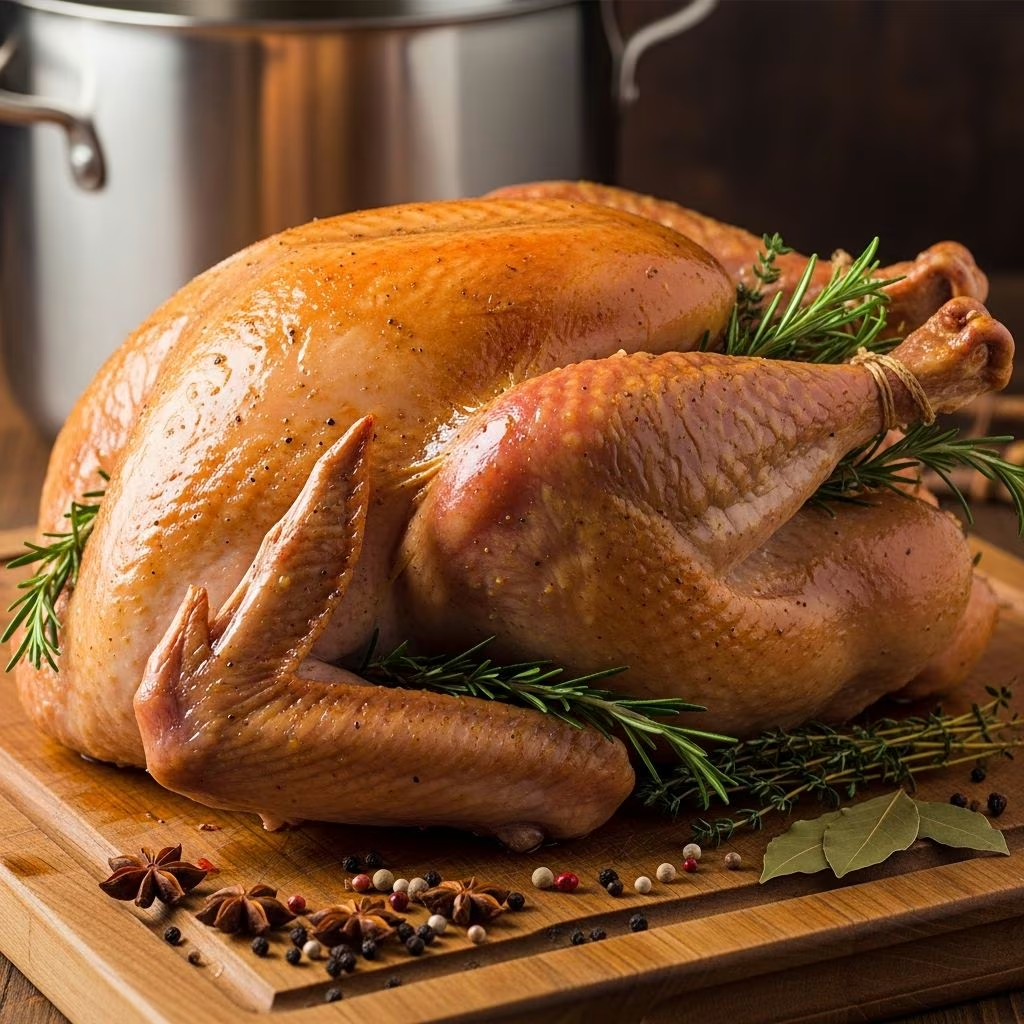
Brining a turkey transforms a standard holiday roast into a culinary masterpiece, locking in moisture and infusing deep flavors that elevate every bite. This method, rooted in simple science, uses a saltwater solution to plump up the meat, making it tender and succulent even after hours in the oven or smoker. Whether you’re hosting Thanksgiving, Christmas, or a special gathering, mastering the brine is your secret to rave reviews from guests.
Why Brining Makes All the Difference
At its core, brining works through osmosis: salt in the solution draws moisture into the turkey’s muscle fibers while breaking down proteins for tenderness. The result is a bird that resists drying out, staying juicy through high-heat cooking. Unlike dry rubs or basic marinades, brine penetrates deeply, seasoning from within. Home cooks report up to 20% more moisture retention compared to unbrined birds, leading to less carving stress and more enjoyable leftovers.
Beyond moisture, brine allows customization with sugars, spices, and aromatics, creating profiles from sweet-savory to herbaceous. It’s versatile for roasting, smoking, frying, or grilling, adapting to any holiday tradition.
Essential Ingredients for a Perfect Brine
A great brine starts with pantry staples, keeping it accessible without specialty shopping. Here’s the foundational recipe scaled for a 16-20 pound turkey:
- 2 gallons cold water (filtered for purity)
- 1-1.5 cups salt (table salt: 1 cup; kosher/canning: 1.5 cups due to coarser grains)
- 1/3 cup brown sugar (for caramel notes and moisture balance)
- 3 tablespoons minced garlic (fresh or jarred for punchy depth)
- 1 tablespoon ground black pepper (freshly cracked for aroma)
- 1/4 cup Worcestershire sauce (umami booster from pantry essential)
Adjust salt precisely: finer table salt dissolves faster but packs more sodium per volume, so measure carefully to avoid over-salting. Brown sugar counters saltiness, promoting even browning via Maillard reaction during cooking.
Step-by-Step Brining Process
Preparation takes minutes, but planning is key for space and timing. Follow these steps for foolproof results:
- Select your vessel: Use a food-grade 5-gallon bucket, oversized stockpot, or brining bag that fits your fridge. For 20-pound birds, opt for 22-quart pots.
- Mix the solution: Dissolve salt and sugar in 1 gallon warm water first, then add remaining cold water, garlic, pepper, and Worcestershire. Stir until clear—about 5 minutes.
- Prep the turkey: Remove giblets, neck, and tail. Pat dry. Submerge fully in brine; weigh down with a plate if needed.
- Refrigerate: Chill 24-48 hours. Ideal is 1 day per 10 pounds; don’t exceed 72 hours to prevent mushiness.
- Rinse and rest: Remove turkey, rinse under cold water 5-10 minutes to wash off excess salt. Pat dry, air-dry uncovered in fridge 4-12 hours for crispy skin.
Pro tip: Label your fridge space ahead. If fridge room is tight, use a cooler with ice packs, monitoring temperature below 40°F to stay food-safe.
Customizing Your Brine for Unique Flavors
Experiment to match your menu. Add these for twists:
| Flavor Profile | Additions (per 2 gallons) | Pairing Ideas |
|---|---|---|
| Citrus Burst | Juice/zest of 4 oranges + 2 lemons | Herb-roasted sides |
| Smoky Spice | 2 tbsp smoked paprika + 1/4 cup apple cider | Smoked or grilled turkey |
| Herbal Garden | Handful fresh rosemary, thyme, sage | Classic stuffing |
| Sweet Maple | 1/2 cup maple syrup instead of brown sugar | Cranberry sauces |
| Asian Fusion | 1/4 cup soy sauce + ginger slices + star anise | Stir-fried leftovers |
Always taste-test a small cooled sample of brine; it should be pleasantly salty, like seawater.
Cooking Your Brined Turkey to Perfection
Post-brine, handle gently to preserve skin integrity. Recommended methods:
- Roasting: 325°F oven, 15 min/lb breast-side up. Tent loosely after 2/3 done. Internal 165°F.
- Smoking: 225-250°F, 30-40 min/lb with fruitwood. Spritz with brine remnants hourly.
- Frying: Ensure fully dry; peanut oil at 350°F, 3-4 min/lb.
Rest 30-45 minutes tented for juices to redistribute. Carve against grain for max tenderness.
Troubleshooting Common Brining Issues
Even pros hit snags—here’s how to fix:
- Too salty? Extend rinse to 15 minutes; soak in plain water 1 hour.
- Skin not crispy? Air-dry longer or pat aggressively before oil/butter rub.
- No fridge space? Ice-filled cooler, rotated every 12 hours.
- Over-brined mush? Shorten time next round; test with smaller bird.
- Frozen turkey? Thaw fully first in fridge (24 hrs/5 lbs).
Safety first: Discard used brine. Never reuse due to bacterial risks. Keep below 40°F always.
Health and Nutrition Insights
Brining doesn’t add significant calories but enhances nutrient retention by preventing drip loss. A 4-oz serving of roasted turkey breast offers 30g protein, B-vitamins, and selenium with ~160 calories. Salt intake rises slightly, so balance with low-sodium sides. For sodium-conscious eaters, reduce salt 25% and extend brine time.
Brining Beyond Turkey: Versatile Applications
This formula shines on chicken (halve water/salt for whole bird, 12-24 hrs), pork chops (4-8 hrs), or shrimp (1 hr). Scale proportionally for success across proteins.
Reader Success Stories and Variations
Home cooks love this: One smoker enthusiast brined a 22-pounder overnight, yielding “fall-off-bone” results. Another swapped sugar for honey, pairing with glazed ham. Short on time? 12 hours still boosts moisture 15%.
Frequently Asked Questions
Can I brine a fresh or frozen turkey?
Fresh only—thaw frozen completely first to ensure even absorption.
How long does brined turkey last?
Refrigerate 3-4 days or freeze 4 months. Reheat to 165°F.
Is brining worth the effort for small gatherings?
Absolutely—even a 10-pound bird benefits hugely from 24 hours.
What if I don’t have Worcestershire?
Substitute soy sauce + balsamic vinegar (1:1) for similar umami.
Does brining work for pre-salted “enhanced” turkeys?
Skip or dilute brine 50%; check label for solution percentage.
Integrate this brine into your routine for holiday confidence. Its simplicity belies transformative power, turning ordinary roasts into legends.
References
- Out of this World Turkey Brine — If The Creek Don’t Rise Blog. 2012-11-01. https://callherblessed-angela.blogspot.com/2012/11/out-of-this-world-turkey-brine.html
- Out Of This World Turkey Brine — Fruchtman Marketing. N/A. https://fruchtman.com/blogs/findings/out-of-this-world-turkey-brine
- USDA Turkey Preparation Guidelines — United States Department of Agriculture. 2023-10-01. https://www.fsis.usda.gov/food-safety/safe-food-handling-and-preparation/poultry/turkeys-and-turkey-products
- Nutrient Data for Turkey — USDA FoodData Central. 2024-01-15. https://fdc.nal.usda.gov/fdc-app.html#/food-details/171486/nutrients