Rice remains one of the most versatile and widely consumed staples across global cuisines. Yet achieving consistently fluffy, perfectly cooked grains can be challenging when relying on stovetop methods. Enter the oven-baking technique—a revolutionary approach that removes guesswork and delivers restaurant-quality results with minimal supervision. This comprehensive guide explores everything you need to know about preparing rice in your oven, from fundamental principles to advanced techniques.
Why Choose Oven-Based Rice Preparation?
The traditional stovetop method requires constant attention, precise heat control, and careful monitoring to prevent scorching or undercooking. Oven-baking transforms rice preparation into a hands-off endeavor that produces exceptional outcomes. Unlike stovetop cooking, where direct heat can create hot spots and uneven cooking, the oven’s ambient heat circulates uniformly around the baking vessel, ensuring every grain cooks evenly.
This method proves particularly valuable when preparing meals for multiple people or when your stovetop space is already occupied with other dishes. The sealed environment created by covering the baking dish traps steam, creating conditions ideal for proper starch gelatinization and moisture absorption. Additionally, once the rice enters the oven, you gain approximately 40-45 minutes of freedom to prepare complementary dishes or attend to other kitchen tasks.
Essential Ingredients and Ratios
The beauty of oven-baked rice lies in its simplicity. The basic formula requires only rice, liquid, fat, and salt—four components that combine to create something far greater than their individual parts.
Understanding the Liquid-to-Rice Ratio
The foundation of successful rice cooking rests on achieving the correct proportion of liquid to rice. Most long-grain white rice varieties benefit from a 1.75:1 liquid-to-rice ratio. This means for every cup of rice, you’ll need approximately 1.75 cups of water or broth. Some recipes adjust this slightly to 2:1 for additional safety margin, especially when cooking larger quantities or in altitude environments where evaporation patterns differ.
The type of rice influences liquid requirements significantly. Jasmine and basmati varieties may require slightly less liquid than standard long-grain white rice, while short-grain and medium-grain varieties typically absorb more moisture. When experimenting with different rice varieties, adjusting liquid volume in small increments during subsequent cooking attempts helps fine-tune your results.
The Role of Fat and Seasoning
Butter or olive oil—typically 1.5 to 2 tablespoons per cup of rice—serves multiple functions beyond flavor. Fat coats individual rice grains, creating separation that prevents sticking and promotes a fluffy texture. It also carries fat-soluble flavor compounds that enhance overall taste. Some preparations use neutral oils, while others exploit the flavor contribution of butter or infused oils.
Salt performs critical work during cooking, enhancing flavor development and controlling starch absorption. Approximately 0.5 to 1 teaspoon of kosher salt per cup of rice provides optimal seasoning, though adjustments accommodate personal preference and pre-existing sodium in broths.
Comprehensive Preparation and Cooking Process
Initial Setup and Equipment Selection
Selecting appropriate cookware significantly impacts outcomes. A 9×13-inch rectangular baking dish accommodates standard quantities well, while larger gatherings benefit from proportionally larger vessels. Glass, ceramic, or traditional metal baking dishes work equally well. The container should have a tight-fitting lid or accommodate heavy-duty aluminum foil for effective sealing.
Preheating your oven to 350°F establishes a gentle cooking environment that minimizes excessive evaporation while ensuring thorough cooking. Some preparations use 375°F or 400°F for accelerated cooking times, typically reducing overall duration by 5-10 minutes, though this requires attentiveness to prevent overcooking or excess moisture loss.
The Cooking Methodology
Combine dry rice, salt, and fat in your prepared baking dish. If using boiling water—which many experts recommend—pour it directly over the dry ingredients and stir briefly to distribute components evenly. The heated water jumpstarts the cooking process immediately, preventing the lag that occurs when adding room-temperature liquid.
Cover the dish tightly with aluminum foil, pressing it firmly against the rim to create a seal that prevents steam escape. Secure placement matters; handle carefully as you transfer the covered dish to your preheated oven, preventing any splashing that could disrupt even cooking.
Bake undisturbed for 40-45 minutes at 350°F. The temptation to peek frequently should be resisted, as opening the cover releases accumulated steam and interrupts the cooking cycle. At the conclusion of the initial bake time, remove the dish from the oven and assess moisture levels before deciding whether additional cooking time is necessary.
Assessing Doneness and Adjusting Technique
Recognizing Proper Cooking Stages
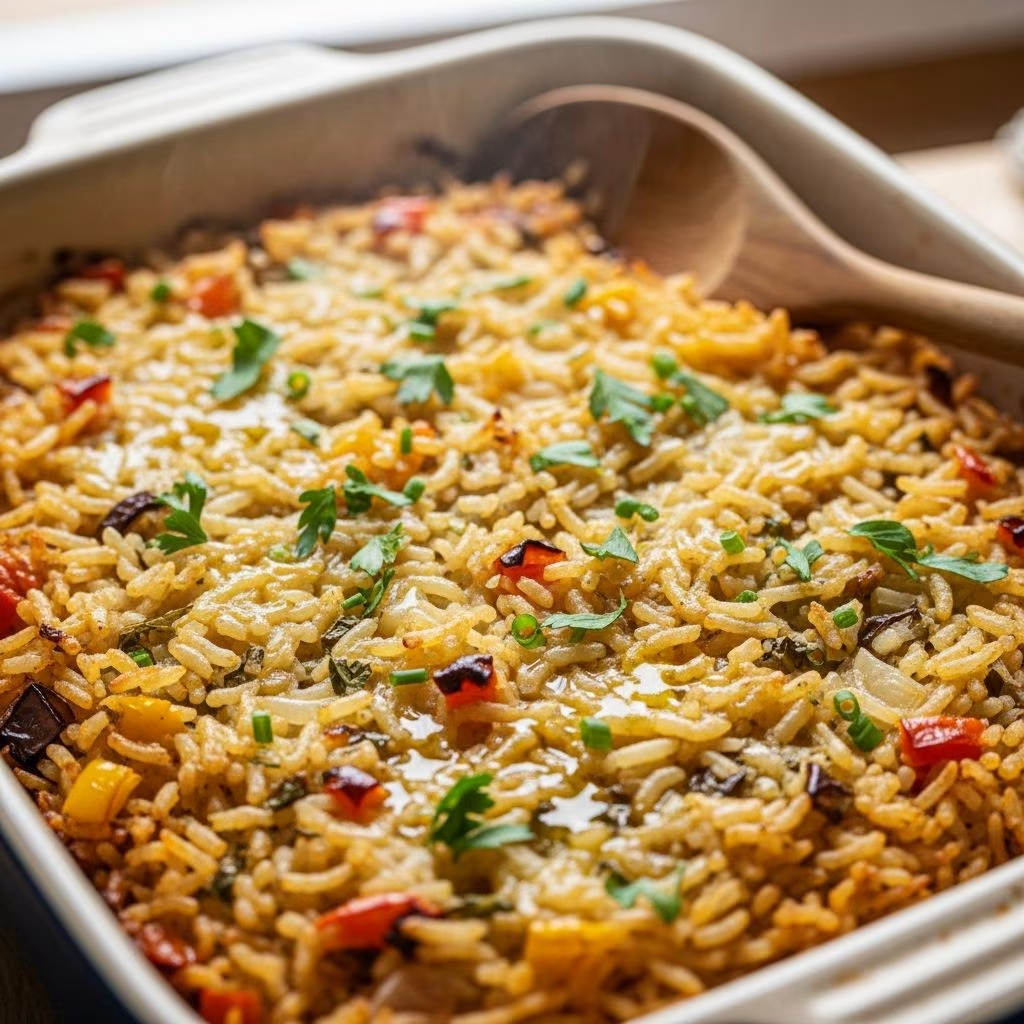
Perfect oven-baked rice typically finishes with a small amount of liquid remaining on the pan bottom—approximately 1/4 to 1/2 inch. At this stage, remove the foil and fluff gently with a fork, then re-cover the dish without foil. This resting period allows residual heat to absorb remaining moisture while steam continues circulating internally.
If rice appears crunchy with substantial liquid remaining, return the covered dish to the oven for additional 5-10 minute intervals, checking progress each time. Conversely, if rice appears somewhat mushy or liquid has completely evaporated, you’ve achieved full cooking; remove from heat and proceed to fluffing and serving.
Troubleshooting Common Issues
Undercooked rice with excessive liquid indicates your oven temperature may run cool or your bake time was insufficient. Solutions include adjusting oven temperature upward by 25 degrees for future attempts or increasing initial bake duration. Conversely, dried-out or overcooked rice suggests your oven runs hot or you’ve extended cooking time excessively. Reduce bake time in future preparations or lower oven temperature slightly.
Uneven cooking where some grains remain firm while others appear soft points to insufficient mixing before baking or uneven oven heat distribution. Stirring rice thoroughly before covering helps distribute liquid evenly. Rotating the baking dish halfway through cooking addresses hot spots in your oven.
Advanced Flavor Enhancement Techniques
Incorporating Aromatics and Broths
Replacing water with vegetable, chicken, or beef broth introduces savory depth that plain water cannot provide. These flavorful liquids need no adjustment to liquid ratios—use identical quantities as you would water. The rice absorbs broth flavors completely, creating seasoned rice without additional effort.
Sautéing minced garlic, diced onions, or other aromatics briefly in oil before combining with rice adds aromatic complexity. Adding these pre-cooked vegetables to rice before baking distributes their flavors throughout. Some preparations incorporate fresh herbs at the beginning, though delicate herbs like cilantro or basil fare better as garnishes after cooking.
Creating Flavored Rice Variations
Loaded rice preparations integrate ingredients throughout the baking process. Diced vegetables, cooked proteins, and cheese can be mixed with rice before liquid addition, allowing all components to cook harmoniously. Some recipes reserve certain delicate ingredients for mixing after cooking to preserve their texture and appearance. This modular approach permits endless customization while maintaining the oven-baking method’s convenience.
Scaling for Different Quantities
| Quantity | Rice | Liquid | Fat | Salt | Bake Time |
|---|---|---|---|---|---|
| Individual (1 serving) | 1/2 cup | 7/8 cup | 0.75 tbsp | 1/4 tsp | 30-35 min |
| Standard (4 servings) | 1 cup | 1.75 cups | 1.5 tbsp | 0.5 tsp | 40-45 min |
| Family (8 servings) | 2 cups | 3.5 cups | 3 tbsp | 1 tsp | 45-50 min |
| Large gathering (20 servings) | 4-5 cups | 7-8.75 cups | 6-7.5 tbsp | 2-2.5 tsp | 50-55 min |
When scaling recipes, maintain proportional liquid-to-rice ratios for consistency. Bake time may increase slightly with larger quantities due to thermal mass, though the ambient oven heat ensures even cooking regardless of batch size. Larger quantities benefit from oven position adjustment—placing the baking dish on a lower rack promotes even heat penetration.
Storage, Reheating, and Make-Ahead Strategies
Preserving Cooked Rice
Properly stored oven-baked rice maintains quality for up to four days when refrigerated in an airtight container. Cool rice to room temperature before storing to prevent excess moisture accumulation from condensation. For longer storage, freeze rice in portion-sized containers for up to four months without significant quality loss.
Reheating Techniques
Reviving stored rice works best using gentle heat with added moisture. Place rice in an oven-safe dish, lightly dampen with water, cover tightly with foil, and reheat at 300°F for approximately 20 minutes. Alternatively, combine rice with a small splash of water in a covered microwave-safe container and heat at 50% power for 2-3 minute intervals, stirring between intervals to ensure even warming.
Avoid vigorous reheating or high temperatures, which can dry rice excessively or create tough, unpalatable textures. The gentle approach preserves the fluffy texture achieved during initial cooking.
Frequently Asked Questions
Can I use room-temperature water instead of boiling water?
While room-temperature water technically works, boiling water offers significant advantages. It jumpstarts cooking immediately when rice enters the oven, reducing total cooking time slightly and promoting more even results. Room-temperature water requires the rice to gradually heat before cooking begins, potentially creating inconsistency.
What’s the best rice variety for oven-baking?
Long-grain white rice varieties like basmati and jasmine work exceptionally well, producing separate, fluffy grains. Short-grain varieties produce stickier rice suitable for certain dishes. Brown rice requires increased liquid and longer cooking times, typically 50-60 minutes. Experiment with your preferred variety, adjusting liquid quantities slightly as needed.
How do I know if my oven temperature is accurate?
Oven temperature variance is common and substantially impacts cooking outcomes. Consider investing in an oven thermometer (placed on the middle rack) to verify actual temperature. If your oven runs significantly hot or cold, adjust your set temperature accordingly or increase/decrease bake time incrementally.
Can I add ingredients like butter and oil together for richness?
Yes, combining butter and oil creates rich flavor complexity. Reduce the total fat quantity slightly if combining—approximately 0.75 tablespoon butter plus 0.75 tablespoon oil per cup of rice provides excellent results without excessive richness. This combination contributes both butter’s distinct flavor and oil’s cooking properties.
Should I stir the rice while it’s baking?
Opening the cover to stir disrupts steam circulation and interrupts cooking. Avoid stirring during the initial bake period. If you’re checking for doneness at the midpoint, a gentle stir is acceptable provided you immediately re-cover the dish. The final fluffing with a fork occurs after the initial baking completes.
Conclusion
Oven-baked rice represents a paradigm shift in home cooking—transforming rice preparation from a technique requiring constant attention into a reliable, hands-off process that consistently delivers exceptional results. Whether preparing simple seasoned rice or elaborate loaded preparations, the fundamental principles remain consistent. Master the basic technique with plain rice, then gradually explore flavor variations and ingredient additions that align with your culinary interests. This method’s remarkable simplicity, combined with its exceptional reliability, makes oven-baked rice an indispensable addition to any home cook’s repertoire.
References
- Oven Baked Rice — Kosher From Jerusalem. 2022-09-22. https://kosherfromjerusalem.com/2022/09/22/oven-baked-rice/
- Perfect Every Time Oven-Baked Rice — My Kitchen My Studio. 2024. https://mykitchenmystudio.com/perfect-every-time-oven-baked-rice/
- Baked Oven Rice — She Made It She Might. 2024. https://shemadeitshemight.com/rice-for-the-rest-of-ya/
- Oven Baked Rice — Spend With Pennies. 2024. https://www.spendwithpennies.com/baked-rice/
- Oven-Baked Rice For A Crowd — Katherine Sasser. 2024. https://katherinesasser.com/oven-baked-rice-for-a-crowd/
- Life Changing Loaded Baked Rice — Dished by Kate. 2024. https://dishedbykate.com/loaded-baked-rice/
- How To Bake Rice In The Oven — Jamie Geller. 2024. https://jamiegeller.com/recipes/how-to-bake-rice-in-the-oven/