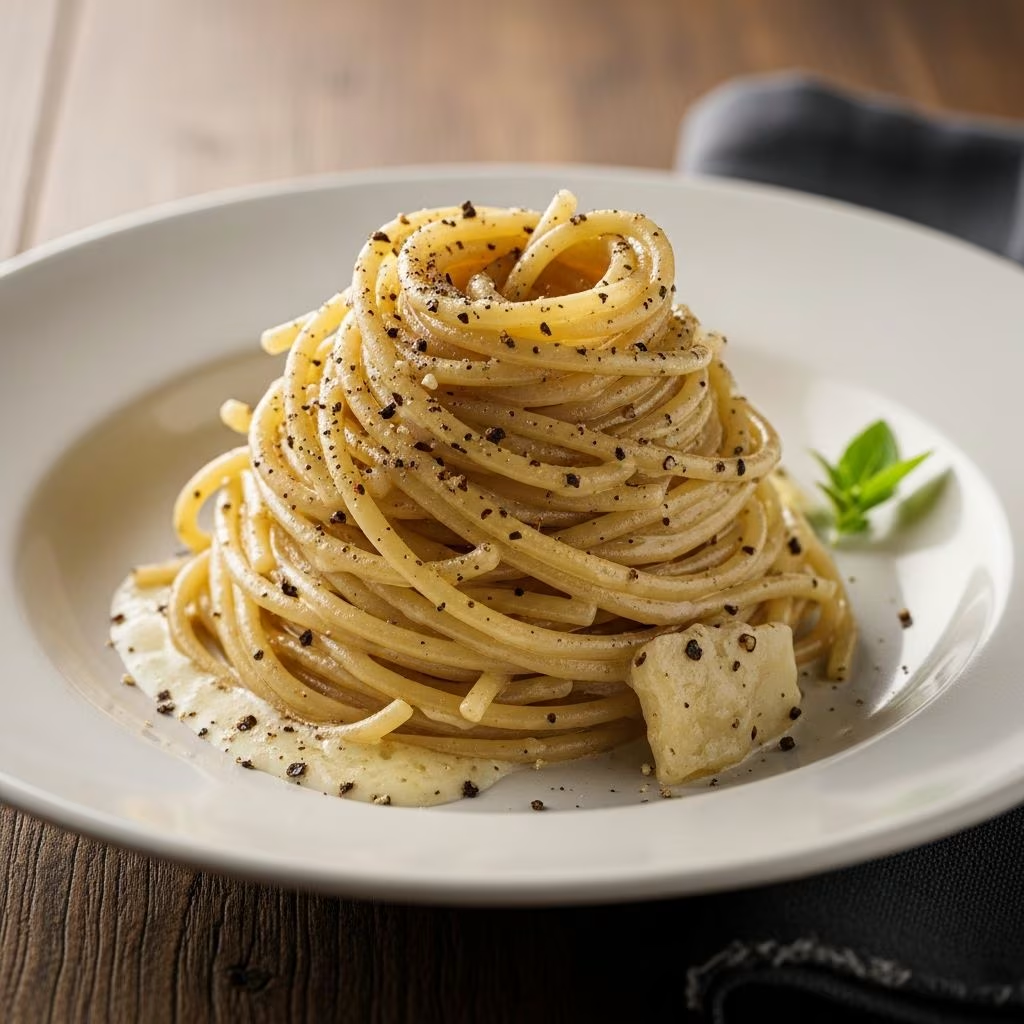
Cacio e pepe stands as one of Italy’s most beloved pasta dishes, celebrated for its minimalist elegance and bold flavors. Translating literally to “cheese and pepper,” this Roman specialty relies on just a handful of ingredients to deliver a creamy, peppery masterpiece that punches far above its weight. Originating from the Eternal City, it embodies the philosophy of la cucina povera—poor man’s cooking—where humble pantry staples transform into something extraordinary.
The Storied Origins of Cacio e Pepe
The history of cacio e pepe is steeped in rustic tradition, with roots tracing back to ancient pastoral life in central Italy. Historians suggest it emerged among shepherds in the Apennine Mountains, who carried durable goods like dried pasta, hard pecorino cheese from their flocks’ milk, and black pepper—ingredients that traveled well and required no refrigeration. These herders would combine them over an open fire for a sustaining meal during long nights tending sheep.
While the shepherd tale adds romantic allure, some scholars point to a more urban evolution in Rome’s Lazio region factories and mines, where workers adapted similar no-frills combinations for quick, affordable nourishment. Regardless of exact beginnings, by the mid-20th century, cacio e pepe had cemented its status in Roman trattorias, praised by figures like Anthony Bourdain for its purity and perfection.
Today, it remains a test of culinary skill, demanding precise technique to emulsify cheese into a glossy sauce without clumps. Its simplicity belies the mastery required, making it a rite of passage for pasta enthusiasts worldwide.
Essential Ingredients for Authentic Flavor
At its core, cacio e pepe demands high-quality components. Here’s what you need:
- Pasta: Opt for long, sturdy shapes like bucatini, tonnarelli, spaghetti, or linguine. Bucatini’s hollow center traps sauce beautifully, while tonnarelli’s square profile is the Roman gold standard.
- Pecorino Romano: This sharp, sheep’s milk cheese is non-negotiable for authenticity. Freshly grate it finely using a microplane for smooth melting—pre-grated won’t emulsify properly.
- Black Pepper: Use coarse, freshly cracked grains toasted for maximum aroma and heat. Pre-ground pepper lacks punch.
- Pasta Water: The starchy cooking liquid is the secret emulsifier, binding everything into silkiness.
Some modern takes incorporate a touch of butter for stability, though purists shun it. A 50/50 Pecorino-Parmesan blend offers milder tang if sheep cheese feels too assertive.
Step-by-Step Recipe for Perfect Results
Ready to cook? This foolproof method serves 4 and takes about 20 minutes. Scale as needed.
Ingredients
| Ingredient | Quantity |
|---|---|
| Bucatini or spaghetti | 12 oz (340g) |
| Pecorino Romano, finely grated | 2 cups (200g), plus extra for serving |
| Coarse black pepper, freshly ground | 2-3 tsp, toasted |
| Unsalted butter (optional) | 2 tbsp |
| Kosher salt | For pasta water |
Instructions
Boil a large pot of heavily salted water (it should taste like the sea). Add pasta and cook 1-2 minutes shy of al dente—about 8-10 minutes for bucatini. Reserve 2 cups pasta water, then drain.
Meanwhile, toast pepper in a dry skillet over medium heat until fragrant (30 seconds). Add ½ cup reserved pasta water and butter (if using); simmer to create a light broth.
Reduce heat to low. Add drained pasta to the skillet, tossing to coat. Remove from heat and sprinkle in Pecorino gradually, tossing vigorously with tongs. Drizzle more pasta water (¼ cup at a time) until a creamy sauce forms. The residual heat melts the cheese without clumping.
Divide into bowls, garnish with extra cheese and pepper. Serve immediately.
Pro Tip: Work quickly off-heat to avoid breaking the sauce—Pecorino seizes if overheated.
Common Pitfalls and How to Avoid Them
Even pros struggle with cacio e pepe. Here’s a troubleshooting table:
| Problem | Cause | Solution |
|---|---|---|
| Clumpy sauce | High heat or low-quality cheese | Grate fresh Pecorino; add cheese off-heat with pasta water |
| Grainy texture | Pre-grated cheese | Microplane-grate a block; avoid powdered |
| Not creamy | Insufficient starch | Cook pasta al dente; reserve ample water |
| Lackluster pepper | Store-bought grind | Crack fresh and toast |
Patience is key: emulsification happens through constant motion, not force.
Creative Twists on the Classic
Once mastered, experiment responsibly:
- Gnocchi Cacio e Pepe: Swap pasta for pillowy potato dumplings for extra comfort.
- Veggie Boost: Fold in wilted arugula or peas post-emulsification.
- Protein Pairing: Top with crispy guanciale for an amatriciana vibe.
- Cheese Swap: 50/50 Pecorino-Parmesan for subtlety.
- Baked Version: Layer in a gratin dish with breadcrumbs for crunch.
These keep the spirit alive while broadening appeal.
Pairing Suggestions and Serving Ideas
Elevate your cacio e pepe with thoughtful sides:
- Wine: Crisp Pecorino Romano pairs with Lazio whites like Frascati or a light Chianti.
- Salad: Bitter greens (radicchio, endive) cut the richness.
- Starter: Prosciutto-wrapped melon or caprese skewers.
Serve family-style to share the joy—it’s best hot from the pan.
Frequently Asked Questions (FAQs)
Can I use Parmesan instead of Pecorino?
Parmesan works in a pinch but lacks Pecorino’s funky sharpness. A blend yields balanced results.
Why does my sauce break?
Overheating causes proteins to seize. Always finish off-heat with steady tossing.
Is butter traditional?
No—purists skip it, but it stabilizes for beginners.
What pasta shape is best?
Bucatini or tonnarelli for authenticity; any long pasta suffices.
How do I store leftovers?
Refrigerate up to 2 days; reheat gently with pasta water. Best fresh.
Why Cacio e Pepe Captivates Home Cooks
Beyond technique, cacio e pepe teaches restraint and respect for ingredients. In a world of complex recipes, its purity reminds us that mastery lies in simplicity. Whether channeling ancient shepherds or modern Roman chefs, perfecting this dish brings Italian soul to your table. Experiment confidently, savor the process, and enjoy the applause.
References
- Cacio e Pepe Recipe – Love and Lemons — Love and Lemons. 2023-05-15. https://www.loveandlemons.com/cacio-e-pepe/
- Cacio e Pepe Recipe | Gimme Some Oven — Gimme Some Oven. 2022-11-10. https://www.gimmesomeoven.com/cacio-e-pepe/
- Authentic Cacio e Pepe – Urban Farmie — Urban Farmie. 2023-08-22. https://urbanfarmie.com/authentic-cacio-e-pepe-recipe/
- Easy Cacio e Pepe Recipe – only 4 ingredients! | Spoon Fork Bacon — Spoon Fork Bacon. 2021-09-01. https://www.spoonforkbacon.com/cacio-e-pepe-recipe/
- How to Make Perfect Cacio e Pepe – YouTube — ChefSteps. 2019-06-12. https://www.youtube.com/watch?v=JTs2NkM_MLo
- 10 Unique And Insanely Delicious Cacio E Pepe Recipes – DeLallo — DeLallo. 2023-02-28. https://www.delallo.com/blog/cacio-e-pepe-recipes