Understanding Rainbow Trout as a Culinary Choice
Rainbow trout stands out as an excellent protein option for home cooks seeking nutritious and flavorful meals. This freshwater fish delivers impressive nutritional benefits comparable to salmon, offering abundant omega-3 fatty acids essential for cardiovascular and cognitive health. The delicate flesh of rainbow trout features a subtle, slightly nutty undertone that pairs beautifully with simple seasonings and aromatic accompaniments. The baking method proves particularly effective for trout because it gently preserves the fish’s natural moisture while developing a pleasantly crispy exterior.
Beyond its taste profile, rainbow trout appeals to those following specific dietary preferences. The fish is naturally gluten-free, low in carbohydrates, and contains minimal sodium before seasoning, making it suitable for keto and paleo-oriented meal plans. The versatility of preparation methods and ingredient pairings ensures that this fish can adapt to various culinary traditions and personal flavor preferences.
Selecting and Preparing Your Rainbow Trout
The foundation of a successful baked trout dish begins with thoughtful selection and proper preparation. When shopping for rainbow trout, you have two primary options: whole fish with the head and bones intact, or pre-packaged fillets. Whole fish, typically weighing between 12 and 16 ounces each, require gutting and cleaning before cooking, while fillets offer convenience for busy home cooks. Most markets sell rainbow trout with the intestines already removed, simplifying the preparation process significantly.
Once you bring your trout home, thorough rinsing under cold running water removes any residual scales, blood, or debris clinging to the surface. After rinsing, pat the fish completely dry using absorbent paper towels. This crucial step prevents steam from accumulating under the skin and ensures proper crisping during the baking process. Allow the prepared fish to reach room temperature for approximately 15 minutes before placing it in the oven, as this promotes even cooking throughout the flesh.
Essential Equipment and Setup
Preparing your cooking environment correctly guarantees superior results and minimizes cleanup. Line your baking sheet with either parchment paper or aluminum foil, creating a protective barrier that prevents sticking while catching any flavorful drippings. Heavy-duty aluminum foil withstands higher temperatures without tearing, while parchment paper offers eco-conscious advantages and easier removal of the finished dish.
Position your oven rack in the middle section, allowing hot air to circulate evenly around the fish from above and below. This central placement prevents the exterior from cooking too quickly while the interior remains undercooked. A reliable meat thermometer—preferably an instant-read digital model—ensures you achieve the perfect doneness without overcooking the delicate flesh.
Temperature Guidelines and Oven Preparation
Rainbow trout bakes most successfully at temperatures between 350°F and 400°F, depending on your fish’s size and thickness. Smaller fillets weighing under one pound cook optimally at 400°F for 6 to 8 minutes, while whole fish require temperatures closer to 375-400°F for 12 to 20 minutes. Always preheat your oven for a minimum of 10 minutes before inserting the fish, ensuring consistent heat distribution from the moment cooking begins.
The fish reaches perfect doneness when the internal temperature reaches exactly 145°F on your thermometer. At this temperature, the flesh becomes opaque throughout and flakes easily with a fork, indicating complete protein denaturation while maintaining optimal moisture content. Cooking beyond this point results in dry, rubbery texture that diminishes the dish’s appeal.
Fundamental Seasoning and Flavor Foundation
The simplest approach to seasoning baked rainbow trout combines just three elements: quality olive oil, sea salt, and freshly cracked black pepper. Drizzle 1 to 2 tablespoons of olive oil across the top and inside cavity of the fish, ensuring thorough coating that prevents sticking and promotes browning. Distribute salt and pepper generously across both the exterior and interior surfaces, allowing the seasonings to permeate the flesh as the fish bakes.
For those preferring more complex flavor development, incorporating garlic powder, paprika, and dried herbs like basil, oregano, or thyme adds immediate depth. These dry seasonings adhere readily to oil-coated surfaces and intensify during the baking process. Fresh garlic, whether minced or sliced, develops sweeter, more mellow characteristics when exposed to gentle oven heat, creating a subtle savory foundation rather than raw sharpness.
Advanced Flavor Enhancement Techniques
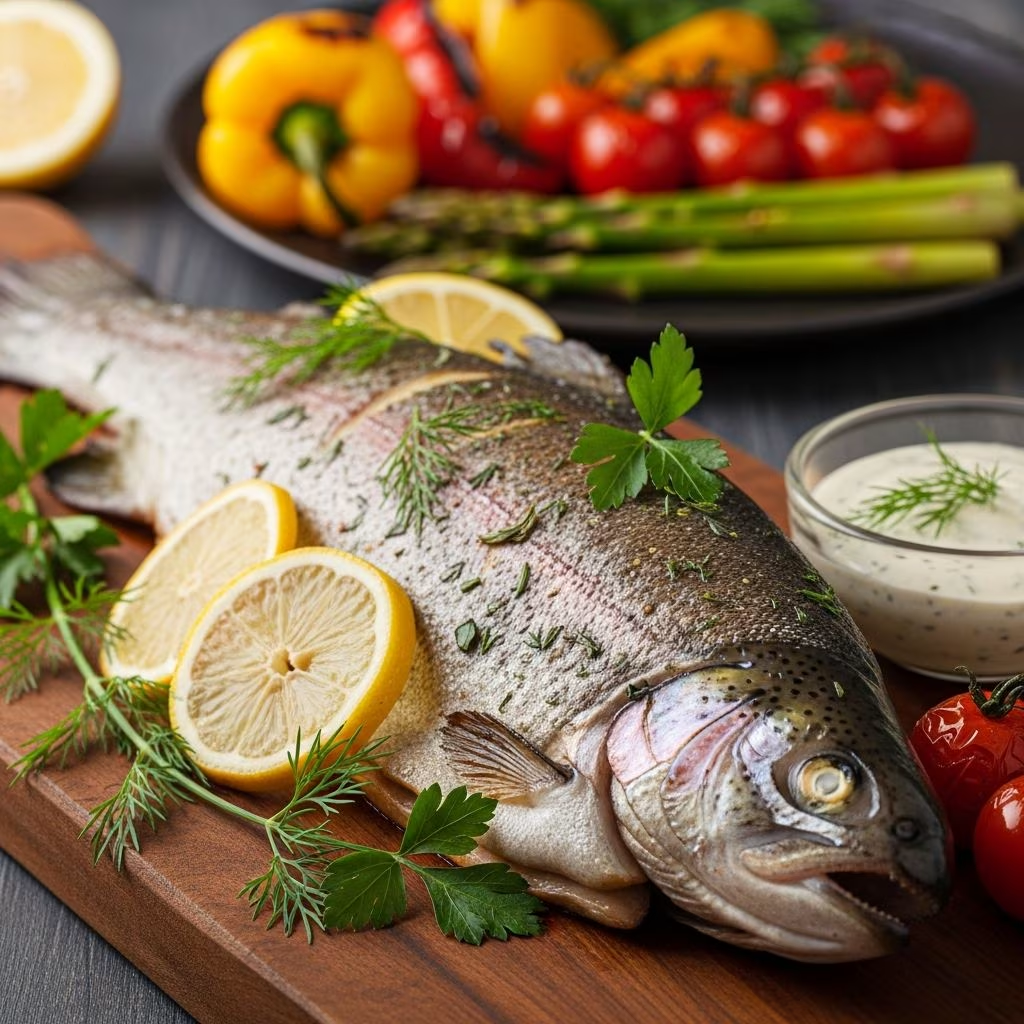
Elevating your baked trout beyond basic preparations opens numerous culinary possibilities. Stuffing the cavity with fresh lemon slices, sprigs of dill, and cherry tomatoes infuses the fish with bright, herbaceous notes while adding visual appeal. These aromatic ingredients release essential oils during baking, permeating the surrounding flesh and creating a cohesive flavor experience.
Preparing a garlic butter sauce represents another sophisticated approach. Melt high-quality butter over gentle heat and combine with freshly minced garlic, cooking briefly until the garlic becomes fragrant but not browned. Capers and fresh lemon juice added to this butter create a classic French-inspired sauce that complements trout’s delicate character. Drizzle this mixture over the cooked fish immediately before serving, allowing the butter to absorb into the warm flesh.
Herb-infused preparations showcase trout’s natural flavors beautifully. Fresh dill remains the traditional pairing, but basil, tarragon, and chives offer equally compelling alternatives. Finely chop fresh herbs and scatter them directly over the fish during the final minutes of baking, preserving their aromatic qualities through residual heat rather than prolonged cooking.
Cooking Methods Comparison
| Cooking Method | Temperature | Time Duration | Texture Result | Best For |
|---|---|---|---|---|
| Standard Baking | 400°F | 12-16 minutes | Tender, flaky interior with crispy skin | Whole fish and thick fillets |
| Gentle Baking | 350°F | 15-20 minutes | Very moist, delicate texture | Thin fillets and sensitive preparations |
| High-Heat Baking | 425°F | 8-12 minutes | Crispy exterior, moist center | Smaller fillets under 8 ounces |
| Broiling Method | Broiler setting | 9-10 minutes per side | Grilled appearance, charred edges | Whole fish seeking grilled flavor |
Step-by-Step Execution Process
Initial Preparation Phase: Begin by preheating your oven to your chosen temperature approximately 10 minutes before cooking. Rinse your trout thoroughly and pat completely dry with paper towels. Line your baking sheet with parchment paper or foil, creating a non-stick cooking surface that facilitates easy cleanup and prevents flavor transfer.
Seasoning Application: Place the prepared trout on the lined baking sheet, positioning it skin-side down if using fillets. Brush the surface lightly with olive oil, coating all exposed surfaces evenly. Sprinkle salt and black pepper across the fish, then add your chosen supplementary seasonings—garlic powder, paprika, dried herbs, or fresh minced garlic as preferred. For whole fish, distribute seasonings inside the cavity as well, ensuring complete flavor development throughout.
Optional Flavor Additions: If incorporating fresh herbs, lemon slices, or tomatoes, arrange these elements either inside the cavity for whole fish or directly atop fillets. These additions release their aromatic compounds during baking, infusing the surrounding flesh with complementary flavors. Arrange any vegetable accompaniments—such as asparagus, green beans, or cherry tomatoes—around the fish on the same baking sheet, allowing them to cook simultaneously.
Baking Execution: Position the baking sheet on the oven’s middle rack, ensuring adequate space above for heat circulation. Bake for your predetermined time, checking at the halfway point to assess browning. The fish achieves perfect doneness when the flesh appears opaque throughout and flakes easily with a fork, or when an instant-read thermometer registers 145°F in the thickest portion.
Finishing Touches: Remove the baking sheet from the oven and allow the fish to rest for 2 to 3 minutes before plating. This brief resting period allows residual heat to distribute evenly and proteins to relax slightly, promoting optimal texture. Garnish with fresh herbs, lemon wedges, or your prepared sauce before serving immediately to diners.
Complementary Side Dishes and Pairings
Rainbow trout’s subtle flavor accommodates numerous side dish options that enhance rather than overpower the fish. Delicate grain preparations—such as quinoa, wild rice, or jasmine rice—absorb any pan drippings while providing satisfying carbohydrates. Roasted vegetables complement baked trout beautifully, with options including asparagus, green beans, zucchini, bell peppers, and root vegetables like carrots and beets.
Leafy green salads dressed with light vinaigrette provide refreshing contrast to the fish’s richness. Mediterranean-inspired preparations pair trout with tomatoes, cucumbers, olives, and feta cheese, creating balanced nutritional profiles. Lighter appetites might prefer simply serving the fish with lemon wedges and a small green salad, allowing trout’s natural characteristics to shine prominently.
Storage and Meal Preparation Strategies
Leftover baked rainbow trout maintains quality for up to three days when properly stored in airtight containers within the refrigerator at 40°F or below. Separate the cooked fish from any accompanying vegetables or sauces before refrigerating to prevent flavor absorption and moisture migration. Reheat gently in a 275°F oven for approximately 8 to 10 minutes, just until warmed through, preventing further cooking that would compromise texture.
Baked trout adapts well to various repurposing applications. Flaked cooked fish combines beautifully with cream cheese and herbs for sandwich fillings, or crumbles into grain bowls with fresh vegetables. Some cooks incorporate leftover trout into pasta dishes or grain salads, creating entirely new meals from the previous evening’s preparation.
Frequently Asked Questions About Baked Rainbow Trout
How do I know if my rainbow trout is cooked through?
The most reliable indicator is using an instant-read thermometer to verify the internal temperature reaches 145°F. Alternatively, observe the flesh’s opacity—properly cooked trout appears completely white or pale pink rather than translucent—and test flakiness with a fork. The flesh should separate easily into individual flakes when gently pressed.
Can I substitute frozen rainbow trout for fresh fish?
Yes, frozen trout works effectively, but thorough thawing beforehand proves essential for even cooking. Thaw frozen fish in the refrigerator for 24 hours before cooking, or use the cold water method by submerging sealed fish in ice water for 1 to 2 hours. Never cook trout directly from frozen, as the exterior will overcook before the interior thaws sufficiently.
What’s the difference between whole fish and fillets for baking purposes?
Whole fish require slightly longer cooking times (12-20 minutes) compared to fillets (6-15 minutes), depending on size. Whole fish develop crispier skin when properly scored before baking, while fillets cook more uniformly due to consistent thickness. Choose based on personal preference and available time.
Can I bake rainbow trout without olive oil?
While olive oil enhances browning and flavor, you can substitute with other cooking fats like melted butter, avocado oil, or cooking spray. However, eliminating fat entirely risks the fish adhering to the baking sheet and developing dry exterior texture.
How should I score whole rainbow trout before baking?
Using a sharp knife, make 2 to 3 shallow diagonal cuts approximately ¼-inch deep across the skin on both sides of the fish. These scores allow steam to escape during baking, preventing skin from splitting and promoting crisping. Avoid cutting deeply enough to penetrate the flesh beneath.
Nutritional Considerations and Health Benefits
A 3-ounce serving of baked rainbow trout provides approximately 19 grams of high-quality protein essential for muscle maintenance and repair. The fish delivers abundant omega-3 polyunsaturated fatty acids, specifically EPA and DHA, which support cardiovascular function and cognitive development. These essential nutrients cannot be synthesized by the body and must come from dietary sources like fatty fish.
Baking as a cooking method preserves these heat-sensitive nutrients more effectively than frying or prolonged cooking methods. The gentle heat maintains the integrity of omega-3 compounds while cooking proteins sufficiently for safety and digestibility. Serving baked trout regularly as part of a balanced diet supports overall wellness while delivering exceptional culinary satisfaction.
References
- Omega-3 Fatty Acids: Health Benefits and Food Sources — Harvard T.H. Chan School of Public Health. 2023. https://www.hsph.harvard.edu/nutritionsource/omega-3-fatty-acids/
- Safe Internal Temperature for Fish — U.S. Food & Drug Administration. 2023. https://www.fda.gov/food/foodborneillnesscontaminants/safeacademicfoodhandling/ucm109377.htm
- Cooking Fish: Methods and Best Practices — University of Maine Cooperative Extension. 2022. https://extension.umaine.edu/ask-extension/faq-topics/food-health/cooking-fish/