After the holiday feast, the turkey carcass holds the key to creating a deeply flavorful stock that elevates everyday cooking. This versatile base infuses soups, stews, risottos, and gravies with authentic turkey essence, reducing waste while maximizing flavor from your meal.
Why Make Stock from Turkey Leftovers?
Using the bones and scraps from a roasted turkey extracts collagen, minerals, and rich flavors not found in store-bought versions. Simmering these elements breaks down connective tissues, yielding a gelatinous broth when cooled that’s perfect for hearty winter dishes. Home production ensures control over ingredients, avoiding preservatives and excess sodium common in commercial products.
Nutritionally, turkey stock provides amino acids like glycine and proline, supporting joint health and digestion. It’s a staple in many kitchens for its ability to transform simple ingredients into gourmet foundations.
Essential Ingredients for Superior Stock
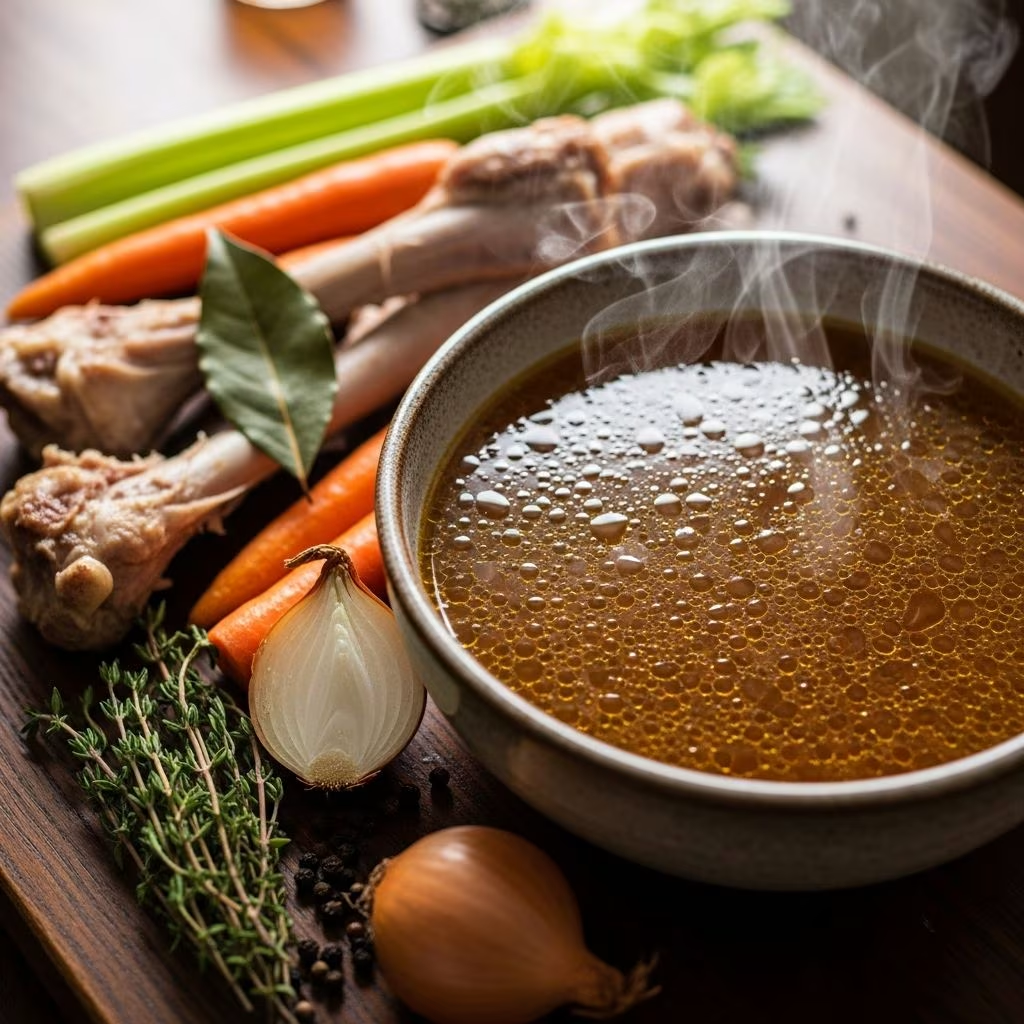
Gather these basics to build a robust turkey stock. Focus on fresh aromatics to layer flavors without overpowering the turkey profile.
- Turkey carcass: From a 12-20 lb bird, cleaned of stuffing and excess meat. Include neck or wings for added depth.
- Onions: 1-2 large, quartered with skins for natural color.
- Carrots: 2-3 medium, scrubbed and halved for sweetness.
- Celery: 3-4 stalks, chopped roughly for earthiness.
- Fresh herbs: Thyme (3-4 sprigs), parsley (handful), optional bay leaves.
- Water: Cold, enough to cover ingredients by 2 inches.
- Optional boosters: Peppercorns, garlic cloves, or lemon for brightness.
Avoid salting during simmering to maintain flexibility in final dishes. Quantities scale with pot size; a standard 8-quart yields about 8-10 cups of stock.
Step-by-Step Guide to Simmering Success
Patience is key—low, slow heat draws out maximum flavor over 6-24 hours. Use a large stockpot or slow cooker for ease.
- Prepare the carcass: Strip lingering meat for other uses (like sandwiches), then break bones to fit pot.
- Add aromatics: Nestle vegetables and herbs around bones for even extraction.
- Cover with water: Use just enough to submerge; excess dilutes intensity.
- Heat gently: Bring to a boil, skim foam, then simmer uncovered or partially covered on lowest setting.
- Monitor and maintain: Skim impurities every hour initially. Add water if needed to keep bones covered.
- Strain meticulously: Cool slightly, then pour through a fine-mesh sieve or cheesecloth into clean containers.
For bone broth-style richness, extend to 24 hours. Crockpot method: Fill after dinner cleanup, set low for 12-18 hours overnight.
Pro Tips for Crystal-Clear, Flavor-Packed Results
- Start cold: Cold water draws out proteins gradually, preventing cloudiness.
- No boiling: Vigorous bubbles emulsify fats; aim for lazy bubbles only.
- Skim diligently: Removes scum for pristine stock.
- Degrease easily: Refrigerate overnight; solidified fat lifts off cleanly. Save for roasting veggies.
- Test doneness: Stock should jiggle like gelatin when chilled, indicating collagen extraction.
Common pitfalls: Overcrowding pot or rushing the simmer leads to weak broth. Experiment with additions like apple peels for subtle sweetness.
Storage and Freezing for Year-Round Use
Fresh stock lasts 4-5 days refrigerated. For longer storage:
| Method | Duration | Tips |
|---|---|---|
| Refrigerator | 4-5 days | Store in glass jars; leave space for expansion. |
| Freezer (ice cube trays) | 6 months | Portion for easy thawing; pop into sauces. |
| Freezer (quart bags) | 3-6 months | Flatten for stackable storage; label dates. |
Thaw in fridge or cold water bath. Boil before use if stored over a week.
Creative Ways to Use Your Homemade Stock
This stock shines as a soup foundation. Sauté mirepoix (onion, carrot, celery), add stock and shredded turkey, simmer with noodles or rice for classic turkey noodle soup.
- Gravies and sauces: Reduce with flour roux for silky Thanksgiving redo.
- Risottos and grains: Swap water for stock in rice, quinoa, or couscous.
- Stews and chilis: Base for turkey vegetable stew or white bean chili.
- Everyday boosts: Enhance mashed potatoes, braises, or even coffee (yes, stock lattes exist for gut health).
One carcass yields enough for multiple meals, stretching holiday dollars.
Nutrition and Health Benefits
Turkey stock is low-calorie (about 20-40 per cup) yet nutrient-dense. Collagen supports skin elasticity and gut lining repair. Minerals like magnesium and phosphorus aid bone health. Use in place of water for healthier cooking.
Frequently Asked Questions
Can I use a frozen turkey carcass?
Thaw fully first to ensure even cooking and food safety.
What if I don’t have fresh herbs?
Dried work (1/3 the amount); tie in cheesecloth for easy removal.
Is turkey stock the same as bone broth?
Similar, but bone broth simmers longer (24+ hours) for more minerals.
Can I make this vegetarian?
Adapt with vegetable scraps, but it won’t replicate turkey depth.
How do I fix weak stock?
Reduce by half next time or simmer longer; add roasted bones for intensity.
Variations for Every Season
Asian-Inspired: Ginger, garlic, star anise, soy. Use in ramen.
Italian Herb: Rosemary, oregano, fennel. Perfect for minestrone.
Spicy Southwest: Chili flakes, cumin, cilantro. Base for pozole.
Customize to pantry staples for endless variety.
Mastering turkey stock turns post-holiday cleanup into a culinary win. With minimal effort, you create a pantry hero ready for countless dishes.
References
- Homemade Turkey Stock Recipe — Coley Cooks. 2023-11-15. https://coleycooks.com/homemade-turkey-stock/
- Best Homemade Turkey Soup Recipe — The Endless Meal. 2023-11-20. https://www.theendlessmeal.com/homemade-turkey-soup/
- Thanksgiving Leftovers: Turkey Stock Recipe — Laura Vitale, YouTube. 2022-11-25. https://www.youtube.com/watch?v=AnlWgrP-ztw