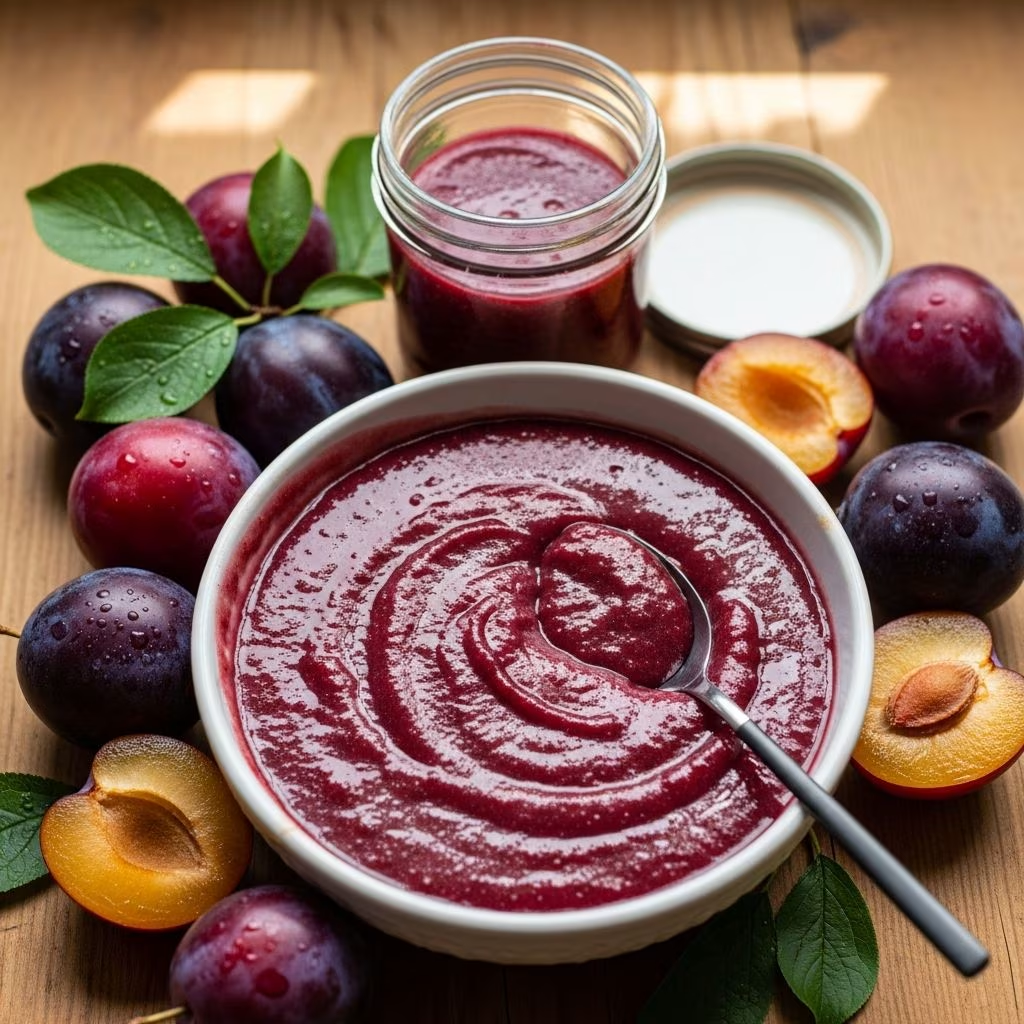
Plum butter stands out as a velvety, intensely flavored preserve that captures the essence of ripe plums in a concentrated form. Unlike traditional jams with their chunkier texture and higher pectin content, plum butter relies on long, slow cooking to break down the fruit’s natural sugars and fibers into a smooth, spreadable consistency. This guide draws inspiration from time-tested methods to help you create your own batch, whether using a slow cooker for hands-off convenience, a stovetop for quicker results, or an oven for even heat distribution.
Why Choose Plum Butter Over Jam?
Plum butter offers a deeper, more caramelized taste due to extended cooking times that allow sugars to develop complex flavors. It’s naturally lower in added pectin, making it ideal for those seeking a smoother product without gel-like setting. Perfect for autumn harvests, it uses abundant plums to yield a versatile condiment that enhances toast, cheese boards, or baked goods.
- Rich flavor profile: Prolonged simmering intensifies plum’s tart-sweet notes.
- Smooth texture: Blending creates silkiness without seeds or skins if desired.
- Customizable spices: Cinnamon, cloves, or vanilla elevate the basic fruit base.
Selecting the Best Plums
Opt for ripe, juicy plums such as Italian prune plums, damsons, or any variety with deep color and soft give when gently squeezed. These types cook down easily due to higher water content and thinner skins. Aim for 4-5 pounds to yield about 4-6 half-pint jars, depending on reduction.
| Plum Variety | Flavor Notes | Best Use |
|---|---|---|
| Italian Prune | Sweet-tart, firm | Slow cooker or stovetop |
| Damsons | Tangy, small | Oven method for intensity |
| Black Plums | Rich, juicy | Quick stovetop batches |
Harvest or purchase in season for peak freshness; overripe fruit works well as it mashes effortlessly.
Essential Ingredients and Ratios
A basic recipe starts with fresh plums, sugar to taste, and warming spices. Sugar not only sweetens but aids preservation and thickening. For 4 pounds of plums, use 2/3 to 1 cup sugar, adjusting based on fruit sweetness. Common additions include:
- 3/4 teaspoon ground cinnamon for warmth.
- 1/4 teaspoon ground cloves for depth.
- 1 teaspoon vanilla extract or bean paste for smoothness.
- Optional: Lemon juice (1-2 tablespoons) to brighten and balance acidity.
Water (1/4 to 1/2 cup) prevents initial scorching, though plums release ample juice.
Stovetop Method: Quick and Controlled
This approach suits smaller batches and allows precise monitoring. Wash, halve, and pit plums before placing in a heavy-bottomed pot with a splash of water. Heat to medium, cover, and cook until softened (20-30 minutes), stirring occasionally.
- Blend with an immersion blender for smoothness.
- Stir in sugar and spices; simmer uncovered on low for 25-40 minutes until reduced by one-third.
- Test readiness: Mixture coats a spoon and holds a line when finger-drawn through.
Expect 1-2 hours total; wider pots speed evaporation.
Slow Cooker Technique: Set-It-and-Forget-It Ease
Ideal for busy cooks, this method builds flavor over hours. Layer halved plums in the cooker, add sugar and spices directly—no water needed initially.
- Cook on low for 10-20 hours covered until very soft.
- Puree, then uncover and continue on low 4-6 hours to thicken.
- Longer cooking yields caramelized notes without burning.
Total time: up to 24 hours, but minimal effort required.
Oven Baking: Even, Hands-Off Cooking
For a low-maintenance option, spread plum mixture in a baking dish. Preheat to 356°F (180°C), bake covered initially, then uncover to reduce.
- Prop door open first 30 minutes for steam release.
- Stir hourly; 2-3 hours total until spoon-test passes.
This method suits larger quantities evenly.
Advanced Variations for Flavor Twists
Experiment beyond basics:
- Cardamom-spiced: Swap cloves for 1 teaspoon ground cardamom.
- Maple-infused: Replace half sugar with maple syrup for wild plum adaptations.
- Citrus boost: Add lemon juice and zest during initial cook.
- Chunky style: Partially blend for texture contrast.
For German-style Pflaumenmus, minimize sugar and cook overnight in a slow cooker.
Achieving Perfect Texture and Doneness
The hallmark of great plum butter is spreadable thickness without graininess. Key tests:
- Spoon test: Drag finger through cooled dollop; ridge holds.
- Reduction check: Volume halves from start.
- Cool factor: Thickens more upon chilling.
If too thin, simmer longer; if scorched, lower heat and stir more.
Canning and Storage Best Practices
For shelf stability, process in a water bath: Ladle hot butter into sterilized half-pint jars, leave 1/4-inch headspace, wipe rims, apply lids, and boil 10 minutes (adjust for altitude). Yields 4-6 jars.
Refrigerate up to 3 weeks or freeze 6-12 months. Thaw overnight before use.
Creative Ways to Enjoy Plum Butter
Beyond toast, incorporate into:
- Baking: Swirl into muffins, cakes, or linzer cookies.
- Savory pairings: Glaze pork, pair with cheeses or charcuterie.
- Breakfast boosts: Yogurt parfaits, oatmeal topping, or pancake syrup.
- Gifting: Jar with ribbon for holiday treats.
In recipes, substitute for apple butter seamlessly.
Troubleshooting Common Issues
| Problem | Cause | Solution |
|---|---|---|
| Too watery | Insufficient reduction | Simmer uncovered longer |
| Burning | High heat | Use low setting, stir frequently |
| Grainy | Poor blending | Re-blend with immersion tool |
| Not sweet | Tart plums | Add sugar incrementally |
Nutrition and Health Benefits
Plum butter provides antioxidants from plum skins, fiber for digestion, and vitamins A and C. Low in fat, it’s a healthier spread option when sugar is moderated. A 2-tablespoon serving offers about 50-70 calories, depending on sweetness.
Frequently Asked Questions
Can I make plum butter without sugar?
Yes, but use very ripe plums and accept shorter shelf life; natural pectin may yield softer set.
How long does homemade plum butter last?
Canned: 1 year unopened; refrigerated: 3 weeks opened.
Do I need to peel plums?
No, skins break down during cooking for smooth results.
Is a slow cooker necessary?
No, stovetop or oven works; slow cooker excels for flavor depth.
Can I double the recipe?
Yes, but extend cooking time; use larger pot to avoid overflow.
References
- Plum Butter – The Daring Gourmet — The Daring Gourmet. 2023. https://www.daringgourmet.com/plum-butter-pflaumenmus/
- Simple Plum Butter Recipe — The Frugal Farm Wife. 2022. https://www.frugalfarmwife.com/article/simple-plum-butter-recipe/
- Easy Plum Butter — A Baker’s House. 2023. https://www.abakershouse.com/easy-plum-butter/
- Plum Butter — Monastery Kitchen. 2021. https://monasterykitchen.org/plum-butter/
- Easy German Plum Butter – Pflaumenmus — My Dinner. 2024. https://mydinner.co.uk/plum-butter/
- Spiced Plum Butter Recipe — The Vintage Mixer. 2022. https://www.thevintagemixer.com/spiced-plum-butter-recipe/