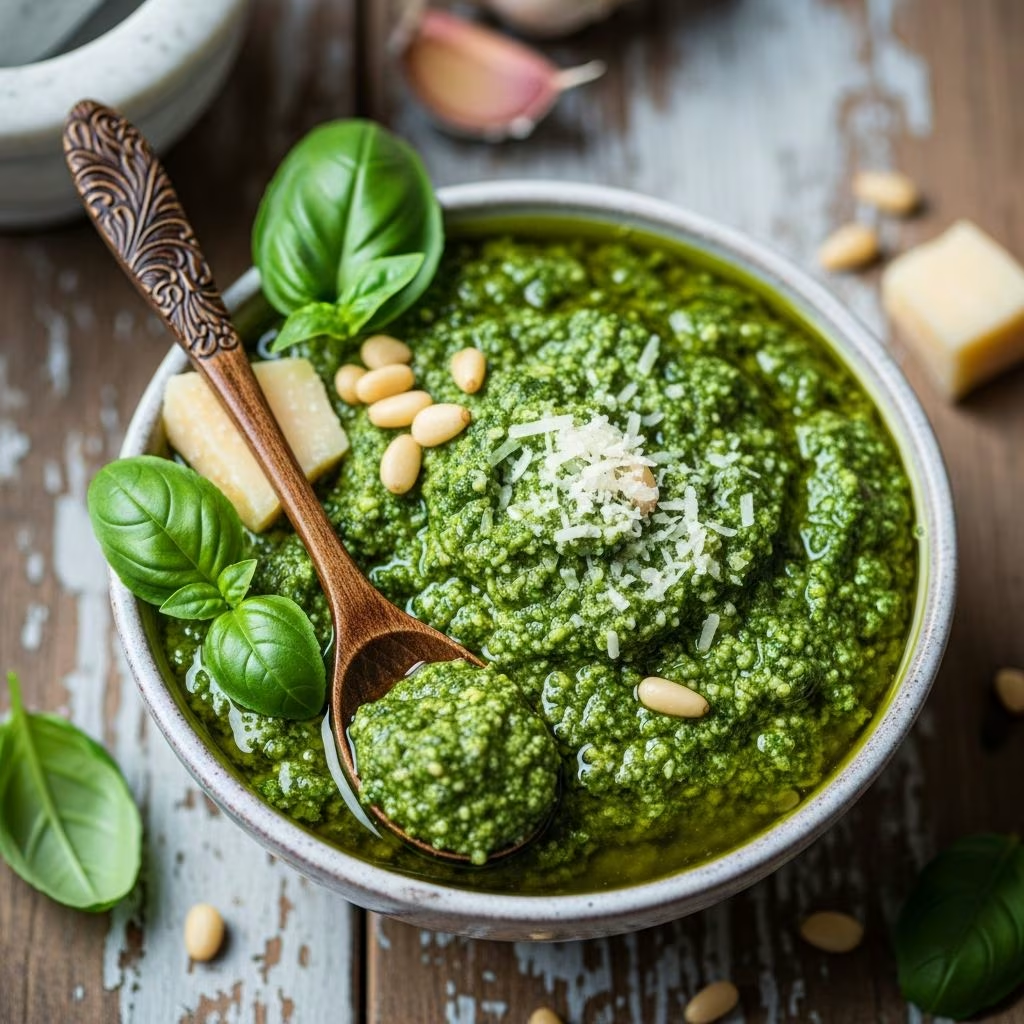
Homemade pesto sauce captures the essence of Italian summers with its bright green hue and bold, herbaceous taste. This versatile condiment blends fresh basil, toasted nuts, garlic, olive oil, and aged cheese into a silky emulsion perfect for elevating simple dishes. Unlike store-bought versions, which often lack freshness and intensity, making it at home ensures peak flavor from quality ingredients.
Why Make Pesto at Home?
Crafting pesto yourself allows control over ingredients, avoiding preservatives and excess salt found in commercial jars. Fresh basil provides unmatched aroma, while toasting nuts enhances their richness. This recipe yields about 2 cups, enough for 1 pound of pasta or multiple meals, and comes together in under 15 minutes with a food processor or blender.
Essential Ingredients for Authentic Pesto
The core components draw from Genoa’s traditional recipe, emphasizing balance between greens, fats, and umami. Here’s what you’ll need:
- 2 cups fresh basil leaves: Packed tightly, stems removed for pure flavor without bitterness.
- 1/2 cup pine nuts: Toasted for nutty depth; alternatives like walnuts work well.
- 2-3 garlic cloves: Fresh, peeled, for pungent kick.
- 1/2 cup extra-virgin olive oil: High-quality for fruity notes.
- 1/2 cup grated Parmesan or Pecorino cheese: Adds salty creaminess.
- Salt and black pepper: To taste, starting with 1/2 teaspoon salt.
These measurements scale easily; double for larger batches. Opt for young basil leaves to minimize toughness.
Step-by-Step Instructions
- Prepare the basil: Gently rinse leaves under cold water and pat dry with paper towels to prevent oxidation and browning.
- Toast the nuts: In a dry skillet over medium heat, toast pine nuts for 2-3 minutes until golden, stirring constantly. Cool slightly.
- Process the base: In a food processor, pulse garlic, nuts, and a pinch of salt until finely chopped.
- Add basil: Toss in basil leaves and pulse 5-7 times to chop coarsely, avoiding over-processing into mush.
- Incorporate oil: With the machine running, drizzle in olive oil slowly until smooth and emulsified, about 30 seconds.
- Finish with cheese: Transfer to a bowl, stir in grated cheese, and season with pepper. Taste and adjust salt.
For a mortar-and-pestle method, crush ingredients in stages for chunkier texture true to Genoese tradition. Avoid heating to preserve vibrant color and enzymes.
Ingredient Variations and Substitutions
Adapt pesto for dietary needs or seasonal availability without compromising taste:
| Original | Substitution | Notes |
|---|---|---|
| Pine nuts | Walnuts, almonds, or sunflower seeds | Toast for best flavor; nuts add creaminess. |
| Basil | Arugula, kale, spinach, or parsley | Creates unique profiles like spicy arugula pesto. |
| Parmesan | Nutritional yeast or vegan cheese | For dairy-free; maintains umami. |
| Olive oil | Avocado or neutral oil | Preserves smoothness. |
Experiment with lemon zest or juice for brightness, or roasted garlic for mellow sweetness.
Perfecting Texture and Flavor Balance
Aim for a pourable yet spoonable consistency—add more oil if too thick. Taste iteratively: basil dominates aromatics, nuts provide body, garlic sharpness, cheese savoriness, and oil richness. If too bitter, balance with a touch of honey or more cheese. Store-bought blenders work; pulse rather than puree for authenticity.
Storage and Preservation Tips
Fresh pesto oxidizes quickly, turning brown. To store:
- Refrigerator: Press plastic wrap directly on surface in a jar; lasts 5-7 days.
- Freezer: Portion into ice cube trays, freeze, then transfer to bags; up to 6 months.
- Thawing: Microwave cubes briefly or stir into hot dishes.
Avoid metal utensils post-blending to prevent discoloration. A drizzle of oil on top seals it airtight.
20 Creative Ways to Use Pesto
Beyond pasta, pesto transforms meals. Here are versatile applications:
- Mix into mayonnaise for sandwiches or burgers.
- Top grilled chicken or fish for instant flavor.
- Swirl into hummus or dips.
- Spread on pizza dough before sauce.
- Toss with roasted vegetables or potatoes.
- Stuff into meatballs or fritters.
- Drizzle over fried eggs or avocado toast.
- Blend into vinaigrette for salads.
- Layer in lasagna or gratins.
- Coat zucchini boats, broil with cheese.
- Stir into risotto or soups.
- Fill deviled eggs or potato salad.
- Top bruschetta or crostini.
- Mix with orzo and peas.
- Enhance sheet-pan chicken dinners.
- Blend into cream sauce for pasta.
- Use as marinade for shrimp skewers.
- Swirl into scrambled eggs.
- Top flatbreads or naan.
- Pair with cheese boards.
These ideas maximize leftovers, turning pesto into a pantry staple.
Common Mistakes and How to Avoid Them
Over-processing creates foaminess; pulse briefly. Warm ingredients warm the oil, dulling flavors—use room temperature. Skimp on salt, and it tastes flat; cheese provides some, but add kosher or sea salt. Browning basil? Work quickly and chill the processor bowl.
Nutritional Profile
Per 2-tablespoon serving: Approximately 150 calories, 15g fat (mostly healthy monounsaturated from oil), 2g protein, rich in vitamins A, C, K from basil, and antioxidants. Nuts contribute heart-healthy fats; use sparingly for calorie control.
Pairing Suggestions
Serve with trofie or linguine pasta, grilled meats, or crusty bread. White wines like Pinot Grigio complement its herbs; for red, try light Chianti.
Frequently Asked Questions (FAQs)
Can I make pesto without a food processor?
Yes, use a mortar and pestle for authentic texture, pounding in order: garlic, salt, nuts, basil, then oil and cheese.
Why does my pesto turn brown?
Oxidation from air exposure; cover with oil and plastic wrap immediately.
Is pesto gluten-free?
The sauce is naturally gluten-free; check nuts and cheese labels.
How much pesto per pound of pasta?
1/2 to 3/4 cup, tossed with hot, reserved pasta water for sauce cohesion.
Can I freeze pesto with cheese?
Yes, cheese freezes well; thaw and stir before use.
Advanced Twists for Seasoned Cooks
Incorporate sun-dried tomatoes for rosso pesto, or pistachios for Sicilian flair. Blend with yogurt for lighter dips or ricotta for stuffed shells. For winter, swap basil for hearty greens like broccoli rabe.
References
- 31 Creative Things To Make With Pesto — DeLallo. 2023-06-15. https://www.delallo.com/blog/what-to-do-with-pesto
- 23 Pesto Recipes (Pasta, Pizza, Salads, and More!) — Camille Styles. 2024-05-20. https://camillestyles.com/food/cooking/pesto-recipes/
- 12 Delicious Recipes Featuring Pesto — Cookie and Kate. 2023-08-10. https://cookieandkate.com/12-recipes-with-pesto/
- Recipes with Pesto — Happy Healthy Mama. 2024-02-14. https://happyhealthymama.com/recipes-with-pesto.html
- 7 of the Best Pesto Recipes — Bobbi’s Kozy Kitchen. 2023-11-05. https://bobbiskozykitchen.com/7-of-the-best-pesto-recipes/
- 10 Delicious Recipes For Using Leftover Pesto — Well Seasoned Studio. 2024-04-01. https://www.wellseasonedstudio.com/ways-to-use-leftover-pesto/
- 10 Deliciously Creative Ways To Use Pesto Beyond Pasta — Food Republic. 2023-09-22. https://www.foodrepublic.com/2046377/creative-ways-use-pesto-not-in-pasta/