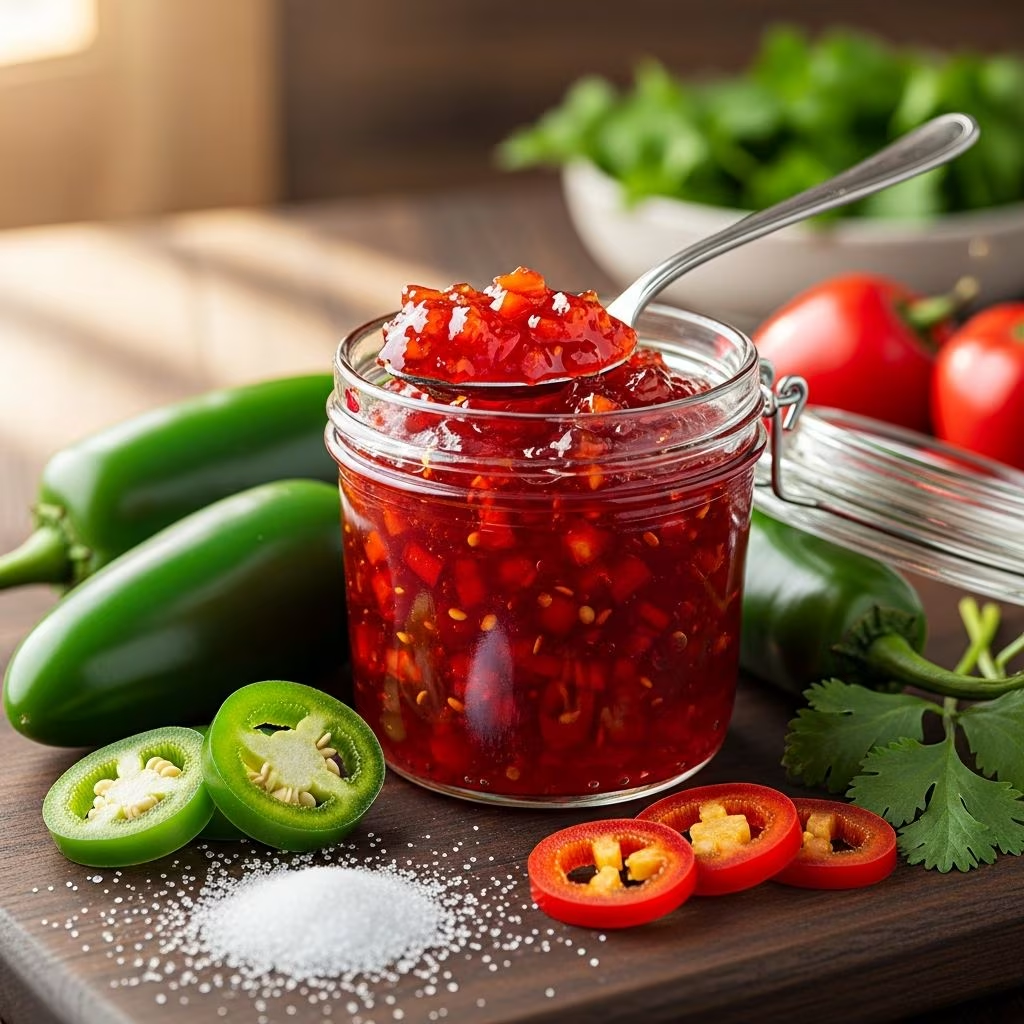
Homemade jalapeño pepper jelly is a delightful fusion of fiery heat and sugary sweetness that transforms simple ingredients into a versatile kitchen staple. This vibrant green spread, speckled with tiny pepper bits, adds a kick to everything from creamy cheeses to grilled meats. Whether you’re a canning novice or a seasoned preserver, this recipe delivers consistent results with minimal equipment. Originating from Southern traditions, pepper jellies have evolved into modern favorites for their customizable heat levels and stunning presentation in jars.
Why Make Your Own Jalapeño Pepper Jelly?
Crafting pepper jelly at home allows full control over sweetness, spice, and texture. Store-bought versions often skimp on fresh peppers or overload on sugar, but your version shines with garden-fresh jalapeños. It’s an ideal project for late summer when peppers abound, yielding jars that double as holiday gifts or pantry essentials. Beyond taste, the process teaches fundamental canning skills, like achieving the perfect gel set without commercial pectin if desired.
Essential Ingredients for Success
The beauty of this recipe lies in its straightforward pantry staples. Here’s what you’ll need for about 6 half-pint jars:
- 1 pound fresh jalapeño peppers: Choose firm, bright green ones for classic color; mix in reds for deeper hue.
- 2 cups apple cider vinegar: Provides acidity for safe canning and a subtle tang.
- 6 cups granulated sugar: Balances heat; use cane sugar for nuanced flavor.
- 1 pouch (3 oz) liquid pectin: Ensures reliable set; powdered works too with adjustments.
- 1 teaspoon butter: Optional, reduces foam for clearer jelly.
- Green food coloring (optional): Enhances the signature emerald look.
Pro tip: Wear gloves when handling peppers to avoid skin burns from capsaicin.
Step-by-Step Preparation Guide
- Prepare the peppers: Stem and roughly chop jalapeños, keeping seeds for heat or removing half for milder jelly. Pulse in a food processor until finely minced but not pureed—aim for visible flecks.
- Combine and cook: In a large pot, mix peppers with vinegar. Bring to a boil over medium-high heat, then stir in sugar until dissolved. Add butter if using.
- Boil vigorously: Increase heat to high and boil for 10 minutes, stirring occasionally to prevent scorching.
- Add pectin: Stir in pectin and return to a full rolling boil for exactly 1 minute. Test heat with a candy thermometer (220°F ideal).
- Skim and color: Remove foam with a spoon. Add a drop of food coloring if desired for that jewel-toned glow.
- Jar and process: Ladle hot jelly into sterilized half-pint jars, leaving ¼-inch headspace. Wipe rims, apply lids, and process in a boiling water bath for 10 minutes (adjust for altitude).
After processing, jars seal with a satisfying ping. Let cool 24 hours before checking seals.
Mastering the Gel Set: Troubleshooting Common Issues
Achieving the perfect wobble is key. If jelly doesn’t set:
| Issue | Cause | Solution |
|---|---|---|
| Runny jelly | Undercooking or inaccurate pectin measure | Reboil with additional pectin; use within 3 weeks or reprocess |
| Too firm | Overboiling | Next batch: shorten boil by 30 seconds |
| Cloudy appearance | Foam not skimmed or low-quality pectin | Add butter next time; strain if needed |
| Weeping liquid | Altitude or rapid cooling | Adjust processing time per USDA guidelines |
For pectin-free versions, rely on high-sugar concentration and longer boils, but expect softer results. Always follow USDA canning guidelines for safety.1
Customizing Heat and Flavor Variations
Tailor this base recipe endlessly:
- Milder version: Use mini bells or remove all seeds; swap half jalapeños for poblanos.
- Extra spicy: Add habaneros or cayenne for Scoville-boosting fire.
- Fruit-infused: Blend in 1 cup pineapple or peach puree before boiling.
- Herbal twist: Infuse vinegar with cilantro or mint stems.
- Holiday red: Equal parts red Fresno and jalapeños for festive color.
Adjust sugar down by ½ cup per variation to maintain balance.
Safe Storage and Shelf Life
Properly canned jelly lasts 1–2 years in a cool, dark pantry. Unopened jars retain peak flavor for 12 months. Refrigerate after opening and use within 6 months. Check for spoilage: discard if seals break, lids bulge, or contents smell off. Freezing is an alternative for small batches—thaw in fridge before serving.2
Creative Serving Suggestions
This jelly’s sweet-spicy profile pairs brilliantly:
- Slather over cream cheese with crackers for instant appetizers.
- Glaze baked ham, pork tenderloin, or chicken wings.
- Stir into cornbread batter or top biscuits.
- Drizzle on goat cheese crostini or fried green tomatoes.
- Mix with mayo for spicy aioli on sandwiches.
For gifting, tie jars with ribbon and include usage tags.
Nutrition and Dietary Notes
Per 1-tablespoon serving: ~50 calories, 12g sugar, negligible fat/protein. Vegan, gluten-free, and low-sodium. High acidity makes it keto-friendly in moderation. Track intake if monitoring sugar.3
Frequently Asked Questions (FAQs)
Can I make this without canning?
Yes! Pour into jars and refrigerate for up to 3 months. No processing needed, but shelf life shortens.
What if I don’t have a food processor?
Finely mince by hand or use a blender in short bursts to avoid puree.
Is it safe for water bath canning?
Absolutely—vinegar ensures pH below 4.6. Follow altitude adjustments.
How do I know when it has set?
Chill a saucer in freezer; drop jelly on it—if it wrinkles when pushed after 1 minute, it’s ready.
Can I reduce the sugar?
Use low-sugar pectin and follow package ratios; taste-test for balance.
Scaling Up for Gifts or Markets
Double or triple the recipe for batches yielding 12+ jars. Invest in a canning funnel and jar lifter for efficiency. Label with date, ingredients, and ‘Best by’ for professionalism. Sell at farmers’ markets after checking local cottage food laws.
History and Cultural Significance
Pepper jelly traces to 13th-century Asia, evolving in the American South via Portuguese settlers introducing guava paste. Bryant Terry’s modern take highlights plant-based twists, but the core method endures. Today, it’s a staple at Southern suppers and charcuterie boards nationwide.4
References
- Complete Guide to Home Canning — National Center for Home Food Preservation, University of Georgia. 2023-09-15. https://nchfp.uga.edu/publications/UGA/uga_complete_guide_home_canning.pdf
- Preserving Food Safely — USDA Food Safety and Inspection Service. 2024-02-12. https://www.fsis.usda.gov/food-safety/safe-food-handling-and-preparation/food-safety-basics/preserving-food-safely
- Nutrient Database for Standard Reference — USDA Agricultural Research Service. 2023-11-01. https://fdc.nal.usda.gov/
- The Oxford Companion to Food — Oxford University Press (via academic excerpt). 2022-06-20. https://www.oed.com/discover/oxford-companion-to-food/