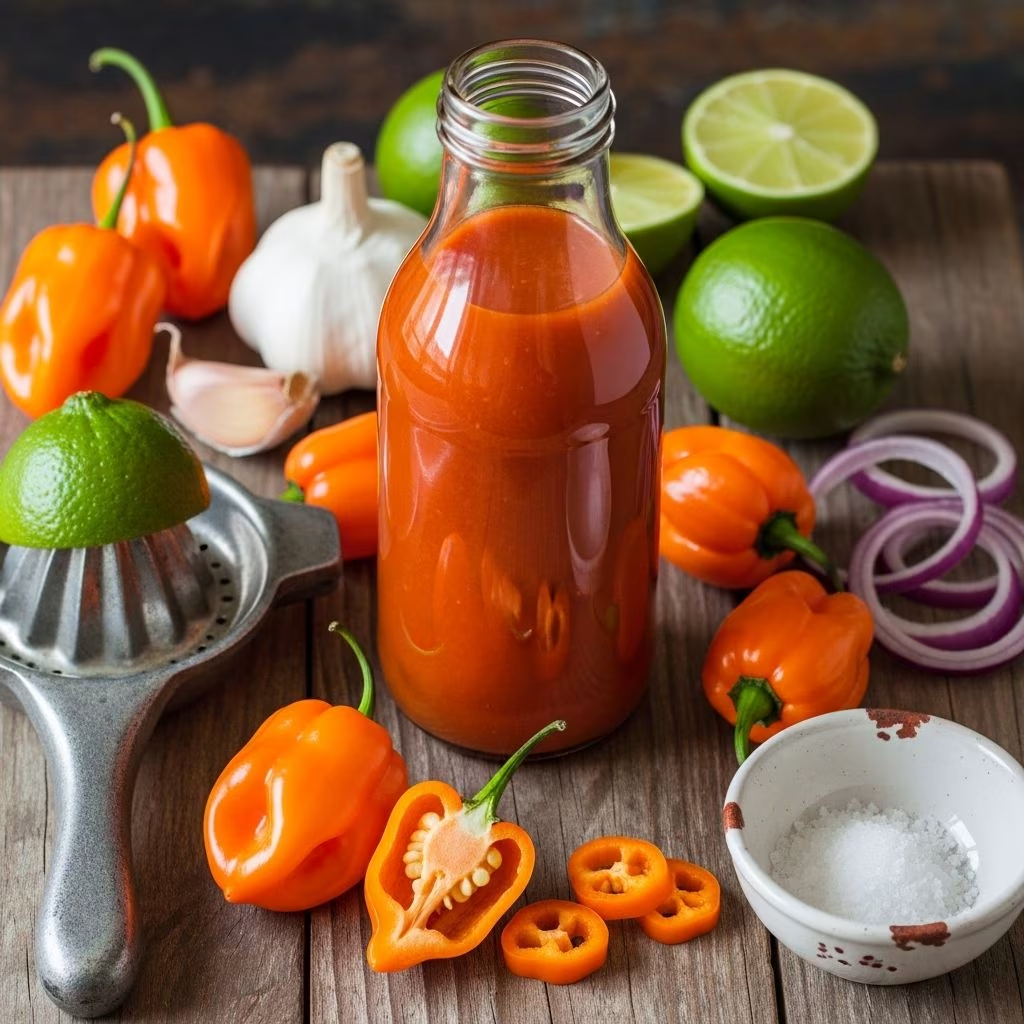
Creating your own habanero hot sauce elevates everyday meals with explosive heat and complex flavors. These small, lantern-shaped peppers pack a punch on the Scoville scale, ranging from 100,000 to 350,000 units, far surpassing jalapeños. This guide dives deep into crafting potent sauces, emphasizing safety, customization, and professional techniques drawn from time-tested methods.
Understanding Habanero Peppers: Heat and Heritage
Habaneros originate from the Yucatán Peninsula in Mexico, where they’ve been cultivated for centuries. Their wrinkled skin and vibrant colors—orange, red, yellow, or chocolate—signal intense citrusy, fruity notes beneath the fiery burn. The heat primarily resides in the seeds and placental tissue, making precise handling essential.
Compared to milder peppers, habaneros deliver a prolonged, throat-scorching sensation rather than a quick sting. This makes them ideal for hot sauces that linger on the palate, enhancing dishes like tacos, wings, or soups. Always prioritize fresh, firm peppers for optimal flavor extraction.
- Orange habaneros: Classic fruity profile with balanced heat.
- Red varieties: Sweeter undertones, perfect for fruit-infused sauces.
- Chocolate habaneros: Smoky depth for nuanced blends.
Gear Up for Safe Preparation
Handling habaneros demands respect to avoid capsaicin-induced burns. Essential tools include nitrile gloves to shield skin, safety goggles for eye protection, and well-ventilated workspaces. A food processor or high-speed blender ensures smooth purees, while fine mesh strainers yield silky textures.
| Essential Tools | Purpose | Tips |
|---|---|---|
| Nitrile gloves | Prevent skin irritation | Double up for extra protection |
| Blender/food processor | Puree ingredients | Vent lid to release steam |
| Fine sieve | Strain for smoothness | Use spatula to press pulp |
| Glass bottles | Storage | Sterilize with boiling water |
Pro tip: Work in a breeze or under a fume hood. If capsaicin contacts skin, neutralize with milk or oil-based soaps—water spreads the burn.
Core Ingredients for Explosive Flavor
A stellar habanero sauce balances heat with acidity, sweetness, and aromatics. Start with 10-12 fresh habaneros (about 1/2 pound), chopped carrots (1/2-1 cup) for body and mild sweetness, diced onions (1/2 cup), and garlic (4-6 cloves) for savory depth.
Vinegar—white, apple cider, or a mix—provides tang and preservation (1-1.5 cups). Salt (1-2 tsp) enhances flavors, while sugar (1/4-1 tsp) tempers bitterness. Optional boosters like lime juice add brightness, and fruits such as peaches or mangoes introduce tropical twists inspired by creative recipes.
Step-by-Step: Crafting Your Signature Sauce
Follow this reliable process for a versatile, shelf-stable hot sauce. Yields about 2-3 cups.
- Prep peppers: Wear gloves, stem, halve habaneros, and remove seeds/membranes for adjustable heat. Retain for full throttle.
- Roast aromatics: Dry-roast garlic cloves in a skillet until fragrant (5 minutes). Sauté onions and carrots in minimal oil over medium heat until softened (8-10 minutes).
- Combine and simmer: Add peppers, veggies, vinegar, water (1/2 cup), salt, and sugar to a pot. Boil, then simmer 20-30 minutes to meld flavors.
- Blend smooth: Cool slightly, transfer to blender. Pulse with lid vented (cover with towel) until velvety. Taste and adjust seasoning.
- Strain and bottle: Pass through a sieve, pressing solids. Funnel into sterilized bottles. Refrigerate for up to 6 months.
Customization table:
| Variation | Key Additions | Flavor Profile |
|---|---|---|
| Classic Fire | Extra garlic, lime | Citrusy burn |
| Tropical Twist | Mango, pineapple | Sweet heat |
| Smoky Depth | Chipotle, molasses | Barbecue vibes |
Advanced Techniques for Pro Results
Elevate your sauce with fermentation: Submerge chopped habaneros in a brine (2% salt by weight) for 1-4 weeks at room temperature. This develops tangy umami, akin to artisanal Tabasco. Blend post-ferment with vinegar for stability.
For thicker consistency, reduce simmering time or incorporate xanthan gum (1/8 tsp per cup). Aging in glass for 2-4 weeks allows flavors to harmonize. Experiment with Scotch bonnet peppers as a habanero substitute for similar heat profiles.
Storage, Shelf Life, and Safety
Acidity (pH below 4.0) from vinegar ensures bacterial safety. Store in fridge for 6-12 months; freezer for 2 years. Label with dates and heat levels. For gifting, use dark glass to block light degradation.
Water bath canning extends shelf life to 1 year unopened. Process pint jars 10 minutes post-boil. Always test pH strips for safety below 4.6.
Pairing and Usage Ideas
Habanero sauce transforms mundane meals:
- Drizzle on eggs, pizza, or ramen for instant thrill.
- Mix into marinades for grilled meats.
- Blend with mayo for spicy aioli.
- Spike cocktails like spicy margaritas.
Start small—its heat builds. Pair with cooling dairy, starches, or sweets to balance.
Frequently Asked Questions
Can I reduce the heat without losing flavor?
Yes, remove all seeds and membranes, or blend with milder peppers like bell for color and bulk.
How do I know if my sauce is shelf-stable?
Aim for 5% acidity via vinegar. Use pH meter or strips; below 4.0 is safe for room temp storage post-canning.
What if I don’t have fresh habaneros?
Frozen work well—thaw and proceed. Dried flakes rehydrate in vinegar but dilute less intensely.
Is this sauce gluten-free and vegan?
Standard recipes are both. Check vinegars for additives.
How much to use per serving?
1/4-1 tsp suffices for most; builds tolerance over time.
Nutrition Snapshot (Per Tablespoon)
| Nutrient | Amount |
|---|---|
| Calories | 5 |
| Sodium | 120mg |
| Vitamin C | 10% DV |
| Carbs | 1g |
Low-cal, vitamin-packed condiment with capsaicin’s metabolism boost.
Troubleshooting Common Issues
- Too thin? Simmer longer or add puree thickeners.
- Bitter taste? More sugar or fruit balances it.
- Separation? Shake well; emulsify with xanthan.
- Not hot enough? Add seeds or ghost peppers cautiously.
Mastering habanero hot sauce rewards with endless customization. Experiment boldly, respect the heat, and enjoy the fiery alchemy.
References
- How to Make Easy and Delicious Homemade Hot Sauce — Outdoor Indoor Texan (YouTube). Accessed 2026. https://www.youtube.com/watch?v=vuoGTVj61PE
- Making Habanero Hot Sauce — Edible Garden Girl. Accessed 2026. https://ediblegardengirl.com/making-habanero-hot-sauce/
- Bob’s Habanero Hot Sauce — Bailey Farms Inc. Accessed 2026. https://baileyfarmsinc.com/bobs-habanero-hot-sauce/
- Bob’s Habanero Hot Sauce — Cooks.com. Accessed 2026. https://www.cooks.com/recipe/yp14p0at/bobs-habanero-hot-sauce.html