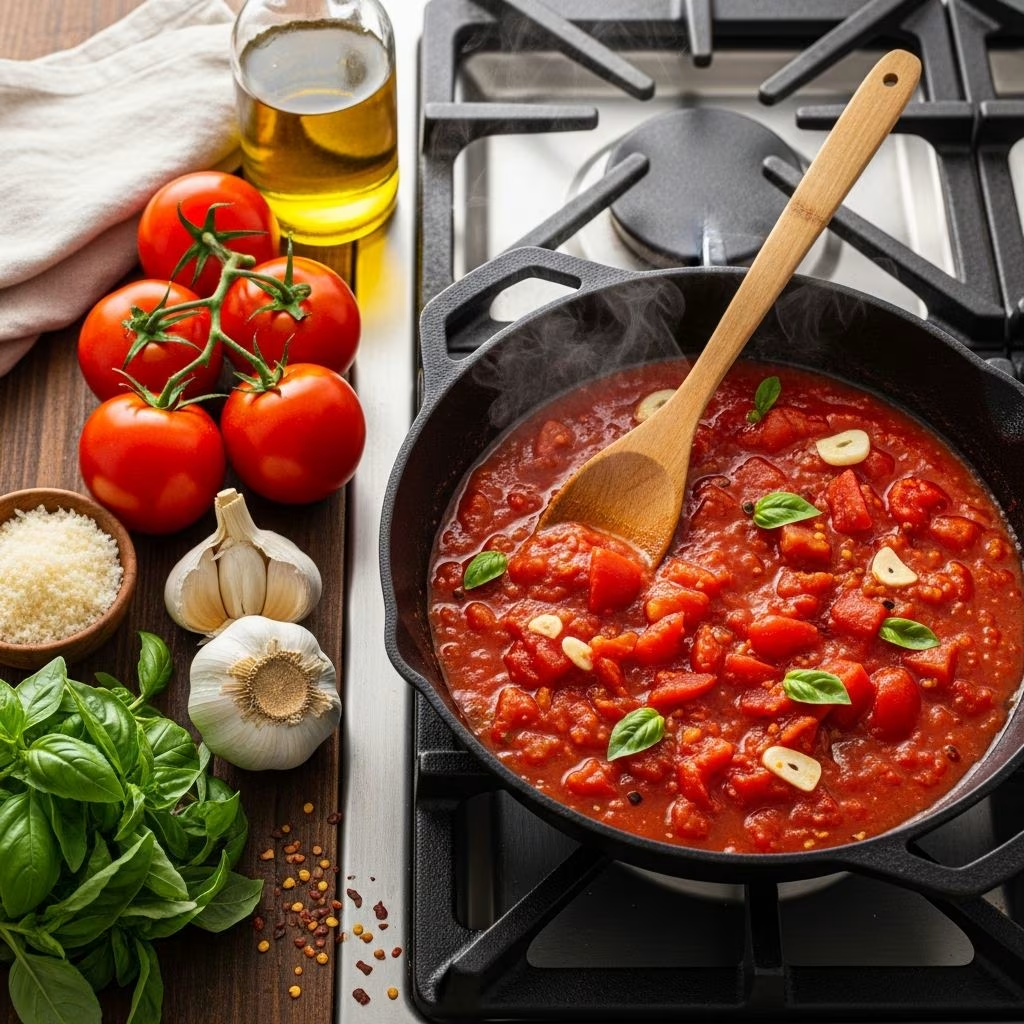
Creating a **homemade marinara sauce** elevates any Italian dish with its fresh, vibrant flavors derived from quality tomatoes, aromatic vegetables, and herbs. Unlike jarred versions, this sauce allows control over sweetness, acidity, and seasoning, resulting in a versatile base for pasta, pizza, or meatballs.
Why Choose Homemade Over Store-Bought
Making marinara at home ensures no preservatives or excess sugar, delivering a purer taste. Common recipes use canned tomatoes for consistency year-round, sautéed onions and garlic for depth, and a simmer to meld flavors. This approach yields a sauce that’s bright yet robust, ready in 20-60 minutes depending on desired thickness.
Fresh herbs like basil add a finishing touch, preventing bitterness from prolonged heat. Home cooks appreciate the simplicity: most recipes require one pot and basic pantry items, making it ideal for weeknight meals.
Essential Ingredients for Authentic Flavor
The foundation of great marinara lies in high-quality components. Start with **San Marzano tomatoes** or crushed varieties for their sweet, low-acidity profile. Onions and garlic provide the aromatic base, while olive oil carries flavors during sautéing.
- Tomatoes: 28 oz crushed or whole peeled, hand-crushed for texture control.
- Aromatics: ½ onion (diced) and 3-8 garlic cloves (minced) for balanced savoriness.
- Herbs: Dried oregano (½ tsp), fresh basil (1 Tbsp chopped), optional thyme or bay leaf.
- Seasonings: Salt (½-2 tsp), black pepper (¼ tsp), pinch of red pepper flakes for subtle heat.
- Oil: 2 Tbsp extra virgin olive oil to bloom flavors without overpowering.
- Optional enhancers: Splash of red wine, Worcestershire, or sugar to balance acidity.
Selecting ripe, in-season produce when possible intensifies natural sweetness, reducing the need for added sugar.
Step-by-Step Recipe for Classic Marinara
This foolproof method produces about 6 servings in 30 minutes, scalable for larger batches.
- Heat 2 Tbsp olive oil in a medium saucepan over medium heat.
- Add ½ diced onion; sauté 4-5 minutes until softened and translucent, not browned.
- Stir in 3 minced garlic cloves; cook 1 minute until fragrant to avoid burning.
- Pour in 28 oz crushed tomatoes, ½ tsp oregano, ½ tsp salt, ¼ tsp pepper. Optional: Add bay leaf or red pepper flakes.
- Bring to a simmer, reduce heat, cover partially, and cook 15-20 minutes, stirring occasionally. Sauce thickens as it reduces.
- Remove from heat, stir in 1 Tbsp chopped fresh basil. Taste and adjust seasoning.
For a chunkier texture, use whole tomatoes crushed by hand. Simmer longer (45-60 minutes) for deeper flavor integration.
Ingredient Variations and Customizations
Adapt marinara to preferences or dietary needs with these tweaks:
| Variation | Key Additions/Substitutions | Best For |
|---|---|---|
| Quick Weeknight | Crushed tomatoes only, 20-min simmer | Pasta pronto |
| Rich & Complex | Red wine (1 cup), Worcestershire (1 Tbsp), 2-hour simmer | Meatballs or lasagna |
| Spicy Arrabbiata | 1-2 tsp crushed red pepper, extra garlic | Penne all’arrabbiata |
| Herb-Forward | Fresh thyme (1 tsp), more basil/parsley | Pizza sauce |
| Vegan/Gluten-Free | No changes needed; ensure wine is vegan | All diets |
Food processors speed up prep by pulsing onions, garlic, and herbs into a paste, as in some robust recipes. For Instant Pot users, sauté then pressure cook 10 minutes for hands-off results.
Pro Tips for Perfection
- Sauté smartly: Low-medium heat prevents bitter garlic; golden onions signal readiness.
- Tomato choice: San Marzano offers superior taste due to volcanic soil origins.
- Acidity balance: A pinch of sugar or baking soda (⅛ tsp) counters tartness without sweetness overload.
- Herb timing: Add fresh basil at end to preserve volatile oils.
- Thickness control: Simmer uncovered longer or blend partially for silky consistency.
- Make ahead: Flavors improve after 24 hours in fridge; freezes up to 3 months.
Avoid overcrowding the pan to ensure even cooking. Quality olive oil enhances mouthfeel—opt for extra virgin.
Storage, Freezing, and Make-Ahead Strategies
Cool sauce completely before storing. Refrigerate in airtight containers up to 5 days. For freezing, portion into freezer bags (flattened for space), thaw overnight in fridge, and reheat gently.
Double batches save time: simmer extended for intensified taste. Canning requires proper water bath processing for shelf stability, following USDA guidelines for safety.
Creative Uses Beyond Pasta
Marinara’s versatility shines in diverse dishes:
- Pizza base: Spread thin, bake at 500°F for crisp crusts.
- Dipping sauce: Thicken slightly for mozzarella sticks or calzones.
- Soup/Stew base: Add broth and veggies for minestrone.
- Chicken/Meatballs: Simmer proteins directly in sauce for infused flavor.
- Shakshuka twist: Poach eggs in spicy marinara for brunch.
- Lasagna/Parmesan: Layer as is or blend smooth.
Experiment with baked ziti or eggplant parm for crowd-pleasers.
Common Mistakes and How to Avoid Them
Steer clear of these pitfalls for restaurant-quality results:
- Burning garlic: Stir constantly after adding.
- Watery sauce: Use crushed tomatoes, simmer longer.
- Overcooking herbs: Reserve fresh ones for finish.
- Ignoring salt: Season incrementally; it amplifies flavors.
- Skipping simmer: Raw tomatoes taste metallic—heat develops umami.
Taste throughout: Adjust acid with butter or sugar if needed.
Nutrition and Health Benefits
A ½-cup serving offers ~80 calories, rich in lycopene (antioxidant from tomatoes, enhanced by oil). Low sodium if unsalted; high in vitamin C from tomatoes/garlic. Pairs with whole-grain pasta for balanced meals.
Frequently Asked Questions (FAQs)
Can I use fresh tomatoes?
Yes, but blanch, peel, and seed first. Roast for concentrated flavor; expect longer cooking.
What’s the difference between marinara and tomato sauce?
Marinara is quicker-simmered, chunkier, herb-focused; tomato sauce often meat-added, longer-cooked.
How do I make it thicker?
Simmer uncovered, add tomato paste (1 Tbsp), or blend.
Is red wine necessary?
No, but it deglazes and adds depth; substitute broth or vinegar.
Can I make it in a slow cooker?
Yes: Sauté first, cook low 4-6 hours for melded flavors.
Pairing Suggestions
Serve with spaghetti, garlic bread, or parmesan. Wine: Chianti or Sangiovese complements acidity.
References
- Easy Marinara Sauce (with VIDEO) — NatashasKitchen.com. 2023-05-15. https://natashaskitchen.com/marinara-sauce/
- The Best Homemade Marinara Sauce — A Little And A Lot. 2022-08-10. https://alittleandalot.com/perfect-homemade-marinara-sauce/
- Best Italian Marinara Sauce Recipe — Ciao Florentina. 2021-11-20. https://ciaoflorentina.com/best-marinara-sauce-recipe/
- Homemade Marinara Sauce – Authentic Italian — Coley Cooks. 2023-02-14. https://coleycooks.com/easy-authentic-marinara-sauce-recipe/
- Classic Marinara Sauce Recipe — Billy Parisi. 2024-01-08. https://www.billyparisi.com/marinara-sauce/
- Easy Marinara Sauce — Downshiftology. 2023-09-22. https://downshiftology.com/recipes/marinara-sauce/
- World’s Best Marinara Pasta Sauce Recipe — Cooking Italian with Joe (YouTube). 2022-06-12. https://www.youtube.com/watch?v=hXj6ptyVNM4