Homemade chili oil transforms simple meals into flavorful masterpieces, offering a customizable blend of heat, aroma, and texture that store-bought versions can’t match. This versatile condiment, rooted in Sichuan cuisine, combines chili flakes, infused oils, and spices for a product that’s spicy, numbing, and deeply savory.
The Allure of Chili Oil in Modern Kitchens
Chili oil has surged in popularity beyond Asian restaurants, appearing on pizza, salads, and even ice cream. Its appeal lies in the balance of fiery capsaicin from chilies, the tingling ma la sensation from Sichuan peppercorns, and rich umami from infused aromatics. Home cooks appreciate the control over spice levels and freshness, ensuring no preservatives dull the vibrant red hue or potent punch.
Unlike commercial oils that prioritize shelf life, homemade versions capture peak flavors through careful temperature control during infusion. This process extracts essential oils from spices without burning delicate compounds, resulting in a glossy, aromatic oil that elevates everyday cooking.
Essential Ingredients for Authentic Flavor
Building a superior chili oil starts with high-quality components. The foundation is neutral oil, which carries flavors without overpowering them.
- Neutral oils: Rapeseed, grapeseed, avocado, or canola work best due to high smoke points and mild tastes. Cold-pressed varieties add subtle nuttiness.
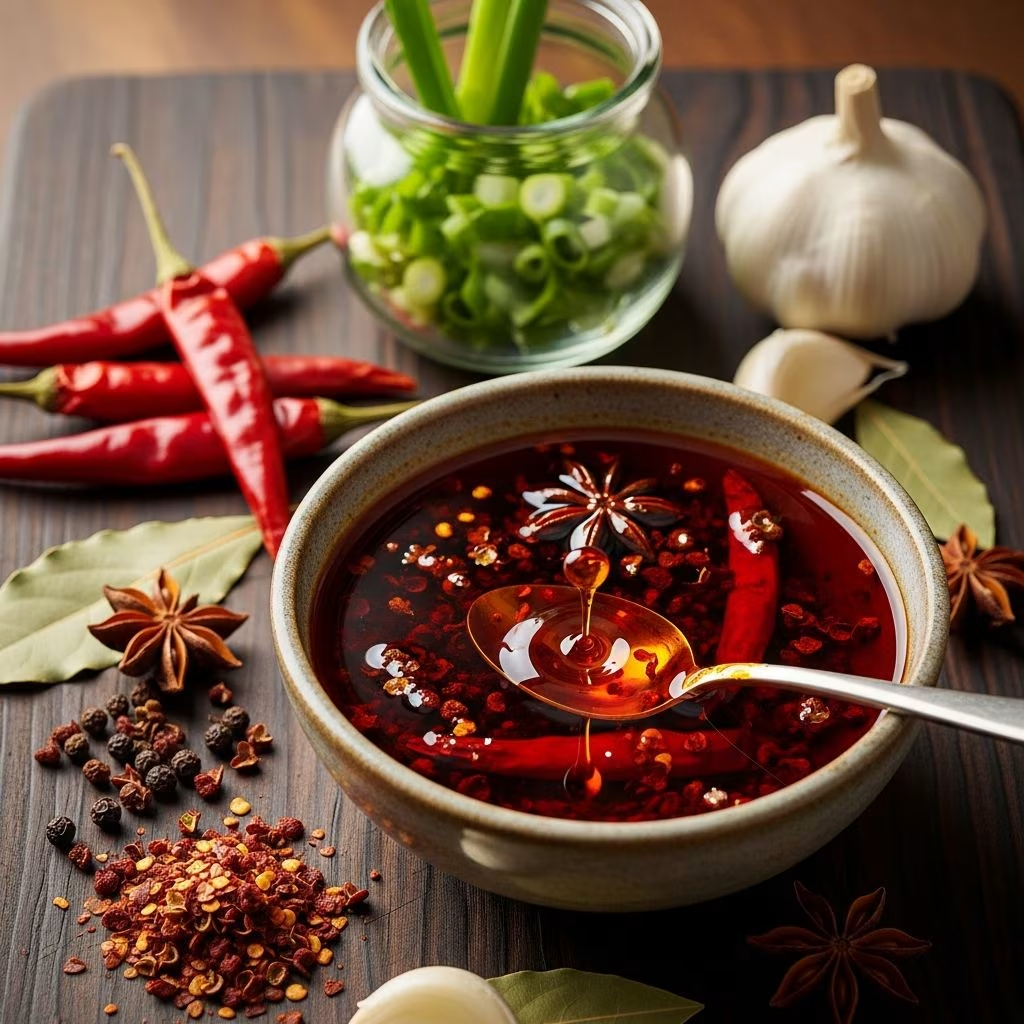
- Chili base: Mix gochugaru (Korean chili powder for sweetness and color), Sichuan chili flakes (coarse for texture), and crushed red peppers. Aim for 50g total per 250ml oil for balanced heat.
- Sichuan peppercorns: 1-2 tsp ground or whole; they provide the signature numbing buzz essential to ma la profiles.
- Aromatics: Ginger, garlic, scallions, shallots for depth. Optional spices like star anise, cinnamon, bay leaves, and black cardamom infuse complexity.
- Finishers: Toasted sesame seeds, salt, sugar, and five-spice powder round out sweetness and savoriness.
Pro tip: Source vibrant, non-roasted chilies for brighter color and fresher taste. Avoid dark, over-roasted flakes that yield bitter results.
Step-by-Step Guide to Perfection
Success hinges on technique, particularly the multi-stage oil pour method that preserves color, aroma, and heat.
- Prepare chilies: If using whole dried chilies, wipe clean, destem, chop, and toast lightly in oil until crisp (5 minutes on low heat). Cool and grind coarsely.
- Infuse oil: Heat 250g oil to 150°C (300°F). Add aromatics (sliced onion, ginger, scallions, bay leaves, star anise, cinnamon) and simmer at 110°C (230°F) for 10-15 minutes until golden. Strain solids.
- Layer the bowl: Mix chili flakes (50g), ground Sichuan pepper (2 tsp), sesame seeds (10g), salt, sugar, and five-spice in a heatproof bowl.
- Three-stage pour: Heat infused oil to 180°C (360°F). Pour one-third over chilies (should sizzle with small bubbles). Stir. Cool to 140°C (280°F), pour second third. At 100°C (210°F), add remainder. This extracts aroma first, then color, then spice.
- Rest and store: Cool completely, steep overnight. Refrigerate for 1-2 months.
Use a thermometer for precision; without one, heat until just shy of smoking, then rest 3-4 minutes per stage.
Temperature Science: Why It Matters
The staged pouring isn’t arbitrary—it’s chemistry. High heat (180°C) volatilizes aromatic compounds; medium (140°C) releases red pigments without degradation; low (100°C) infuses capsaicinoids gently. Overheating burns flavors, yielding dull, bitter oil.
| Stage | Temperature | Effect |
|---|---|---|
| First Pour | 180°C / 360°F | Aroma extraction |
| Second Pour | 140°C / 280°F | Color development |
| Third Pour | 100°C / 210°F | Spice infusion |
This method, common in Sichuan traditions, ensures layered complexity.
Customizing Your Chili Oil
Adapt for preferences:
- Milder version: Reduce flakes to 30g, add more gochugaru for color without heat.
- Extra numbing: Up Sichuan pepper to 1 tbsp ground.
- Smoky twist: Include fennel seeds or allspice.
- Herbal notes: Cilantro roots or dried comfrey for intensified red.
- Crunchy crisp: Mix in fried garlic or shallots post-infusion.
Experiment with ratios, but maintain oil-to-chili at 5:1 for pourable consistency.
Creative Ways to Use Chili Oil
Beyond drizzling, integrate into recipes:
- Noodles & dumplings: Toss with wheat noodles, vinegar, soy for dan dan style.
- Stir-fries: Finish veggies or meats for glossy heat.
- Salads: Dress cucumber or potato salads.
- Proteins: Marinate tofu, eggs, or poultry.
- Western fusion: Top pizza, avocado toast, or roasted potatoes.
For biang biang noodles: Cook wide noodles, shock in ice water, dress with chili oil, garlic, vinegar, cilantro.
Storage, Safety, and Troubleshooting
Store in sterilized glass jars in fridge; oil solidifies in cold but liquifies at room temp. Lasts 1-2 months; discard if moldy or off-smelling.
Common issues:
- Too oily: Increase flakes by 10g.
- Bitter taste: Lower first pour temp or shorten infusion.
- Dull color: Use fresher chilies, ensure medium pour.
Safety: Use dry utensils to avoid moisture introducing bacteria.
Health Benefits and Nutritional Notes
Chili oil delivers capsaicin for metabolism boost, anti-inflammatory properties, and antioxidants from chilies and sesame. Sichuan pepper aids digestion. Moderate use enhances meals without excess calories (1 tbsp: ~120 kcal, mostly from oil).
Frequently Asked Questions (FAQs)
What oil is best for chili oil?
Neutral high-smoke-point oils like rapeseed or grapeseed preserve flavors without burning.
Can I make chili oil without Sichuan peppercorns?
Yes, but you’ll miss the numbing ma la effect. Substitute black pepper for mild heat.
How spicy is homemade chili oil?
Customizable; base recipe is medium-hot. Adjust flakes for tolerance.
Is chili oil vegan?
Fully vegan as described; no animal products.
Can I reuse the strained aromatics?
Yes, fry into crispy bits for toppings or add to stocks.
Advanced Variations for Seasoned Cooks
Elevate with sand ginger or tsaoko for earthiness. For umami bomb, incorporate fermented black beans or shrimp paste (non-vegan). Smoke-infuse oil first for barbecue notes.
Batch large: Scale linearly, but infuse in smaller pots to control heat evenly.
References
- Homemade Sichuan Chili Oil — Xueci Cheng, Chill Crisp. 2023-10-15. https://chillcrispbyxueci.substack.com/p/homemade-sichuan-chili-oil
- Chinese Chili Oil From Scratch — The Tomato Tart. 2022-05-20. https://www.thetomatotart.com/recipe/chinese-chili-oil-scratch/
- Easy Homemade Chili Oil Recipe — The Foodie Takes Flight. 2023-08-12. https://thefoodietakesflight.com/easy-chili-oil-recipe/
- How to Make Chili Oil: The Perfect Recipe — The Woks of Life. 2024-01-10. https://thewoksoflife.com/how-to-make-chili-oil/
- How to Make Chili Oil (辣椒油) — Healthy Nibbles and Bits. 2023-11-05. https://healthynibblesandbits.com/how-to-make-chili-oil/