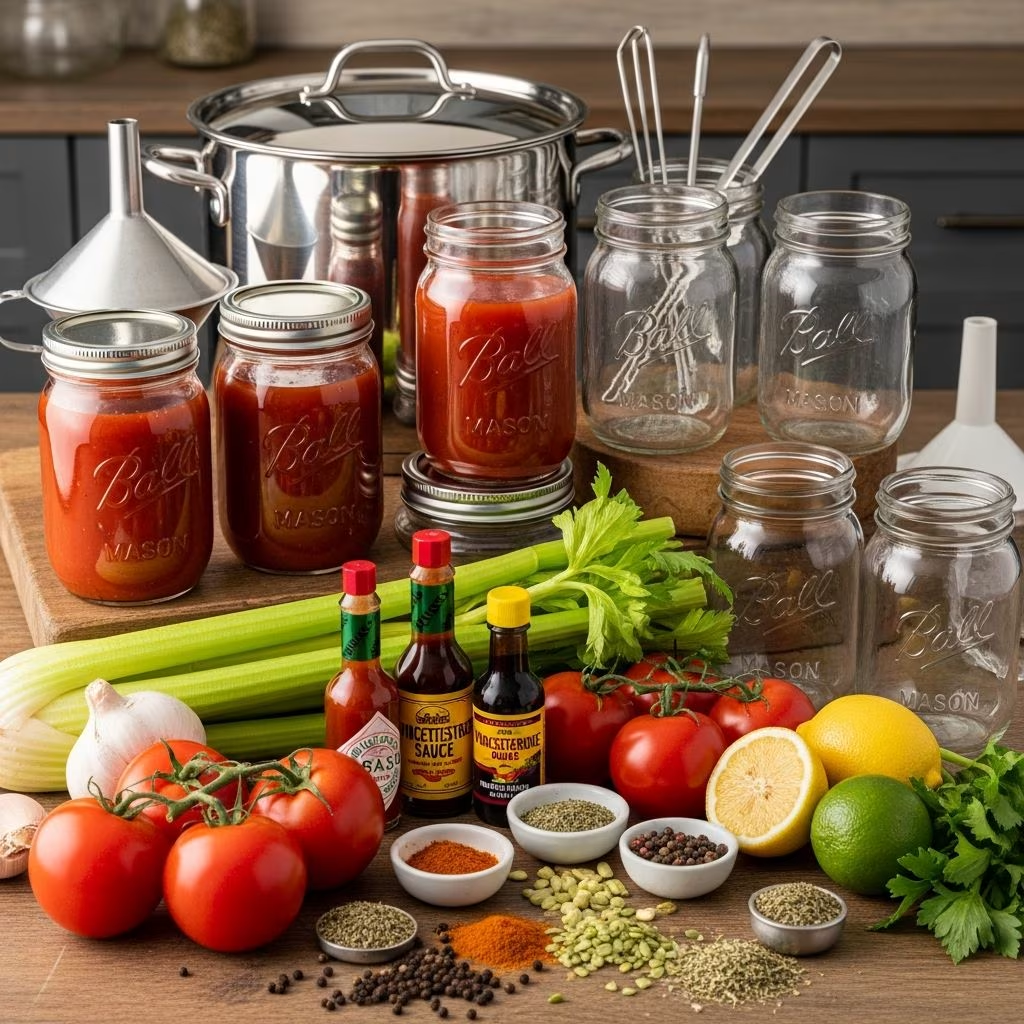
Creating a custom Bloody Mary mix at home offers enthusiasts complete control over flavor profiles, ingredient quality, and preservation methods. Unlike commercial versions, homemade batches can be tailored to personal preferences while utilizing fresh, seasonal produce. The process combines culinary creativity with food preservation techniques, allowing home canners to produce shelf-stable cocktail mixers that rival professional preparations.
Understanding the Foundation: Core Ingredients and Proportions
The foundation of any quality Bloody Mary mix begins with premium tomatoes, which provide both volume and natural acidity necessary for safe canning. Fresh tomatoes should be ripe and firm, free from blemishes or soft spots that could compromise the final product’s quality. Most traditional recipes call for substantial quantities—approximately 20 pounds of tomatoes—to yield multiple quart jars of finished product.
Supporting vegetables create flavor complexity and nutritional value. Onions contribute sweetness and depth, while bell peppers add mild flavor and natural sugars. Carrots provide earthiness and additional pectin, which aids in achieving the desired consistency. Fresh garlic, minced finely, delivers pungent aromatic qualities that define authentic preparations.
Heat and Spice Elements
Chile peppers introduce varying degrees of heat intensity. Dried chile de arbol peppers, when ground into powder, deliver concentrated spiciness without overpowering moisture content. Fresh jalapeño peppers offer adjustable heat levels—removing seeds produces milder results, while retaining them intensifies piquancy. Horseradish provides distinctive peppery bite and volatility that characterizes traditional Bloody Mary experiences.
Seasoning components work synergistically to develop balanced flavor profiles. Worcestershire sauce contributes umami depth and complexity, while celery seed provides subtle earthiness. Bay leaves infuse gentle herbal notes during the simmering phase, though they must be removed before final processing. Seafood seasoning, commonly Old Bay brand, combines multiple spices efficiently, though individual seasonings can be substituted based on preference.
Acidic and Complementary Components
Vinegar and lemon juice serve dual purposes—enhancing flavor while ensuring adequate acidity for safe water bath canning. The acidic environment prevents pathogenic microorganism growth during storage. Tomato sauce, though concentrated and processed, supplements tomato solids and flavor intensity, particularly when fresh tomato availability is limited.
Vegetable Preparation and Processing Techniques
Success in producing quality Bloody Mary mix depends significantly on proper vegetable preparation. All vegetables require thorough washing under cold running water to remove surface debris and potential contaminants. Tomatoes should be inspected carefully, with any bruised or deteriorated portions removed completely.
Chopping and Size Considerations
Vegetables must be reduced to appropriate sizes for efficient processing. Tomatoes typically require coarse chopping to facilitate handling through food processing equipment. Onions, bell peppers, and carrots should be cut into uniform pieces to ensure consistent processing and extraction. Garlic requires mincing to fine particles for even distribution throughout the final product.
Extracting and Concentrating Juices
Traditional preparation involves processing vegetables through a food juicer, which separates liquid from pulp. This technique produces smoother, more refined texture compared to blended preparations. Working in batches prevents equipment overload while ensuring thorough processing. The resulting juice should be strained to remove excess pulp if a thinner consistency is preferred.
Cooking and Flavor Development Process
Initial vegetable combination and seasoning integration occurs over moderate heat, bringing the mixture to a rolling boil. The simmering phase—typically 30 minutes—allows flavors to meld and vegetables to soften completely. During this period, flavors concentrate and deepen as moisture evaporates gradually.
Transitioning to Juice Processing
After the initial simmer, the combination moves through the vegetable juicer to achieve the desired consistency. Excess pulp may be strained if needed, though some recipes retain more body for texture. The processed juice then transfers to a fresh pot for secondary heating, bringing it to near-boiling temperature.
Final Seasoning Additions
Lemon juice incorporates near the completion of cooking, adding brightness and final acidity adjustment. This timing prevents heat degradation of lemon’s volatile compounds while ensuring proper distribution. The mixture should reach nearly-boiling temperature before jar filling commences.
Sterilization and Jar Preparation Essentials
Proper sterilization represents critical food safety protocol in home canning operations. Jars, lids, and rings must be subjected to high-temperature sterilization prior to use. Submerging equipment in actively boiling water for minimum five minutes effectively eliminates potential microorganisms that could compromise preservation.
Jar Selection and Sizing
Quart-sized jars represent standard containers for Bloody Mary mix, though pint jars offer portion-controlled alternatives. All canning jars must be purpose-designed with proper sealing surfaces and compatible lid systems. Commercial canning jars feature specially designed rims and heads that create vacuum seals during the cooling phase.
Standard one-quart canning jars accommodate approximately four servings of finished Bloody Mary mix, making them convenient for household use. Pint-sized alternatives provide options for those preferring smaller inventory or limited storage space.
Filling and Air Removal Procedures
Hot Bloody Mary mix transfers into sterilized jars carefully, maintaining appropriate headspace. Proper headspace—approximately one-quarter inch below the rim—allows for expansion during processing and provides adequate distance for lid sealing. Overfilled jars may experience seal failure, while excessive headspace can result in incomplete preservation.
Bubble Elimination Techniques
Air pockets trapped within filled jars compromise storage stability and can create weak spots in preserved product. A thin knife or specialized bubble-removal tool slides along jar interiors, dislodging trapped air that floats upward and escapes. This process requires gentle handling to avoid creating new bubbles or spilling contents.
Rim Preparation for Sealing
Cleanliness around jar rims directly affects seal success rates. Moist paper towels wipe away food residue, seasonings, or juice drips that could interfere with lid adhesion. This simple step significantly increases successful seal formation and long-term storage reliability.
Water Bath Canning Processing and Timing
Water bath canning represents the standard method for preserving high-acid foods like Bloody Mary mix. A specialized canning kettle or large stockpot fitted with a rack accommodates multiple jars simultaneously while allowing water circulation underneath.
Setup and Heat Application
Water fills the canner halfway initially, then boils vigorously before jar placement. Jars lower carefully into boiling water using jar holders or specialized tongs, maintaining level positioning to prevent tilting. Additional boiling water adds if needed to ensure minimum one-inch coverage above jar tops.
Processing Duration and Temperature
Covered canners bring water to rolling boil and maintain this state for 40 minutes—the standard processing time for quart jars. Pint-sized jars require reduced processing time of 35 minutes due to their smaller volume and faster heat penetration. Altitude adjustments become necessary for locations above 1,000 feet elevation, as water boils at lower temperatures in higher elevations.
Cooling and Seal Verification
After processing completion, jars transfer carefully to cloth-covered or wooden surfaces, spacing them several inches apart to allow adequate air circulation during cooling. This protected positioning prevents thermal shock from temperature fluctuations that could compromise newly-formed seals.
Recognizing Successful Seals
As jars cool completely, metal lids contract downward, creating distinctive popping sounds that indicate successful vacuum seal formation. Pressing firmly on each lid’s center after cooling should produce no flexing—a properly sealed lid feels solid and immovable. Any lids that flex or make popping sounds during pressure suggest failed seals, requiring immediate refrigeration and consumption within two weeks.
Storage Conditions and Shelf Life
Successfully sealed jars store best in cool, dark locations such as pantries, basements, or designated storage closets. Consistent cool temperatures—ideally between 50-70°F—extend preservation quality. Darkness prevents light degradation of pigments and flavor compounds.
Properly preserved Bloody Mary mix maintains quality for approximately 12 months when stored under ideal conditions. Over extended periods, flavors may mellow slightly and color may darken gradually, though product safety remains uncompromised if seals remain intact and jars show no signs of mold, bulging, or leakage.
Frequently Asked Questions About Homemade Canning
Can I use other heat-processing methods instead of water bath canning?
Pressure canning offers an alternative, particularly for those at high altitudes. Processing at 10 pounds per square inch pressure requires only 15 minutes processing time. However, water bath canning remains the standard for high-acid mixtures like Bloody Mary preparations.
What causes failed seals and how can I prevent them?
Seal failures result from inadequate jar cleanliness, improper headspace, lid defects, or insufficient processing time. Ensuring scrupulous rim cleaning, maintaining exact headspace measurements, using new lids, and adhering to recommended processing durations virtually eliminates failures.
Is it safe to modify recipes or ingredients?
Recipe modifications are possible provided adequate acidity is maintained. Adding non-acidic vegetables requires additional vinegar or lemon juice to maintain pH levels suitable for water bath canning. When uncertain about safety implications, consulting USDA canning guidelines ensures proper food preservation practices.
Can I freeze Bloody Mary mix instead of canning?
Freezing represents a valid preservation alternative, extending shelf life to approximately 12 months. Freezing eliminates the need for heat processing while maintaining excellent flavor quality. However, frozen storage requires dedicated freezer space, and thawed mixture must be consumed within days.
Customization Possibilities and Flavor Variations
Homemade preservation allows for creative flavor experimentation that commercial products rarely offer. Additional ingredients such as hot sauce varieties, cucumber juice, or specialty vinegars personalize preparations. Some preparations incorporate smoked paprika for depth, while others add fresh herbs like cilantro or dill for brightness.
Spice intensity proves fully adjustable based on individual preferences. Those preferring milder versions reduce chile peppers and horseradish, while heat enthusiasts increase both components substantially. Worcestershire sauce quantities also adjust according to desired umami intensity.
Conclusion
Producing homemade Bloody Mary mix through water bath canning combines practical food preservation with culinary creativity. The process yields personalized cocktail mixers that reflect individual taste preferences while providing shelf-stable products for year-round enjoyment. Following established canning protocols ensures both safety and quality in the finished product.
References
- Complete Guide to Home Canning and Preserving — United States Department of Agriculture (USDA). 2024. https://www.usda.gov/
- Safe Home Canning of Tomato Products — National Center for Home Food Preservation, University of Georgia. 2023. https://nchfp.uga.edu/publications/usda/USDA_canning_guide.html
- Food Safety During Home Canning Operations — FDA Food Safety Modernization Act Guidance. 2024. https://www.fda.gov/food/guidance-compliance-regulatory-information
- Vegetable Processing and Preservation Techniques — Penn State College of Agricultural Sciences Extension. 2023. https://extension.psu.edu/food-preservation
- Altitude Adjustments for Water Bath Canning — National Center for Home Food Preservation. 2024. https://nchfp.uga.edu/how/can_altitude.html