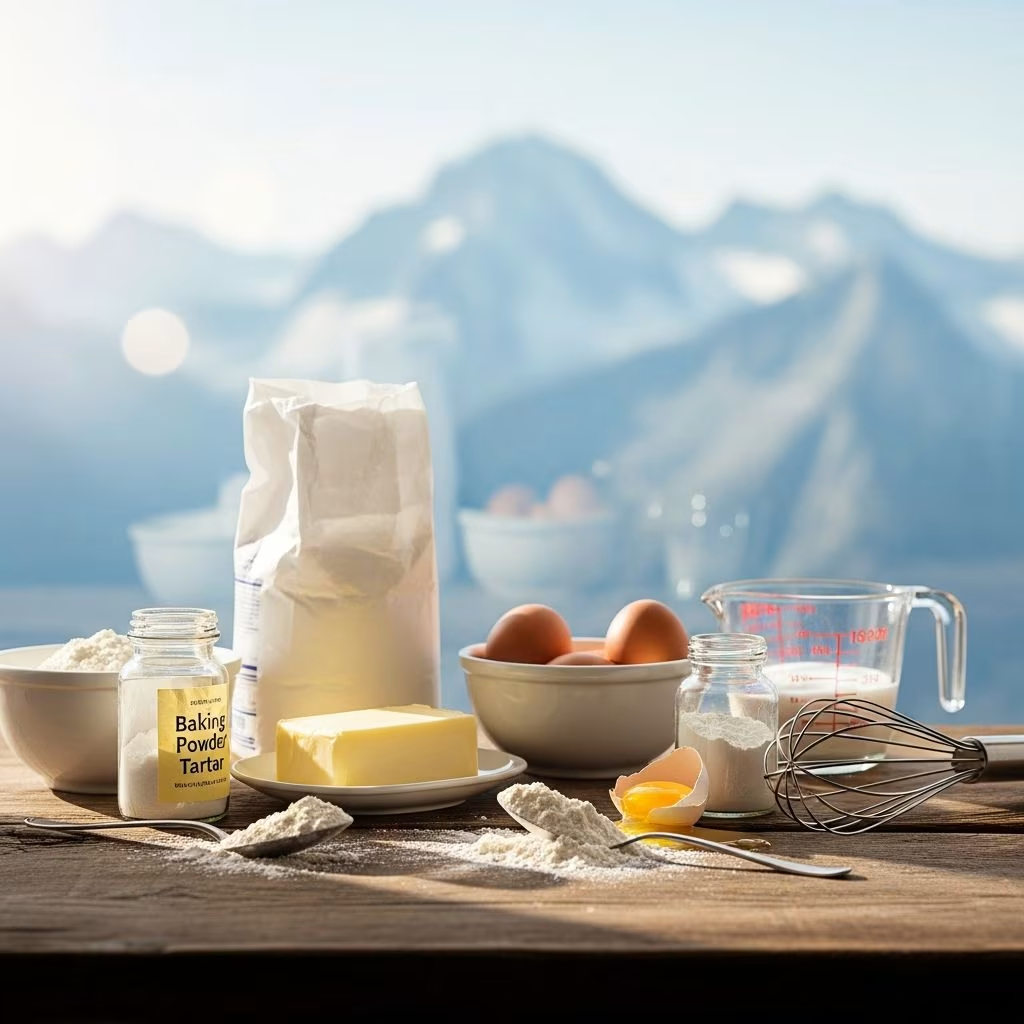
Baking at elevations above 3,000 feet presents unique challenges due to lower air pressure, which accelerates evaporation, boosts leavening action, and alters dough behavior. These factors often result in dry, collapsed, or overly spread baked goods if sea-level recipes are followed unchanged. By understanding atmospheric impacts and applying targeted modifications, home bakers can produce reliable, delicious outcomes regardless of location.
Understanding the Science Behind High Altitude Effects
At sea level, atmospheric pressure of about 14.7 psi keeps gases dissolved in liquids and supports structured rises in batters. Above 3,000 feet, pressure drops, causing bubbles in leaveners to expand faster and moisture to escape more quickly. This leads to excessive rising followed by collapse, dryness from rapid evaporation, and weaker gluten development in doughs.
Key physical changes include:
- Faster boiling point: Water boils at lower temperatures (e.g., 202°F at 5,000 feet vs. 212°F at sea level), speeding evaporation.
- Reduced oxygen: Impacts yeast activity and browning reactions like Maillard.
- Lower humidity: Amplifies drying in finished products.
These principles guide all adjustments, ensuring baked items set properly before over-expanding or drying out.
Universal Recipe Adjustments for Success
Most high-altitude adaptations follow consistent rules across recipes. Start with small changes and test, as exact needs vary by elevation, recipe, and oven.
| Ingredient/Setting | Adjustment | Reason | Elevation Guideline |
|---|---|---|---|
| Oven Temperature | Increase 15-25°F | Sets structure before over-expansion; use lower end for delicate items | All above 3,000 ft |
| Baking Time | Reduce 5-8 min per 30 min | Higher heat finishes baking sooner | Check 5 min early |
| Liquid (water/milk) | Increase 1-2 tbsp per 1,000 ft over 3,000 | Compensates for faster evaporation | Extra eggs can substitute |
| Flour | Add 1 tbsp per 3,500 ft +1 tbsp/1,500 ft | Strengthens structure and absorbs moisture | Use high-protein flour |
| Sugar | Decrease 1 tbsp per cup | Prevents weakening tender crumb | Especially for cakes |
| Leaveners (baking powder/soda) | Reduce 1/8-1/4 tsp per tsp | Curbs excessive rise | More at higher elevations |
Implement changes incrementally: for 5,000 feet, add 2 tbsp liquid, 1 tbsp flour, cut leavener by 1/8 tsp per tsp, and bake at +20°F for reduced time.
Perfecting Cakes at Elevation
Cakes suffer most from high altitude, often peaking high then sinking due to rapid gas expansion. To counteract:
- Boost liquids with milk or extra egg whites for moisture retention.
- Cut sugar to avoid softening cell walls excessively.
- Avoid overmixing batter to limit initial air incorporation.
- Use sturdy pans and ensure even oven heat.
For example, a standard 9-inch layer cake recipe at 7,000 feet might need +3 tbsp liquid, -2 tbsp sugar, +2 tbsp flour, and -1/4 tsp baking powder per tsp called for, baked at 375°F instead of 350°F for 25-30 minutes.
Pro tip: Wrap cooled layers in plastic immediately to trap moisture in dry mountain air.
Crafting Ideal Cookies Without Spreading
Cookies tend to spread excessively or dry out at altitude. Minimal tweaks often suffice:
- Chill dough 30-120 minutes to firm fats and limit spread.
- Slightly increase flour or decrease fat/sugar for chewiness.
- Bake hotter/shorter to set edges quickly.
Adjustment table for cookies:
| Change | How Much | Why |
|---|---|---|
| Liquid | +1-2 tsp | Helps dough bind |
| Leaveners | -1/8 tsp per tsp | Prevents puff-then-flat |
| Temp/Time | +15-25°F / -1-2 min per 10 min | Sets structure fast |
High-protein flour enhances crisp edges without toughness.
Baking Breads and Yeast Goods
Yeast doughs rise too rapidly, yielding coarse, flavorless loaves. Key fixes:
- Reduce yeast by 25% and use cooler water (90-100°F).
- Provide ample bowl space for quick rises; punch down and re-rise once extra.
- Increase flour for stronger gluten.
- Expect 20-30% shorter proof times.
For sourdough, extend levain build times slightly for flavor development despite fast bulk fermentation. Pizza dough benefits from extra rise and high-heat bake.
Quick Breads, Muffins, and Biscuits
These rise aggressively; treat like cakes with leavener cuts and liquid boosts. For muffins:
- Increase oven to 425°F from 400°F.
- Fill cups 2/3 full to avoid overflow.
- Check doneness 5 minutes early.
Biscuits need extra flour for tender, non-sticky handling.
Pies and Pastries in Thin Air
Pie crusts dry fast; pastry doughs become tough.
- Add 1-2 tbsp extra liquid to dough.
- Chill thoroughly before rolling.
- Blind bake with weights to prevent bubbles.
- For fruit fillings, increase thickener (cornstarch +10-20%) as juices boil quicker.
Custard pies may need +5-10 minutes bake time despite higher temp.
Equipment and Technique Essentials
Beyond ingredients:
- Accurate tools: Oven thermometer verifies true temps; scale weighs flour precisely.
- Pan prep: Grease/flour well; parchment prevents sticking.
- Humidity hacks: Mist oven or place water pan for moisture.
- Testing: Toothpick for cakes, internal temp 195-210°F for breads.
High-protein flours (11-13% protein) build better structure universally.
Frequently Asked Questions
What elevation counts as high altitude for baking?
Adjustments begin at 3,000 feet; significant changes above 5,000 feet.
Do I need special ingredients?
No, but high-gluten flour and extra eggs help. Gluten-free? Add binders like xanthan gum.
Why do my goods sink in the middle?
Too much leavener or sugar; reduce both and increase flour.
Can I use box mixes?
Yes—follow package altitude instructions or apply general rules.
How do I store high-altitude bakes?
Airtight containers immediately; freeze extras to combat dryness.
Troubleshooting Common Issues
Too dry: More liquid/eggs next time; underbaking helps retain moisture.
Collapsed: Less leavener, hotter oven.
Spreading: Chill, more flour, less sugar.
Pale color: Extend bake slightly or brush with egg wash.
Practice with one recipe type first, logging changes for consistency.
References
- High Altitude Baking Tips — Rocky Mountain Lodge. 2020-07-01. https://rockymountainlodge.com/blog/2020/07/high-altitude-baking-tips.html
- High-Altitude Baking — King Arthur Baking. N/A. https://www.kingarthurbaking.com/learn/resources/high-altitude-baking
- High Altitude Baking: Adjusting for High Elevation — Wilton. N/A. https://wilton.com/baking-inspiration/high-altitude-baking/
- High Altitude Baking: Tips, Tricks & Lessons From a Mountain Kitchen — Sugar Bake Test Kitchen. N/A. https://sugarbaketestkitchen.com/high-altitude-baking-tips-tricks-lessons-from-a-mountain-kitchen/
- High-Altitude Cooking and Baking: A Comprehensive Guide — Escoffier. N/A. https://www.escoffier.edu/blog/recipes/high-altitude-cooking-and-baking-a-complete-guide/
- Baking at High Altitudes: Tips and Tricks — Baking-Forums.com. N/A. https://www.baking-forums.com/threads/baking-at-high-altitudes-tips-and-tricks.7300/