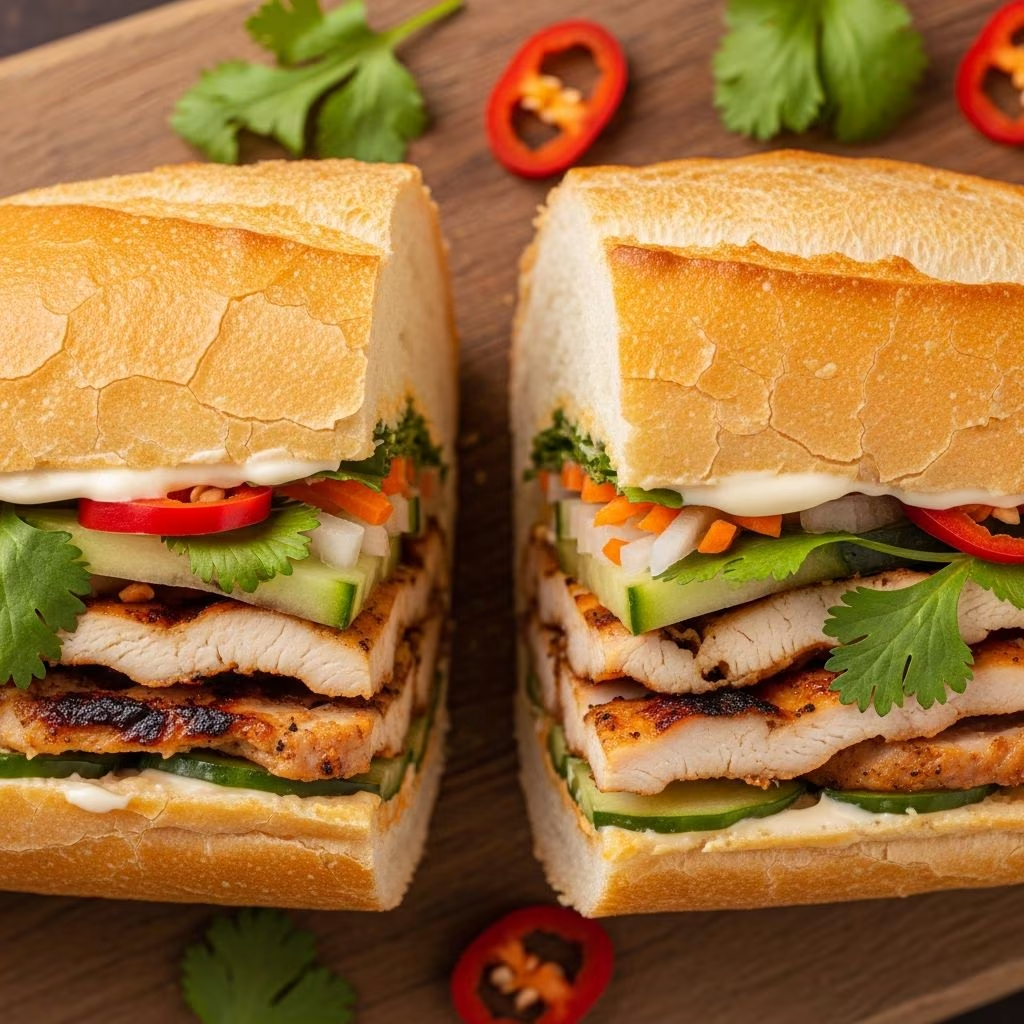
The Vietnamese banh mi sandwich represents one of Asia’s most beloved culinary intersections, where French colonial influence meets Vietnamese resourcefulness and flavor tradition. Among the countless regional variations and preparation methods, the Hanoi-style grilled chicken version stands as a cornerstone recipe that captures the essence of street food excellence. This rendition celebrates simplicity married with depth—a philosophy that underpins much of Vietnamese cooking. The grilled chicken provides a lean protein canvas that absorbs distinctive umami-forward marinades, while supporting ingredients create layers of texture and brightness.
Understanding the Foundation: What Makes Banh Mi Special
Banh mi emerged from Vietnam’s 20th-century history, incorporating baguettes introduced during French occupation into a distinctly Vietnamese framework. The sandwich category encompasses multiple variations, but the chicken preparation style originating from Hanoi has gained prominence for its balanced approach to seasoning and cooking technique. Unlike some interpretations that rely heavily on processed ingredients or excessive condiments, the Hanoi method emphasizes the quality of the grilled chicken itself, treating it as the hero rather than merely a filler component.
The architecture of an effective banh mi depends on several non-negotiable elements working in concert. The bread must provide structural integrity while maintaining an appealing textural contrast between a crispy exterior and a soft interior crumb. The protein component requires proper marination and cooking to develop both surface caramelization and interior tenderness. Pickled vegetables contribute acidic brightness that cuts through richness and stimulates the palate. Condiments serve as flavor anchors, while fresh herbs add aromatic complexity. Understanding how these components interact ensures successful execution.
Selecting and Preparing Your Chicken
The choice between chicken thighs and breast fundamentally affects your final product’s character. Chicken thighs contain higher fat content and more connective tissue, which break down during cooking to create moisture retention and fuller flavor profiles. Breast meat, conversely, offers leaner protein and a more delicate texture but requires more careful cooking to avoid drying out. For traditional Hanoi banh mi, chicken thighs represent the preferred choice among recipe developers and experienced cooks, though both options work acceptably.
Preparation begins with trimming excess fat deposits and ensuring even thickness across each piece. Large thighs benefit from butterflying—a technique where you split the thickest sections horizontally to create a more uniform thickness. This step prevents some portions from overcooking while others remain undercooked. Consistent thickness ensures that when your chicken cooks, all pieces reach doneness simultaneously.
The Marinade: Building Flavor Through Chemistry
The marinade represents the critical step separating memorable banh mi from forgettable versions. Traditional Hanoi-style marinades combine fish sauce, fresh lime juice, sugar, black pepper, and canola oil in precise proportions. Fish sauce serves as the foundational umami element—its pungent aroma mellows significantly during cooking while its salty-savory profile permeates the meat fibers. Fresh lime juice provides acidity that both tenderizes the protein and brightens the final flavor impression. Sugar balances these assertive flavors while promoting beneficial browning reactions during cooking.
The typical marinade formula includes one tablespoon of fish sauce, one tablespoon of fresh lime juice, approximately one-quarter teaspoon each of salt and sugar, one and one-quarter teaspoons of black pepper, and one and one-half tablespoons of canola oil per pound and a half of chicken. The oil component serves multiple purposes: it carries fat-soluble flavor compounds, prevents marinade from evaporating, and assists in even heat distribution during grilling.
Marination duration significantly impacts flavor development. A minimum of twenty to thirty minutes allows the marinade components to penetrate the outer meat layers. Extended marination up to twenty-four hours develops increasingly complex flavor profiles through enzymatic action and molecular diffusion. Room temperature marination works adequately for shorter periods, while refrigeration becomes necessary for extended marination to prevent bacterial proliferation.
Achieving Perfect Grill Results
Proper grilling technique separates exceptional chicken from mediocre preparations. Begin by preheating your grill to medium or medium-high heat—approximately 350-400 degrees Fahrenheit. If using a stovetop grill pan rather than an outdoor grill, achieve similar temperatures and lightly brush the cooking surface with oil. Clean grill grates prevent sticking and promote even heat contact across the chicken surface.
Place marinated chicken pieces on the preheated grill, establishing initial contact without moving them for approximately three to four minutes. This resting period allows exterior proteins to denature and bond to the grill surface, developing an attractive caramelized crust. The chicken should release easily when properly seared. Flip pieces only once at the halfway point, then continue cooking for an additional three to four minutes. Avoid the common mistake of frequent flipping, which prevents crust development and extends cooking time.
Determining doneness requires checking that internal juices run clear when pierced with a knife tip and that no pink remains in the meat’s thickest sections. Chicken thighs require approximately six to ten minutes total cooking time, depending on thickness and grill temperature consistency. After removing chicken from heat, allow a five to ten minute resting period that permits juices to redistribute throughout the meat, ensuring moisture retention when slicing.
Preparing Supporting Components
While your chicken marinates and cooks, attention turns to preparing pickled vegetables that provide essential acidic brightness and textural contrast. Traditional Vietnamese pickled carrot and daikon combinations require minimal active cooking time but benefit from advance preparation. Peel both vegetables and cut them into thick matchsticks that maintain structural integrity during pickling and eating. Combine vegetables with salt, sugar, distilled white vinegar, and water in proportions that create a balanced sweet-sour profile.
The pickling liquid should taste distinctly tart with noticeable sweetness—neither should dominate. Allow pickled vegetables to rest at room temperature for at least thirty minutes before assembly, though longer sitting periods (up to several hours or overnight) develop increasingly complex flavor integration. These pickles maintain quality for several days when refrigerated, making advance preparation practical for entertaining.
Simultaneously, prepare your remaining ingredients: slice fresh cucumbers into thin rounds, slice jalapeños thinly for heat application, roughly chop fresh cilantro, and assemble mayonnaise and any optional condiments like soy sauce or hot sauce. This mise en place approach ensures smooth assembly without rushed scrambling.
Bread Selection and Preparation
The baguette requires careful consideration—you’re seeking a French-style loaf featuring a crispy exterior crust and airy interior crumb structure. Vietnamese bakeries produce specialized banh mi baguettes specifically engineered for sandwich duty, featuring slightly thinner, crispier crusts than traditional French baguettes. If specialized banh mi bread proves unavailable, seek any quality French baguette, avoiding dense, heavy varieties or soft dinner rolls.
Cutting technique matters more than most home cooks recognize. Rather than slicing baguettes into individual round sections, cut crosswise into six-inch lengths representing appropriate single-sandwich portions. Slice each portion lengthwise without cutting completely through—maintaining one attached hinge creates structural integrity that prevents fillings from escaping. If your bread feels particularly soft, briefly toasting it in a toaster creates surface crispness while maintaining interior softness.
Strategic Assembly Methodology
Assembly order significantly impacts your eating experience. Begin by spreading a thin layer of mayonnaise across the interior surfaces—approximately one to two teaspoons per sandwich. Mayonnaise creates a moisture barrier preventing bread from absorbing excess liquid while adding richness that balances acidic components. Follow with a small pile of sliced grilled chicken, allowing it to rest against the mayonnaise layer.
Next, add your pickled carrot and daikon mixture in modest quantity—you needn’t use every available pickle. These vegetables should complement rather than overwhelm other components. Arrange fresh cucumber slices, then add optional jalapeño slices, cilantro sprigs, and any additional preferred toppings. The final arrangement should present a balanced profile without excessive crowding that prevents manageable consumption.
Frequently Asked Questions
Can I prepare this recipe without fresh fish sauce?
While fish sauce provides authenticity and distinctive flavor that’s difficult to replicate, soy sauce offers an acceptable substitution. The sandwich remains delicious, though the Vietnamese character becomes somewhat muted. Using equal volumes of soy sauce creates a slightly saltier profile, so you might reduce salt additions slightly.
How far in advance can I cook the chicken?
Grilled chicken maintains quality for up to three days when properly stored in the refrigerator. Reheat gently using a skillet over medium heat or microwave, adding any reserved cooking juices to restore moisture. The chicken tastes best within twenty-four hours of preparation.
What if I don’t have a grill or grill pan?
An oven broiler set to high heat produces acceptable results, cooking marinated chicken pieces for approximately six minutes per side. Alternatively, a regular stovetop skillet heated to medium-high temperature works well, though it doesn’t produce the same caramelized exterior as grilling methods.
Can I use chicken breast instead of thighs?
Chicken breast works but requires extra attention during cooking. Pound breasts to uniform thickness, watch carefully to prevent overcooking, and consider increasing marinade time to compensate for lower natural moisture content. Many cooks prefer the more forgiving nature of chicken thighs.
How can I make this recipe vegetarian?
Replace chicken with grilled tofu that’s been marinated in the same sauce mixture, or prepare marinated and grilled mushroom varieties. Increase the amount of pickled vegetables and add additional protein sources like eggs or legumes.
Serving and Storage Recommendations
Serve banh mi immediately after assembly while bread maintains optimal crispness and all components remain at their intended temperatures. The sandwich deteriorates quality as bread absorbs moisture over time, typically becoming acceptable for approximately two hours post-assembly.
Store cooked chicken separately from assembled sandwiches if preparing in advance. Keep pickled vegetables in their marinade within an airtight container at refrigeration temperature. Assemble individual sandwiches only when ready to eat, allowing customization for different heat preferences or dietary accommodations.
References
- The Banh Mi Handbook: Recipes and Stories from Vietnam — Andrea Nguyen. 2010. A comprehensive guide to Vietnamese banh mi traditions and preparations.
- Vietnamese Cuisine: A Culinary Journey Through Regions and Traditions — Food Literacy Center Educational Resources. Accessed 2026. https://www.foodliteracycenter.org/
- Understanding Fish Sauce in Asian Cooking — Culinary Institute standards documentation. A technical resource for ingredient functionality in Southeast Asian cuisine preparation.