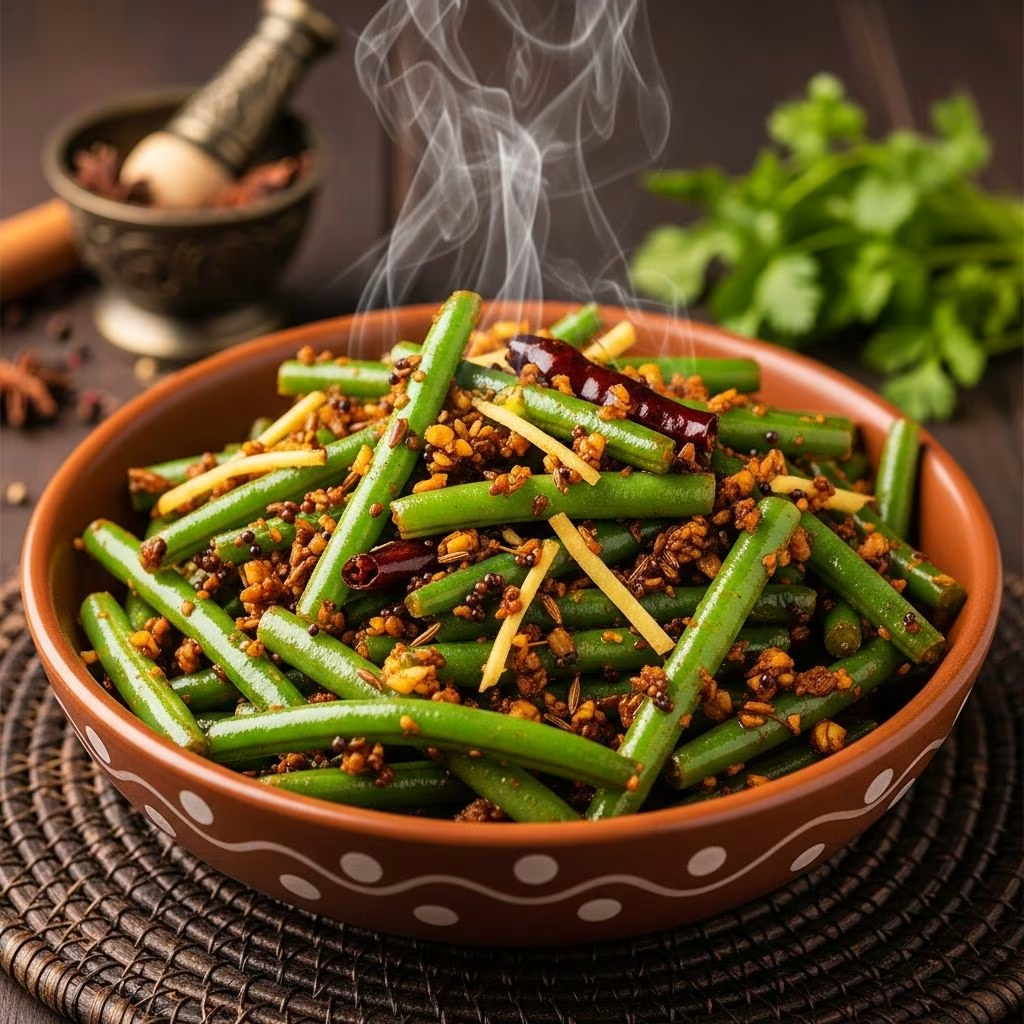
Gujarati cuisine represents one of India’s most distinct regional food traditions, characterized by its creative use of spices, preference for vegetarian preparations, and balance between bold and subtle flavors. Among the many vegetable dishes that define this culinary heritage, green beans prepared in the Gujarati style stand out as both simple and remarkably flavorful. Known locally as “Fansi nu Shaak,” this dish transforms humble green beans into an aromatic side that complements rice, dal, and roti-based meals. The preparation showcases foundational cooking techniques that have been refined across generations, demonstrating how a small collection of pantry staples can create dishes of considerable depth and satisfaction.
Understanding the Foundation of Gujarati Vegetable Cookery
The Gujarati approach to vegetable preparation rests on several fundamental principles that distinguish it from other regional Indian cooking styles. Rather than relying heavily on cream-based sauces or lengthy braising techniques, Gujarati vegetable dishes emphasize the natural flavors of ingredients while using strategic spice layering to build complexity. This methodology proves particularly effective with green beans, which possess a delicate sweetness that benefits from careful seasoning rather than being overwhelmed by heavy sauces.
The technique begins with what is known as a “vaghar” or tempering base. This foundational step involves heating oil or ghee and infusing it with aromatic seeds and spices before introducing the main ingredient. The vaghar serves multiple purposes: it extracts the essential oils from spices, creating a fragrant base; it allows the cook to develop flavor layers systematically; and it ensures spices distribute evenly throughout the dish rather than concentrating in isolated pockets.
Essential Ingredients and Their Roles
Preparing authentic Gujarati green beans requires relatively few components, yet each ingredient contributes meaningfully to the final result. Understanding the function of each element helps cooks appreciate why these particular choices have endured in traditional recipes.
Primary Components
- Fresh green beans: Approximately one pound of firm, vibrant green beans forms the vegetable base. The quality of beans matters significantly; beans should be bright green, crisp to the touch, and show no signs of browning or limpness.
- Vegetable oil: Four to five tablespoons of neutral oil like peanut, canola, or grapeseed oil serves as the cooking medium. The oil must be of sufficient quantity to properly coat the beans and allow spices to bloom effectively.
- Black mustard seeds: One tablespoon of whole mustard seeds creates the characteristic pop and crackle sound that signals proper tempering. These tiny seeds release a peppery, slightly bitter flavor when heated, which provides a counterpoint to the natural sweetness of the beans.
- Garlic: Four cloves of fresh garlic, minced finely, add pungency and depth. Garlic must be added after the mustard seeds pop to prevent burning while ensuring it infuses its flavor throughout the oil.
Flavor-Building Spices
Beyond the primary components, several spices work in concert to create the characteristic Gujarati flavor profile:
- Red chili: Either one dried red chili coarsely crushed or a pinch of red chili flakes provides heat and depth. The choice between dried chili and flakes depends on personal preference; dried chili offers a more smoky, complex heat, while flakes provide a more immediate, straightforward spiciness.
- Turmeric powder: Between one-quarter and one teaspoon of turmeric adds both color and earthy flavor. This ancient spice contributes warmth and has been integral to Indian cooking for thousands of years.
- Ground coriander and cumin: Often combined as a single blend called “dhana jeeru,” these spices introduce floral and warm nutty notes respectively, creating a more rounded spice profile.
- Cumin seeds: One teaspoon of whole cumin seeds may be added during tempering for additional aromatic complexity and texture variation.
- Asafetida: A tiny pinch of this pungent, resinous spice aids digestion and adds subtle umami depth, though it can be omitted if unavailable.
Seasoning and Balance
The seasoning agents that complete the dish deserve careful attention:
- Salt: One teaspoon of salt enhances all other flavors and allows the beans’ natural sweetness to emerge more prominently.
- Sugar: One-half teaspoon of sugar balances any bitterness from spices and complements the beans’ inherent sweetness without making the dish cloying.
- Black pepper: Freshly ground black pepper added near the end of cooking provides a final note of sharpness and complexity.
- Lemon juice: A squeeze of fresh lemon brightens the overall flavor profile and adds a subtle acidic counterpoint that prevents the dish from feeling heavy.
Preparation Steps for Optimal Results
Bean Selection and Preparation
Begin by selecting green beans that snap readily when bent, indicating proper ripeness and freshness. Rinse the beans thoroughly under cool water to remove any dirt or debris. Using a sharp knife, trim the stem ends from both sides of each bean, removing approximately one-quarter inch from each end. Some cooks prefer to cut beans into one-inch pieces, while others keep them slightly longer by halving or thirding each bean. The choice affects both visual presentation and cooking time; smaller pieces cook slightly faster and distribute spices more evenly, while longer pieces retain a firmer texture and maintain more of the bean’s natural structure.
Blanching Consideration
Some traditional recipes include a blanching step, briefly cooking the beans in boiling water for three to four minutes before pan-cooking. This preliminary step serves multiple purposes: it begins the cooking process gently, ensuring the beans reach appropriate tenderness without overcooking during the final pan cooking; it removes surface enzymes that can cause discoloration; and it allows the beans to absorb the spiced oil more readily during the final cooking phase. However, this step proves optional and can be skipped if time is limited, as the beans cook sufficiently during the main preparation.
Tempering the Spices
Heat the measured oil in a large frying pan or wok over medium heat. Once the oil ripples and shimmers across the surface, add all the mustard seeds at once. Cover the pan immediately or hold a splatter screen overhead, as the seeds will begin popping vigorously within seconds. This pop-and-crackle represents proper tempering and indicates the seeds are releasing their essential oils. Once the popping slows to occasional pops rather than continuous crackling, add the minced garlic.
Stir the garlic pieces continuously as they cook in the hot oil. The garlic will brown gradually, transforming from white to pale golden to a deeper golden color. This color progression indicates flavor development; however, the garlic must not darken to brown, as this indicates burning and imparts a bitter, unpleasant taste. This stage typically requires forty-five seconds to one minute of constant stirring.
Building Flavor Layers
Once the garlic reaches pale golden color, add the crushed red chili and stir for a few seconds. The chili will perfume the oil and release its heat and flavor. Immediately add the prepared green beans along with the salt and sugar. Stir thoroughly to ensure the beans coat evenly with the fragrant oil and spices.
At this stage, some cooks prefer to allow the beans to cook undisturbed for several minutes without additional stirring. This technique permits the beans to develop subtle brown edges where they contact the hot pan surface, adding textural interest and caramelized flavor development. After four to five minutes, stir the beans, breaking up any that have stuck together, and continue cooking for another four to five minutes.
Final Seasoning and Completion
Test the beans for doneness by piercing one with a fork or by biting into a piece. The beans should remain slightly firm, retaining their natural texture rather than becoming soft and mushy. Once the desired doneness is reached, reduce heat to low and add the remaining spice powders: turmeric, ground coriander and cumin blend, and any additional seasonings. If using a combination of spices rather than individual components, ensure they distribute evenly by stirring thoroughly for fifteen to twenty seconds.
Add black pepper and fresh lemon juice, stirring to combine. If the beans appear too dry, sprinkle one to two tablespoons of water and cook for an additional minute, allowing the water to create a light sauce that clings to each piece. The finished dish should not be wet or soupy; rather, the beans should glisten with oil and spices, with just enough moisture to create visual appeal.
Cooking Variations and Techniques
Covered Cooking Method
An alternative preparation style involves covering the pan after adding the beans. This technique traps steam, creating a gentler cooking environment that preserves the beans’ crispness while allowing thorough spice absorption. Using this method, beans cook in their own steam on low heat for five to seven minutes, with occasional stirring to prevent sticking. This approach works particularly well when time is limited or when preferring beans with maximum tenderness.
High-Heat Charring Method
A more modern variation involves cooking the beans over medium-high heat, allowing them to develop lightly charred edges before thoroughly stirring and cooking for an additional period. This technique creates visual interest and adds subtle caramelized notes that complement the spices. The charred edges provide textural contrast to the tender interior, creating a more complex eating experience.
Combination Cooking Approaches
Some cooks employ a hybrid method: cooking the beans covered for several minutes to ensure tenderness through steaming, then uncovering and increasing heat slightly to allow edges to char during the final cooking phase. This approach balances the desire for both proper cooking and interesting texture development.
Ingredient Substitutions and Adaptations
Oil Choices
While vegetable oil represents the standard choice, cooks may substitute other neutral oils such as coconut oil, which adds subtle sweetness, or grapeseed oil, which has a clean, neutral profile. Some traditional preparations use clarified butter (ghee), which imparts richer flavor and should be used in slightly smaller quantities due to its concentrated flavor.
Spice Modifications
Those preferring milder preparations can reduce the dried chili quantity or substitute it with a milder spice combination. Ground ginger can be added for additional warmth and complexity. Cooks seeking earthier flavor profiles might increase turmeric slightly. The foundational cooking technique remains constant while spice ratios can be personalized to individual taste preferences.
Vegetable Additions
Green beans pair well with complementary vegetables in this preparation style. Diced potatoes can be added when the beans are added, cooking together to complete tenderness. This addition transforms the dish from a simple side into a more substantial preparation. Fresh or dried coconut shreds can be scattered over the finished dish, adding textural interest and traditional flavor. Some regional variations include peas or diced carrots.
Serving Suggestions and Meal Integration
Gujarati green beans fit naturally into diverse meal structures. Serve alongside steamed rice and a simple lentil preparation for a complete, balanced vegetarian meal. The spiced beans complement yogurt-based rice dishes, providing textural contrast and additional flavor complexity. For traditional meals, serve as part of a Gujarati thali, alongside flatbreads like roti or paratha, a lentil preparation, pickled vegetables, and fresh chutneys.
The dish serves equally well in contemporary meal planning, accompanying grains like quinoa or millet, fitting into plant-based dinner plates, or serving as a substantial side for grain bowls. The natural fiber content and spice profile support digestion, making this an ideal choice for evening meals.
Nutritional Considerations
Green beans deliver substantial nutritional benefits alongside their appealing flavors. Rich in vitamins A, C, and K, green beans support immune function and bone health. The spices used in this preparation contribute additional health properties: turmeric contains curcumin, studied for anti-inflammatory effects; cumin seeds support digestive function; and black pepper enhances nutrient absorption. The moderate oil content provides essential fatty acids while keeping the overall dish relatively light compared to cream-based preparations.
Storage and Make-Ahead Preparation
Cooked Gujarati green beans maintain quality refrigerated for three to four days, covered in an airtight container. Reheat gently in a pan over low heat, adding a splash of water if the beans have dried during storage. The spices may intensify slightly during storage, actually improving flavor development over the first day. Freezing is possible but may affect texture; frozen beans best serve as additions to rice or grain dishes rather than as standalone preparations. For make-ahead efficiency, beans can be trimmed and stored separately several hours before cooking, reducing preparation time at cooking time.
Frequently Asked Questions
Can this dish be made entirely ahead of time?
Yes. Prepare the beans as described and store them refrigerated. Reheat gently before serving, adding a small amount of water if needed to restore moisture. The spices will intensify as they sit, so taste and adjust seasoning if necessary before serving.
What if fresh green beans are unavailable?
Frozen green beans work acceptably, though fresh beans offer superior texture. If using frozen beans, thaw them before cooking and reduce the cooking time slightly since they are partially cooked during the freezing process.
How much heat should the finished dish have?
The heat level depends on the dried chili or chili flake quantity chosen. Start conservatively with a smaller amount and increase in future preparations if desired. The spices provide warmth beyond just heat, so the dish offers complex flavor even when made mild.
Can this recipe be scaled for larger quantities?
Absolutely. The recipe scales proportionally; however, cooking time may increase slightly when preparing larger batches, as the pan requires additional time to heat the greater volume of beans evenly.
What oil produces the most authentic result?
Traditional preparations typically use vegetable oil or peanut oil, which are neutral in flavor and allow the spices to shine. Ghee was historically used when available, though modern preparations typically employ more accessible vegetable oils.
References
- Gujarati-style green beans – Madhur Jaffrey — Cathy in Geneva. Accessed 2022-03-22. https://cathyingeneva.wordpress.com/2022/03/22/gujarati-style-green-beans-madhur-jaffrey-easy-peasy-i-mean-beansy/
- Green Beans Sabzi our FAVOURITE way! — Flour & Spice. Accessed 2024. https://www.flourandspiceblog.com/green-beans-sabzi-my-favourite-way/
- Quick Fansi nu Shaak (Gujarati Green Beans) — J Cooking Odyssey. Accessed 2024. https://www.jcookingodyssey.com/fansi-nu-shaak/
- Gujarati Green Beans — Snacko Backo. 2013-10-18. https://snackobacko.com/2013/10/18/gujarati-green-beans/
- Fansi nu Shaak, A Gujarati Green Beans Dish — Indiaphile. YouTube. Accessed 2024. https://www.youtube.com/watch?v=xICqhKfDx_U