Grilling short ribs doesn’t require spending half the day tending to a smoker. With the right techniques and a well-crafted dry rub, you can achieve restaurant-quality results in approximately 90 minutes to 2 hours. This comprehensive guide walks you through every step of creating tender, flavorful grilled short ribs that will impress your guests and become a summer staple at your cookouts.
Understanding Short Ribs and Their Grilling Potential
Short ribs are a premium cut of beef that benefit tremendously from the intense heat of grilling combined with a protective dry rub. Unlike traditional smoking methods that can take 6 to 12 hours, grilling short ribs allows you to achieve tenderness through a combination of steam, direct heat, and proper seasoning. The key is understanding that short ribs contain substantial connective tissue that breaks down when exposed to moderate heat over time, resulting in that coveted fall-off-the-bone texture.
When selecting short ribs for grilling, choose pieces that are approximately 2 to 3 inches thick. You’ll want them to have good marbling, which indicates intramuscular fat that will render during cooking and keep the meat moist. Boneless short ribs work particularly well for grilling as they cook more evenly and allow better seasoning penetration on all surfaces.
Crafting the Perfect Dry Rub Foundation
The dry rub is the flavor backbone of your grilled short ribs. Rather than using store-bought versions, creating your own dry rub allows complete control over flavor intensity and ingredient quality. A traditional dry rub for short ribs combines sweet, savory, and spicy elements that work together to create depth and complexity.
Essential Dry Rub Components
The foundation of any quality dry rub starts with understanding how different ingredients contribute to the final flavor profile:
- Paprika: Smoked paprika provides a subtle smokiness and mild pepper flavor that anchors the rub. It adds visual appeal and contributes to the browned exterior.
- Garlic and Onion Powder: These aromatic powders provide savory depth without the moisture that fresh garlic and onion would add. They distribute evenly across the meat surface.
- Brown Sugar: The sweetness caramelizes during grilling, creating a flavorful crust while balancing spicy and savory notes.
- Kosher Salt: The grain size of kosher salt allows it to adhere to meat better than table salt and doesn’t dissolve as quickly during the curing process.
- Black Pepper: Fresh-ground pepper provides warmth and complexity. Add it generously for pronounced peppery notes.
- Ground Mustard: This ingredient enhances meat flavors and adds subtle tangy undertones that complement barbecue sauce.
- Optional Heat Elements: Cayenne pepper or chili powder can be added for those preferring more heat.
Sample Dry Rub Recipe
| Ingredient | Quantity |
|---|---|
| Brown Sugar | 1/4 cup |
| Kosher Salt | 2 teaspoons |
| Black Pepper | 2 teaspoons |
| Smoked Paprika | 2 teaspoons |
| Garlic Powder | 1 teaspoon |
| Onion Powder | 1 teaspoon |
| Ground Mustard | 1 teaspoon |
| Cinnamon | 1/2 teaspoon |
| Celery Salt | 1/2 teaspoon |
| Cayenne Pepper | 1/4 teaspoon |
Mix these ingredients in a small bowl, breaking up any clumps of brown sugar. This recipe yields enough for approximately 3 pounds of short ribs with some left over for future use. Store unused rub in an airtight container for up to three months.
Preparation and Seasoning Strategy
Proper preparation sets the foundation for success. Begin by patting your short ribs completely dry with paper towels. Any surface moisture will inhibit the dry rub from adhering properly and prevent browning. Once dry, generously apply the dry rub to all surfaces of each rib piece, ensuring even coverage on the top, bottom, and sides.
After applying the rub, allow the ribs to rest at room temperature for 20 to 30 minutes before grilling. This resting period allows the flavors to penetrate the meat surface and helps achieve more even cooking. Some methods suggest refrigerating the rubbed ribs for 30 minutes to 1 hour, which further develops flavor; however, you must then allow them to come to room temperature before grilling to ensure consistent cooking throughout.
The Foil-Packet Steaming Method
One of the most effective techniques for grilling short ribs involves the foil-packet method. This approach combines steaming with grilling, resulting in incredibly tender meat while maintaining the smoky flavors from direct heat.
Creating Your Foil Packets
Cut sheets of heavy-duty aluminum foil to appropriate sizes—typically 18 by 24 inches for individual packets or 12 by 18 inches per quarter portion. Place the rubbed ribs in the center of the foil sheet and add two ice cubes to each packet. The ice cubes create steam as they melt, which penetrates the meat and breaks down collagen. Bring the foil sides up and create a double-fold seal along the top and ends, leaving sufficient space inside for heat circulation and steam accumulation.
Grilling Process
Preheat your grill to medium indirect heat, aiming for an internal temperature of 375 to 400 degrees Fahrenheit. Place the foil packets on the grill grates away from direct flames. Close the grill cover and allow the packets to cook for 1.5 to 2 hours. The exact timing depends on the thickness of your ribs and your grill’s heat output. Some grills may require turning the packets every 15 minutes for even cooking.
You’ll know the ribs are approaching doneness when you can feel the meat yielding slightly when you press the foil packet with tongs. The internal temperature should reach approximately 207 degrees Fahrenheit for maximum tenderness.
The Final Grilling Phase: Building the Crust
After the steaming phase completes, carefully open each foil packet by cutting along the top seams with a sharp knife. Allow the steam to escape slowly to avoid burns. Once the packets are fully opened, remove the ribs and discard the foil and ice cube remnants.
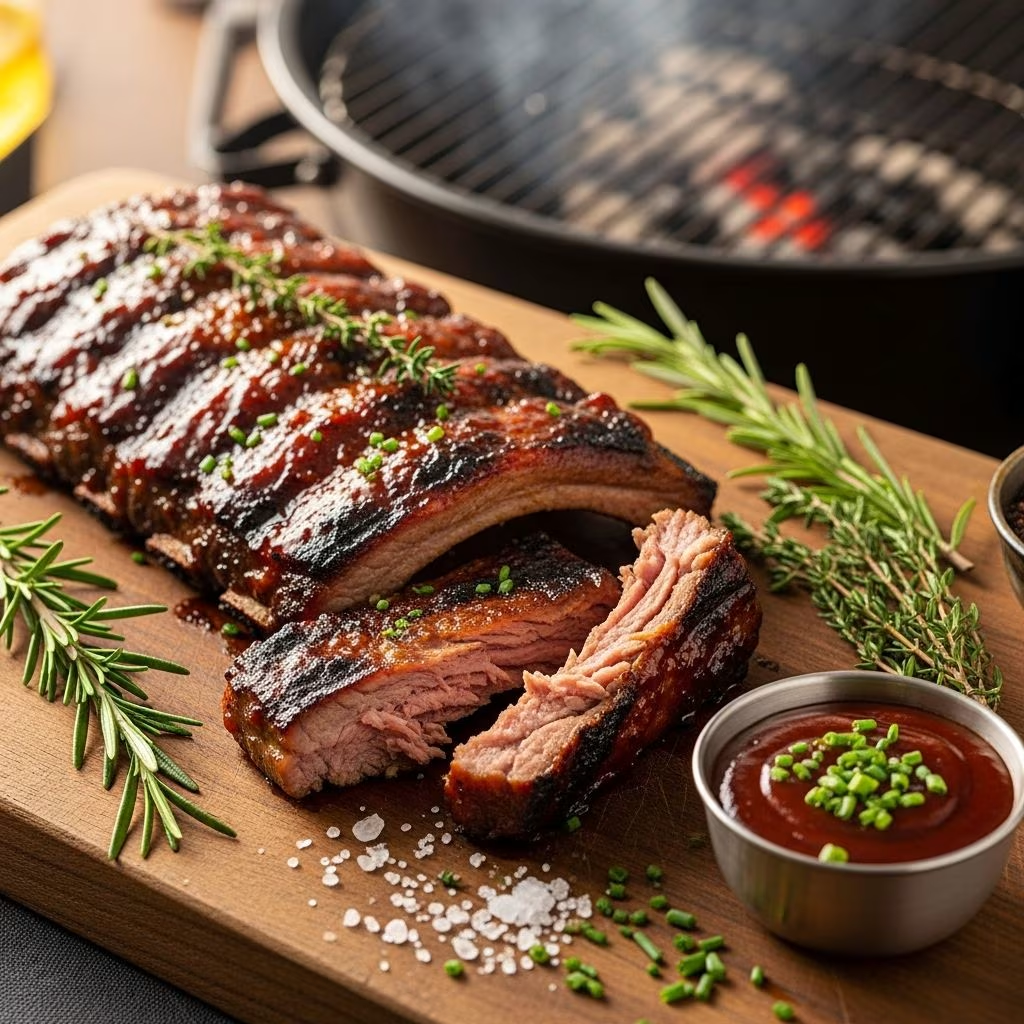
Place the ribs directly on the grill grates over medium-high direct heat, bone-side down if applicable. Brush each rib piece liberally with your favorite barbecue sauce. Grill for 10 to 15 minutes, turning and basting every few minutes until the exterior develops a caramelized, lightly charred finish. This final phase creates the textural contrast that distinguishes restaurant-quality grilled ribs from mediocre ones.
Temperature Control and Grilling Fundamentals
Temperature management is crucial for grilled short rib success. Begin with a medium-heat grill for the steaming phase, typically 375 to 400 degrees Fahrenheit. This moderate temperature allows the ice-assisted steam to tenderize the meat without drying the exterior. Using indirect heat during this phase prevents burning the dry rub while the internal meat cooks through.
For the final crust-building phase, increase heat to medium-high, around 450 degrees Fahrenheit if your grill allows. This higher temperature quickly caramelizes the barbecue sauce and creates grill marks. Always allow gas grills to preheat for at least 10 minutes with burners at the desired heat level. For charcoal grills, light a full chimney of briquettes and spread them in a single, tight layer before beginning.
Alternative Grilling Approaches
While the foil-packet method is highly effective, alternative approaches exist depending on your preferences and available time. Direct-heat grilling involves placing seasoned ribs directly on hot grates and cooking for approximately 8 minutes total, flipping every 2 minutes to create crosshatch grill marks. This method requires vigilant monitoring to prevent burning while achieving adequate internal cooking.
Another approach involves cooking ribs uncovered on indirect medium heat for 1.5 hours before moving them to direct heat for final browning. This method takes slightly longer than the foil-packet technique but eliminates the need for foil management.
Achieving Optimal Tenderness and Moisture
The challenge with grilling short ribs lies in balancing exterior browning with interior tenderness. The dry rub protects the meat surface from excessive drying while creating a flavorful crust. The foil-packet steaming method ensures that connective tissue breaks down thoroughly through moist heat exposure. The combination of these techniques results in ribs that are simultaneously tender throughout and crispy on the exterior.
Never skip the resting phase after grilling. Allow the cooked ribs to rest on a plate away from direct heat for 10 minutes. This resting period allows juices to redistribute throughout the meat, ensuring moisture in each bite.
Barbecue Sauce Selection and Application
While the dry rub provides primary flavor, barbecue sauce adds another layer of complexity. Traditional Kansas City-style sauce works well, offering a tomato base with sweetness and slight smokiness that complements grilled short ribs. Alternatively, mustard-based sauces provide tanginess that balances rich, fatty meat.
Apply sauce only during the final grilling phase to prevent burning. The sugars in barbecue sauce burn quickly over direct heat, so timing is essential. Begin basting with sauce during the last 10 to 15 minutes of grilling, when the ribs can finish cooking while the sauce caramelizes.
Serving Suggestions and Accompaniments
Grilled short ribs pair excellently with traditional barbecue sides. Coleslaw provides refreshing acidity that cuts through the richness of the meat. Baked beans add substance and complementary flavors. Cornbread or grilled corn on the cob rounds out the meal with starch and sweetness.
Consider offering extra barbecue sauce on the side for guests who prefer additional sauce. Lemon wedges or vinegar-based sauces provide options for those seeking brightness and acidity.
Troubleshooting Common Grilling Challenges
If your ribs end up tough and dry, the most common cause is insufficient steaming time or cooking temperature that was too high during the initial phase. Ensure packets are properly sealed and heat remains in the 375 to 400-degree range. If ribs are tender but lack browning, extend the final direct-heat phase and increase heat to achieve adequate caramelization.
Charring or burning on the dry rub suggests heat was too high during the initial phase or the final grilling phase lasted too long. Reduce heat and monitor more closely during subsequent cooks.
Frequently Asked Questions
Can I prepare the dry rub ahead of time?
Yes, prepare the dry rub up to one week in advance and store it in an airtight container. Mix it into ribs the day before grilling for flavor development.
How do I know when short ribs are fully cooked?
Use a meat thermometer to confirm internal temperature reaches 207 degrees Fahrenheit. The meat should be very tender when pierced with a fork.
Can I substitute boneless ribs with bone-in varieties?
Yes, bone-in short ribs work well but may require slightly longer cooking times due to thicker sections. Cooking times may extend to 2.5 hours.
What’s the best way to prevent flare-ups during grilling?
Use indirect heat during the steaming phase to minimize flare-ups. During the final browning phase, keep a spray bottle of water nearby to manage any flames.
Can I make this recipe with a charcoal grill?
Absolutely. Set up charcoal for two-zone cooking with coals on one side for indirect heat during the steaming phase. Move ribs to the direct-heat side for the final browning phase.
Conclusion
Grilled short ribs with dry rub represent an achievable way to create impressive barbecue at home without extensive time investment. By combining proper seasoning, foil-packet steaming, and strategic grilling phases, you’ll produce consistently excellent results. Experiment with dry rub variations to develop your signature flavor profile, and you’ll soon find yourself grilling these ribs regularly throughout the grilling season.
References
- Grilled BBQ Short Ribs with Dry Rub — Reynolds Brands. Accessed April 2026. https://www.reynoldsbrands.com/recipes/grilled-bbq-short-ribs-dry-rub
- Quick and Easy Dry-Rubbed Grilled Barbecue Ribs — Mary Disomma. Accessed April 2026. https://marydisomma.com/blogs/recipes/quick-and-easy-dry-rubbed-grilled-barbecue-ribs
- Tender & Flavorful Grilled Short Ribs Recipe — Salt Pepper Skillet. Accessed April 2026. https://saltpepperskillet.com/grilled-short-ribs/
- Grilled Short Ribs with Smoked Spanish Paprika Rub — Dad Cooks Dinner. Accessed April 2026. https://www.dadcooksdinner.com/grilled-short-ribs-with-smoked-spanish-paprika-rub/
- The Best Dry Rub For Ribs — Hey Grill Hey. Accessed April 2026. https://heygrillhey.com/best-dry-rub-for-ribs/