Grilled fish skewers represent one of the most elegant yet accessible ways to prepare seafood for entertaining or weeknight dining. These versatile preparations combine the natural flavors of fresh fish with customizable marinades, vegetables, and cooking methods to create a dish that appeals to both novice cooks and culinary enthusiasts. Whether you’re planning a summer gathering or seeking a quick healthy dinner, understanding the fundamentals of fish skewer preparation transforms ordinary ingredients into an impressive culinary creation.
Understanding the Foundation: Quality Ingredients Matter
The success of any fish skewer dish begins long before the grill heats up. The most critical factor in achieving restaurant-quality results lies in sourcing the finest ingredients available. Fresh seafood forms the absolute foundation of this preparation, as the delicate nature of fish means that quality directly translates to flavor and texture in the final dish.
When selecting fish for skewers, visit local fish markets early in the morning when inventory is freshest and just received from boats. Look for fish with clear, bright eyes, firm flesh that springs back when pressed, and a clean oceanic aroma rather than a strong fishy smell. Excellent options for skewering include firm-fleshed varieties such as barracuda, which holds its shape during cooking, as well as milder options like cod or halibut. The fish you choose should have enough structural integrity to remain intact when cubed and threaded onto skewers.
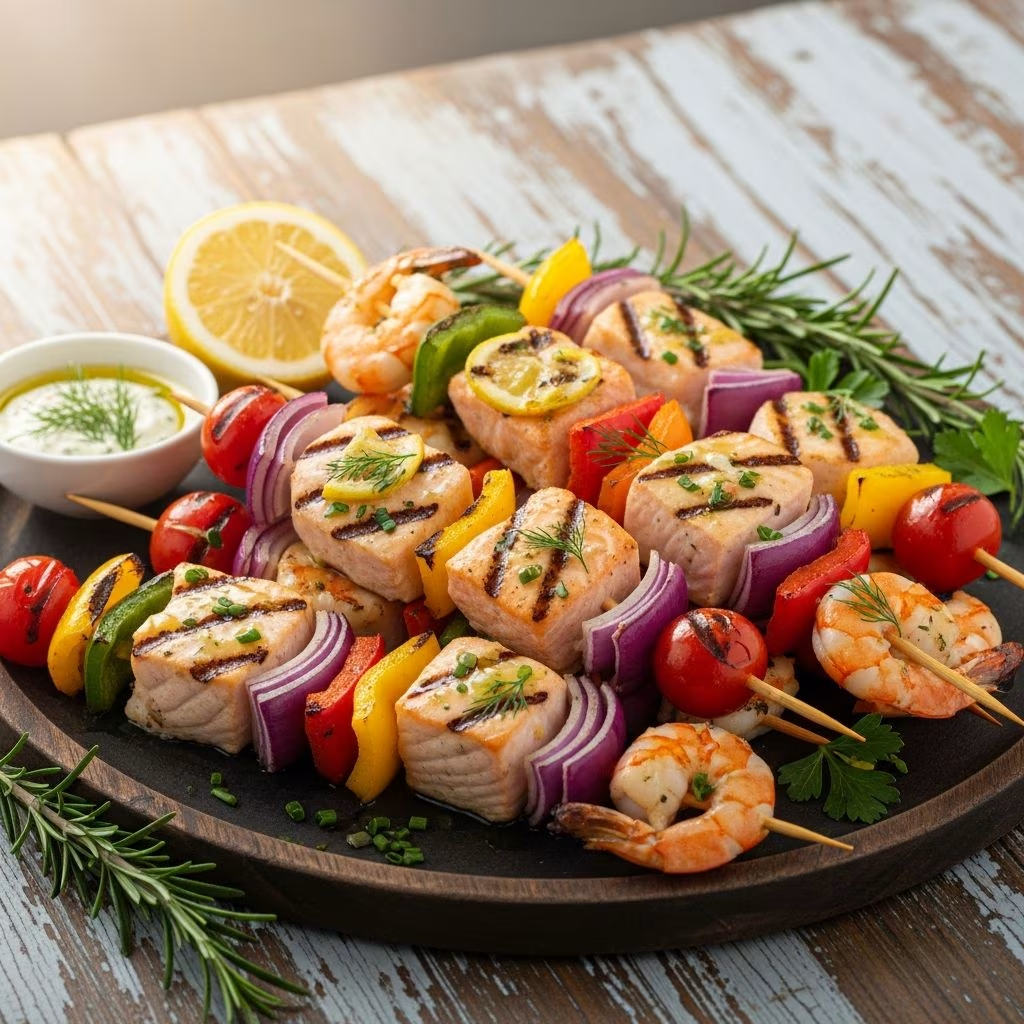
Beyond the fish itself, the supporting ingredients elevate the entire dish. Fresh vegetables cut into uniform pieces ensure even cooking and presentation. Garlic, onions, peppers, and zucchini all contribute complementary flavors and textures. Fresh herbs like parsley and basil add brightness and complexity. Quality olive oil serves as the base for marinades, while citrus juices—both lime and lemon—provide necessary acidity that both flavors and helps cook the fish slightly during marination.
Preparation Techniques for Optimal Results
Proper preparation separates successful fish skewers from mediocre ones. Begin by rinsing your selected fish under cold running water to remove any surface debris or impurities. Pat the fish completely dry using paper towels, as moisture inhibits proper browning and can cause sticking during grilling.
Cutting your fish into uniformly-sized cubes represents a crucial technical step. Aim for consistent sizing—approximately one to one-and-a-half inch cubes—to ensure even cooking throughout. Uneven pieces result in some portions being overcooked while others remain underdone. When cutting, maintain steady knife pressure and use a sharp blade to create clean cuts that don’t damage the flesh.
Vegetable preparation follows similar principles. Wash all vegetables thoroughly under running water. Cut them into pieces roughly equivalent in size to your fish cubes. This uniformity ensures that when you assemble your skewers, all components finish cooking simultaneously. Stagger your assembly by alternating fish pieces with vegetables and aromatics.
Before assembly, prepare wooden skewers by soaking them in water for at least thirty minutes. This essential step prevents them from charring excessively during cooking, which can impart unwanted flavors and create safety hazards.
Marinade Fundamentals: Building Flavor Profiles
Marinades transform simple fish and vegetables into complex, restaurant-worthy preparations. The classic approach combines six tablespoons of high-quality olive oil with fresh lemon or lime juice, minced garlic, freshly chopped parsley, and cracked black pepper. This Mediterranean-inspired base complements the delicate nature of seafood without overwhelming it.
For those seeking bolder flavor profiles, consider regional variations. A Latin-inspired marinade incorporates chipotle peppers, achiote (annatto), ground cumin, garlic, lime juice, and olive oil to create a silky, complex coating that brings warmth and depth. The interplay of smoky and citrus elements particularly complements richer fish varieties.
The emulsion technique proves essential for creating balanced marinades. Whisk your oil and acidic component together vigorously until they form a cohesive mixture. This process breaks down oil molecules into smaller particles, allowing the marinade to coat fish more effectively and penetrate more deeply during the crucial marinating period.
Place your prepared fish and vegetables into a container and pour the marinade over them, ensuring all pieces are thoroughly coated. The recommended marinating time is approximately thirty minutes, a window that allows the flavors to develop and the acid to begin gently curing the fish without over-processing it. Refrigerate during this entire period to maintain food safety.
Assembly and Threading Techniques
Threading your marinated ingredients onto skewers requires a thoughtful approach. Before beginning, drain excess marinade from your components—you want coating flavor, not pooling liquid. Reserve a small amount of marinade for basting during cooking.
Start by placing a piece of fish on the skewer, followed by a vegetable piece, then repeating this pattern. Alternate your ingredients rather than grouping all fish together, as this distribution ensures even heat circulation and creates visual appeal. Thread carefully but firmly, pushing ingredients close enough that they cook efficiently but not so tightly that they crack or split.
Proper threading also influences presentation. Position skewers so that their contents remain relatively flat and don’t spin freely. This stability prevents ingredients from rotating unevenly during cooking and ensures consistent browning on all sides.
Grilling Methods and Temperature Control
The actual cooking phase requires attention and precision. Preheat your grill to medium-high heat, allowing it to reach optimal temperature before placing skewers on the grate. This temperature ensures that fish develops a golden exterior crust while remaining moist and tender inside.
Position skewers on the preheated grill and cook for approximately one to two minutes per side. Fish cooks remarkably quickly—the entire process typically requires less than ten minutes total. The flesh should transition from translucent to opaque, and when tested with a fork, should flake easily but remain moist.
During cooking, flip your skewers frequently and baste them with reserved marinade. This repeated turning and basting prevents charring while building layers of flavor. Watch for a light golden-brown color developing on all sides, which indicates proper cooking without burning.
For those without access to outdoor grilling equipment, a cast-iron grill pan placed over medium-high stovetop heat provides an excellent alternative. The same timing and technique apply, though you’ll need to manage heat more actively to prevent sticking.
Finishing Touches and Flavor Enhancements
Proper finishing elevates your dish from simple to spectacular. Just before serving, sprinkle your fish skewers with a light coating of fresh sea salt. The salt crystals dissolve slightly on the warm fish, intensifying natural flavors rather than adding saltiness.
Prepare a complementary sauce for serving alongside your skewers. A traditional yogurt-based sauce combines whole milk yogurt, fresh lemon juice, salt, pepper, and fresh basil leaves. The cooling properties and mild tanginess of yogurt balance the warm, grilled components perfectly. Alternatively, a simple aioli made from quality mayonnaise, minced garlic, and lemon juice provides richness that complements lighter fish preparations.
Fresh herb garnishes add visual appeal and aromatic complexity. Scatter additional fresh parsley or basil over finished skewers immediately before plating. A final squeeze of fresh lime juice enhances brightness and prevents the flavors from feeling heavy.
Serving Suggestions and Menu Planning
Fish skewers function beautifully as appetizers at dinner parties, offering elegant presentation in a hand-held format. They also serve as compelling main courses when accompanied by appropriate side dishes. Consider pairing your skewers with fresh vegetable sides, grain-based dishes, or vibrant salads that won’t overwhelm the delicate fish flavors.
The versatility of this preparation allows for creativity with seasonal vegetables and available ingredients. Spring preparations might emphasize delicate asparagus and tender spring onions, while summer variations incorporate bell peppers, zucchini, and eggplant. Fall and winter versions benefit from heartier vegetables that can withstand grilling without falling apart.
Common Questions About Fish Skewer Preparation
- How far in advance can I prepare fish skewers?
- You can assemble and marinate skewers up to four hours ahead of time, keeping them refrigerated. This advance preparation reduces last-minute stress when entertaining. However, grilling should occur closer to serving time to ensure optimal texture and temperature.
- Can I use frozen fish for this preparation?
- While fresh fish yields superior results, thoroughly thawed frozen fish can work acceptably. Ensure frozen fish is thawed in the refrigerator rather than at room temperature to maintain food safety and quality. Pat thawed fish very dry before proceeding with preparation steps.
- What if I don’t have wooden skewers?
- Metal skewers work excellently and offer reusable advantages over wooden options. They don’t require soaking and won’t burn. Ensure metal skewers are preheated before threading ingredients to prevent sticking.
- How can I prevent fish from sticking to the grill?
- Ensure your grill grate is clean and well-oiled before heating. Oil the grate with a high-smoke-point oil using a folded paper towel held with tongs. Don’t move skewers excessively—allow them to develop a crust before turning, which naturally prevents sticking.
- What vegetables work best on fish skewers?
- Bell peppers, red onions, zucchini, and eggplant all grill beautifully alongside fish. Avoid vegetables with very long cooking times. Cut pieces slightly thicker than fish cubes so they don’t overcook before fish finishes.
Troubleshooting Common Issues
If your fish skewers consistently dry out, your grilling temperature may be too high or cooking time too long. Reduce heat slightly and monitor cooking carefully. Additionally, ensure your marinade contains sufficient oil, which helps maintain moisture during cooking.
Vegetables that remain too firm while fish overcooks suggest uneven sizing. Recommit to precise, uniform cutting, and consider cutting vegetables slightly smaller than fish to account for different cooking rates.
Skewers that char excessively despite careful attention may indicate either soaked wood that wasn’t adequately dried or excessive heat. Ensure wooden skewers are patted dry before use, and monitor grill temperature with a thermometer rather than guessing.
If your marinade tastes one-dimensional, you likely need more acidic component balance. Fresh citrus juice should be pronounced enough to notice on the palate while the oil carries it through the preparation.
Health Considerations and Nutritional Benefits
Fish skewers represent a nutritionally excellent meal option. Fish provides complete protein, omega-3 fatty acids that support cardiovascular health, and essential vitamins and minerals. Grilling requires minimal added fat beyond the marinade, making this preparation lighter than many alternative cooking methods.
The inclusion of fresh vegetables on skewers boosts nutritional density by adding fiber, vitamins, and phytonutrients. The grilling process itself doesn’t significantly diminish nutritional value when proper temperatures and timing are maintained.
For those managing dietary restrictions, fish skewers adapt easily. Gluten-free preparations require only attention to marinade ingredients. Low-fat versions can reduce olive oil while maintaining acid components. The flexibility of skewer format makes this preparation accommodating to various dietary needs.
Conclusion: Mastering the Art of Grilled Seafood
Fish skewers embody the principles of excellent cooking: quality ingredients prepared with proper technique and mindful attention. By understanding the importance of fresh seafood, mastering marinade construction, and practicing proper grilling methods, home cooks can reliably produce impressive dishes that satisfy both casual diners and discerning palates. The relatively quick preparation time combined with impressive presentation makes fish skewers an ideal choice for entertaining or creating memorable weeknight meals. With these comprehensive techniques and troubleshooting strategies, success awaits every time you fire up the grill.
References
- Brocheta De Pescado: Exquisita Manera De Comer Pez — San Pellegrino. 2024. https://www.sanpellegrino.com/es/sparkling-drinks/recetas/brochetas-pescado
- Fish Skewers Recipe – Brochettes de Poisson — Kadirecipes (YouTube). 2024. https://www.youtube.com/watch?v=UwoL2s5-bpg
- Brochetas de Pescado con Hamachi: Receta de Aperitivo — Global Seafoods. 2024. https://globalseafoods.com/es/blogs/recipes/hamachi-fish-skewers-a-crowd-pleasing-appetizer
- Seafood Handling and Safety Guidelines — U.S. Food and Drug Administration. 2023. https://www.fda.gov/food/seafood-guidance