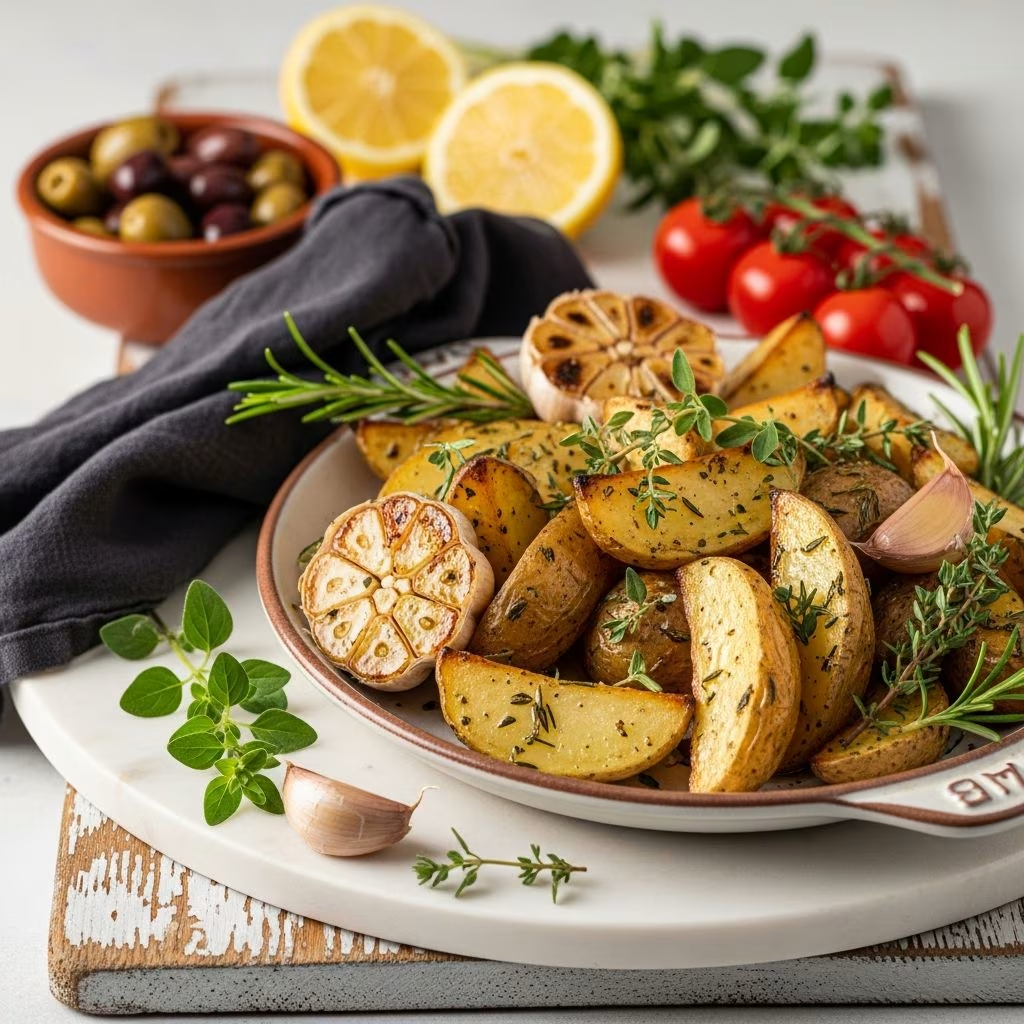
Roasted potatoes seasoned with garlic, lemon, and oregano represent one of the most beloved preparations in Mediterranean cuisine. This simple yet elegant dish combines humble potatoes with the bright, herbaceous flavors of the Mediterranean region, creating a side dish that rivals any main course in terms of satisfaction and flavor complexity. The beauty of this preparation lies in its accessibility—requiring minimal ingredients and straightforward techniques—while delivering restaurant-quality results that impress at any table.
Understanding the Core Components
The magic of Mediterranean herb-roasted potatoes depends on understanding how each ingredient contributes to the final dish. Rather than treating them as separate elements, successful preparation requires viewing them as an integrated flavor system where each component enhances and balances the others.
Potato Selection and Preparation
The foundation of this dish begins with choosing the right potato variety. Yukon Gold potatoes stand out as the preferred choice for their buttery texture, thin edible skin, and ability to maintain their structure during extended cooking periods. Their natural creaminess complements the acidic lemon juice and peppery oregano without overwhelming the palate. Medium-starch potatoes like Yukon Golds develop crispy, golden exteriors while preserving tender, fluffy interiors—the ideal textural contrast.
Preparation method significantly impacts final texture. Cutting potatoes into uniform wedges or 1.5-inch cubes ensures even cooking throughout the batch. Inconsistent sizing results in some pieces burning while others remain undercooked. Most recipes recommend cutting pieces approximately 3 centimeters thick, a measurement that balances the need for crispy exteriors with sufficiently cooked centers. Some preparation methods involve soaking cut potatoes in cold water for 30 minutes before roasting, a technique that removes excess starch and contributes to superior texture development.
The Flavor Trinity: Garlic, Lemon, and Oregano
These three ingredients form the aromatic backbone of the dish, each playing a distinct role in the overall flavor profile:
- Garlic provides pungent, savory depth. Mincing or thinly slicing 4-5 cloves creates small flavor parcels distributed throughout the dish. Some preparations blend garlic with oil into a paste for more uniform distribution.
- Lemon juice introduces brightness and acidity that cuts through the richness of olive oil while enhancing the perception of other flavors. Fresh-squeezed juice (approximately 1/4 to 1/3 cup) provides superior flavor compared to bottled alternatives.
- Oregano contributes Mediterranean authenticity through its slightly peppery, minty character. Recipes typically employ 1-2 tablespoons of dried oregano, with fresh oregano added as a finishing garnish for aromatic freshness.
Olive Oil: The Cooking Medium
Extra virgin olive oil serves dual purposes—as a cooking medium and as an essential flavor component. The oil carries fat-soluble flavor compounds from garlic and herbs while creating the crispy exteriors that define successful roasting. Most recipes specify 1/4 to 1/2 cup of olive oil, with the exact amount depending on batch size and desired crispness. Quality matters here; premium extra virgin olive oil provides superior flavor that budget alternatives cannot match.
Fundamental Cooking Techniques
The Two-Stage Roasting Method
Professional preparation typically employs a two-stage roasting approach that optimizes texture development. The first stage combines potatoes with oil, garlic, oregano, salt, and pepper, roasting at 400°F (200°C) for 15 minutes. During this initial phase, the exterior begins crisping while the interior remains firm.
The second stage introduces liquid—chicken or vegetable stock, wine, or a combination—which is added after the first roasting phase and the mixture roasts for an additional 15 minutes. This liquid injection infuses potatoes with savory depth and ensures they absorb flavor throughout their structure. Finally, lemon juice is added and the potatoes roast for 35-40 minutes until completely tender with deeply golden, crispy edges. The staggered addition of ingredients prevents premature acid coagulation and ensures optimal flavor development at each cooking phase.
Temperature and Timing Considerations
Oven temperature significantly influences the final product. Most recipes specify 400°F (200°C), a temperature that encourages browning reactions while preventing burning. Some preparations employ a higher initial temperature (400°F) followed by reduction to 320°F (160°C) after initial browning, a technique that prevents surface burning while allowing interiors to cook through.
Total cooking time ranges from 50-65 minutes, with variations depending on potato size and oven characteristics. Stirring potatoes every 30 minutes during roasting ensures even browning and prevents sticking. This attention to detail distinguishes mediocre results from exceptional ones.
Achieving Optimal Crispness
For those desiring extra-crispy exteriors, several techniques prove effective. Transferring partially cooked potatoes to a separate roasting pan after the initial liquid absorption phase allows independent control of browning. This separation prevents re-absorption of moisture that can soften exteriors. Additionally, broiling finished potatoes for 2-3 minutes achieves maximum crispness, though this step requires careful monitoring to prevent burning.
Ingredient Variations and Enhancements
Optional Flavor Additions
While the core preparation achieves excellence with minimal ingredients, several optional additions enhance complexity:
- Dijon mustard (2 tablespoons) adds subtle tanginess and umami depth
- Ground cumin (1 teaspoon) introduces warm, toasted spice notes
- Cloves and allspice (2-3 of each) provide warming spice and subtle sweetness
- Fresh parsley garnish contributes brightness and visual appeal
- Parmesan cheese (1/2 cup) creates a savory crust and additional umami
- Aleppo pepper or freshly ground black pepper replaces standard pepper for complex heat
Stock and Liquid Variations
The choice of liquid profoundly influences final flavor. Chicken stock provides rich, savory depth, while vegetable stock accommodates dietary preferences while maintaining herbaceous notes. White wine introduces acidity and subtle fruit notes that complement the lemon. Some recipes employ combinations of liquids for layered complexity. Approximately 1/2 to 1 1/4 cups of liquid works for standard batch sizes.
Step-by-Step Execution
Pre-Roasting Preparation
Success begins before potatoes enter the oven. Preheat the oven to 400°F (200°C) while preparing ingredients, ensuring the oven reaches optimal temperature before cooking begins. Scrub potatoes under running water to remove soil, then peel if desired (though leaving thin skins provides additional texture) and cut into uniform wedges or chunks. If using the cold-water soaking technique, submerge cut potatoes for 30 minutes, then drain and dry thoroughly with clean towels. Moisture removal prevents steaming rather than roasting.
Arrange potatoes in a single layer within a large baking dish or roasting pan, sized appropriately so pieces don’t overlap excessively. Pour olive oil over the potatoes and add minced garlic, dried oregano, sea salt, and freshly ground pepper. Toss thoroughly until every potato piece receives an even coating of oil and seasonings.
The Roasting Process
Place the prepared pan in the preheated oven and roast for 15 minutes, during which exteriors will begin browning. After this initial phase, add stock and toss well, then return to the oven for an additional 15 minutes. Subsequently, add fresh lemon juice and continue roasting for 35-40 minutes, stirring occasionally, until potatoes are completely tender and exteriors display deep golden-brown coloring. Test doneness by piercing with a fork—potatoes should be soft but maintain structural integrity rather than disintegrating.
Finishing Touches
Upon removing from the oven, transfer potatoes to a serving platter and immediately sprinkle fresh oregano over the top. Drizzle any remaining pan juices—the concentrated, lemony oil that has accumulated—over the finished dish. This sauce represents the essence of all combined flavors and should not be discarded. Serve while hot, allowing the aromas and warmth to enhance the dining experience.
Common Preparation Mistakes and Solutions
| Issue | Cause | Solution |
|---|---|---|
| Soggy or undercooked potatoes | Excessive liquid or insufficient roasting time | Increase oven temperature or extend cooking time; ensure liquid mostly evaporates before serving |
| Burned exteriors with raw centers | Temperature too high or potatoes too large | Reduce temperature to 350°F; cut potatoes into smaller, more uniform pieces |
| Pale, non-crispy exteriors | Overcrowding pan or insufficient oil | Arrange in single layer; use full amount of olive oil specified |
| Flat, one-dimensional flavor | Stale dried oregano or low-quality olive oil | Replace dried herbs annually; invest in quality extra virgin olive oil |
| Potatoes stick to pan | Insufficient oil or pan temperature too high | Use adequate olive oil; ensure pan is coated; verify oven temperature with thermometer |
Frequently Asked Questions
Can I prepare this dish in advance?
Yes, these potatoes can be roasted up to two days ahead and reheated in a 350°F oven for 15-20 minutes until warmed through. However, flavor intensity diminishes after the first day, and texture becomes less crispy. For optimal results, prepare shortly before serving.
What potato varieties work if Yukon Gold isn’t available?
Baby gold potatoes, fingerling potatoes, or even small red potatoes work acceptably, though cooking times may require adjustment. Avoid high-starch russet potatoes, which tend toward mushiness, or waxy potatoes like new potatoes, which resist browning.
How do I accommodate dietary restrictions?
For vegetarian or vegan preparations, substitute vegetable stock for chicken stock—the dish requires no animal products otherwise. Those reducing oil intake can use approximately 3 tablespoons per pound of potatoes rather than the standard 1/4 cup, though this compromises crispy exteriors and flavor development.
Can I use fresh oregano instead of dried?
Fresh oregano provides different flavor characteristics—lighter, more herbaceous, less concentrated. Use approximately three times the quantity of fresh oregano compared to dried (so 3 tablespoons fresh instead of 1 tablespoon dried). Add half during initial preparation and half as a finishing garnish for maximum aromatic impact.
What serving sizes does a typical recipe yield?
A standard preparation using 3 pounds of potatoes yields 4-6 servings as a side dish, or 2-3 servings as a light main course when paired with salad or vegetables.
Wine and Beverage Pairings
The bright acidity and herbaceous quality of these potatoes pair exceptionally well with crisp white wines such as Sauvignon Blanc or Pinot Grigio, which echo the lemon and oregano notes. Mediterranean rosés complement the Mediterranean origin while providing sufficient body. For non-alcoholic pairings, sparkling water with fresh lemon and fresh herbs mirrors the flavor profile elegantly.
Storage and Make-Ahead Planning
Refrigerate leftovers in an airtight container for up to three days. Cold potatoes can be consumed directly or reheated gently without additional liquid. Freezing is not recommended, as the texture deteriorates significantly upon thawing. For entertaining, prepare the mise en place (all ingredients measured and arranged) the day before, then complete roasting just before serving for maximum textural quality.
References
- Patates Riganates – Roasted Potatoes with Garlic, Lemon and Oregano — Aglaia Kremezi. Accessed April 2026. https://www.aglaiakremezi.com/patates-riganates-roasted-potatoes-with-garlic-lemon-and-oregano/
- Greek Lemon Potatoes – The Happier Homemaker — The Happier Homemaker. Accessed April 2026. https://thehappierhomemaker.com/perfectly-roasted-lemon-greek-potatoes/
- Greek Lemon Potatoes with Garlic & Oregano — The Greek Foodie. Accessed April 2026. https://thegreekfoodie.com/lemon-potatoes-with-garlic-and-oregano/
- Authentic Greek Lemon Potatoes – OliveTomato.com — Olive Tomato. Accessed April 2026. https://www.olivetomato.com/greek-roasted-potatoes-with-lemon-and-garlic-patates-fournou/
- Greek Potatoes with Lemon, Garlic, and Parmesan — The Mediterranean Dish. Accessed April 2026. https://www.themediterraneandish.com/roasted-greek-potatoes/
- Greek Lemon Potatoes – RecipeTin Eats — RecipeTin Eats. Accessed April 2026. https://www.recipetineats.com/greek-lemon-potatoes/