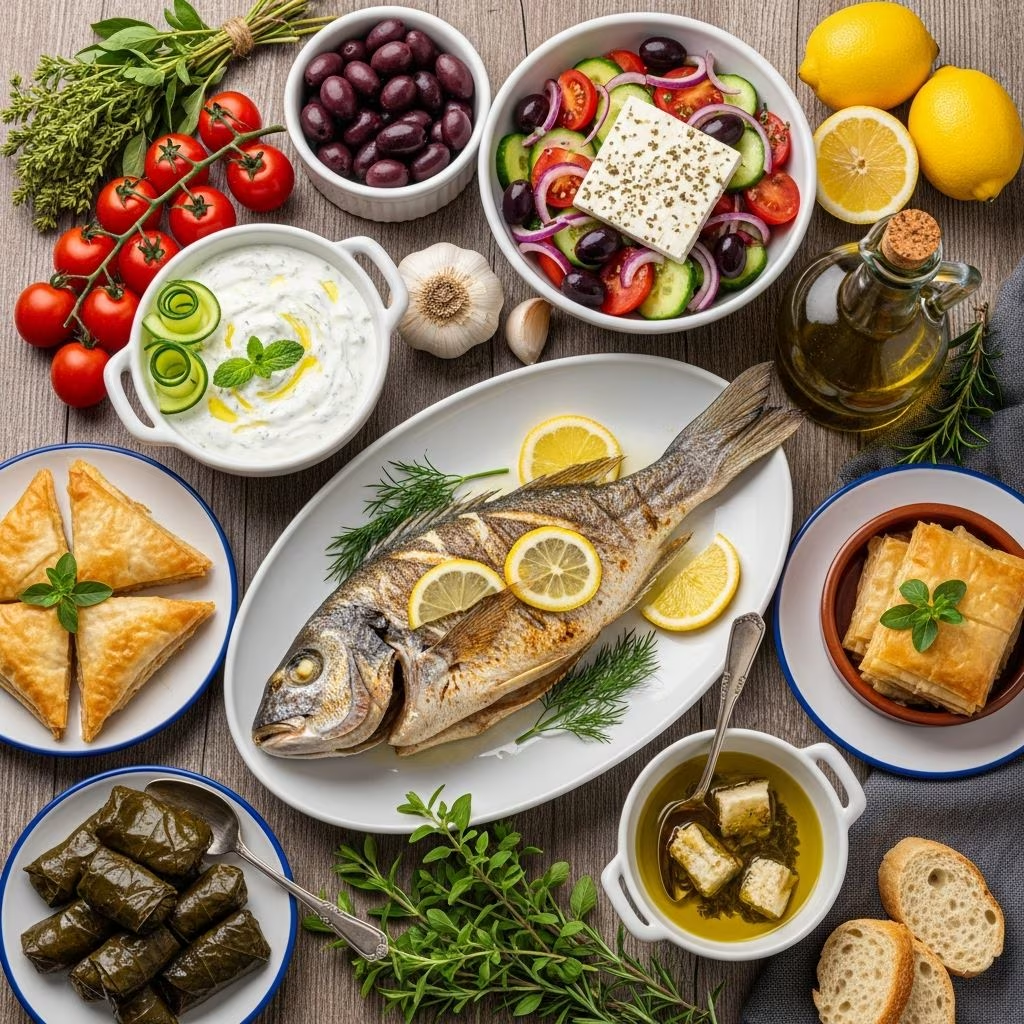
Greek cuisine embodies the essence of the Mediterranean diet, renowned for its emphasis on fresh ingredients, simple preparations, and bold flavors derived from herbs, citrus, and seafood. Rooted in ancient traditions, it prioritizes olive oil, vegetables, and lean proteins, making it one of the healthiest culinary traditions globally.
The Historical Foundations of Greek Eating
The story of Greek food begins over 10,000 years ago in the Aegean region, where the Mediterranean climate fostered abundant crops and seafood access. Ancient Greeks built their diet around the foundational “Mediterranean triad” of wheat, olive oil, and wine, with frugal meals featuring grains, minimal meat, and plentiful fish. This approach persisted through Hellenistic, Roman, and Byzantine eras, incorporating elements like feta cheese precursors and cured fish roe.
During the Ottoman occupation from the 15th to 19th centuries, Greek gastronomy absorbed influences such as yogurt, stuffed vegetables, and layered dishes like moussaka, blending Middle Eastern spices with local produce. Post-independence, family recipes solidified, emphasizing seasonal, high-quality ingredients passed down generations. Today, this evolution positions Greek cuisine as a UNESCO-recognized Intangible Cultural Heritage, celebrated for its balance and longevity-promoting qualities.
Core Ingredients That Define Greek Flavors
At the heart of every Greek dish lies a palette of simple, potent staples. **Olive oil** serves as the lifeblood, drizzled generously over salads, vegetables, and meats for its fruity depth and health benefits. Fresh herbs like **oregano**, **thyme**, **rosemary**, and dill infuse dishes with aromatic earthiness, while garlic and lemon provide zesty brightness.
- Dairy essentials: Feta cheese, a brined sheep’s milk staple, adds salty creaminess; thick Greek yogurt forms the base for sauces like tzatziki.
- Produce powerhouses: Tomatoes, cucumbers, eggplants, zucchini, and onions form the backbone of salads and stews, often paired with olives.
- Proteins: Lamb, pork, beef, chicken, fish, and shellfish reflect regional availability—islands favor seafood, mainland hearty meats.
- Sweets and grains: Honey, nuts, phyllo dough, and sesame seeds star in desserts; wheat-based breads and pastas round out meals.
Wine, particularly resin-flavored retsina, complements these elements, tracing back to ancient practices. This ingredient synergy creates meals that are nutrient-dense and flavorful without heavy processing.
Appetizers and Meze: The Social Start to Meals
Meze, small shared plates, embody Greek hospitality, encouraging lingering conversations over ouzo or wine. These bites range from cold dips to hot fritters, always featuring seasonal freshness.
| Meze Type | Description | Key Flavors |
|---|---|---|
| Tzatziki | Yogurt with grated cucumber, garlic, dill, and lemon | Cool, tangy, garlicky |
| Taramasalata | Carp roe dip with olive oil and lemon | Briny, creamy |
| Melitzanosalata | Smoky roasted eggplant spread | Earthy, smoky |
| Tirokafteri | Spicy feta and pepper cheese dip | Fiery, cheesy |
| Dolmadakia | Grape leaves stuffed with rice and herbs | Tangy, herby |
Other favorites include spanakopita (spinach-feta phyllo pies), tiropita (cheese pies), and grilled halloumi with lemon. Meze sets a balanced tone, mixing vegetables, dairy, and light proteins.
Main Courses: Hearty and Regional Delights
Greek mains showcase geographic diversity: coastal areas highlight grilled fish like sea bream or octopus, while inland regions favor roasted meats. Souvlaki and gyros—skewered or spit-roasted pork/chicken in pita with tzatziki and fries—offer portable street food perfection, costing €4-10.
Comfort classics include:
- Moussaka: Layered eggplant, ground lamb/beef, potatoes, and béchamel, baked to golden perfection—an Ottoman-influenced icon.
- Kleftiko: Slow-cooked lamb with garlic, lemon, and herbs, tenderized in parchment.
- Pastitsio: Baked pasta with spiced meat sauce and creamy topping, Greece’s answer to lasagna.
- Kotopoulo lemonato: Chicken braised in lemon-olive oil sauce with potatoes.
Vegetarian options abound, like gemista (stuffed tomatoes/peppers with rice and herbs) or fasolada (bean soup). Tavernas prioritize daily catches and local farms for peak freshness.
Salads and Sides: Freshness in Every Bite
No Greek table lacks a vibrant salad, balancing rich mains with crisp vegetables. The quintessential **horiatiki** (village salad) combines ripe tomatoes, cucumbers, red onions, green peppers, olives, feta, oregano, and olive oil—never lettuce.
Variations include:
- Dakos: Barley rusk topped with tomatoes, feta, capers, and olive oil.
- Pitakia: Fried zucchini or eggplant patties (kolokithokeftedes).
- Briam: Roasted vegetable medley akin to ratatouille.
Sides like patates fournou (herb-roasted potatoes) or pilafi (lemon rice) complete plates, emphasizing produce’s starring role.
Sweet Endings: Honeyed Traditions
Greek desserts draw from ancient honey-nut duos, using phyllo for crisp layers. Baklava—nuts, honey syrup, and phyllo—exemplifies indulgence, while loukoumades (honey-drizzled dough balls) offer fritter joy. Simpler treats include halva (semolina pudding) or yogurt with honey and walnuts.
Easter specialties like tsoureki (sweet bread) and magiritsa (lamb soup) tie sweets to rituals, maintaining continuity from antiquity.
Regional Variations Across Greece
Greece’s 6,000 islands and rugged mainland yield diverse palates. Crete boasts dakos and staka (creamy goat cheese); the Peloponnese excels in free-range lamb; Macedonia integrates pork and pies; islands like Santorini feature fava (split pea puree) and cherry tomatoes. Thessaloniki’s cuisine reflects Ottoman and Jewish influences with bougatsa (custard pastry). This variety ensures every region offers unique twists on classics.
Health Benefits and Modern Appeal
Greek cuisine’s acclaim stems from its alignment with the Mediterranean diet, linked to lower heart disease and longevity risks. Abundant antioxidants from olive oil, fiber-rich vegetables, and omega-3s from fish promote wellness. Globally, it’s adapted into home cooking, with yogurt bowls and grain salads trending.
Practical Tips for Enjoying Greek Food
- Visit tavernas for authentic, family-run experiences; avoid tourist traps.
- Pair with local wines or ouzo; try Assyrtiko whites or Xinomavro reds.
- Markets like Athens’ Varvakios offer fresh feta, olives, and herbs.
- Home cooks: Invest in quality olive oil and extra virgin—it’s transformative.
Frequently Asked Questions
What is the healthiest aspect of Greek cuisine?
Its reliance on olive oil, vegetables, fish, and herbs supports cardiovascular health and reduces inflammation, as per Mediterranean diet studies.
Is Greek food vegetarian-friendly?
Yes, with salads, stuffed veggies, bean dishes, and pies offering robust plant-based options.
What’s the difference between souvlaki and gyros?
Souvlaki uses cubed meat on skewers; gyros is shaved from a spit, both wrapped in pita.
Can I find Greek cuisine outside Greece?
Absolutely—diaspora communities preserve traditions worldwide, from U.S. diners to Australian tavernas.
How do I make authentic tzatziki at home?
Strain full-fat Greek yogurt, mix with grated cucumber (squeezed dry), garlic, dill, lemon, salt, and olive oil; chill before serving.
References
- Introduction to Greek Cuisine — Visit Greece. 2023. https://www.visitgreece.gr/blog/travel-tips/623/introduction-to-greek-cuisine/
- Greek Cuisine — Wikipedia (drawing from primary historical sources). 2024-04-01. https://en.wikipedia.org/wiki/Greek_cuisine
- Greek Cuisine Guide — iGourmet. 2023. https://igourmet.com/blogs/country-cuisine-guide/greek-cuisine-guide
- The Insightful Guide to the History of Greek Cuisine — Insight Vacations. 2023. https://www.insightvacations.com/blog/history-of-greek-cuisine/
- An Introduction to Greek Cuisine — The Royal Tour Blog. 2024-12-09. https://theroyaltourblog.com/2024/12/09/an-introduction-to-greek-cuisine/
- Intro to Greek Cuisine — Diane Kochilas. 2023. https://dianekochilas.com/intro-to-greek-cuisine/