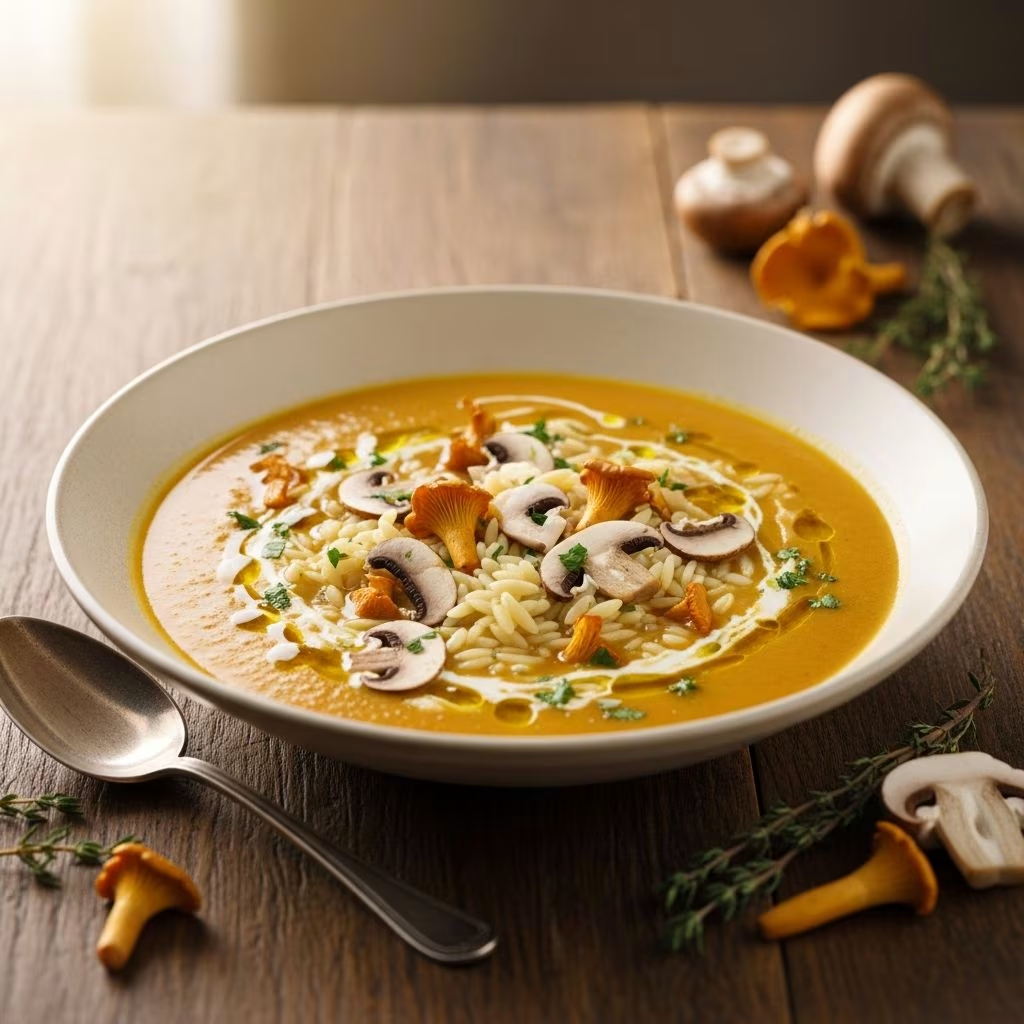
There’s something inherently soothing about a well-crafted soup, particularly one that combines humble ingredients into something extraordinary. This golden mushroom soup represents the intersection of simplicity and sophistication, bringing together earthy fungi, delicate pasta, and warming spices into a single, harmonious bowl. The recipe demonstrates how careful attention to technique and ingredient selection can elevate everyday components into a dish worthy of both casual weeknight dinners and more intentional gatherings.
Understanding the Building Blocks
At its core, this soup relies on three fundamental flavor foundations that work in concert. The mushrooms provide deep, umami-rich notes that form the backbone of the entire dish. The turmeric introduces both color and a subtle earthiness that complements rather than overwhelms the delicate fungal flavors. Finally, the orzo pasta transforms what could be a simple puree into a textured, more substantial meal that feels nourishing and complete.
The beauty of this particular combination lies in its restraint. Rather than piling on numerous ingredients, the recipe allows each component to shine while supporting the others. This approach to cooking reflects a broader culinary principle: mastery often comes not from complexity but from understanding how to balance a limited palette of quality ingredients.
Selecting and Preparing Your Mushrooms
The choice of mushrooms significantly impacts the final flavor profile. While button mushrooms certainly work, experimenting with varieties creates a more interesting depth. Cremini mushrooms, with their slightly deeper earthiness, pair beautifully with cremini’s larger cousin, the portobello, which offers a more robust, almost meaty quality. Shiitake mushrooms bring a subtle sweetness and complexity, while oyster varieties contribute a tender texture and delicate flavor. If access permits, foraged mushrooms add an element of discovery to the cooking process.
Preparation begins with cleaning your mushrooms properly. Rather than washing them, which can make them absorb excess water and become soggy, gently wipe them with a damp cloth or soft brush to remove any dirt. Once cleaned, tear or cut them into bite-sized pieces, ensuring relatively uniform sizing so they cook evenly throughout the process.
The Technique of Proper Browning
One of the most crucial steps in creating a flavorful mushroom soup involves browning the mushrooms thoroughly before adding liquid. This isn’t merely an aesthetic choice; it’s a fundamental cooking technique that develops deep flavors through the Maillard reaction, a chemical process that occurs when proteins and sugars heat to specific temperatures, creating hundreds of complex new flavor compounds.
The process unfolds in stages. First, heat olive oil in a large pot over medium-high heat until it shimmers slightly. Add approximately half the mushroom pieces and season generously with salt and pepper. The salt does two things: it seasons the mushrooms and draws out their moisture, allowing them to brown rather than steam. Resist the urge to stir constantly. Instead, let the mushrooms sit undisturbed for several minutes, allowing their surfaces to develop color and texture. After six to eight minutes, when the edges show golden-brown coloring, add additional olive oil if the pot appears dry—mushrooms are notorious for absorbing oil rapidly—then introduce the remaining mushrooms along with all the prepared garlic.
Continue cooking this second batch for another six to eight minutes, stirring occasionally, until all mushrooms have developed color and released their moisture. Look for fond—those brown, sticky bits clinging to the pot bottom—as this indicates proper browning and the development of concentrated flavor.
Blooming Spices for Maximum Impact
Once your mushrooms have achieved optimal color and texture, introduce the turmeric and chili flakes. These spices need to bloom in the fat to release their volatile oils and ensure their flavors integrate thoroughly into the soup rather than remaining harsh or raw-tasting.
Add the spices directly to the mushrooms and oil, stirring continuously for one to two minutes. You should notice the aroma intensifying and the mixture becoming more fragrant. This brief period is essential; it transforms the spices from mere seasonings into flavor enhancers that weave seamlessly throughout the final dish. The turmeric will give the soup its characteristic golden hue, while the chili flakes provide a gentle warmth and subtle spice that builds gradually with each spoonful.
Building Your Broth Foundation
With your mushrooms properly browned and spices bloomed, the time has come to add liquid. Traditional water works perfectly well, though vegetable stock or mushroom broth elevates the final result by contributing additional depth and umami character. The ratio of liquid to solids varies based on personal preference—some prefer a brothier consistency, while others favor a heartier, more concentrated soup.
Bring the liquid to a gentle simmer, which allows flavors to meld while preventing the mushrooms and other ingredients from breaking down too much and making the soup cloudy or overly thick. Once simmering, add the dried orzo pasta, which will absorb much of the broth as it cooks, creating a creamy consistency without the addition of cream.
Seasoning and Final Touches
Fish sauce or soy sauce, used sparingly, serves as an umami amplifier. These fermented ingredients contain glutamates, compounds that intensify savory perception without adding fishiness or saltiness when used judiciously. Begin with two teaspoons and taste, adjusting according to your preferences. This ingredient represents the difference between a pleasant soup and an unforgettable one.
Taste frequently throughout cooking and season with additional salt and pepper as needed. The pasta will continue absorbing seasoning as it cooks, so what tastes slightly underseasoned midway through cooking will likely be perfectly balanced at the end.
The Importance of Finishing Fat
In the final moments before serving, stir in unsalted butter. This ingredient, often overlooked in recipe discussions, performs critical functions. Butter carries fat-soluble flavors and creates a luxurious mouthfeel that transforms the soup from simple to elegant. It also helps distribute spices more evenly throughout each bite and adds richness that complements rather than overpowers the delicate mushroom flavors.
Offer additional butter at the table, allowing diners to customize their bowls. Some prefer a modest finish, while others enjoy that extra richness and creaminess that an additional pat of butter provides.
Timing and Texture Considerations
The orzo pasta determines much of your timing. Dried orzo typically reaches al dente in ten to fifteen minutes of simmering. Begin checking a few minutes before the package suggests, as pasta texture preferences vary widely. Some appreciate a slight firmness to the bite, while others prefer a softer, more tender pasta that has absorbed even more broth.
This soup achieves its best texture when consumed relatively soon after completion. If made ahead, store the components separately and combine shortly before serving, or add slightly less broth initially and thin with additional stock or water when reheating, as the pasta continues absorbing liquid as it sits.
Flavor Profile and Serving Suggestions
The final soup presents a complex flavor profile. The earthiness of mushrooms forms the foundation, while turmeric introduces gentle warmth and color without dominating the palate. Garlic adds pungency and savory notes, and the chili flakes provide a subtle heat that becomes more apparent toward the end of each spoonful. The butter rounds everything out, creating silkiness and sophistication.
Serve this soup in warm bowls with crusty bread for dunking and a drizzle of excellent olive oil for additional richness. Fresh herbs such as parsley or chives provide textural contrast and brightness. A squeeze of fresh lemon juice brightens the flavors just before consumption, cutting through richness and sharpening the overall taste experience.
Adaptations and Variations
This recipe welcomes creative adaptation. Substitute orzo with other small pasta shapes like ditalini or stelline. Add leafy greens such as spinach or kale in the final minutes of cooking for additional nutrition and color contrast. Include diced root vegetables like carrots or parsnips for sweetness and textural variety. Consider replacing standard chili flakes with smoked paprika for a different heat profile, or add a splash of white wine after browning the mushrooms for acidity and complexity.
For those seeking additional protein, consider stirring in cooked white beans, lentils, or even small pasta-and-bean combinations. Vegetarians and vegans can easily adapt the recipe by using vegetable broth instead of fish or soy sauce alternatives, while a drizzle of quality olive oil or vegan butter substitutes the traditional butter finish.
References
- Golden Mushroom Soup with Orzo and a Pat of Butter — Nigella Lawson. nigella.com. https://www.nigella.com/recipes/guests/golden-mushroom-soup-with-orzo-and-a-pat-of-butter
- Mushroom Varieties and Culinary Applications — United States Department of Agriculture. usda.gov. https://www.usda.gov/media/blog/2012/06/27/importance-mushrooms-your-kitchen
- The Maillard Reaction: Chemistry and Flavor Development in Cooking — Journal of Agricultural and Food Chemistry, American Chemical Society. 2019. https://pubs.acs.org/journal/jafcau