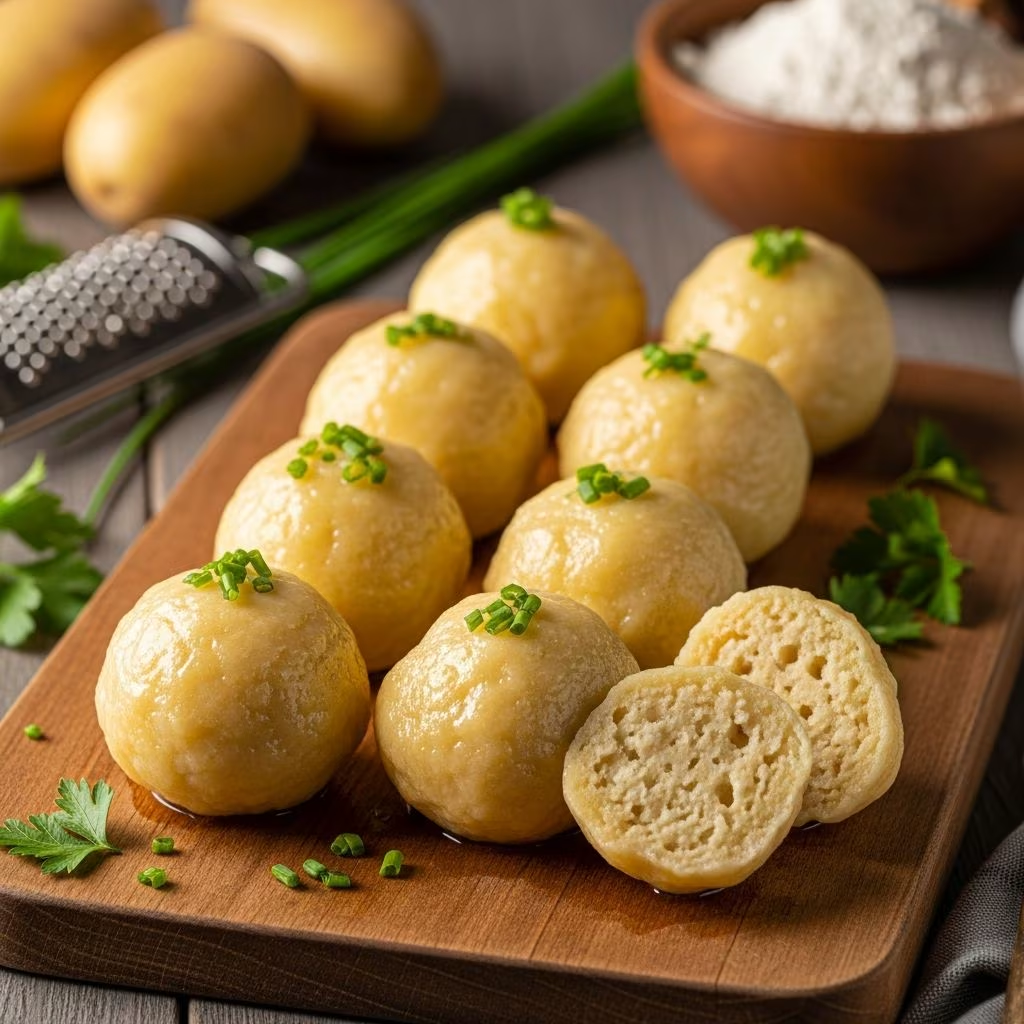
Authentic German potato dumplings, known as Kartoffelknödel, represent the heart of comforting home cooking in Germany. These soft, fluffy balls made primarily from potatoes offer a simple yet satisfying side dish that elevates roasts, stews, and goulash. Their tender texture comes from carefully boiled and riced potatoes bound with starch and egg, then gently simmered to perfection.
Originating from regions like Bavaria and Thuringia, Kartoffelknödel have been a staple for generations, prized for their ability to absorb rich gravies without falling apart. Unlike denser dumplings, these rely on high-starch potatoes for lightness, making them a favorite during family gatherings and festive meals.
Why Choose Potato Dumplings?
Potato dumplings stand out for their versatility and ease. They complement sauerbraten, schnitzel, or vegetable soups, providing a neutral base that highlights main flavors. Nutritionally, they offer complex carbohydrates from potatoes, with options to add fillings like bread croutons for extra heartiness. Home cooks appreciate their forgiving nature—once mastered, they yield consistent results even for beginners.
- Fluffy texture: Ricing prevents gumminess, ensuring lightness.
- Quick prep: Ready in under an hour with basic pantry staples.
- Customizable: Add herbs, cheese, or fillings for variety.
- Budget-friendly: Uses affordable, everyday ingredients.
Essential Ingredients for Success
Selecting the right components is crucial for dumplings that hold together yet remain tender. Focus on starchy varieties and precise measurements to avoid common pitfalls like sogginess or crumbling.
| Ingredient | Quantity (for 8-12 dumplings) | Purpose |
|---|---|---|
| Starchy potatoes (Russet, Yukon Gold, or mehligkochend) | 2-2.25 lbs (900g-1kg) | Base for fluffiness and structure |
| Potato starch or cornstarch | 1-1.5 cups (120-180g) | Binder to prevent sticking |
| Egg (or 2 yolks) | 1 large | Adds richness and cohesion |
| Salt | 1.5-2 tsp | Enhances flavor |
| Butter | 1-2 tbsp | Improves smoothness (optional) |
| Nutmeg (ground) | 1/8-1/4 tsp | Subtle aromatic lift |
| Day-old bread cubes (optional filling) | 4 slices | Absorbs moisture inside |
Starchy potatoes are non-negotiable; waxy types release too much moisture and yield dense results. Potato starch is traditional in Germany for superior binding, but cornstarch works well as a substitute.
Step-by-Step Preparation Method
Follow these precise steps for foolproof Kartoffelknödel. Patience during the ricing and simmering phases ensures optimal texture.
Boil the potatoes: Wash and place whole potatoes (skins on) in a pot with salted water. Boil until fork-tender, about 20-25 minutes depending on size. Drain and steam-dry over low heat for 1-2 minutes to remove excess moisture.
Rice while warm: Peel hot potatoes using a cloth for safety. Pass through a ricer or food mill into a bowl. Avoid mashing, as it incorporates too much air and toughens the dough. Let cool slightly.
Mix the dough: Incorporate starch, salt, nutmeg, beaten egg, and softened butter. Knead gently with hands until smooth and soft—not sticky. If needed, add starch 1 tbsp at a time. Overworking makes them tough.
Prepare filling (optional): Cube day-old bread and fry in butter until golden. Press 1-2 pieces into each dumpling center to prevent a raw potato core.
Shape dumplings: Wet hands to form tennis-ball-sized spheres (about 2.5-3 inches). Ensure uniformity for even cooking. Place on a floured tray.
Simmer gently: Bring a large pot of salted water to a bare simmer (not boil). Add dumplings one by one. They rise after 5-10 minutes; continue poaching uncovered for 15-20 minutes total. Use a slotted spoon to remove.
Test doneness by cutting one open—it should be uniformly cooked without a dense center. Keep warm in the pot off heat for up to 15 minutes.
Pro Tips to Avoid Common Mistakes
- Prevent falling apart: Simmer, don’t boil vigorously—bubbles break the exterior.
- Handle gently: Wet hands and avoid overcrowding the pot.
- Potato selection: Choose high-starch for best rise and tenderness.
- Tools matter: A ricer yields superior fluffiness over mashers.
- Storage: Refrigerate leftovers up to 2 days; reheat by steaming to restore texture.
If dough is too wet, incorporate more starch incrementally. For denser climates, reduce water in boiling to minimize starch leaching.
Classic Pairings and Serving Ideas
Kartoffelknödel shine with savory mains. Slice them post-cooking and pan-fry in butter for crispy edges, or serve whole with gravy ladled overtop.
- Roast meats: Sauerbraten, pork knuckle, or beef rouladen—their gravies cling perfectly.
- Stews: Goulash or lentil soup for a filling meal.
- Vegetarian twist: Mushroom ragout or sauerkraut with apples.
- Sweet variation: Dust with sugar and cinnamon for dessert.
In Germany, they’re often halved and browned, revealing the optional crouton surprise inside.
Nutritional Profile and Variations
A serving (2 dumplings) provides about 250 calories, mostly from carbs, with 5g protein and minimal fat. They’re naturally gluten-free if using pure potato starch.
Variations:
- Raw potato version (Schwedische Klöße): Grate raw potatoes for earthier flavor, but requires more starch.
- Herbed: Mix in chives or parsley.
- Cheesy: Fold in grated Emmental before shaping.
- Vegan: Omit egg, use aquafaba or extra starch.
Frequently Asked Questions (FAQs)
What if my dumplings fall apart?
Increase starch or ensure gentle simmering. Over-boiled potatoes also contribute.
Can I make them ahead?
Shape and refrigerate up to 4 hours; poach fresh for best texture.
Potato starch vs. cornstarch?
Potato starch is clearer and more traditional; cornstarch absorbs similarly but may yield slightly firmer results.
How do I know potatoes are starchy?
Floury types like Russets feel dry and mealy when cut.
Freezer-friendly?
Yes—freeze shaped uncooked dumplings on a tray, then bag. Boil from frozen, adding 5 minutes.
Equipment You’ll Need
- Potato ricer or food mill
- Large pot for boiling
- Slotted spoon
- Mixing bowl
- Non-stick skillet (for croutons)
Invest in a sturdy ricer for repeatable success—dishwasher-safe models simplify cleanup.
Mastering Kartoffelknödel opens doors to German cuisine’s soulful simplicity. With practice, these dumplings become a go-to for cozy dinners, blending tradition with everyday ease.
References
- Foolproof German Potato Dumplings (Easy Kartoffelknödel) — My Dinner. Accessed 2026. https://mydinner.co.uk/potato-dumplings/
- Kartoffelklöße (German Potato Dumplings) — The Daring Gourmet. Accessed 2026. https://www.daringgourmet.com/german-potato-dumplings-kartoffelkloesse/
- German Potato Dumplings (Kartoffelknödel) — Days of Jay. Accessed 2026. https://daysofjay.com/german-potato-dumplings-kartoffelknodel/
- The Best German Potato Dumplings | Kartoffelknödel — Our Gabled Home. Accessed 2026. https://ourgabledhome.com/german-potato-dumplings/