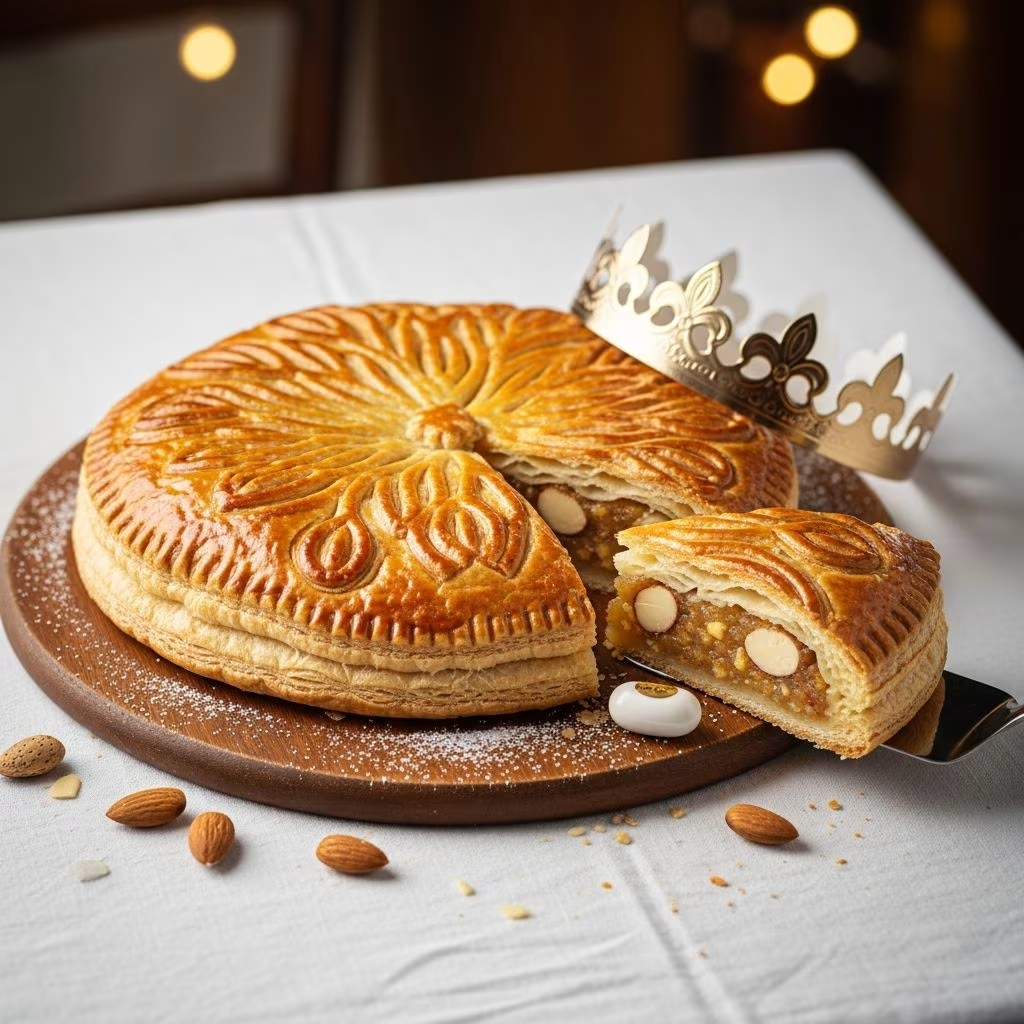
The galette des rois represents one of France’s most cherished culinary traditions, combining simplicity with elegance in a single pastry creation. This classic French confection consists of just two primary components: delicate puff pastry and luxurious almond frangipane filling. What makes this dessert particularly special is not merely its refined taste, but the centuries-old custom woven into its preparation and consumption.
Dating back centuries, galette des rois became intertwined with the celebration of Epiphany, the Christian feast commemorating the visit of the Three Kings to Jesus. Traditionally served during this festive period, the galette des rois carries a whimsical tradition: a small token, known as a fève, is hidden within the almond cream filling before baking. Whoever discovers this hidden treasure in their slice is crowned “king for the day” and wears a decorative paper crown. This charming custom has persisted through generations, making the galette des rois more than just a dessert—it’s an experience that brings joy and excitement to the table.
Understanding the Components: Puff Pastry Foundation
Creating an authentic galette des rois begins with understanding its foundational element: puff pastry. While many modern home bakers opt for store-bought puff pastry for convenience, understanding the traditional approach provides valuable context. Professional pastry chefs, such as those trained at Le Cordon Bleu, begin their galette des rois preparations the day before serving, allowing proper time for laminating the dough.
The traditional puff pastry, known as détrempe, starts with basic ingredients that undergo a precise folding technique:
- Cold water and salt combined into a base mixture
- Hot melted butter incorporated for richness
- Plain flour added to create the initial dough structure
- Dry butter (typically 84% fat content) incorporated through multiple folds to create hundreds of delicate layers
The lamination process—repeatedly folding and turning the dough—creates the characteristic flaky texture that distinguishes an exceptional galette des rois from an ordinary pastry. Each fold traps tiny pockets of butter between layers of dough, which expand during baking to produce the desired crispy, golden exterior.
The Almond Frangipane: Heart of the Filling
The frangipane filling is where galette des rois truly distinguishes itself as a refined delicacy. This rich almond cream requires careful attention to ingredient selection and preparation technique. The filling typically combines several essential components working in harmony:
Primary Ingredients for Traditional Frangipane:
- Unsalted butter (softened to room temperature for proper incorporation)
- Granulated sugar to provide sweetness and texture
- Almond flour or finely ground almonds as the signature ingredient
- Fresh eggs at room temperature for optimal emulsification
- Flavor enhancers such as rum, vanilla extract, or almond extract
Some sophisticated variations incorporate pastry cream into the frangipane base, creating an even more luxurious texture. This pastry cream component consists of milk heated with vanilla, combined with tempered egg yolks and cornstarch, creating a silky foundation that prevents the almond cream from becoming too dense.
The preparation method matters significantly in achieving the proper consistency. Creaming the softened butter with sugar until the mixture becomes pale and fluffy incorporates air into the filling, contributing to its characteristic texture. Adding eggs one at a time ensures proper emulsification, while folding in the almond flour prevents overdevelopment of gluten that could result in a tough filling.
Step-by-Step Preparation Process
Building Your Frangipane Filling
Creating the perfect frangipane demands methodical attention to each stage of preparation. Begin by combining your softened butter with granulated sugar in a medium bowl or stand mixer. Beat this mixture thoroughly until it transforms into a light, fluffy consistency—typically requiring 3-5 minutes of mixing. This creaming process incorporates air, creating the foundation for a properly textured filling.
Next, incorporate your eggs one at a time, ensuring each egg is thoroughly mixed before adding the subsequent one. This gradual integration prevents the mixture from separating and ensures smooth incorporation of the eggs’ moisture and binding properties.
Fold in your ground almonds gently, maintaining the airiness you’ve already created. Some recipes call for the addition of almond flour combined with a small amount of all-purpose flour, which can help achieve a more delicate crumb structure. Add your chosen flavor enhancement—whether rum, orange blossom water, vanilla extract, or almond extract—at this stage.
If preparing a more elaborate version with pastry cream components, fold this silky cream into the almond mixture at the final stage, creating a unified, velvety filling ready for assembly. Chill the completed frangipane for at least 30 minutes before assembly.
Puff Pastry Assembly and Decoration
Begin your assembly by preparing your work surface with parchment paper on a baking sheet. Roll out your puff pastry (homemade or store-bought) to an even thickness, then cut out two circles approximately the size of a dinner plate. The first circle serves as your base, while the second will form the protective top layer.
Place your first pastry circle on the prepared baking sheet. Brush the outer border with cold water—this acts as an adhesive that will help seal the two pastry layers together. Spread your prepared frangipane filling onto the center of the circle, maintaining a consistent ¾-inch border around the edges. Before covering, carefully press your hidden fève into the almond cream filling, positioning it somewhere within the filling rather than directly against the pastry.
Place the second pastry circle atop your filled base, and gently press down with the flat of your hand to seal. Use the back of a knife or specialized fluting tool to create the characteristic scalloped edges—a technique known as chiqueter. This decorative technique not only enhances the visual appeal but also helps prevent the pastry from puffing unevenly during baking.
With a sharp paring knife, create decorative scoring patterns across the top surface. Traditional designs include wheat stalks or spiral patterns. Use the same knife to poke 3-4 tiny holes near the center, allowing steam to escape during baking and preventing excessive puffing that could compromise the pastry’s structure.
The Final Egg Wash and Chilling
Prepare your egg wash by beating together an egg yolk with a splash of milk. This mixture provides that desirable golden-brown color during baking. Apply the first coat of egg wash evenly across the top of your galette, avoiding contact with the sides, which could inhibit proper rising. Refrigerate your assembled galette for at least 15 minutes.
After chilling, apply a second coat of egg wash for an extra-glossy, golden finish. This double-coating technique creates the professional appearance characteristic of authentic French galettes des rois.
Baking and Serving Guidelines
Preheat your oven to between 375-400°F (190-200°C), depending on your specific recipe and oven characteristics. Different sources recommend slightly varying temperatures, so becoming familiar with your particular oven’s hot spots will help achieve consistent results.
Bake your galette des rois for approximately 25-30 minutes, until the pastry turns golden brown across the top and up the sides. During baking, the pastry should puff attractively while the filling sets. If the galette begins puffing excessively, you may gently poke it once or twice with a paring knife to release excess steam and maintain a more controlled rise.
Remove your finished galette from the oven and transfer it to a cooling rack. It will naturally deflate slightly as it cools—this is completely normal and expected. The galette des rois can be served warm immediately after baking, at room temperature, or even slightly chilled, depending on your preference.
Traditional Ingredients Comparison
| Component | Typical Quantity | Purpose | Substitution Options |
|---|---|---|---|
| Almond Flour | 1-1.25 cups (100-125g) | Core flavor and texture | Finely ground hazelnuts, pistachios |
| Unsalted Butter | 7-8 tablespoons (100g) | Richness and moisture | Not recommended; use quality butter |
| Sugar | ½-1 cup (100g) | Sweetness and texture | Caster sugar recommended |
| Eggs | 2 large | Binding and structure | Use room temperature for best results |
| Flavoring | 1-2 teaspoons | Depth and complexity | Rum, vanilla, almond extract, orange blossom |
Frequently Asked Questions
What exactly is a fève, and where should I find one?
A fève is a small hidden object traditionally baked into the galette des rois. Originally, these were actual dried beans, which is why the name persists (“fève” means bean in French). Modern versions range from small ceramic figurines to candied fruits or whole almonds. These items are intentionally placed within the almond filling before baking and adding the top pastry layer.
Can I make galette des rois with store-bought puff pastry?
Absolutely. Many authentic galette des rois recipes, including popular home cooking versions, successfully utilize quality store-bought puff pastry. While traditional professional preparation involves making puff pastry from scratch, using prepared pastry is entirely acceptable and produces excellent results when starting with quality brands.
How far in advance can I prepare the galette des rois?
The galette des rois is best assembled and baked within 1-2 days of serving. You can prepare the frangipane filling up to three days ahead, storing it covered in the refrigerator. The completed galette can be frozen unbaked for up to one week; simply add a few minutes to the baking time when baking from frozen.
What should I do if my pastry isn’t rising properly?
Inadequate rising typically results from insufficient chilling time before baking or improper egg wash application. Ensure your assembled galette chills for at least 15 minutes before entering the oven. Additionally, avoid applying egg wash to the pastry edges, as this can seal them and prevent proper puffing.
Why is the almond filling sometimes grainy or separated?
A separated or grainy filling typically indicates that eggs were added too quickly without proper emulsification or that the filling was overmixed after adding dry ingredients. Add eggs gradually while mixing, and fold in the almond flour gently rather than stirring vigorously.
Conclusion: Embracing the Galette des Rois Experience
Mastering the galette des rois connects you with a centuries-old French culinary tradition that transcends simple baking. This elegant pastry combines technical skill with cultural significance, offering bakers the opportunity to create something both visually stunning and deliciously memorable. Whether you’re preparing it for an Epiphany celebration or introducing your family to this classic French dessert, the galette des rois represents the beautiful intersection of pastry artistry and joyful tradition.
References
- A Must Try: French Galette des Rois Recipe — Enri Lemoine. 2019-01-06. https://enrilemoine.com/en/2019/01/06/galette-des-rois-kings-cake-recipe/
- Galette des Rois (French King Cake) — La Cuisine de Géraldine. https://lacuisinedegeraldine.fr/en/french-galette-des-rois
- Galette des Rois Recipe — David Lebovitz. https://www.davidlebovitz.com/galette-des-rois-kings-cake-recipe/
- Three Kings’ Cake Recipe – Galette des Rois — Le Cordon Bleu. https://www.cordonbleu.edu/news/galette-de-rois-recipe-2020/en
- Galette Des Rois Recipe (French King’s Cake) — Molly J Wilk. https://www.mollyjwilk.com/galette-des-rois-kings-cake/
- How to Make Galette des Rois, the French King Cake — Claire Saffitz, Dessert Person. https://www.youtube.com/watch?v=I6Qkikwqqts
- How to Make Galette des Rois — ChefSteps. https://www.youtube.com/watch?v=K3i84kG2XHE