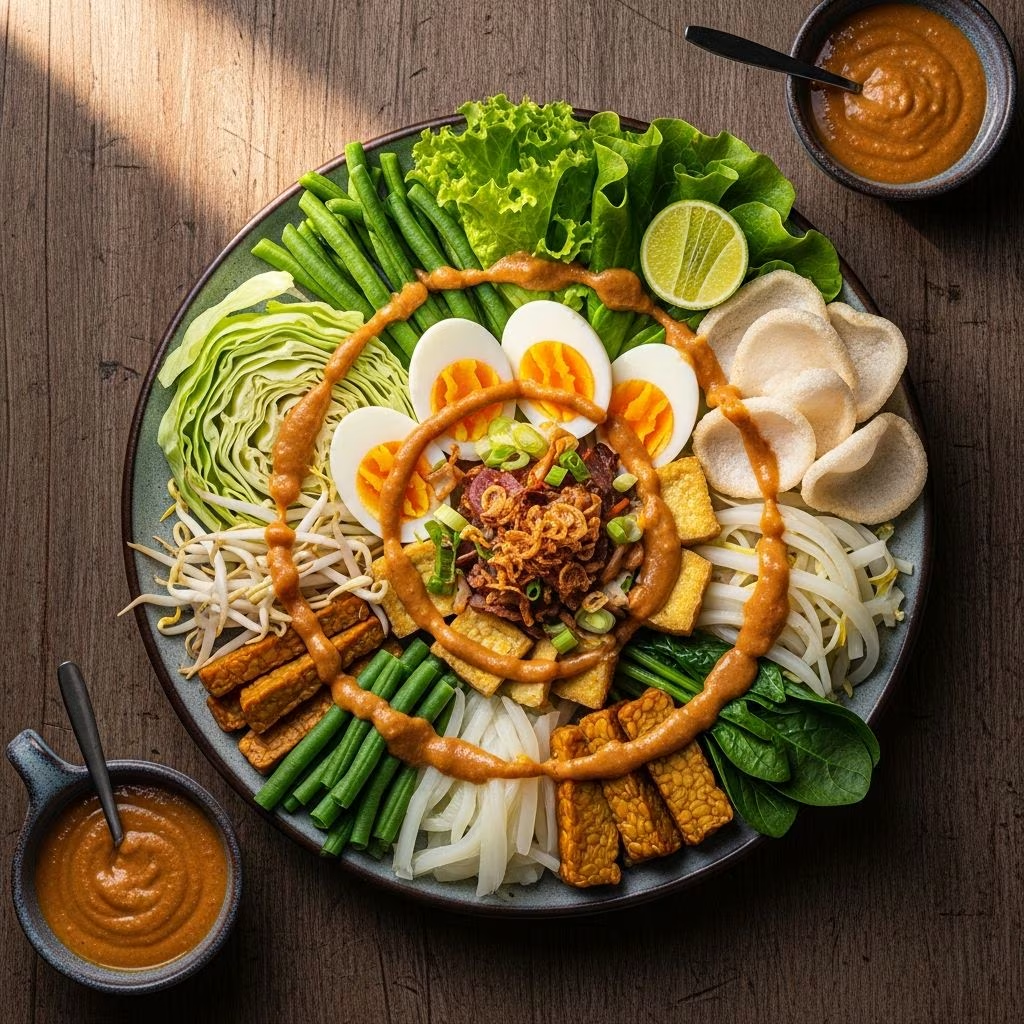
Gado Gado stands as one of Indonesia’s most cherished dishes, blending a colorful array of fresh and blanched vegetables with a luscious peanut sauce. This salad, meaning \”mix-mix\” in Indonesian, offers a perfect balance of textures and flavors, making it a staple street food and home favorite across the archipelago.
Origins and Cultural Significance
Rooted in Sundanese cuisine from West Java, Gado Gado has evolved into a Jakarta street food icon. Its name reflects the medley of seasonal vegetables used, allowing for regional variations. Traditionally vendor-sold, it combines cooked greens, raw crunch, protein like eggs or tofu, and a signature peanut dressing that’s both creamy and spicy.
Today, Gado Gado symbolizes Indonesia’s diverse produce and bold spices, appealing globally for its vegan-friendly adaptability and nutrient density. It’s more than a salad—it’s a vibrant plate of balance: cool veggies against warm sauce, soft against crisp.
Essential Ingredients Breakdown
Building Gado Gado starts with quality components. Vegetables form the base, proteins add substance, and the peanut sauce ties it all together.
Vegetable Selection
- Blanched veggies: Green beans, broccoli, cauliflower, carrots—quick-cook to retain crunch and color.
- Raw elements: Cucumber slices, bean sprouts, radishes for fresh snap.
- Optional adds: Tomatoes, cabbage, potatoes for heartiness.
Choose seasonal produce for peak flavor; aim for 5-7 types to capture the \”mix-mix\” essence.
Proteins
- Hard-boiled eggs: Classic topping, sliced for creaminess.
- Firm tofu or tempeh: Fried crispy for contrast.
Peanut Sauce Staples
The sauce is the star. Core elements include peanut butter or roasted peanuts, garlic, chilies, sweet soy (kecap manis), tamarind or lime, and palm sugar. Aromatics like lemongrass, shrimp paste, or ginger deepen umami.
| Ingredient | Role | Quantity (Serves 4) |
|---|---|---|
| Peanut butter/crunchy peanuts | Base creaminess | 1/2 cup |
| Garlic & shallots | Aroma | 2-3 cloves + 2 shallots |
| Chilies | Heat | 1-2 fresh or flakes |
| Kecap manis & sugar | Sweetness | 1 tbsp each |
| Tamarind/lime | Acidity | 1 tbsp paste or juice |
Step-by-Step Recipe
Prep time: 20 mins | Cook time: 25 mins | Serves: 4
Prepare the Peanut Sauce
- Sauté garlic, shallots, chilies, lemongrass, and shrimp paste in oil until fragrant.
- Add water, peanut butter, kecap manis, palm sugar, and spices; simmer until thickened. Blend smooth.
- Taste: Adjust lime for tang, sugar for balance, chilies for fire.
Cook the Vegetables
- Blanch green beans, broccoli, cauliflower, carrots in boiling salted water 2-4 mins each. Shock in ice water.
- Leave cucumber, sprouts, radishes raw; slice tomatoes if using.
Fry Proteins
- Press and cube tofu; marinate in soy, ginger, vinegar. Fry until golden.
- Boil eggs 8-10 mins; peel and quarter.
Assemble
Layer veggies on a platter: base of hearty ones, top with raw. Drizzle generously with sauce, garnish with cilantro, fried onions, prawn crackers. Serve warm or room temp.
Customizing Your Gado Gado
Gado Gado thrives on flexibility. Swap veggies based on availability: spinach, kangkung (water spinach), or potatoes. For vegan, skip eggs, amp tofu.
- Spice levels: Mild (no chilies), hot (extra sambal).
- Protein twists: Tempeh for nutty crunch, prawns for seafood vibe.
- Gluten-free: Use tamari over soy.
Seasonal US adaptation: Asparagus in spring, zucchini in summer.
Nutrition and Health Benefits
Per serving (veggie-heavy): ~400 calories, high fiber from veggies, healthy fats from peanuts, complete protein with eggs/tofu. Rich in vitamins A, C, K; antioxidants from chilies.
- Peanuts: Heart-healthy monounsaturated fats.
- Blanched greens: Retain nutrients better than overcooking.
- Low-carb option: Skip potatoes, noodles.
Pro Tips for Perfection
- Sauce consistency: Simmer low; thin with water/coconut milk if needed.
- Make-ahead: Veggies and sauce store 2 days fridge; assemble fresh.
- Tools: Food processor for silky sauce; crinkle cutter for cukes.
- Authenticity: Seek kecap manis, palm sugar at Asian markets.
Common Mistakes to Avoid
- Overcooking veggies: Keep al dente for texture.
- Sauce too thick: Balance liquids early.
- Skipping blanching: Ensures even cooking, vibrant color.
Gado Gado Variations Around the World
While Indonesian roots shine, global twists abound: Jamie Oliver adds potatoes and prawn crackers; Western versions lighten sauce with less sugar. In Australia, it’s a BBQ side.
Pairing Suggestions
Serve with satay skewers, nasi goreng, or as a light lunch. Drinks: Iced tea, young coconut water to cut richness.
FAQs
What is Gado Gado?
An Indonesian salad of mixed blanched/raw veggies, peanut sauce, eggs/tofu.
Is Gado Gado vegan?
Yes, omit eggs; use plant proteins.
How long does peanut sauce last?
Up to 5 days refrigerated; freeze 1 month.
Can I use regular peanut butter?
Yes, natural unsweetened works best.
What’s the best sub for kecap manis?
Soy sauce + molasses or brown sugar.
Storage and Reheating
Store components separate. Reheat sauce gently; veggies cold or microwaved briefly. Best eaten day-of for crispness.
References
- How to make the ultimate gado gado recipe – Simone’s Kitchen — Simone van den Berg. N/A. https://insimoneskitchen.com/the-ultimate-gado-gado-recipe-plus-a-killer-peanut-sauce/
- Gado gado (Indonesian salad with peanut sauce) — Caroline’s Cooking. N/A. https://www.carolinescooking.com/gado-gado/
- Gorgeous Gado Gado | Comfort Food — Jamie Oliver. N/A. https://www.jamieoliver.com/recipes/vegetables/gorgeous-gado-gado/
- Indonesian gado-gado salad — Lazy Cat Kitchen. N/A. https://www.lazycatkitchen.com/indonesian-gado-gado-salad/
- Gado Gado (Indonesian salad with peanut sauce) — RecipeTin Eats. N/A. https://www.recipetineats.com/gado-gado-indonesian-salad-with-peanut-sauce/