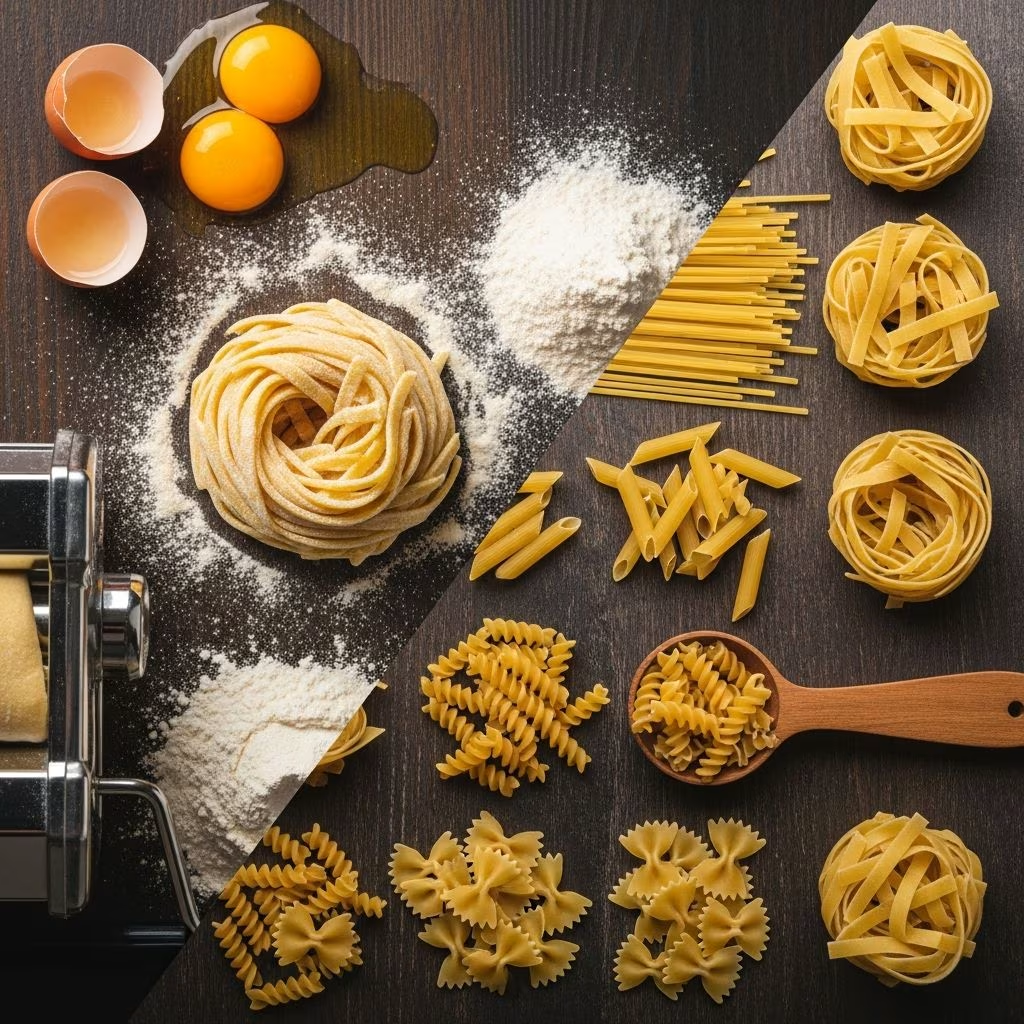
Pasta lovers often debate whether fresh or dry pasta reigns supreme, but the truth is each excels in specific scenarios based on their unique properties. Fresh pasta offers a tender, velvety bite ideal for light sauces, while dry pasta provides a firm, chewy texture perfect for robust flavors.
Understanding the Fundamentals of Pasta Types
Pasta comes in two primary forms: fresh and dry, each crafted through distinct processes that influence their final characteristics. Dry pasta, a staple in pantries worldwide, undergoes a dehydration process that transforms simple ingredients into a long-lasting product. In contrast, fresh pasta is prepared closer to mealtime, emphasizing immediacy and delicacy.
The journey begins with ingredients. Dry pasta typically relies on semolina flour—a coarse, high-protein durum wheat flour—mixed with water and sometimes salt. This combination creates a sturdy dough that is extruded through metal dies into shapes like spaghetti or penne, then slowly dried to remove moisture, ensuring shelf stability for years. Semolina’s gluten content gives dry pasta its resilience, allowing it to maintain structure during cooking.
Fresh pasta, however, incorporates eggs into the mix, often with ’00’ flour or semolina, water, and occasionally olive oil. The eggs enrich the dough, yielding a supple texture. This dough is rolled thin and cut by hand or machine into ribbons like fettuccine or filled shapes like ravioli. Without drying, it remains perishable, requiring refrigeration and prompt use.
| Aspect | Dry Pasta | Fresh Pasta |
|---|---|---|
| Key Ingredients | Semolina flour, water, salt | Flour, eggs, water/olive oil |
| Texture (Cooked) | Chewy, al dente | Tender, silky |
| Cooking Time | 8-12 minutes | 1-4 minutes |
| Shelf Life | Years (pantry) | 2-3 days (fridge) |
Production Methods: From Dough to Dish
Manufacturing dry pasta involves precision engineering. The dough is forced through bronze or Teflon dies, with bronze creating a porous surface that sauces cling to better. It’s then dried at controlled low temperatures for days, sometimes fermenting slightly to develop nutty flavors, as seen in artisanal brands from southern Italy. This slow process contrasts with industrial quick-drying, which can impart a burnt taste.
Fresh pasta production is more artisanal. Kneading develops gluten without overworking, followed by rolling to uniform thickness. Home cooks use pasta machines for consistency, adding flavors like spinach for green hues. Regional traditions shine here: northern Italy favors egg-based fresh pasta, while southern regions lean toward dry varieties.
- Bronze-die extrusion enhances sauce adhesion in dry pasta.
- Eggs in fresh pasta create elasticity and richness.
- Humidity affects fresh dough; drier conditions yield firmer results.
Cooking Techniques for Optimal Results
Mastering cooking separates good pasta from great. For dry pasta, boil in abundant salted water—about 4-6 quarts per pound—with 2-3 tablespoons of salt. Test at 8 minutes for al dente, that firm ‘to the tooth’ bite. Reserve pasta water to emulsify sauces.
Fresh pasta cooks lightning-fast; undercook slightly as it continues to soften off-heat. A wide pot prevents sticking, and gentle stirring ensures even cooking. Its silkiness pairs with minimal tossing to preserve tenderness.
Common pitfalls include overcooking dry pasta into mush or shocking fresh pasta in cold water, which ruins texture. Always match cooking to shape: long dry strands for twirling, filled fresh for quick poaches.
Pairing Pasta with Sauces: The Perfect Match
Sauce selection hinges on pasta type. Dry pasta’s rugged surface grips chunky, meaty ragù, tomato-based pomodoro, or oil-based aglio e olio. Its sturdiness shines in baked dishes like lasagna or minestrone soups, absorbing flavors without disintegrating.
Fresh pasta demands subtlety. Creamy Alfredo, carbonara’s eggy embrace, or light pesto let its tenderness star. Wide ribbons like pappardelle cradle wild boar sauce delicately, while delicate spatzle suits butter sage.
| Pasta Type | Ideal Sauces | Why It Works |
|---|---|---|
| Dry (e.g., Rigatoni) | Bolognese, Puttanesca | Holds thick, hearty mixtures |
| Fresh (e.g., Tagliatelle) | Carbonara, Alfredo | Absorbs light, creamy flavors |
Storage and Shelf Life Strategies
Dry pasta’s appeal lies in convenience: store in cool, dark pantries indefinitely if unopened. Once cooked, consume promptly or refrigerate up to 2 days, reheating gently to avoid gumminess.
Fresh pasta spoils quickly; use within 2-3 days refrigerated, loosely covered to prevent drying. Freeze uncooked sheets or shapes for up to 2 months—thaw before boiling. For longer storage, air-dry fresh pasta 12-24 hours into a semi-dry form lasting months.
- Label frozen portions with dates.
- Airtight containers for dry pasta prevent pests.
- Fresh: dust with flour to avoid sticking.
Regional Italian Traditions and Variations
Italy’s pasta landscape reflects geography. Northern regions like Emilia-Romagna produce egg-rich fresh pasta for tortellini in brodo. Southern areas, with durum wheat abundance, specialize in dry semolina pasta like orecchiette for broccoli rabe.
Artisanal producers like Rustichella d’Abruzzo use slow-drying for superior taste, challenging industrial norms. Home traditions vary: winter humidity affects fresh dough hydration, demanding adjustments.
Home Cooking: Making and Substituting
Homemade fresh pasta is rewarding. Combine 2 cups ’00’ flour, 3 eggs; knead 10 minutes, rest, roll, cut. Dry pasta requires no such effort but quality matters—seek bronze-cut for authenticity.
Substitutions work: dry for fresh in pinches, but adjust sauce thickness. Fresh in bakes turns gummy; opt for dry there. Experiment with colors: beet for red, squid ink for black.
Health and Nutritional Angles
Both offer carbs, protein from gluten. Dry pasta’s semolina provides more fiber if whole wheat. Fresh eggs add protein, vitamins. Portion control key: 2oz dry equals 1 cup cooked. Gluten-free alternatives use rice flour.
FAQ
Can I use dry pasta instead of fresh?
Yes, but cook al dente and pair with structured sauces; fresh equivalents soften more.
How do I know if pasta is fresh?
Look for yellow hue from eggs, pliability, refrigeration requirement.
Is frozen pasta as good as fresh?
Nearly, for stuffed varieties; thaw and cook immediately.
Why is my fresh pasta sticky?
Over-floured dough or insufficient resting; use semolina dust.
Best flour for homemade pasta?
’00’ for tenderness, semolina for structure.
Advanced Tips from Chefs
Finish cooking in sauce for gloss. Use pasta water’s starch. Test artisanal dry like Martelli for fermented depth versus fresh’s purity.
References
- Fresh Pasta vs. Dry Pasta: Boiling Down The Differences — Paesana. 2023. https://www.paesana.com/blog/fresh-pasta-vs.-dry-pasta-boiling-down-the-differences
- Fresh vs. Dry vs. Frozen vs. Store Bought vs. Homemade Pasta — Wildgrain. 2023. https://wildgrain.com/blogs/news/fresh-vs-dry-vs-frozen-vs-store-bought-vs-homemade-pasta
- Issue No. 126: Is fresh pasta better than dried pasta? — Zingerman’s The Feed. 2021-06-25. https://thefeed.zingermans.com/2021/06/25/issue-no-126-fresh-pasta-better-dried-pasta/
- Dry Vs. Fresh Pasta — Escoffier Online (YouTube). 2023. https://www.youtube.com/watch?v=pQxIqvfYUjI