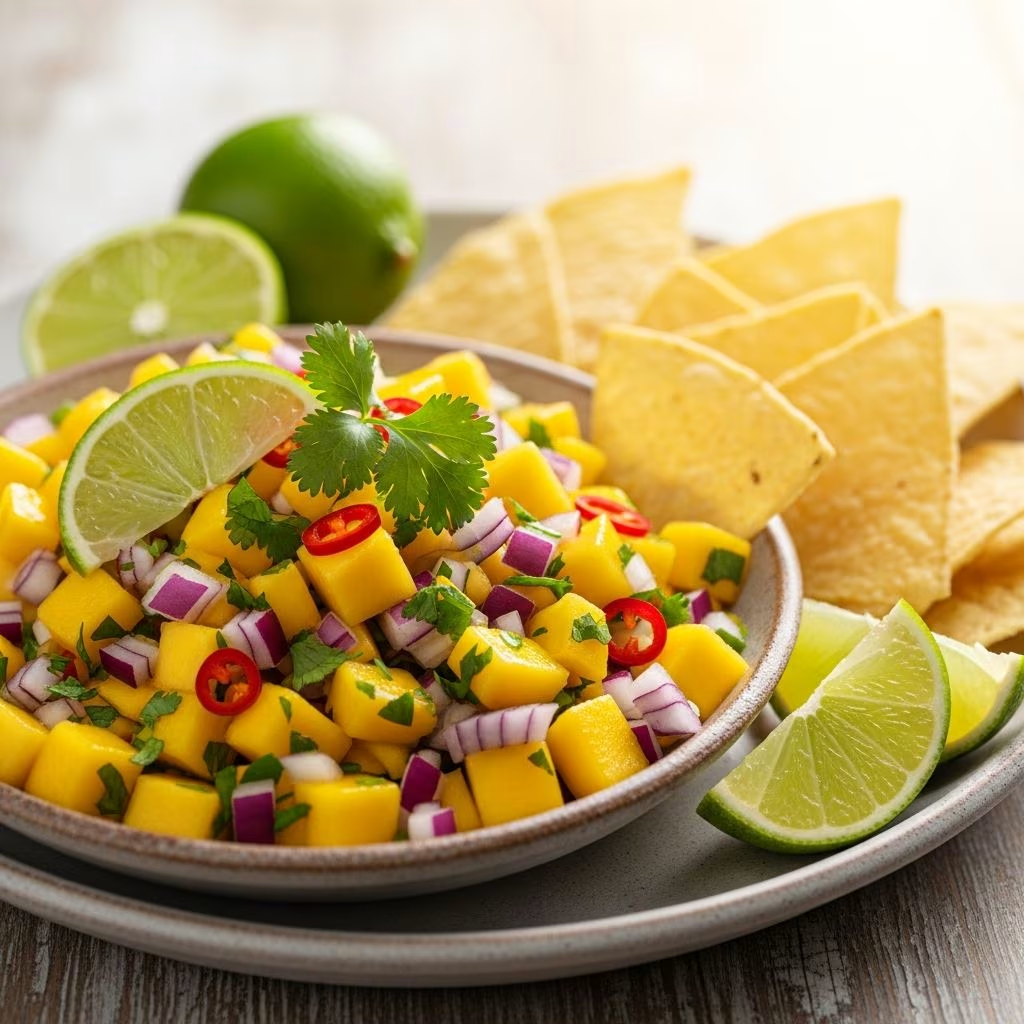
Mango salsa represents a vibrant and versatile condiment that transforms simple tropical fruit into a sophisticated accompaniment for countless dishes. This refreshing preparation combines the natural sweetness of ripe mangoes with complementary ingredients, creating a balance of flavors that appeals to both adventurous eaters and those seeking comfort in familiar tastes. Whether you’re hosting a summer gathering or preparing a weeknight dinner, understanding the fundamentals of mango salsa preparation allows you to create restaurant-quality results in your own kitchen.
Understanding the Foundation: Core Components
The foundation of exceptional mango salsa rests on selecting quality ingredients that work harmoniously together. Each component contributes distinct characteristics that elevate the final dish beyond what any single element could achieve independently.
The Star Ingredient: Mangoes
Mango selection proves critical to salsa success. Ripe mangoes provide the essential sweetness and texture that define this dish. When selecting mangoes, look for fruits that yield slightly to gentle pressure but maintain firmness—overripe mangoes will become mushy when diced, compromising the salsa’s structure. The mango should emit a subtle, pleasant aroma near the stem, indicating optimal ripeness. Fresh mangoes deliver superior flavor and texture compared to frozen alternatives, which tend to become watery during thawing.
To prepare your mangoes, use a sharp knife to cut lengthwise on either side of the flat pit. Score the flesh in a crosshatch pattern without piercing the skin, then invert and scoop the cubes into your preparation bowl. This technique yields consistent dice sizes while minimizing waste.
Building Flavor Layers
Beyond mangoes, several ingredients work together to create complexity. Red bell peppers contribute a crisp texture and subtle sweetness that complements rather than overwhelms the mango. Red onions introduce a sharp, pungent quality that adds savory depth and prevents the salsa from becoming cloying. Fresh cilantro imparts herbaceous notes that brighten the overall profile, though parsley serves as an excellent substitute for those with aversions to cilantro’s distinctive flavor.
The heat component comes from jalapeño peppers, which can be adjusted based on preference. Removing the seeds and white membranes significantly reduces heat while maintaining flavor. For those preferring additional spice, habanero peppers offer intensified warmth without overshadowing other flavors.
Balancing Acidity and Seasoning
Fresh lime juice provides essential acidity that brightens flavors and prevents oxidation, particularly important when avocado is included. Lime juice also enhances the preservation qualities of prepared salsa. Some recipes incorporate lemon juice as an alternative when limes aren’t available, delivering comparable tartness. Salt serves as a flavor amplifier, though quantities should be adjusted to personal preference and based on other ingredients’ inherent saltiness.
Ingredient Variations and Customizations
While core ingredients remain consistent across mango salsa recipes, variations emerge based on regional preferences and intended applications.
Optional Additions for Depth
Some preparations introduce avocado for creaminess and richness, though this addition requires careful timing since avocado darkens when exposed to air for extended periods. Adding avocado immediately before serving preserves its vibrant green color and prevents unpleasant browning.
Garlic introduces pungent, aromatic qualities that enhance savory applications. Tomatoes, particularly cherry or grape varieties, add juiciness and slight acidity, creating more complex flavor profiles. A small amount of honey can balance particularly acidic preparations or enhance mango sweetness in less-ripe fruit.
Chili powder or cumin may be incorporated for Southwestern influences, while orange juice adds citrus complexity beyond lime’s tartness. Olive oil can be drizzled for richness, though this remains optional in most preparations.
Step-by-Step Preparation Method
Creating fresh mango salsa requires minimal equipment and follows straightforward procedures.
Preparation Process
- Assemble ingredients and equipment: Gather a sharp knife, cutting board, medium mixing bowl, and large spoon for combining ingredients.
- Prepare produce: Wash all produce thoroughly under running water. Peel and dice mangoes into consistent-sized cubes. Finely dice bell peppers, removing seeds and membranes. Mince red onion into small pieces. Seed and mince jalapeños, adjusting quantities based on spice preference.
- Combine in bowl: Add prepared mangoes, bell peppers, onions, jalapeños, and cilantro to your mixing bowl.
- Add acid and seasoning: Squeeze fresh lime juice over the mixture. Add salt to taste, starting with conservative amounts.
- Mix thoroughly: Using your large spoon, gently stir ingredients until evenly distributed. Avoid aggressive mixing that could bruise delicate mango pieces.
- Rest and adjust: Allow the salsa to rest for 10-30 minutes before serving. This resting period permits flavors to meld and develop. Taste and adjust seasoning as needed.
Timing Considerations
Fresh mango salsa reaches optimal flavor after 15-30 minutes of resting. During this time, the lime juice begins breaking down cell walls, allowing flavors to intermingle. Extended resting—even several hours—intensifies flavor development, similar to how traditional salsas improve overnight in refrigeration. However, salsa containing avocado should be prepared closer to serving time to prevent discoloration.
Storage and Shelf Life Guidelines
Proper storage extends the life and maintains the quality of your prepared mango salsa.
| Storage Condition | Shelf Life | Quality Notes |
|---|---|---|
| Room temperature | 1-2 hours | Best consumed fresh; flavors peak immediately |
| Refrigerated without avocado | 3-4 days | Flavors intensify; may develop slight fermentation taste |
| Refrigerated with avocado | 1-2 days | Avocado darkens over time despite lime juice protection |
| Frozen | 2-3 months | Texture changes upon thawing; best for cooked applications |
Store salsa in airtight containers to minimize oxidation and prevent absorption of refrigerator odors. The lime juice acts as a natural preservative, helping maintain freshness longer than unseasoned preparations. If preparing salsa ahead, keep avocado separate and add immediately before serving to maintain visual appeal.
Versatile Applications and Serving Suggestions
Fresh mango salsa transcends traditional boundaries, complementing diverse dishes and occasions.
Traditional and Contemporary Pairings
Mango salsa serves as an ideal topping for grilled fish, particularly white varieties like mahi-mahi or halibut. The bright acidity cuts through rich fish oils while the sweetness creates pleasing contrast. Shrimp preparations—whether grilled, sautéed, or in tacos—benefit tremendously from mango salsa’s refreshing qualities.
Pulled pork and grilled chicken receive sophisticated elevation when crowned with mango salsa. The tropical elements provide counterbalance to rich, smoky meat flavors. Fish tacos achieve restaurant-caliber status when dressed with this condiment, creating complex flavor combinations that justify upscale pricing when served in commercial establishments.
Beyond protein pairings, mango salsa functions excellently as a dip for crispy elements. Tortilla chips—whether corn or multigrain varieties—provide textural contrast to the salsa’s soft components. Some preparations utilize mango salsa atop ceviche, within grain bowls, or alongside Latin American rice dishes.
Entertaining Applications
Mango salsa impresses at gatherings without requiring last-minute preparation pressure. Double or triple batch recipes easily accommodate varied guest counts. Present in attractive serving bowls alongside complementary items, creating inviting buffet displays that encourage sampling and encourage conversation.
Nutritional Benefits and Dietary Considerations
Fresh mango salsa naturally aligns with multiple dietary preferences and nutritional objectives. The preparation contains no added preservatives, sodium, or refined sugars when prepared from whole ingredients. Mangoes contribute significant vitamin C content, supporting immune function and collagen synthesis. The cilantro and jalapeños provide antioxidants and phytonutrients associated with reduced inflammation.
This preparation naturally accommodates gluten-free, dairy-free, vegan, and nut-free dietary requirements. Those monitoring sodium intake appreciate the ability to control salt additions precisely. The high water content from mangoes and peppers contributes to hydration without excess calories.
Common Preparation Challenges and Solutions
Addressing Texture Issues
Problem: Salsa becomes watery after preparation. Solution: Mangoes naturally release liquid as cell walls break down. Reducing prep time before serving minimizes this effect. Alternatively, use firmer mangoes that are slightly less ripe, or drain excess liquid before serving.
Problem: Uneven ingredient distribution. Solution: Ensure consistent dice sizes across all ingredients. Smaller pieces distribute more evenly throughout, creating balanced bites.
Flavor Imbalances
Problem: Salsa tastes too spicy. Solution: Reduce jalapeño quantity or remove seeds completely. Add additional mango or bell pepper to dilute heat.
Problem: Insufficient flavor impact. Solution: Verify lime juice freshness—bottled juice may lack potency. Add additional salt incrementally. Extend resting period to allow flavor development.
Problem: Cilantro overpowers other flavors. Solution: Reduce cilantro quantity or substitute parsley for those preferring milder herb influence.
Frequently Asked Questions
Can I make mango salsa with frozen mangoes?
Frozen mangoes generally produce inferior results due to cellular breakdown during freezing, resulting in mushy texture and watery consistency. Fresh mangoes provide superior texture and flavor intensity that define quality salsa.
How far ahead can I prepare mango salsa?
Prepare salsa without avocado up to 4 days ahead, storing in airtight refrigerated containers. Salsa containing avocado should be prepared 1-2 days maximum to prevent browning. Individual components may be prepped 1-2 days ahead and combined just before serving.
What’s the best way to adjust spice levels?
Control heat by adjusting jalapeño quantity and removing seeds and membranes. For less spice, use smaller jalapeños or substitute milder peppers. For increased heat, include habanero peppers or retain jalapeño seeds.
Can I substitute cilantro with something else?
Fresh parsley serves as an excellent cilantro alternative, providing herbaceous character without cilantro’s distinctive polarizing flavor. Mint offers a different but pleasant herbal dimension.
Is homemade mango salsa healthier than store-bought versions?
Homemade versions typically contain fewer preservatives and significantly less sodium than commercial alternatives. You control ingredient quality and proportions, eliminating added sugars or artificial ingredients found in some packaged products.
Conclusion: Elevating Your Salsa Game
Fresh mango salsa represents an accessible yet sophisticated addition to your culinary repertoire. The straightforward preparation masks the complexity of flavors achievable through thoughtful ingredient selection and proper technique. By understanding core principles and embracing customization opportunities, you transform simple tropical fruit into a versatile condiment that impresses family and guests alike. Whether serving alongside grilled proteins, as a dip for crispy accompaniments, or integrated into composed dishes, fresh mango salsa delivers consistent excellence with minimal effort.
References
- Fresh Mango Salsa Recipe — Cookie and Kate. Accessed April 2026. https://cookieandkate.com/fresh-mango-salsa-recipe/
- The Best Fresh Mango Salsa Recipe — Ambitious Kitchen. Accessed April 2026. https://www.ambitiouskitchen.com/mango-salsa-recipe/
- Fresh Mango Salsa Recipe — Delish Knowledge. Accessed April 2026. https://www.delishknowledge.com/fresh-mango-salsa-recipe/
- Fresh Mango Salsa — Tastes of Homemade. Accessed April 2026. https://tastesofhomemade.com/amazing-mango-salsa/
- Mango Salsa Recipe with Fresh Mangoes — Striped Spatula. Accessed April 2026. https://stripedspatula.com/mango-salsa-recipe/